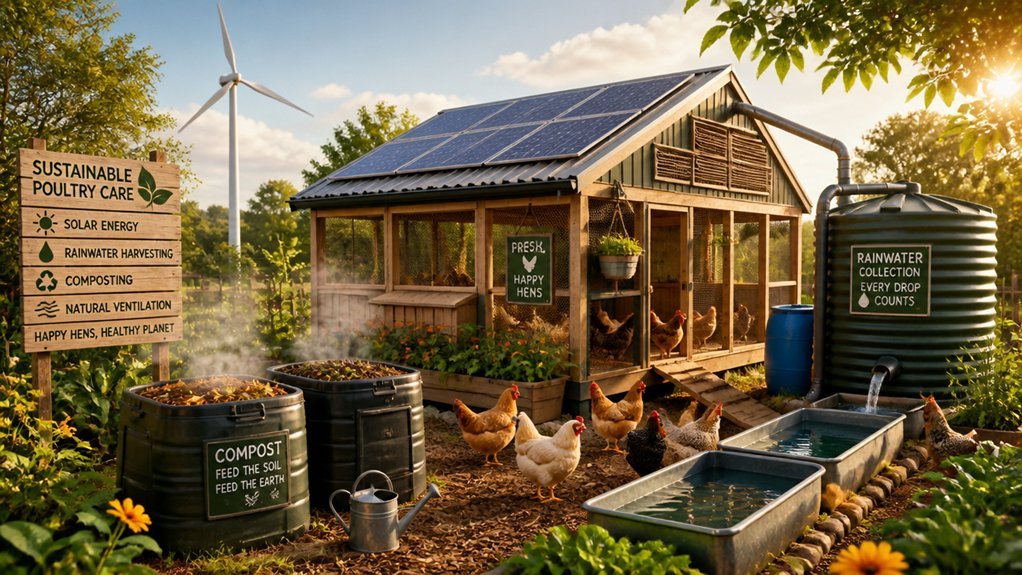
You can cut your chicken care carbon footprint by choosing low-impact feed, storing it in sealed bins, and using no-waste feeders to reduce spoilage. Save energy with LEDs, timers, better insulation, and good ventilation. Conserve water by fixing leaks and using efficient waterers. Keep bedding dry, compost manure, and remove wet litter fast. Pick sustainable bedding and durable, reusable coop supplies. These simple swaps lower emissions, waste, and costs, and there’s more you can put to work.
Main Sources of Chicken Coop Emissions

Where do most chicken coop emissions come from? You’ll usually find the biggest sources in manure, bedding, and energy use.
As droppings break down, they release methane and nitrous oxide, especially when you let them sit wet or compacted. Dirty litter can also trap ammonia, which worsens air quality inside the coop.
If you run lights, heat lamps, fans, or water heaters, they add electricity or fuel-related emissions too. Feed transport and storage can contribute as well, but the coop itself often creates the most direct impact.
You can lower emissions by keeping bedding dry, removing waste often, and improving ventilation. Better management cuts odor, protects flock health, and reduces the gases your coop sends into the air. Using dust-free, highly absorbent bedding can also help reduce moisture buildup and minimize emissions further.
Choose Low-Impact Chicken Feed
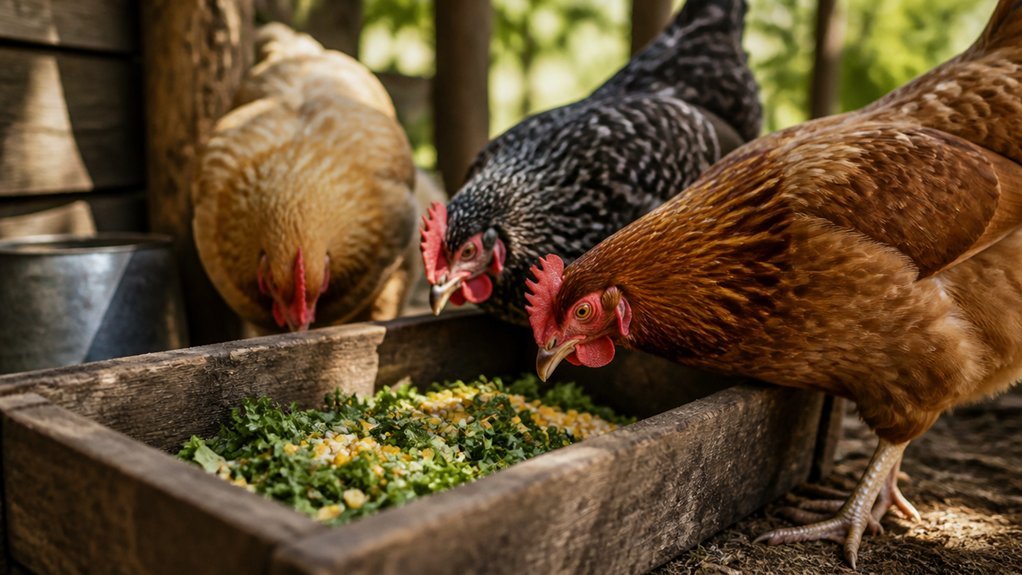
Choosing low-impact chicken feed can shrink your flock’s carbon footprint without hurting nutrition. You can look for rations made with locally grown grains, by-product meals, and responsibly sourced protein instead of ingredients shipped across the globe. These options often need less land, fuel, and processing than conventional blends.
Choose feeds with simple ingredient lists and dependable nutrient labels, so you know your hens still get enough protein, vitamins, and minerals. You can also reduce waste by buying only what your flock will eat before it spoils, then storing it in airtight containers.
If you mix your own feed, compare sources and pick ingredients from nearby suppliers whenever possible. Small changes in what you buy can lower emissions and support a more sustainable feeding routine.
Cut Chicken Coop Energy Use

Feed choices matter, and so does the energy your coop uses each day. You can trim your flock’s footprint by using natural light, insulating walls, and sealing drafts so heaters and fans work less. Swap old bulbs for LEDs, and run them on timers only when needed. Ensuring proper ventilation capacity also helps reduce the need for excessive cooling or heating, lowering overall energy consumption.
Save Water in Daily Chicken Care
Water use is another easy place to cut waste in chicken care, and small changes can save a lot over time. You can refill drinkers only as needed, instead of leaving them overflowing or dirty. Choose containers that minimize spills, and place them where hens can reach them without knocking them over. Check for leaks in hoses, nipples, and fittings so water doesn’t run all day. Incorporating a high-quality, cleanable waterer with anti-roost features, like the ones with sealed, cone-shaped lids, can further reduce waste and contamination. Use light-blocking designs to slow algae growth and decrease cleaning frequency, saving water and effort.
Manage Manure for Lower Emissions

You can cut emissions by composting manure efficiently, turning waste into a useful soil amendment instead of a pollution source. Keep the pile well-aerated and balanced so it breaks down faster and releases fewer gases. You’ll also lower ammonia emissions by removing manure often and keeping bedding dry. Using a ventilated compost bin with proper airflow features can significantly improve decomposition and reduce bad odors.
Compost Manure Efficiently
Composting chicken manure efficiently can cut odors, reduce methane and nitrous oxide emissions, and turn waste into a useful soil amendment.
You should mix manure with carbon-rich bedding like straw, wood shavings, or dried leaves to balance moisture and speed decomposition. Turn the pile regularly so oxygen reaches the microbes that break it down.
Using a well-designed compost tumbler can help aerate the manure and bedding mixture evenly, speeding up the composting process. Keep it damp like a wrung-out sponge, not soggy, and cover it to prevent rain from washing nutrients away.
Use a dedicated compost area away from runoff paths and water sources. When the pile heats up and then cools, you’ll know it’s progressing well. After curing, spread the finished compost on fields or gardens only when plants can use the nutrients.
Reduce Ammonia Emissions
Even small manure-management changes can sharply reduce ammonia losses in a chicken house. You should remove wet litter quickly, since moisture speeds ammonia release and raises stress for your flock. Keep drinkers adjusted, fix leaks, and ventilate well so litter stays drier. Turn or rake bedding to break up caked areas and expose less manure to the air. Incorporating odor neutralizers can further help in reducing emissions and maintaining a healthier environment. If you store manure, cover it and keep piles compact to limit gas escape. Add fresh absorbent material when needed, and separate wet zones around waterers and feeders. You can also schedule frequent cleanouts during warm, humid periods, when emissions climb fastest. These steps cut odor, protect bird health, and lower the nitrogen lost from your system, helping you manage manure more efficiently and reduce your farm’s carbon footprint.
Use Sustainable Bedding and Coop Materials
Choosing sustainable bedding and coop materials can cut waste and shrink your flock’s carbon footprint at the same time. You can swap virgin pine shavings for recycled paper bedding, hemp hurd, or locally sourced straw, which often needs less processing and transport. Using low-dust hemp bedding can also improve air quality inside the coop while reducing airborne particles that contribute to pollution. For coop builds and repairs, choose reclaimed lumber, metal roofing, and untreated wood from nearby suppliers when possible. These options last well and reduce demand for new materials. You should also insulate with natural fibers or reused boards to improve temperature control without extra energy use. When you maintain the coop carefully, you’ll extend material life and replace parts less often. By choosing renewable, recycled, or reclaimed inputs, you keep your chickens comfortable while lowering emissions tied to production, shipping, and disposal.
Reduce Waste With Smarter Chicken Supplies

You can cut waste by choosing reusable coop supplies instead of disposable options. Store feed in bulk containers to reduce packaging and keep it fresh longer. These small changes help you run a cleaner, more efficient chicken setup, while also employing pest-resistant storage options to prevent spoilage and unwanted visitors.
Reusable Coop Supplies
Reusable coop supplies can cut down on waste while making daily chicken care simpler. You can swap disposable tools for sturdy, washable options that last for years. Choose metal or heavy-duty plastic feeders, waterers, and nesting boxes that you can clean and reuse instead of replacing often. Using nesting boxes with roll-away trays helps prevent egg breakage and reduces waste from discarded broken eggs. Use washable cloths, scrub brushes, and refillable spray bottles to keep the coop tidy without piling up trash. You’ll also save money because durable supplies don’t need frequent replacement. When something breaks, repair it if you can before buying a new one. Store your reusable items in a dry place so they stay in good shape longer. By choosing products built for repeated use, you reduce landfill waste and make your chicken routine more sustainable.
Bulk Feed Storage
Another easy way to cut waste in chicken care is to store feed in bulk. You buy less packaging, save trips, and keep supplies ready. Choose sealed bins that block moisture and pests, then label each container so you use older feed first. This keeps nutrients fresh and cuts spoilage. Using no waste feeders, which are designed to minimize spillage and waste, further enhances feed conservation.
Frequently Asked Questions
How Do I Measure My Chicken Coop’s Carbon Footprint?
You measure your coop’s carbon footprint by tracking electricity, heating, feed, bedding, water, and manure emissions, then converting each into CO2e. Add totals monthly, and compare them against your flock’s output.
Can Backyard Chickens Really Offset Household Emissions?
Yes, but only a little: your chickens can offset some food waste and eggs you’d otherwise buy, yet they won’t cancel most household emissions. You’ll still need bigger changes in energy, transport, and consumption.
What Chicken Breeds Are Best for Low-Impact Care?
You’ll usually do best with hardy, dual-purpose breeds like Plymouth Rocks, Sussex, Orpingtons, and Australorps; they thrive on less fuss, resist disease well, and give you eggs and meat without demanding much extra care.
How Often Should I Audit My Coop’s Sustainability?
You should audit your coop’s sustainability monthly, then do a deeper review seasonally. You’ll catch waste, inefficiencies, and energy use early, and you can adjust feed, bedding, water, and repairs before problems grow.
Are There Carbon-Neutral Options for Chicken Healthcare?
Yes, you can choose carbon-neutral chicken healthcare by using herbal remedies, local vets, reusable supplies, and telehealth consults. You’ll cut transport emissions, avoid waste, and still protect your flock’s health responsibly.
In Summary
By making a few smart changes, you can shrink your chicken coop’s carbon footprint without sacrificing care. When you choose low-impact feed, save energy and water, manage manure well, and pick sustainable bedding and materials, you help your flock and the planet at the same time. Small daily habits add up fast, so start with one step today and keep building from there. Your chickens will thrive, and your coop will run cleaner and greener.