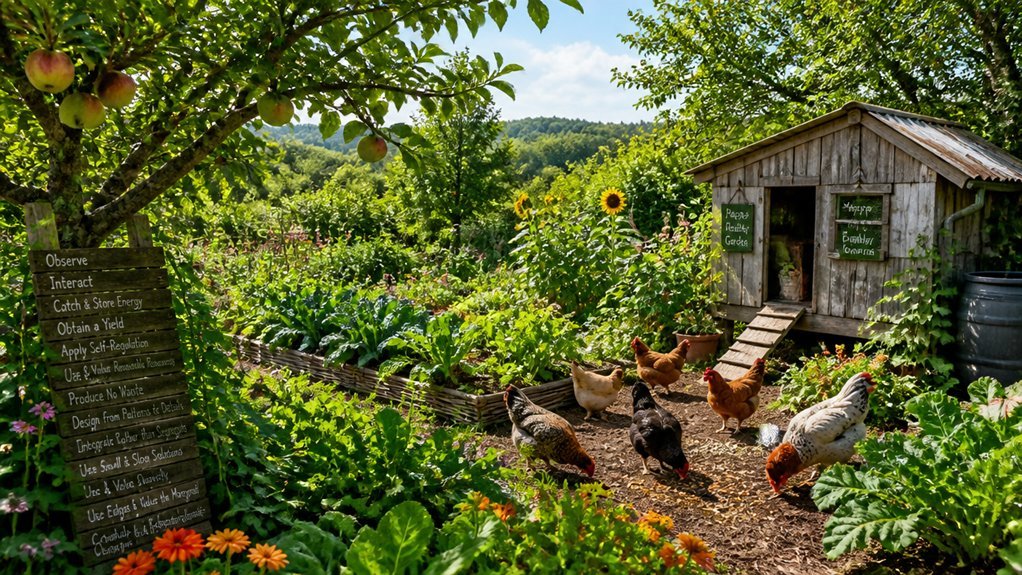
You can incorporate chickens into a sustainable permaculture garden by letting them cycle kitchen scraps and garden trimmings into rich manure, while their foraging helps reduce pests, weeds, and larvae. Use movable fencing to rotate them through beds for just a few days, then rest those areas and add compost or cover crops. Choose calm, productive breeds, and keep a safe coop and run in place. With a good system, your garden and flock can work together beautifully, and there’s more to explore.
Why Chickens Belong in Permaculture Gardens
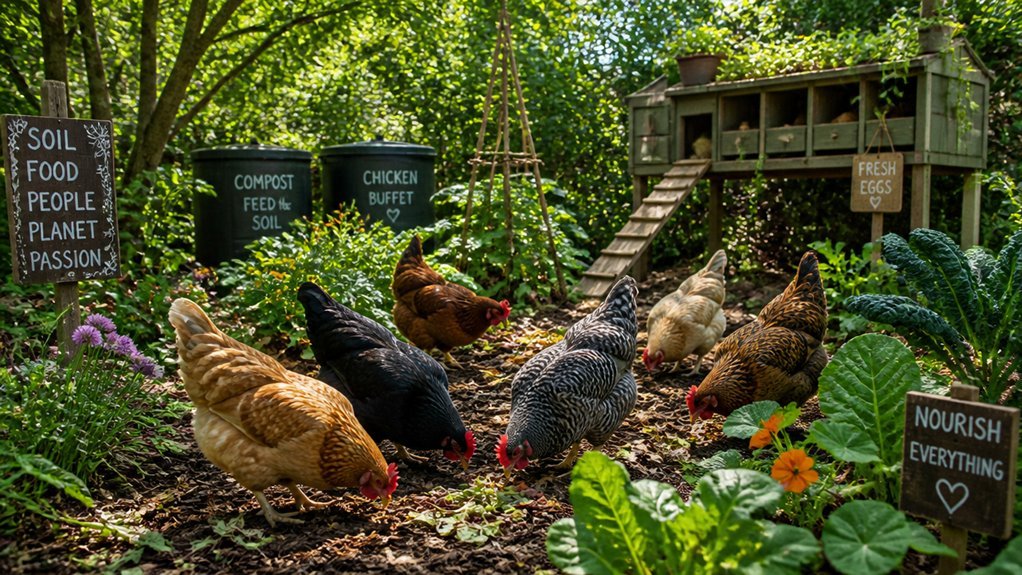
Chickens fit naturally into permaculture gardens because they do more than provide eggs—they actively support the whole system. You can count on them to turn kitchen scraps into manure, scratch up pests, and fertilize soil as they move through your space.
Their constant foraging helps break insect cycles, while their droppings add nutrients that feed future growth. You also gain a resilient source of protein that fits a low-waste, regenerative lifestyle.
When you work with chickens, you create a living loop: plants feed birds, birds enrich the earth, and the earth supports healthier plants. That synergy makes chickens a practical choice for gardeners who want productivity, biodiversity, and ecological balance without relying on synthetic inputs or unnecessary effort.
Predator protection is also crucial to ensure their safety and the sustainability of your garden ecosystem.
Design a Permaculture Chicken Garden
To design a permaculture chicken garden, start by mapping how your birds will move through the space and what you want them to do there. Place runs, beds, and paths so chickens can scratch, fertilize, and control pests without damaging young plants. Use movable fencing to divide areas, and rotate access to keep soil from becoming bare.
Consider the size and height of your fencing to ensure predators are kept out and chickens stay contained, which helps maintain a healthy grazing system. Put water, shade, and dust-bathing spots where birds can reach them easily. Protect sensitive crops with low barriers or raised beds, and plant hardy edges that can recover from pecking.
Let chickens work after harvest or before planting to clean up debris and stir mulch. Design for flow, so you can gather eggs, maintain beds, and manage manure with little effort. Incorporate poultry netting to create flexible, predator-resistant enclosures that support sustainable grazing practices.
Choose Chicken Breeds for Garden Use
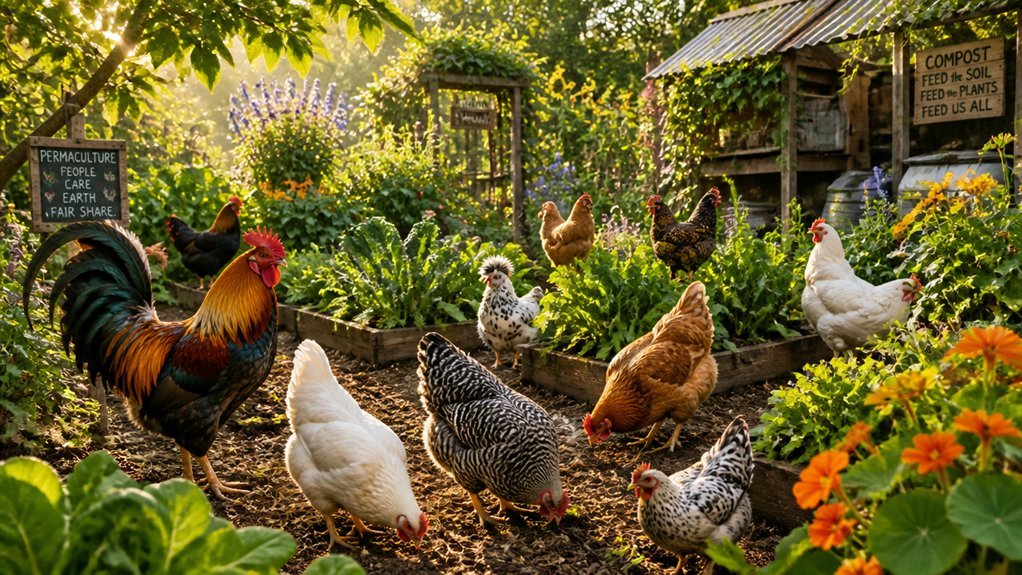
Now that your garden layout is set, you can choose chicken breeds that fit the work you want them to do.
If you want steady egg production, pick breeds like Rhode Island Reds, Australorps, or Leghorns. If you’d rather have birds that forage hard and scratch less aggressively, choose dual-purpose breeds such as Plymouth Rocks, Orpingtons, or Sussex.
In colder climates, select hardy breeds with smaller combs that handle frost better. If you need birds that calm down around plants and people, favor docile breeds over flighty ones.
Match breed size, temperament, and climate tolerance to your garden goals. You’ll get better results when your chickens suit your system instead of forcing one breed to do everything in your garden. Ensuring your flock’s health and productivity also depends on selecting breeds appropriate for parasite resistance, especially if you plan to keep them in a natural, outdoor environment.
Build a Coop and Run System
A well-planned coop and run keeps your chickens safe while making daily care easier. You should place the coop on high, well-drained ground and orient openings for ventilation without drafts.
Build sturdy walls, a secure roof, and predator-proof latches so you can relax at night. In the run, give them space to move, scratch, and dust-bathe while protecting nearby beds.
- Use hardware cloth, not chicken wire, on all exposed sides.
- Add roosts, nesting boxes, and easy-clean flooring inside.
- Include shade, rain cover, and a gate you can lock.
- Connect the run to garden paths for simple access and routine checks.
Ensuring proper walk-in access height will make cleaning and maintenance less strenuous, keeping both you and your flock comfortable. When you keep the structure practical, you reduce stress, save time, and support healthy birds.
How Chickens Control Garden Pests
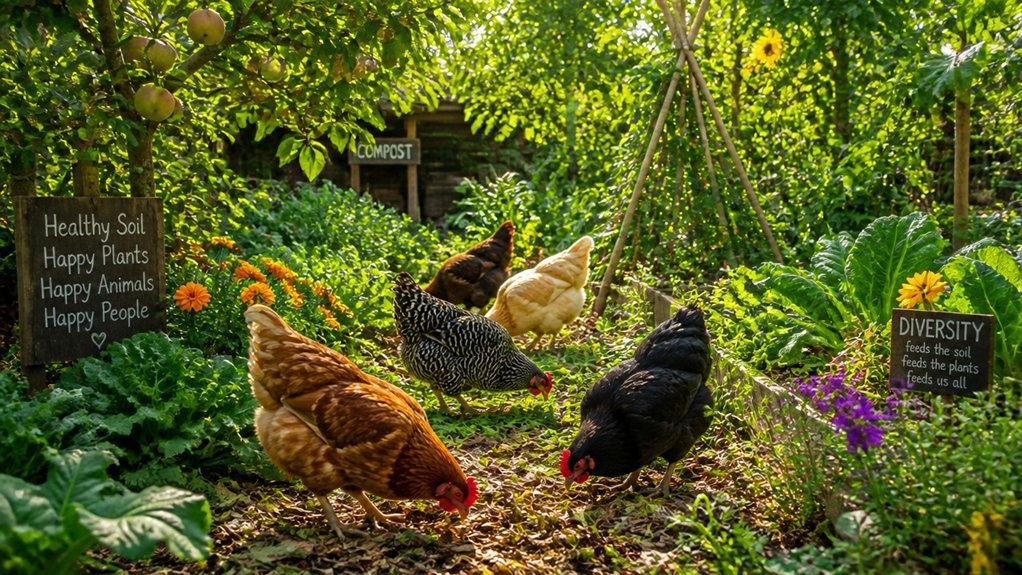
You can let chickens patrol your garden to hunt down pests through natural foraging. They scratch and peck through soil and mulch, eating insects, larvae, and weeds as they go. A well-designed garden fence can help keep your chickens contained while allowing them to perform this valuable service. With careful management, you’ll reduce harmful pests without wiping out the beneficial insects you still need.
Natural Pest Foraging
Chickens can quickly become one of the most effective pest patrols in a permaculture garden. You let them forage, and they’ll hunt down insects that damage leaves, stems, and roots. Their sharp eyes spot movement fast, and their quick pecks reduce pest pressure without chemicals.
- They target beetles, caterpillars, and grasshoppers.
- They scratch through mulch to expose hidden larvae.
- They eat weeds before they set seed.
- They patrol garden edges where pests often gather.
- Their natural pest control is supported by food-grade diatomaceous earth, which safely enhances their environment and minimizes harmful pests.
You gain a living control system that works while feeding itself. By guiding their access, you protect crops and keep pest outbreaks smaller.
Natural foraging also supports healthier soil life because you avoid harsh sprays. Used well, chickens help you manage garden pests with less effort and more balance.
Scratch And Peck
That natural foraging goes a step further with the scratch-and-peck habit, which helps chickens control garden pests while they search for food. You’ll see them scratch leaf litter, soil, and mulch to expose hidden larvae, slugs, beetles, and weed seeds. A tightly woven mesh size personalized for your garden can prevent chickens from getting entangled or escaping while allowing them to forage safely. This constant movement breaks pest hiding spots and reduces the chance that insects settle in one area. As they peck, they quickly snatch up insects before they can spread damage across your beds. Their feet also stir the top layer of soil, disrupting egg clusters and small larvae. When you guide them through targeted areas, you can let them clean up problem spots without chemicals. Use short supervised sessions, and you’ll keep their browsing focused while they help protect your garden’s health.
Balancing Beneficial Insects
When you bring chickens into a permaculture garden, balance matters because they don’t just target pests—they also investigate the beneficial insects that keep your beds thriving. You can use them wisely by guiding their foraging, not letting them roam unchecked.
Chickens help you reduce slugs, beetles, and larvae, but they’ll also scratch up ground beetles and pollinator helpers if you’re careless. To protect your ecosystem, you should:
- Rotate birds through beds briefly.
- Fence off flowering zones.
- Let them patrol after harvest.
- Watch insect populations closely.
This timing lets you harness pest control without upsetting natural allies. Incorporating poultry dust treatments when necessary can help manage pest levels effectively while maintaining ecological harmony. When you manage access with intention, your flock supports soil health, cuts pest pressure, and preserves the insect balance that makes your garden resilient.
Feed Chickens With Garden Waste
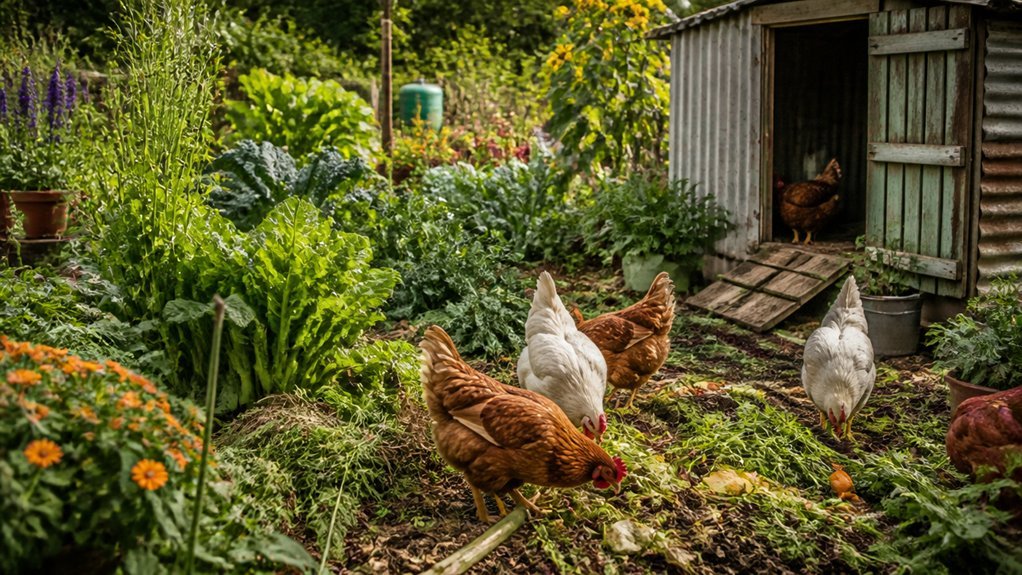
Instead of tossing garden trimmings into the compost pile, you can feed many of them directly to your chickens. You’ll cut waste, save money, and give your flock fresh variety. Offer clean, pesticide-free greens, bolted herbs, and leftover vegetables in small portions. Chop tougher stems so birds can peck them easily, and remove anything moldy or rotten. Rotate offerings to keep feeding interesting and reduce waste. Incorporating black soldier fly larvae treats can boost your hens’ nutrition and further support eggshell quality.
Use Chicken Manure to Feed Soil
You can compost chicken manure before adding it to your garden, so it breaks down safely and becomes easier for plants to use. This rich material boosts your soil with nutrients that support stronger growth and healthier beds. When you use it well, you turn chicken waste into a valuable part of your permaculture system. Ensuring proper ventilation & airflow features in your compost bin helps maintain optimal conditions for faster decomposition and safer, odor-free compost.
Composting Chicken Manure
Chicken manure can become a powerful soil builder, but it needs proper composting before you spread it in the garden.
You can turn fresh bedding and droppings into safe compost by balancing them with dry carbon materials. Follow these steps:
- Mix manure with straw, leaves, or shredded cardboard.
- Keep the pile moist, not soggy.
- Turn it regularly to add air.
- Let it mature until it smells earthy and looks dark.
This process helps you avoid scorching plants and keeps your beds cleaner. You’ll also reduce odor and fly problems around the coop.
When you compost carefully, you create a steady, manageable soil amendment that fits well into a closed-loop permaculture system.
Nutrient-Rich Soil Boost
Once your composted chicken manure is ready, spread it where your garden needs a nutrient lift most. You’ll give beds a balanced dose of nitrogen, phosphorus, and potassium that supports leafy growth, strong roots, and better flowering.
Work it into the topsoil lightly, or apply it as a thin mulch around established plants. You can also mix it into planting holes for heavy feeders like tomatoes, squash, and corn. Because composted manure releases nutrients slowly, you won’t shock plants or invite burn.
It also feeds soil life, which improves structure, moisture retention, and long-term fertility. Use it before planting and again midseason if crops look tired. With careful application, you’ll turn chicken waste into a steady, garden-wide soil boost.
Rotate Chickens Without Damaging Beds
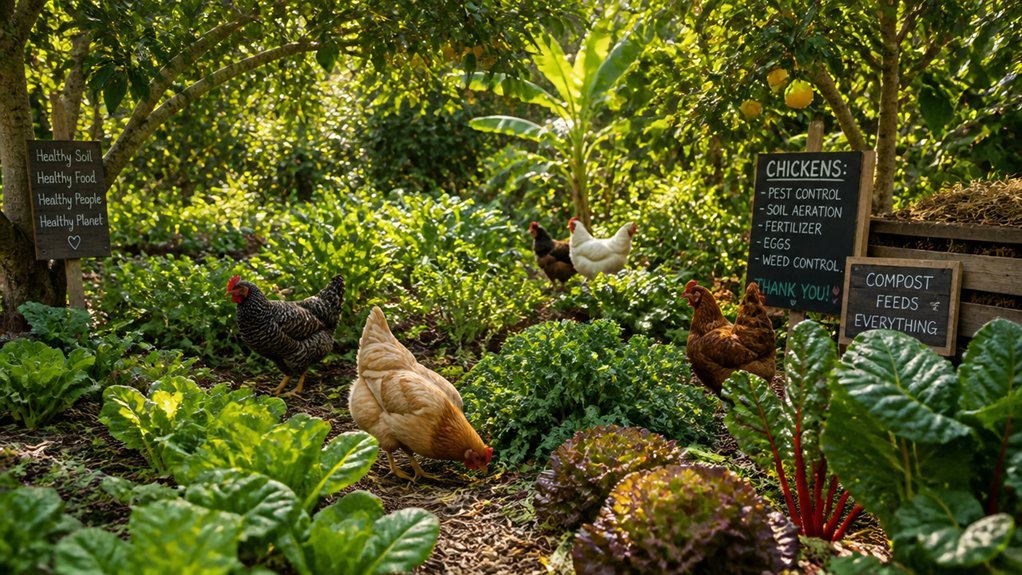
To rotate chickens without damaging your beds, move them onto fresh ground before they scratch, compact, or strip the soil too deeply. You’ll protect roots, preserve mulch, and keep fertility cycling where you want it.
Set up light, mobile fencing so you can shift the flock often, especially after rain. Watch for bare patches and slow growth, then adjust your timing.
- Move birds every 1 to 3 days.
- Use temporary barriers to shield seedlings.
- Rest each bed until the soil rebounds.
- Follow chickens with compost or cover crops.
You’ll get manure without overworking the bed, and your garden will stay productive, balanced, and easier to manage across the season.
Frequently Asked Questions
How Many Chickens Can a Small Permaculture Garden Support?
You can usually support 3 to 6 chickens in a small permaculture garden, if you rotate them carefully and provide enough feed, water, shelter, and pest pressure management without overgrazing or damaging plants.
Do Chickens Need Permits in Residential Neighborhoods?
Yes, you often need permits or must follow local zoning rules in residential neighborhoods. You’ll also want to check HOA restrictions, setbacks, coop limits, and noise ordinances before you bring chickens home.
What Predators Are Most Dangerous to Backyard Chickens?
Raccoons, foxes, coyotes, hawks, and neighborhood dogs usually pose the biggest threat to your backyard chickens. You’ll protect them best with sturdy coops, secure fencing, covered runs, and locking doors at night.
Can Chickens Survive Winter Without Supplemental Heat?
Yes, you can keep chickens through winter without heat if you give them a dry, draft-free coop, good ventilation, thick bedding, plenty of feed, and unfrozen water; cold hardy breeds handle winter better.
How Often Should Chickens Receive Veterinary Care?
You should schedule yearly checkups, and you’ll need extra visits whenever you notice illness, injury, or drops in egg production. Also, keep vaccinations, parasite control, and prompt treatment of problems to keep your flock healthy.
In Summary
When you add chickens to your permaculture garden, you create a system that works with nature instead of against it. They’ll scratch, fertilize, and help control pests while turning kitchen scraps and garden waste into value. If you choose the right breeds, build a solid coop, and rotate them carefully, you’ll protect your beds and improve your soil. With a little planning, your chickens can become one of the most useful parts of your garden.