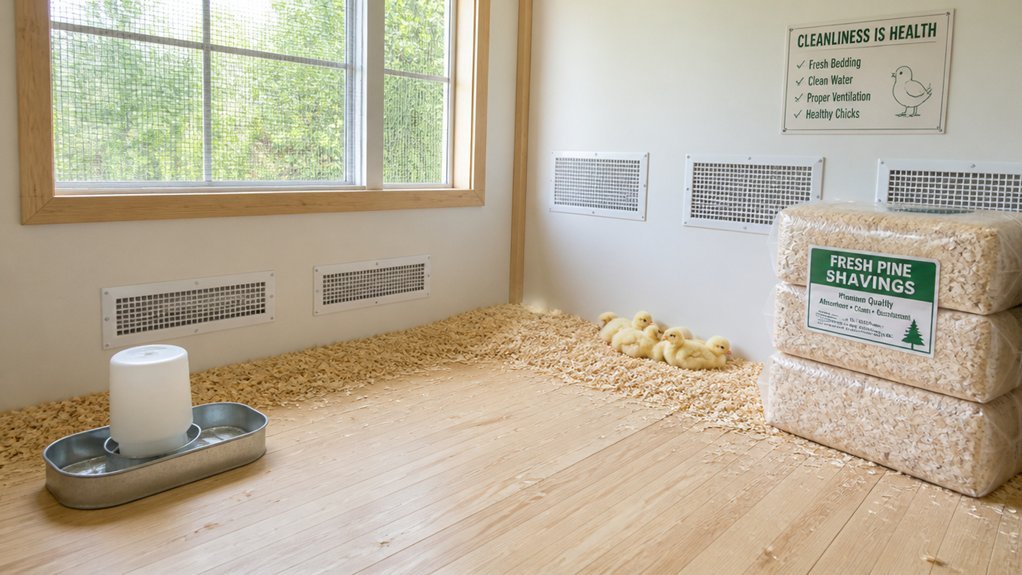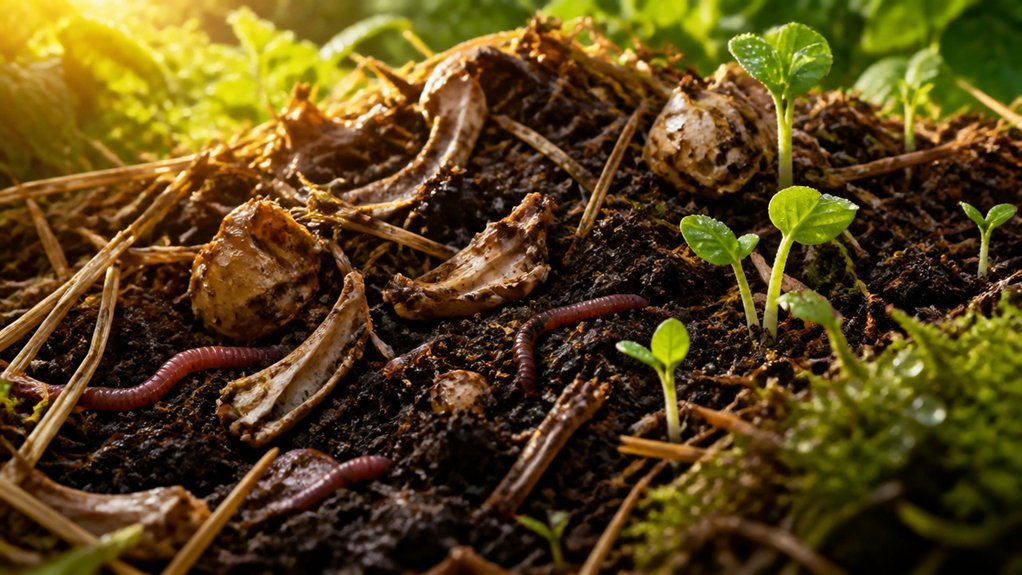
Composting chicken waste gives you three major benefits: richer soil, less odor, and less waste around your coop. When you mix droppings with carbon-rich bedding and keep the pile aerated, you turn manure into a nutrient-rich amendment that boosts nitrogen, phosphorus, and potassium in your garden. You’ll also cut strong ammonia smells and reduce messy storage. Done well, composting makes cleanup easier and helps your plants thrive, with more useful details ahead.
How to Compost Chicken Waste Safely

To compost chicken waste safely, you need to manage it carefully from the start. You should collect droppings, bedding, and litter in a dedicated pile or bin, then mix them with plenty of carbon-rich material like straw, leaves, or shredded paper. Using a compost bin with proper ventilation & airflow features helps maintain oxygen levels and speeds up decomposition. Keep the pile moist, not soggy, and turn it regularly to add oxygen. Use gloves and wash your hands after handling waste. Avoid adding meat, dairy, or pet feces, since they can attract pests and create hazards. Let the compost heat up fully, and monitor it with a thermometer if you can. Wait until the material looks dark, crumbly, and smells earthy before you use it anywhere in your garden.
How Chicken Waste Improves Soil
Chicken waste can boost soil fertility because it adds nitrogen, phosphorus, and potassium, which plants need for strong growth. When you compost it and mix it into your garden beds, you help build richer, darker soil that holds nutrients better.
You also encourage beneficial microbes and earthworms, which break down organic matter and make nutrients easier for roots to absorb. Over time, your soil can develop a looser texture, so water moves through it more evenly and roots spread more freely. This gives your vegetables, flowers, and fruit trees a stronger foundation.
If you apply composted chicken waste in moderation, you’ll feed your soil steadily and support healthier plant growth season after season without relying so heavily on synthetic fertilizers. Proper odor control and regular maintenance, such as emptying the compost pails frequently and using suitable composting materials, are essential for safe and effective use.
How Composting Cuts Odor and Waste
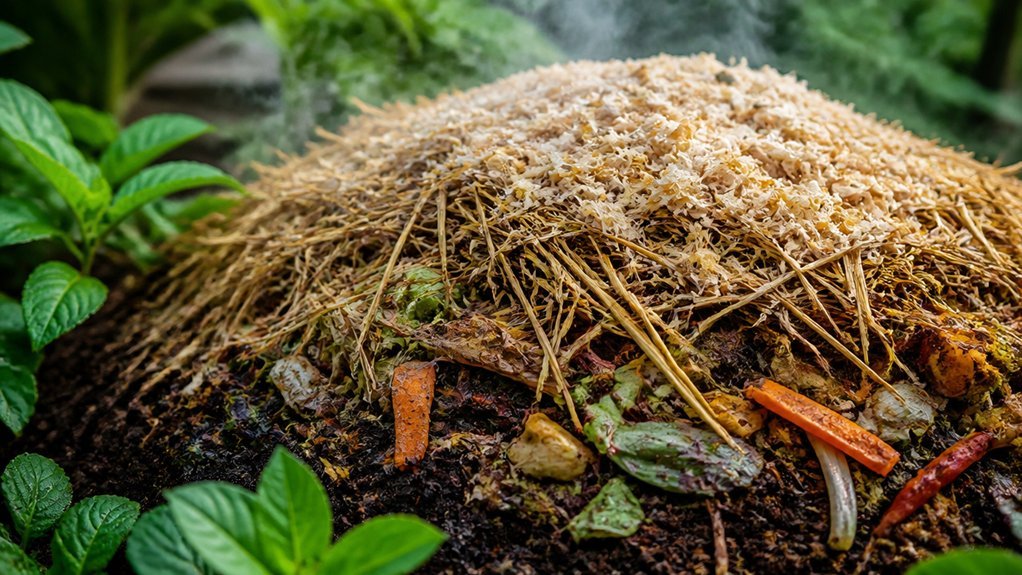
When you compost chicken waste properly, you cut down on the strong ammonia smell that fresh manure can create and keep it from piling up around your property. You also shrink the volume of bedding, droppings, and scraps by turning a messy pile into a stable, useful amendment. Proper carbon layers, airflow, and moisture balance help microbes break materials down fast and limit odor. That means you handle less waste, store less trash, and create a cleaner coop area. Using ventilation and aeration techniques enhances microbial activity and ensures efficient composting.
Frequently Asked Questions
Can Composted Chicken Waste Be Used in Vegetable Gardens?
Yes, you can use composted chicken waste in vegetable gardens if it’s fully finished and aged. You’ll want to mix it into soil before planting, because fresh waste can burn roots and spread pathogens.
How Long Does Chicken Waste Take to Fully Decompose?
You’ll usually wait about 6 to 12 months for chicken waste to fully decompose, depending on heat, moisture, and turning. You can speed it up by mixing carbon-rich bedding and keeping the pile balanced.
What Carbon Materials Work Best With Chicken Manure?
You’ll get the best results with dry straw, shredded leaves, sawdust, wood chips, and chopped cardboard. Mix these with chicken manure to balance nitrogen, reduce odor, and speed composting while keeping airflow strong.
Can Composted Chicken Waste Attract Pests or Rodents?
Yes, if you don’t manage it well, composted chicken waste can attract pests or rodents. You’ll avoid trouble by covering it with carbon materials, keeping it hot, and turning it regularly to speed decomposition.
Is Composted Chicken Waste Safe for Houseplants?
Yes, you can use fully composted chicken waste on houseplants, but you should use it sparingly. You’ll avoid root burn and odors if it’s mature, crumbly, and mixed well with other composted material.
In Summary
Now you know the top 3 benefits of composting chicken waste: you can compost it safely, boost your soil, and cut down on odor and waste. When you manage chicken manure the right way, you turn a messy problem into a useful resource for your garden. Keep your pile balanced, monitor moisture, and give it time to break down fully. With a little care, you’ll help your chickens, your soil, and your yard all at once.