
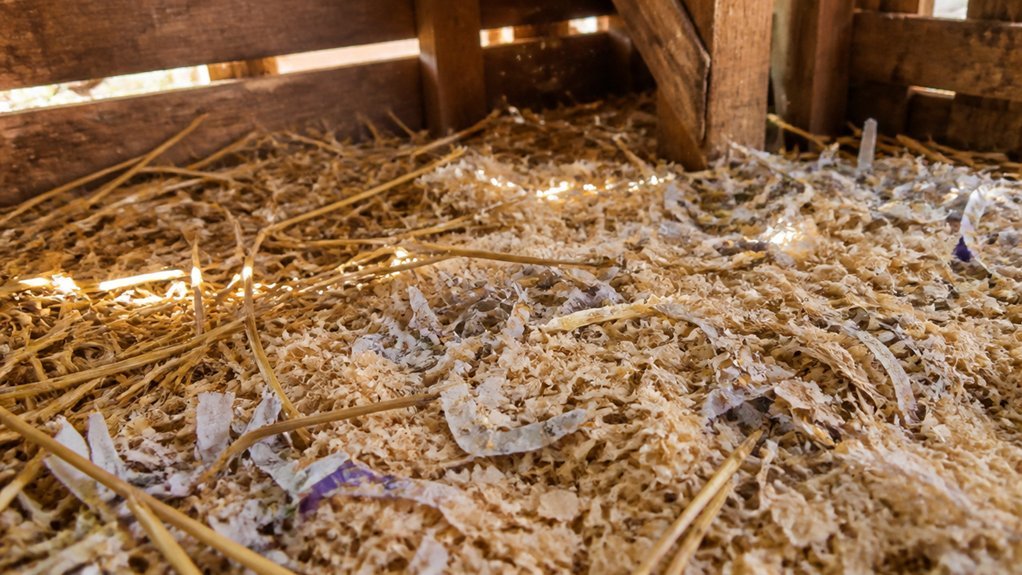
You should match bedding to the season. In winter, use fluffy, insulating bedding like straw or pine shavings to hold warmth and keep coop floors dry. In hot, wet weather, switch to cooler, fast-drying options such as pine shavings, chopped straw, hemp, or sand. Choose low-dust material that absorbs moisture, controls odor, and rakes out easily. The best choice also depends on your coop and flock, and a few simple tweaks can make it work better.
What Makes Good Chicken Bedding
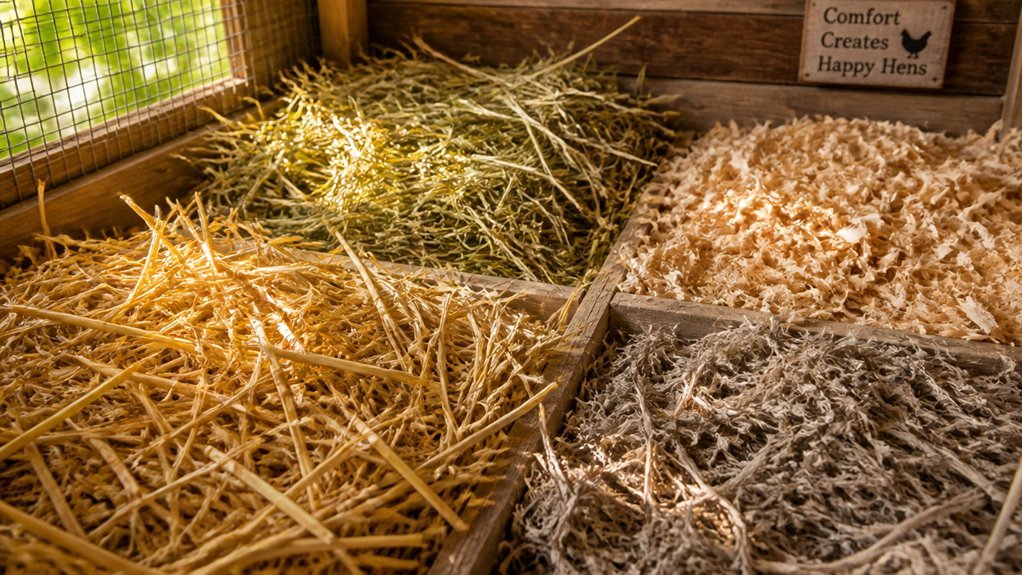
Good chicken bedding does more than cover the coop floor—it keeps your flock comfortable, dry, and healthy. You want bedding that absorbs moisture fast, controls odor, and stays fluffy enough for scratching and nesting. It should cushion feet, help reduce chill, and support cleaner eggs by keeping droppings separated from resting areas. Dust control is also crucial, as low-dust bedding minimizes respiratory issues for both birds and humans. You also need material that’s easy to rake, replace, and compost without creating extra work. Good bedding won’t pack down into a soggy mat, and it won’t trap excess humidity in the coop. If you can keep the floor dry and the air fresher, you’ll help lower stress and limit health problems. Choose bedding that fits your cleaning routine, climate, and flock size for the best results.
Best Chicken Bedding Materials
When you want extra warmth, straw can help keep your chickens cozy in colder weather. Pine shavings work well because they soak up moisture and keep the coop cleaner. In hot months, you can use sand for better airflow and easier cleanup. Using low dust bedding can also improve respiratory health for your flock during all seasons.
Straw For Warmth
Straw can be a smart choice if you want a bedding option that helps your chickens stay warmer in colder weather. You can spread it in a thick layer so it traps air and gives your flock extra insulation from chilly floors and drafts. It also lets chickens nestle down and conserve body heat overnight.
When you use straw, keep the coop dry and replace damp sections quickly, since wet bedding loses its cozy feel and can make birds uncomfortable. You should fluff it regularly to keep it loose and inviting. Straw works especially well in winter runs and nesting areas, where your chickens need a softer, warmer surface. Using low-dust bedding can further improve air quality and reduce respiratory irritants in the coop environment.
Choose clean, mold-free straw so you’re giving your flock a safer, more comfortable place to rest.
Pine Shavings Absorbency
Pine shavings are one of the most absorbent bedding choices for chickens, helping soak up moisture from droppings, spilled water, and damp coop floors. You’ll notice drier litter, less odor, and a cleaner coop when you use them correctly. Their light texture also makes daily tending easy. Additionally, using weatherproof materials can help maintain a dry environment year-round by protecting the bedding from rain and moisture intrusion.
- You spread a deep, even layer across the floor.
- You fluff so air can move through the bedding.
- You scoop wet spots before they spread.
- You replace soiled shavings when they lose their hold.
Because pine shavings trap moisture well, you can keep your flock’s living area fresher with less effort. They work especially well when you want reliable absorbency without heavy cleanup.
Sand For Summer
Sand can be a smart bedding choice in hot weather because it stays cool, drains fast, and helps your coop dry out after spills or summer humidity. You’ll also notice it doesn’t clump like wet litter, so you can scoop droppings quickly and keep airflow better. Use coarse construction sand, not fine play sand, to reduce dust and improve traction. Additionally, choosing durable, weather-resistant materials ensures the bedding remains effective throughout the season.
Choose Bedding for Winter Coops
When you choose bedding for winter coops, you need materials that trap warmth and keep your chickens comfortable. Straw, pine shavings, and similar options can add insulation while still letting the coop breathe.
You should also pick bedding that handles moisture well so damp spots don’t turn into cold, unhealthy conditions. Incorporating absorbent minerals, such as diatomaceous earth or volcanic ash, can help maintain a dry environment and support healthy plumage.
Winter Insulation Choices
For winter coops, you need bedding that helps trap warmth without turning damp or compacted, and straw is often the best all-around choice because its hollow stems add insulation while still allowing air to move through the coop.
You can also layer materials to create a snug floor your flock will appreciate.
- Use chopped straw for airy warmth.
- Add pine shavings under roosts for extra loft.
- Spread a thick base so feet stay off cold boards.
- Fluff bedding often to keep it soft and insulating.
When you choose well, your hens can settle in, conserve body heat, and stay more comfortable through cold nights. Aim for a deep, dry bed that cushions them without feeling heavy or packed. Proper bedding materials also help promote ventilation and reduce moisture buildup, ensuring a healthier environment inside the coop.
Moisture Control Bedding
If winter bedding gets damp, it can chill your flock fast, so you need a material that wicks moisture and dries quickly. You can choose pine shavings, chopped straw, or hemp bedding to help keep the coop dry.
Pine shavings absorb droppings well and let air move through the litter. Hemp holds moisture efficiently and breaks down cleanly, while chopped straw insulates without packing down too tightly. You should avoid bedding that mats easily, because wet clumps trap cold and smell bad.
Stir the bedding often, remove damp spots, and add fresh material before the floor feels soggy. Good moisture control also reduces ammonia, which protects your chickens’ eyes and lungs. When you pair dry bedding with ventilation, you’ll keep winter coops healthier and warmer.
Choose Bedding for Hot, Wet Coops

In hot, wet coops, you need bedding that dries fast and won’t pack down into a soggy mess. Choose materials that stay airy, such as pine shavings, chopped straw, or dry hemp, so your birds keep footing and airflow stays strong.
Using hardware cloth around your coop can also help improve ventilation and keep out predators, contributing to a healthier environment.
- Spread a thin layer under roosts.
- Stir it daily so damp spots don’t spread.
- Add fresh bedding after rain or heavy humidity.
- Remove any clumps that smell sour.
You’ll help the coop stay cooler by preventing heat-trapping sludge, and your hens won’t have to stand in wet litter.
Choose Bedding for Easy Cleanouts
When cleanup day rolls around, you’ll be glad you chose bedding that lifts out easily and breaks apart without much scraping. You save time when the material doesn’t pack into a stubborn mat or cling to the coop floor.
Light, loose bedding lets you scoop soiled spots fast, shake out reusable portions, and refresh the run without a full overhaul. It also helps you spot damp patches, droppings buildup, and hidden messes before they spread. Using bottomless drainage design bedding further enhances airflow and reduces moisture buildup, making cleaning easier and improving coop hygiene.
If you can remove it in manageable loads, you’ll clean more often and keep odors down. You’ll also reduce strain on your back and make the chore less miserable. Pick bedding that stays manageable after use, so every cleanup feels quicker, simpler, and far less messy.
How to Choose the Right Bedding
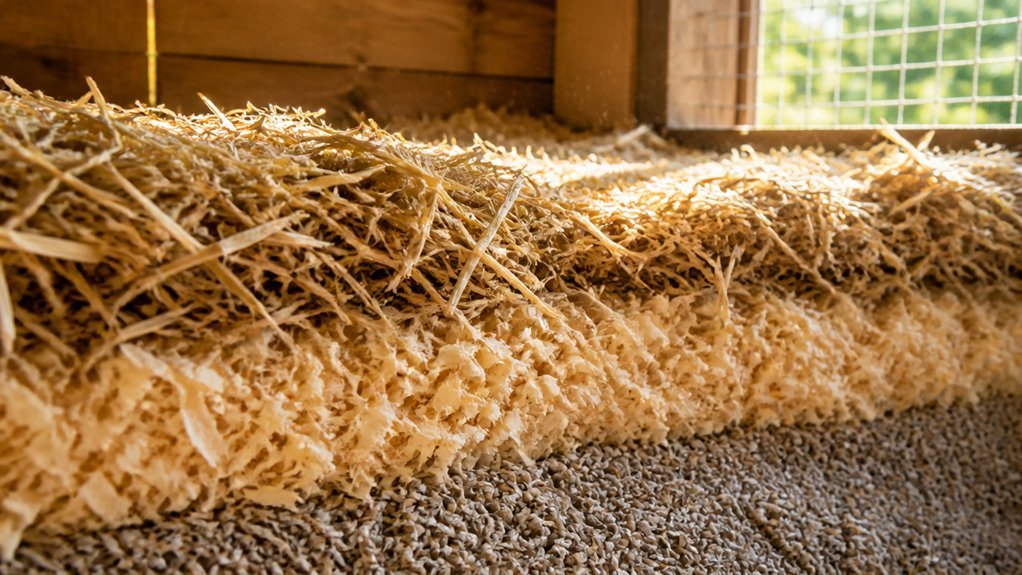
Picking the right bedding means balancing comfort, absorbency, cleanup, and cost. You should match the material to your coop, climate, and flock size so your birds stay dry and healthy.
If you want quick cleaning, choose a light, easy-to-rake option. If odors build fast, pick bedding that soaks up moisture well.
- Check climate: Use fluffier bedding in winter and cooler, drier material in summer.
- Watch dust: Choose low-dust bedding if your chickens sneeze or your coop is closed up.
- Think about labor: Pick bedding you can refresh without a full overhaul every week.
- Compare price: Buy enough for deep coverage, but don’t overspend on fancy materials.
- Consider ventilation: Proper airflow helps prevent odors and maintains a healthier environment for your flock.
Test one option, then adjust if it stays wet, smells, or mats down.
Frequently Asked Questions
How Often Should Chicken Bedding Be Replaced?
You should replace chicken bedding weekly in damp or dirty coops, and fully refresh it monthly; spot-clean daily to keep your flock healthy, reduce odor, and prevent pests, especially during wet seasons.
Can Bedding Help Control Coop Odors?
Yes, you can use bedding to control coop odors by keeping it dry, absorbent, and regularly fluffed or replaced. You’ll cut ammonia smells, improve airflow, and help your chickens stay healthier and more comfortable.
Is Bedding Safe for Baby Chicks?
Yes, you can use safe, dust-free bedding for baby chicks, like paper towels or pine shavings. You shouldn’t use slippery or moldy material, and you’ll need to keep it dry and changed often.
Does Bedding Affect Chicken Dust Bathing?
Yes, your bedding affects dust bathing a lot. You’ll see chickens bathe better in dry, loose, dusty material like sand or fine wood shavings. Wet, clumpy, or slippery bedding can stop natural bathing behavior.
Should Nesting Boxes Use Different Bedding?
Yes, you should use softer, cleaner bedding in nesting boxes, like straw or pine shavings, so your hens stay comfortable and eggs stay cleaner. You’ll want to avoid deep, dusty, or slippery materials there.
In Summary
Choosing the right bedding keeps your chickens healthier and your coop easier to manage. In winter, you’ll want materials that insulate and stay dry, while summer calls for bedding that controls moisture and heat. For wet coops, pick options that absorb well and won’t pack down fast. If you want easy cleanouts, go with bedding that’s simple to replace. Match the bedding to your coop’s needs, and your flock will thank you.



