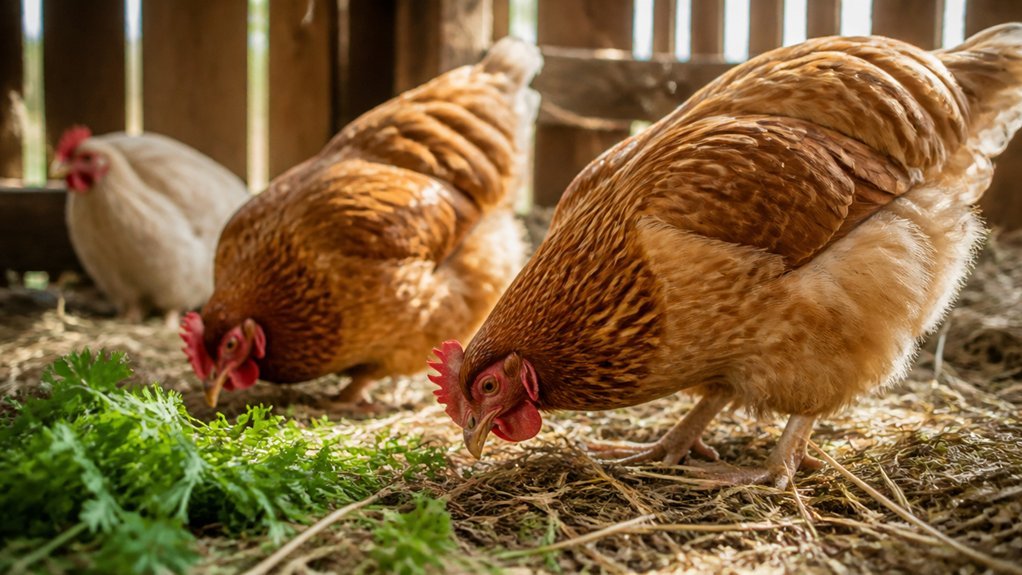
Seasonal parasite prevention matters for chickens because warm, damp, and crowded conditions help worms, mites, lice, and coccidia spread fast. You can protect your flock by checking feathers, skin, droppings, and comb color, then cleaning wet bedding, freshening litter, and improving airflow. Chicks and older hens need extra care during spring rains, summer heat, fall moisture, and winter crowding. Stay ahead of infestations, and you’ll see how to keep your birds healthier year-round.
Why Seasonal Parasite Prevention Matters

Seasonal parasite prevention matters because changing weather can quickly shift the risks your flock faces, from lice and mites in warmer months to worm pressure after wet or muddy conditions. You can’t rely on one routine all year, because parasite activity changes with temperature, humidity, and bedding conditions. When you stay ahead of those shifts, you protect your chickens’ weight, egg production, comfort, and immunity. You also catch small problems before they spread through the coop and demand harsher treatment. Using food-grade diatomaceous earth, which is safe for chickens when applied correctly, can be an effective part of your organic parasite control routine. Seasonal planning helps you inspect birds, refresh litter, and adjust management at the right time, not after damage starts. If you wait until your flock looks unwell, you’ve already lost valuable time. Regular prevention keeps your birds healthier and your flock easier to manage year-round.
Spring Parasite Risks in Chickens
As winter moisture gives way to warming ground and fresh growth, spring can bring a sharp rise in parasite pressure for your flock. You’ll often see more worm eggs, coccidia, lice, and mites survive in damp bedding, muddy runs, and newly active pasture.
Chicks and young pullets face the greatest risk because their immunity isn’t fully built yet. Watch for pale combs, slow growth, loose droppings, itchiness, and reduced egg laying.
You can lower exposure by cleaning coops, replacing wet litter, rotating ground areas, and keeping feed dry. Check droppings and skin regularly, and isolate any bird that looks off.
Using effective poultry dust products can help you control pests early on. Early spring action helps you catch problems before parasites spread through the flock.
Summer Heat and Parasite Outbreaks

Summer heat can trigger parasite outbreaks fast, especially when coops stay warm, damp, and crowded. You give mites, lice, and worms ideal conditions when shade, ventilation, and bedding care slip during hot spells.
Heat stresses your flock, so they spend more time resting and less time staying clean and active. Moist litter, spilled water, and heavy manure buildup help parasites multiply and spread through the coop.
You can reduce the risk by keeping bedding dry, improving airflow, and removing waste often. Offer fresh water in shaded spots and avoid overcrowding, since tight quarters let pests move quickly from bird to bird.
When you stay ahead of summer conditions, you make your chickens’ environment less inviting for parasites and far healthier overall. Incorporating poultry wound sprays that support skin healing and deter pecking can also help reduce injury-related vulnerabilities that attract parasites.
How to Spot Chicken Parasites
You can spot chicken parasites by checking for visible feather damage, like missing patches or ragged edges around the vents and neck. Watch for behavioral warning signs such as constant preening, restlessness, or reduced egg laying, and inspect droppings and skin for anything unusual. If you catch these clues early, you can act fast and protect your flock. Additionally, dust bath habits can help prevent pest infestations by naturally dislodging mites and lice from your chickens’ feathers.
Visible Feather Damage
Visible feather damage is often the first clue that parasites are bothering your flock, so check for broken, ragged, missing, or uneven feathers, especially around the vent, under the wings, and along the back.
You may also notice dull, frayed edges or patches where feathers have been chewed away. Part feathers gently and inspect the skin beneath for tiny insects, nits, or irritation. Seasonal shedding can look similar, but parasite damage usually appears irregular and concentrated in specific areas.
If you catch it early, you can treat the birds and clean the coop before the problem spreads. Using effective disinfectants and odor control products can help reduce the risk of parasite buildup in your coop environment.
- Check the vent area first
- Lift wings to inspect hidden spots
- Look for feather shafts with damage
- Compare birds for uneven loss
Behavioral Warning Signs
Feather damage can point to parasites, but birds often show the problem in their behavior before the feathers look badly affected. You may notice your chickens scratching more than usual, shaking their bodies, or pecking at themselves in short bursts. They can seem restless, spend less time foraging, or avoid the coop because constant irritation wears them down. Using dust baths regularly can help prevent clips and dirt from accumulating, which can harbor parasites. Some birds hunch, tuck their heads, or stop joining the flock at normal times. Watch for reduced egg laying, since discomfort can disrupt routine and stress the flock. If one bird keeps separating from the group or acts unusually irritable, inspect it right away and check your coop management. Quick action helps you catch infestations early and protect the rest of your birds.
Droppings And Skin Clues
Look closely at your chickens’ droppings and skin, because parasites often leave clues long before the problem becomes obvious. Check for watery, bloody, or mucus-coated droppings, which can signal internal worms or coccidia.
Then inspect skin and feathers for pale combs, scaly legs, tiny moving specks, or irritated patches around the vent and under wings. You can spot lice eggs stuck to feather shafts and mites hiding in creases at night.
- Run a gloved hand along the vent area.
- Compare droppings across birds for changes.
- Part feathers and watch for crawling pests.
- Separate any bird that looks itchy or weak.
- Using probiotics can help restore your flock’s gut health and support immunity after parasite treatments.
Quick checks help you catch trouble early, protect the flock, and stop parasites from spreading through your coop.
Signs Parasites Are Hurting Your Flock
You might notice a pale comb, which can signal your chickens aren’t getting what they need because parasites are draining them.
Watch for abnormal droppings, weight loss, feather damage, and constant itching, since these often mean the flock’s health is suffering.
If you catch these signs early, you can act fast and limit the damage.
Monitoring electrolyte balance is also important, as imbalances caused by parasite infestations can lead to dehydration and reduced vitality.
Pale Comb Color
When parasites are draining your chickens, one of the easiest signs to spot is a pale comb. You’ll usually notice the bright red color fading to pink, washed-out red, or even nearly white. That change happens because parasites stress the bird and can interfere with normal circulation and overall wellness.
Check the comb in good light and compare it with your flock mates, since some birds naturally run a bit lighter than others.
- Look for color loss after scratching or pecking starts
- Watch for a comb that feels cooler than usual
- Compare the comb with healthy birds nearby
- Treat pale color as an early warning, not a diagnosis
If you catch this early, you can respond quickly and protect the rest of your flock before the problem spreads.
Droppings And Weight Loss
Droppings can tell you a lot about parasite pressure, especially when they change from normal and firm to loose, watery, or unusually dark. You should check the coop floor, perches, and run daily so you can spot trends before they become serious.
Parasites often rob your chickens of nutrients, so you may notice slow but steady weight loss, a thinner body under the breastbone, and birds that seem smaller than the rest of the flock. If one bird keeps dropping weight while eating normally, don’t ignore it. Weigh that chicken, compare it with the others, and call your veterinarian or use a fecal test if needed. Quick action can stop the problem from spreading and help your flock bounce back faster.
Regular monitoring of seasonal parasite prevention can significantly reduce the risk of infestations and keep your flock healthier throughout the year.
Feather Damage And Itching
Feather damage and constant itching can be early clues that mites, lice, or other parasites are irritating your chickens. You might notice broken shafts, bare patches, or birds pecking themselves nonstop.
When parasites bite, your flock scratches more, loses feathers, and gets stressed, which can quickly weaken health and egg production. Check under wings, around the vent, and along the neck for tiny pests or dark specks. Act fast, because itching often worsens in warm, damp weather.
- Watch for frayed feathers
- Look for bald spots
- Notice excessive preening
- Inspect skin for tiny insects
- Using safe and effective traps, you can reduce rodent populations that may carry further pests which exacerbate parasite problems.
If you catch these signs early, you can treat the coop, clean bedding, and protect your flock before the problem spreads.
Keep the Coop Cleaner Year-Round
Keeping the coop clean year-round is one of the simplest ways to reduce parasite pressure before it builds up. You should remove wet bedding, spilled feed, and droppings often because these spots give mites, lice, and worm eggs a place to survive.
Scrape roosts, refresh nesting boxes, and sweep corners so debris can’t accumulate. Good airflow also helps because damp, stale air lets pests thrive. Wash feeders and waterers regularly, and keep feed sealed to discourage insects and rodents that can carry parasites.
If you spot cracks, repair them fast so pests have fewer hiding places. A tidy coop won’t eliminate every threat, but it lowers the chances that parasites spread quietly through your flock.
When to Deworm Chickens and Use Dust Baths
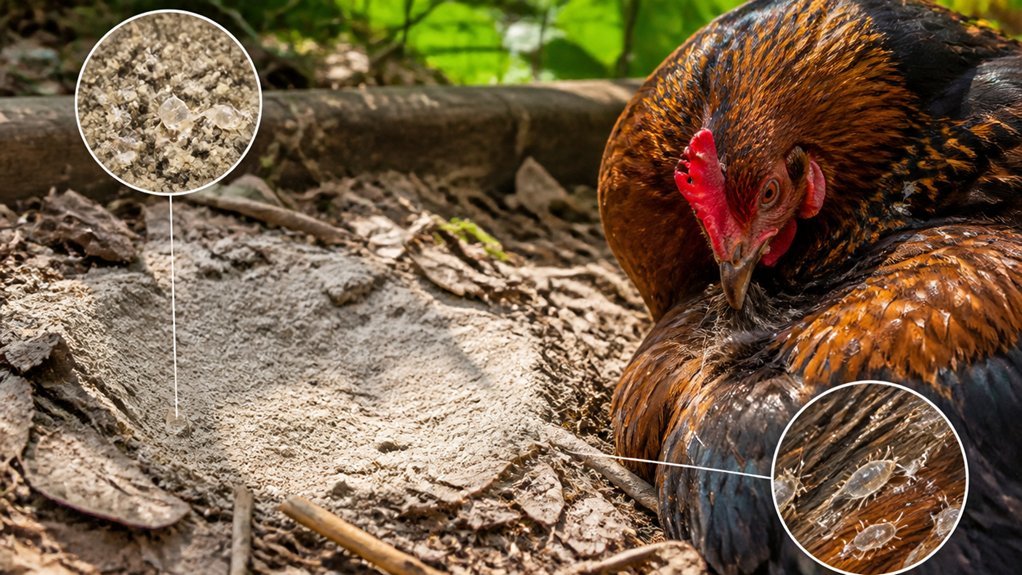
When should you deworm your chickens? You should do it after a vet confirms worms, or when hens look pale, lose weight, or drop egg production. Deworming works best in cool seasons, when birds face stress from muddy runs or crowded coops. Use the exact product and dose your vet recommends, and treat the whole flock together.
- Watch for dull combs and thin bodies.
- Check droppings for changes.
- Give dust baths when birds seem itchy.
- Let chickens bathe in dry, loose soil or wood ash mixes.
Dust baths help chickens groom naturally and shake off pests. Offer a sheltered bath area so rain won’t ruin it, and refresh the material often.
How to Prevent Mites, Lice, and Worms
You can prevent mites by keeping the coop clean, dry, and well-ventilated, then checking your birds often for early signs of irritation.
For lice and worms, use regular inspections, rotate bedding and pasture areas, and follow a steady worm-control plan based on your flock’s needs. When you act early and stay consistent, you’ll cut parasite problems before they spread.
Preventing Mite Infestations
Mite infestations can spread fast in warm, crowded, or damp coop conditions, so regular prevention is the best defense. You should inspect roosts, nesting boxes, and cracks weekly, because mites hide in tiny spaces.
Keep bedding dry and replace it often, since moisture invites pests. Clean spills, improve ventilation, and reduce clutter so mites have fewer places to thrive.
Dust birds and coop joints with a poultry-safe product when needed, following label directions carefully. Quarantine new birds before adding them to your flock, and check them for crawling pests.
- Scrub roosts and corners routinely
- Use fresh, dry bedding
- Watch birds for itching or scabs
- Isolate newcomers before mixing them
Worm Control Strategies
Parasite prevention doesn’t stop at mites and lice, because worms can also weaken your flock and spread quietly through contaminated ground, droppings, and shared resources. You can reduce risk by rotating runs, keeping bedding dry, and moving feeders and waterers off the ground.
Clean droppings often, and don’t let chickens scratch in muddy or crowded spots. Quarantine new birds before you mix them in, and use a fecal test or vet guidance before deworming so you treat the right problem.
If your flock free-ranges, limit access to high-risk areas after rain. Support recovery with clean water, balanced feed, and good sanitation.
Watch for pale combs, weight loss, and dropping production, then act quickly to protect the flock.
Natural Parasite Prevention for Chickens
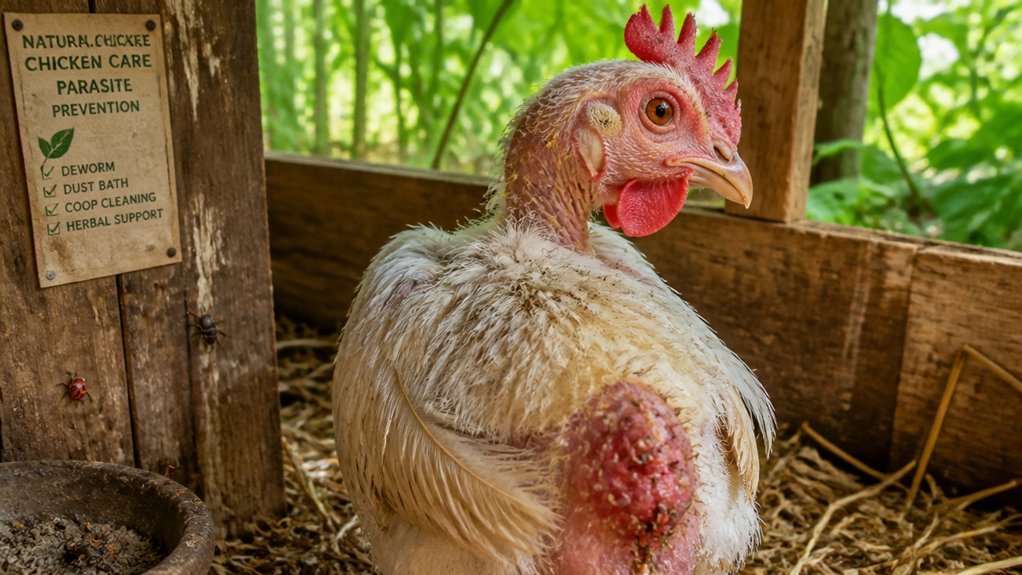
Natural parasite prevention starts with keeping your flock’s environment clean, dry, and less inviting to pests. You can lower parasite pressure by renewing bedding often, removing damp litter, and clearing spilled feed that attracts insects and rodents.
Rotate outdoor areas so chickens don’t peck the same parasite-heavy ground all season. Support strong immunity with balanced feed, fresh water, and access to sunlight and dust bathing.
- Keep coops ventilated and clutter-free
- Replace wet bedding before it builds up
- Use sand or dry soil in run areas
- Inspect birds regularly during handling
You’ll also benefit from hardy herbs and safe natural deterrents around the coop. These habits won’t replace careful observation, but they can help your flock stay comfortable and resilient without harsh methods.
When to Treat Chickens for Parasites
Even with good prevention, you should treat chickens for parasites as soon as you notice warning signs like restless behavior, pale combs, weight loss, dirty vents, or reduced egg production. Don’t wait for the flock to worsen; parasites spread fast and weaken birds quickly.
Check droppings, inspect feathers, and look for mites around the vent, under wings, and on roosts. If you confirm an infestation, act immediately with the right treatment for the parasite type, and follow label directions carefully.
Clean the coop, replace bedding, and remove manure to reduce reinfection. Recheck your birds after treatment so you can catch any lingering issues early.
Quick action helps protect egg laying, growth, and overall flock health, especially when seasonal stress makes chickens more vulnerable.
Protect Chicks and Older Hens Seasonally
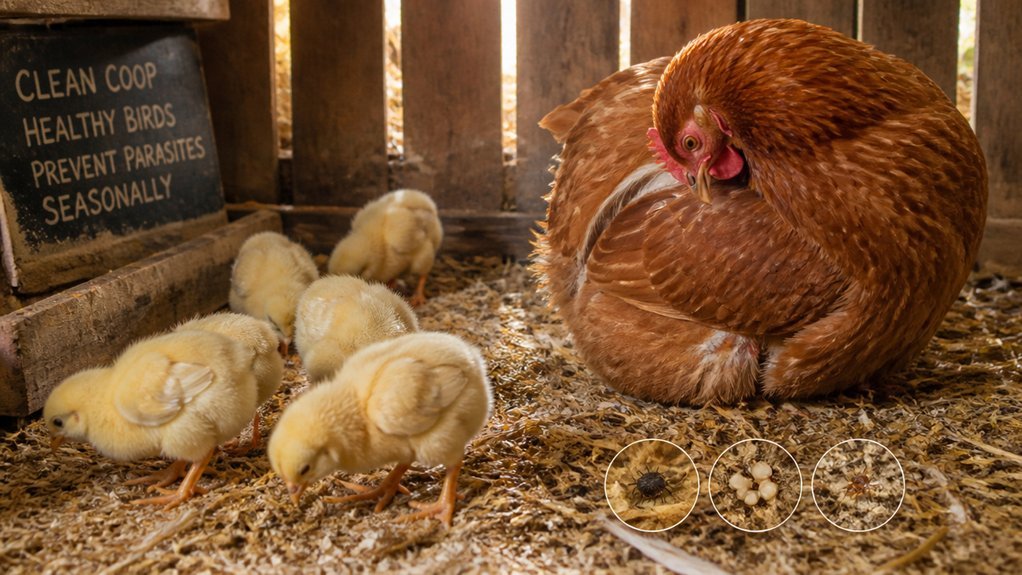
Chicks and older hens need extra protection because parasites hit them hardest during seasonal changes. You should keep chicks warm, dry, and separated from damp litter, since their immune systems aren’t ready for heavy parasite pressure.
For older hens, check weight, comb color, and droppings more often, because they can decline fast when parasites surge. Clean coops after wet spells, replace soiled bedding, and limit contact with mud where parasite eggs can build up.
During molt, spring rain, and fall chill, stay alert for scratching, pale combs, and slow growth.
- Shield chicks from damp bedding
- Watch older hens for early weakness
- Remove wet litter quickly
- Inspect birds after weather shifts
Make a Year-Round Prevention Plan
To keep parasites from gaining a foothold, you should build a simple year-round plan and adjust it with the seasons. Check droppings, skin, and feathers weekly, then ramp up inspections after rain, heat, or muddy weather. Keep litter dry, rotate pasture, and clean feeders often. Use this quick guide:
| Season | Focus | Action |
|---|---|---|
| Spring | Rebound | Clean coop deeply |
| Summer | Heat | Shade and inspect |
| Fall | Moisture | Replace wet bedding |
| Winter | Crowding | Reduce stress |
Track findings in a notebook, so you spot patterns fast. If you see mites, lice, or worms, treat promptly and repeat sanitation. With steady habits, you’ll lower parasite pressure and help your flock stay productive all year.
Frequently Asked Questions
How Do I Safely Introduce New Chickens Without Spreading Parasites?
Quarantine new chickens for 30 days, inspect droppings and skin, treat only if needed, and keep them separate from your flock. You’ll reduce parasite spread by cleaning gear, changing boots, and monitoring everyone closely.
Can Wild Birds Bring Parasites Into My Chicken Flock?
Yes, wild birds can carry mites, lice, worms, and disease onto your property. You can reduce risk by covering feed, cleaning spills, limiting contact, and keeping your flock’s area dry and secure.
Do Free-Range Chickens Need Parasite Prevention Too?
Yes, you do. Free-range chickens still pick up worms, mites, and lice from soil, droppings, and wildlife. You can lower risk with regular checks, clean bedding, rotation, and targeted treatments when needed.
What Parasites Can Humans Catch From Chickens?
You can catch Salmonella, Campylobacter, and some intestinal worms from chickens. You’ll lower your risk by washing hands after handling birds, cleaning coops well, and keeping eggs and droppings away from food.
How Long Do Parasites Survive in Empty Coops?
You’ll find parasites survive weeks to months in empty coops, depending on species, moisture, and temperature. You should clean, dry, and disinfect thoroughly, because eggs and mites can linger and reinfest birds later.
In Summary
Seasonal parasite prevention keeps your flock healthier all year long. When you stay ahead of spring outbreaks, summer heat stress, and hidden infestations, you protect your chickens from weight loss, poor laying, and lasting damage. Watch for warning signs, use natural prevention methods, and treat promptly when needed. Give chicks and older hens extra care, and build a year-round plan. A little prevention now helps your birds thrive through every season.