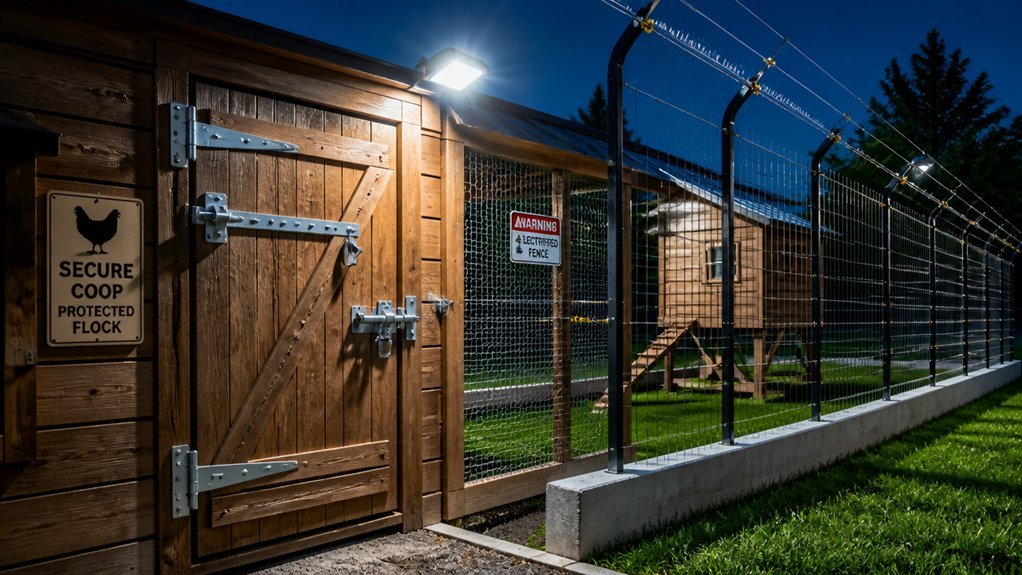
You can protect your chickens from raccoons by locking them in a sturdy coop at dusk, sealing every gap with 1/2-inch hardware cloth, and using predator-proof latches with long screws. Clear feed, scraps, and clutter that attract raccoons, and trim nearby branches so they can’t climb in. Add motion lights, alarms, or electric fencing for extra security. If you keep going, you’ll pick up a few more smart ways to harden your flock’s defenses.
Secure the Coop Against Raccoons
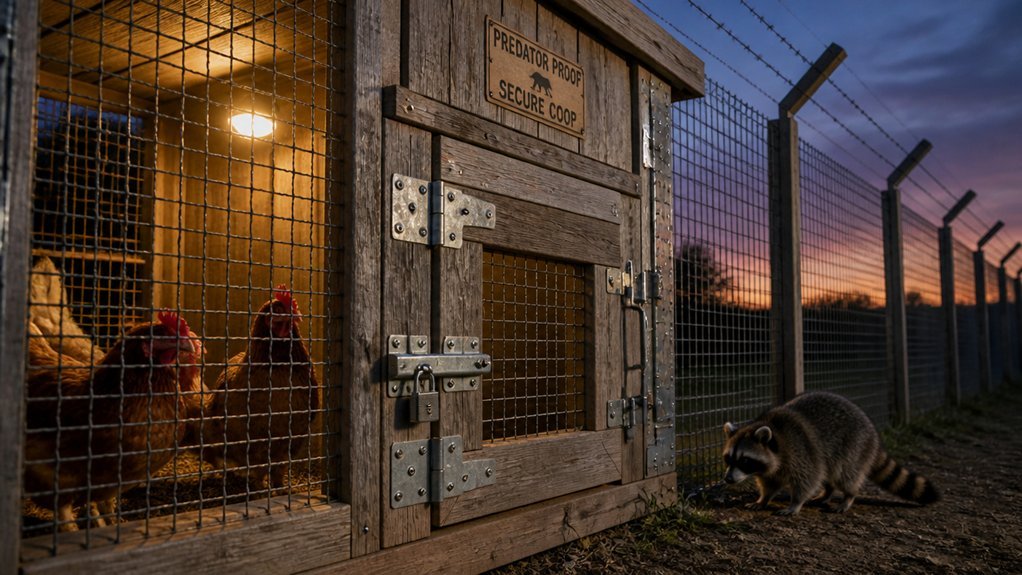
To keep raccoons out, you need a coop that gives them no easy way in. You should inspect walls, doors, vents, and corners for gaps, then seal every opening with hardware cloth, not chicken wire. Use sturdy latches that raccoons can’t twist open, and add a second lock if needed. Incorporate self-locking gate latches that automatically secure upon closing to reduce the chance of partial openings. Reinforce weak panels with wood or metal so they can’t pry them apart. Cover windows and vents with tight mesh, and fasten it with screws and washers for strength. Check the coop after storms or wear, because even a small hole invites trouble. Keep the structure solid, dry, and well-maintained so raccoons can’t find an easy weakness to exploit.
Lock Chickens Up at Night
At dusk, you should lock your chickens inside the coop, since raccoons are most active at night and can strike quickly when birds are left exposed. Make this a strict routine so your flock learns when to settle in.
Before dark, count every bird, close the door, and check that the latch is fully set. If you wait until you hear movement outside, you’re already too late.
- Bring birds in before twilight.
- Verify each chicken is accounted for.
- Shut the coop promptly and calmly.
- Inspect the closure twice before leaving.
Consistency matters because raccoons test weak habits as easily as weak doors. When you end the day the same way, you cut risk and keep your flock safe.
Ensuring your coop has secure predator protection features is essential for nighttime safety.
Block Raccoons From Climbing In
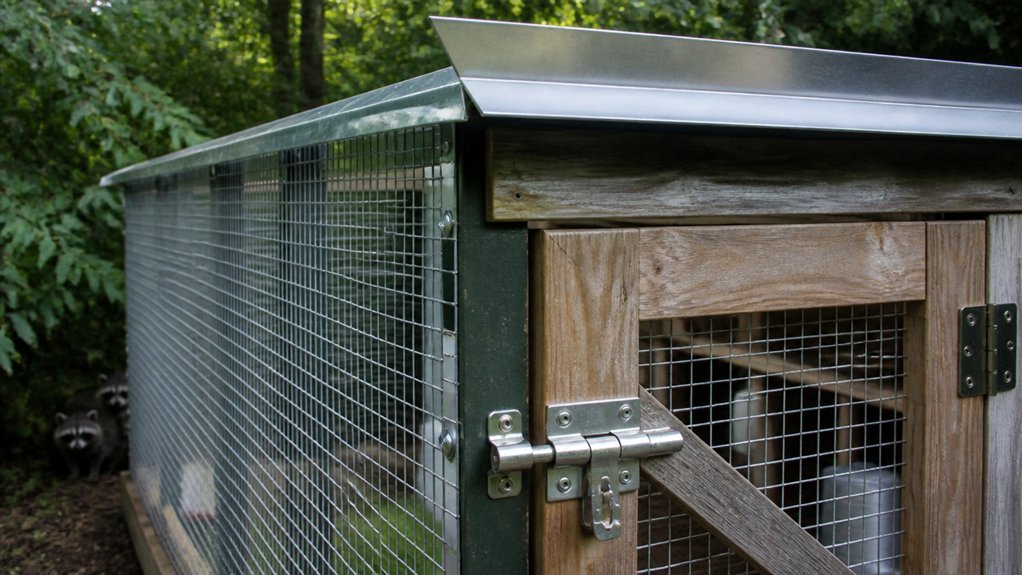
Raccoons can climb surprisingly well, so you need to stop them from using posts, fence rails, or nearby branches as a ladder into your coop. Trim back limbs that hang over the run, and keep the area around the enclosure clear so they can’t leap or scramble in. If your coop sits on raised legs, wrap the supports with smooth metal flashing or pipe sleeves to make gripping harder. Using hardware cloth with a 1/2 inch mesh and 19 gauge wire is highly effective, as it prevents raccoons from squeezing through or tearing the fencing. For wire runs, add an inward-angled overhang or apron at the top to block their reach. Check for gaps where fencing meets the roof and seal them with hardware cloth, not chicken wire. You should also inspect corners, hinges, and door frames, because raccoons can squeeze through weak spots and force their way inside.
Remove Food That Attracts Raccoons
Even a secure coop can draw raccoons if food is left out, so you should remove anything that smells like an easy meal. Pick up feed before dusk, and don’t let cracked grain sit overnight. Clean spills right away, because raccoons follow scent trails fast. Using pest-proof feeders can help reduce leftovers and mess, further discouraging foraging raccoons. Store supplies in tight bins that they can’t pry open, and keep treats sealed after each use. You should also check nearby compost, pet dishes, and garden scraps, since raccoons raid every accessible source. When you cut off food rewards, you make your coop far less inviting and help protect your flock without extra hassle.
Use Lights, Latches, and Alarms
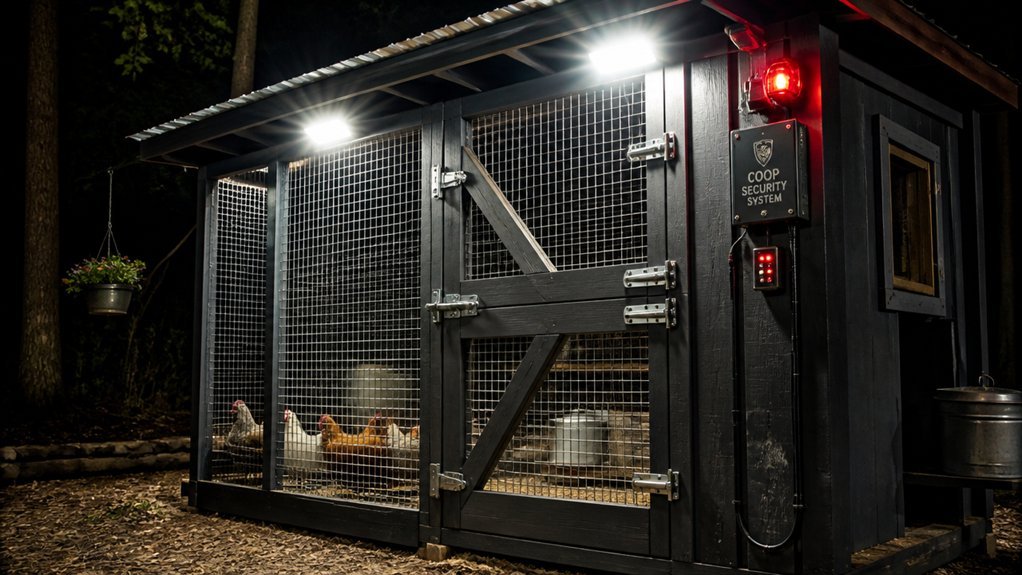
You can start by installing motion-activated lights around your coop to startle raccoons before they get close. Use predator-proof latches on every door and access point so they can’t pry their way inside. If you want extra security, add a coop alarm system that alerts you the moment something tries to break in. Incorporating predator deterrent lights with flashing LEDs that mimic eyes or fire can further enhance your defense by providing a humane and effective visual warning against nocturnal predators.
Motion-Activated Lights
Motion-activated lights can startle raccoons and make your coop less inviting, especially when you pair them with sturdy latches and a loud alarm. You should mount bright fixtures near doors, runs, and dark corners so unexpected movement triggers a quick flash. That burst of light may interrupt a raccoon’s approach and give you time to respond. A well-placed light can also help you spot any potential threats early, increasing your overall security. Weatherproof, battery-backed units are essential to ensure reliable operation in various weather conditions. Test the sensor range at night to confirm the lights activate appropriately without false triggers. Keep brush trimmed so nothing masks the beam. Use the lights as part of a nightly routine, not as your only defense. When you check the coop after dusk, the sudden glow helps you spot trouble fast. Consistent lighting can turn your yard into a place raccoons want to avoid.
Predator-Proof Latches
Strong latches are the backbone of raccoon defense, because clever predators can pry open weak doors and flimsy hasps in minutes. You should choose heavy-duty barrel bolts, two-step latches, or locking hasps that require a firm twist and lift. Mount them with long screws that bite deep into the frame, not short hardware that wobbles loose. Check every door, window, and clean-out panel, since raccoons test weak spots fast. If you use a gate latch, add a carabiner or padlock for extra resistance. Keep hinges tight, and replace bent metal right away. You’ll protect your flock better when you close the coop fully each night and verify the latch catches cleanly. Good hardware won’t stop every threat, but it makes forced entry far harder and buys you valuable time. Additionally, choosing secure fencing made from durable materials like galvanized or double-spiked posts can help prevent predators from jumping or climbing into your coop.
Coop Alarm Systems
When raccoons approach, a little early warning can stop a lot of damage. You can protect your flock with coop alarm systems that trigger lights, sounds, and motion alerts before a thief gets close.
Set motion lights around the run, and raccoons often bolt from the sudden glare. Add a loud alarm or sensor chime to make your coop less inviting at night.
- Place lights where shadows hide.
- Use latches that connect to the alarm.
- Test batteries weekly.
- Reset alerts after storms.
You should also check wiring, since loose connections can fail when you need them most. Pair alarms with strong locks, and you’ll create layers of defense that make your chickens harder to reach and your coop much riskier for raiders. Incorporating electric fencing can further increase protection against predators, ensuring your flock stays safe even during breaches.
Protect Free-Range Chickens
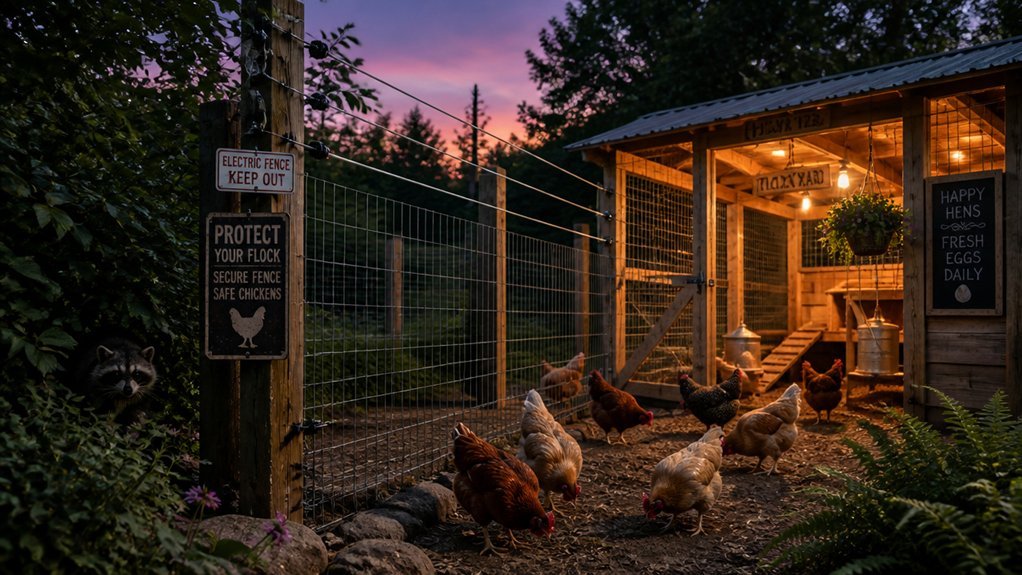
If you let your chickens roam during the day, you need to stay one step ahead of raccoons, since free-ranging birds are easiest to ambush. You should supervise them whenever possible, especially near dusk, when raccoons start hunting.
Keep the flock close to your house, barn, or fenced yard, where you can hear trouble fast. Move feed and water into secure spots so you don’t lure predators into open ground.
Use portable fencing or chicken tractors to limit where birds forage, and rotate their grazing area to reduce blind spots. Trim tall weeds, brush, and junk piles that give raccoons cover.
Train your chickens to return to a coop or pen with treats before dark, so they’re already safe when night falls. Incorporate durable fencing to help prevent raccoon intrusions and ensure your flock’s safety.
What to Do After a Break-In
After a raccoon break-in, act fast to check for injured birds, broken fencing, and any gaps the predator used to get in.
After a raccoon break-in, quickly inspect for injuries, damaged fencing, and any openings it used to get inside.
Move the flock to a secure pen, then count every chicken so you know who’s missing.
Treat wounds right away and call a vet if you see deep bites, shock, or heavy bleeding.
- Lock down the coop with stronger latches and hardware cloth.
- Remove feed, eggs, and trash that can lure raccoons back.
- Search nearby brush for hiding birds or signs of repeated visits.
- Set traps only if local laws allow, or contact wildlife control.
Afterward, watch your flock closely for stress, reduced laying, and nighttime panic.
Implementing durable garden netting to secure vulnerable areas can help prevent future intrusions.
Better protection now can stop another attack later.
Frequently Asked Questions
How Can I Tell if Raccoons Are Near My Chicken Coop?
You can spot raccoons by muddy paw prints, tipped feed, torn wire, noisy nighttime activity, and missing eggs. Check for droppings, scattered feathers, and scratch marks around your coop regularly.
What Chicken Breeds Are Safest Around Raccoons?
You’ll find no breed is truly safe, but you can choose alert, flighty birds like Leghorns, Araucanas, or Easter Eggers; they spot danger fast, roost well, and won’t stay outside after dusk.
Can Guard Dogs Help Protect Chickens From Raccoons?
Yes, you can use guard dogs to deter raccoons, but you’ll need a calm, trained dog that won’t chase or harm chickens. You should supervise introductions and keep coops secure for real protection.
Are Electric Fences Safe for Chickens and Other Pets?
Yes, you can use electric fences safely if you install and maintain them correctly. You’ll need proper grounding, low enough voltage, and clear warnings. Keep pets trained away, and check regularly for damage or exposed wires.
How Often Should I Inspect Coop Damage for Raccoon Entry?
You should inspect your coop daily, especially after storms or at night’s end. Check locks, wire, corners, and roofing for gaps, chew marks, or loosened boards, so raccoons can’t exploit damage quickly.
In Summary
By securing your coop, locking your chickens up at night, and blocking climbing spots, you’ll make it much harder for raccoons to strike. If you keep feed cleaned up, use strong latches, lights, and alarms, and stay alert with free-range birds, you’ll give your flock the best protection. If a break-in happens, act fast, repair the damage, and strengthen weak points so it doesn’t happen again.