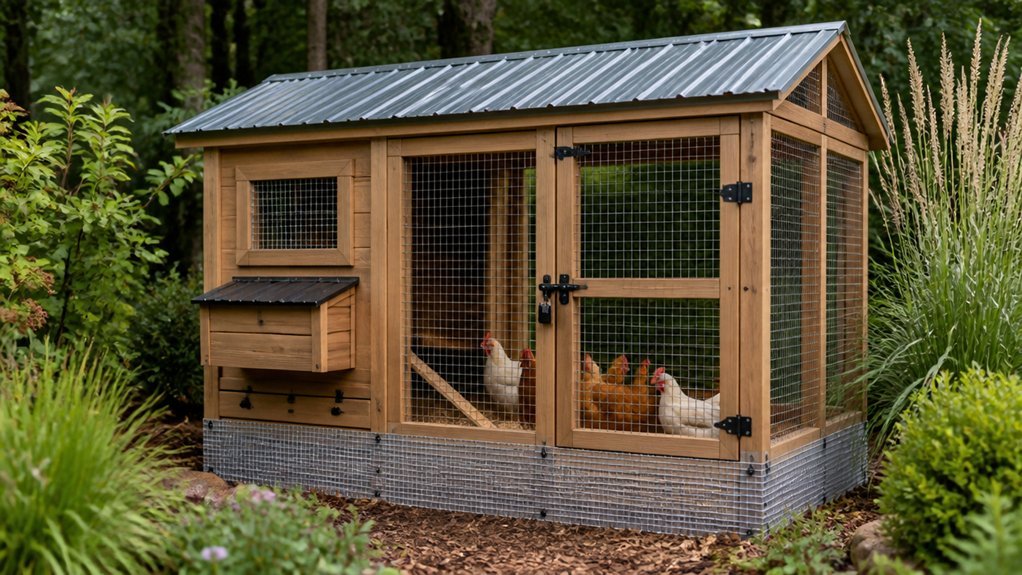
You can protect your chickens from predators with a few DIY upgrades. Walk the run often and fix gaps, loose boards, bent wire, and weak latches right away. Use tall fencing, bury it 12 to 18 inches deep, and bend the bottom outward to stop diggers. Cover the top with mesh or a roof to block hawks. Add motion lights, alarms, and reflective decoys, and keep brush cleared so predators have fewer hiding spots, then see what else helps.
Check Your Chicken Run for Weak Spots
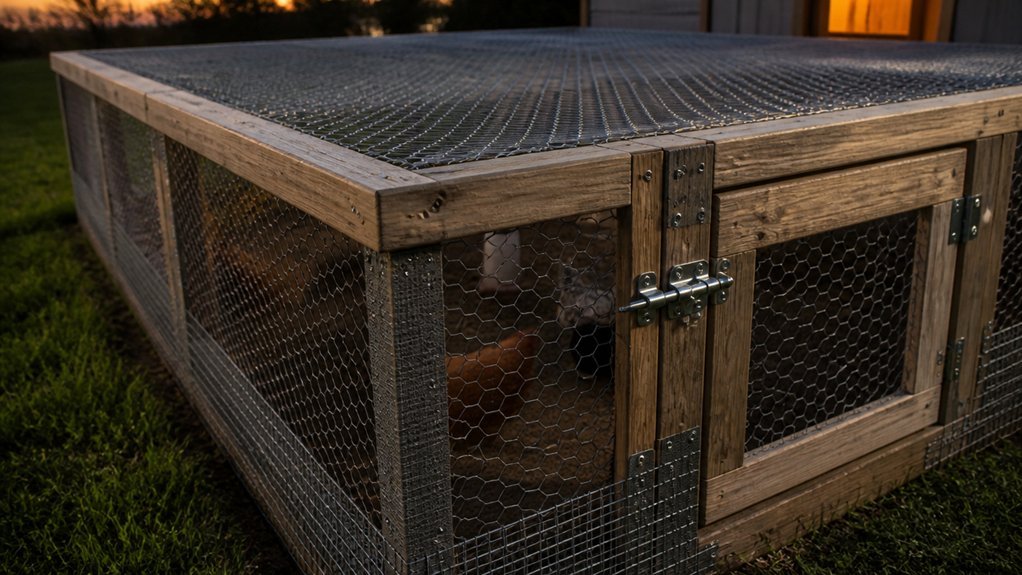
Start by walking the entire chicken run and looking for anything a predator could exploit. Check the ground line for gaps, loose boards, bent wire, and soft spots where digging might start. Press around posts and corners to see if anything wobbles. A thorough inspection should also include assessing the fence height and gaps, ensuring they are sufficient to prevent small animals and predators from squeezing or flying over. Look closely at latches, hinges, and door edges, because even small openings can invite trouble. Scan for holes under feed bins, torn mesh, and places where brush or clutter gives cover. If you spot rot, rust, or sagging sections, fix them right away. Trim back overgrown plants near the run so you can see threats clearly. Keep a notebook of problems you find, then inspect again after storms or heavy use. Consistent checks help you catch weaknesses before predators do.
Build a Strong Chicken Run Fence
You need a tall fence, since height makes it harder for predators to jump in. Bury the bottom edge several inches underground to stop digging animals from getting inside. With both height and buried barriers, you’ll give your chicken run much better protection. Using electric poultry netting can enhance security by delivering humane shocks to deter predators effectively.
Fence Height Matters
A chicken run fence only works if it’s tall enough to keep predators out and discourages your birds from flying over it. Aim for at least 6 feet if you keep active breeds, and go higher when your flock includes strong flyers. You’ll protect more birds when you match fence height to their behavior and your local threats. Proper fence height and secure anchoring are essential to prevent predators from finding weak points or jumping over the barrier.
Bury Predator Barriers
Even the strongest fence can fail if predators dig underneath, so bury a barrier along the run’s perimeter to stop tunneling. You can use welded wire, hardware cloth, or galvanized sheet metal, then bury it 12 to 18 inches deep. A properly chosen mesh size ensures small predators cannot squeeze through or exploit gaps in the barrier. Angle the bottom outward in an L-shape if you want extra protection, because digging animals hit the buried edge and give up. Secure the barrier to your fence posts with heavy staples or screws, and overlap seams so there aren’t any gaps. Check for loose soil, erosion, or holes after storms, since predators exploit weak spots fast. If you keep the barrier tight and continuous, you’ll make your chicken run far harder to breach and keep your flock safer day and night.
Bury Wire to Stop Digging Predators
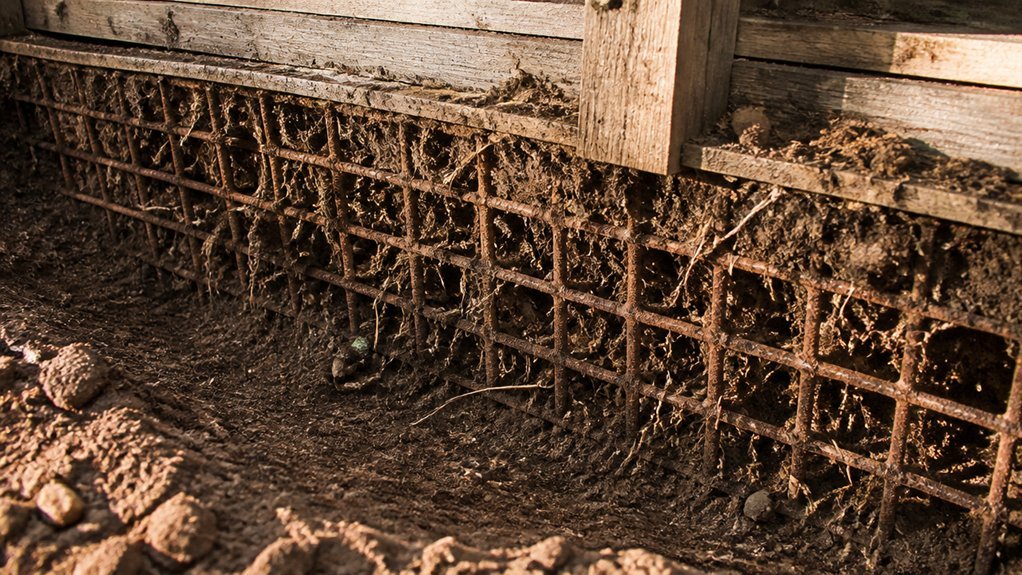
To keep digging predators like foxes, raccoons, and dogs from tunneling under your coop, bury wire at the base of the run or fence. Use hardware cloth or welded wire, not flimsy chicken wire, because strong jaws and claws can tear through it.
Dig a trench 12 to 18 inches deep, then bend the wire outward in an L-shape so animals hit a barrier when they try to dig. Secure it tightly to posts and overlap seams so there’s no gap. Cover the buried edge with soil, gravel, or rocks to hold it in place.
Check the perimeter often for loose spots, erosion, or fresh digging. When you reinforce weak points early, you make your coop far harder to breach and keep your flock safer. Weather-resistant materials ensure your protective barrier withstands the elements over time.
Cover the Run to Block Hawks and Owls
You can keep hawks and owls out by covering your run with a solid roof or strong overhead panels. If you want lighter protection, shade cloth can also shield your flock while still letting in air and sunlight. A full cover gives you a safer run and helps your chickens stay calmer outside, especially when combined with secure predator protection measures.
Solid Roof Materials
A solid roof over the run gives your flock a strong defense against hawks, owls, and other aerial predators. You can build it with corrugated metal, polycarbonate panels, or exterior-grade plywood topped with waterproof sheeting. Choose materials that shed rain, resist rot, and stand up to wind.
Fasten every panel tightly to sturdy framing so predators can’t slip through gaps or pry edges loose. You should pitch the roof slightly to move water away from the coop and keep bedding dry. If you live in a hot climate, use light-colored roofing to reduce heat buildup.
Check screws, seams, and supports often, because a weak spot invites trouble. A durable roof doesn’t just block attacks; it also keeps your run cleaner, drier, and safer year-round.
Shade Cloth Coverage
Shade cloth can be a simple, affordable way to make your chicken run less visible and less inviting to hawks and owls. You can stretch it over part or all of the enclosure to break up overhead sightlines and give your birds more cover. Choose a durable, UV-resistant cloth with small enough openings to limit a predator’s view while still allowing airflow and light. Secure it tightly with clips, zip ties, or wire so wind can’t lift it. Check the edges often, because sagging fabric can trap water or create gaps. Proper mesh material selection ensures the cloth remains tear-resistant and effective over time. Shade cloth won’t stop climbing predators, but it adds another barrier and makes swooping attacks harder. Pair it with strong fencing and a roof for better protection.
Lock Down Gates, Latches, and Doors
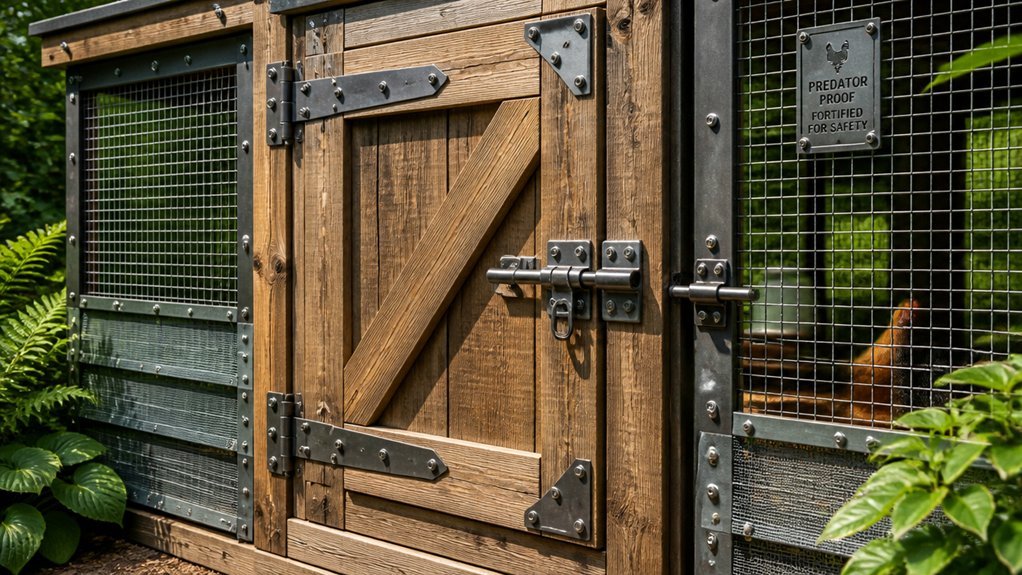
Even the strongest coop won’t keep predators out if gates, latches, and doors have weak spots, so check every entry point and secure it with hardware raccoons, foxes, and dogs can’t easily open.
Replace flimsy hooks with predator-proof slide bolts, carabiners, or double-action latches, and mount them with screws that won’t pull loose. Test each door by shaking, tugging, and lifting to spot gaps or warping. Add sturdy hinges and make sure gates close flush without dragging. If a latch can be flipped by a paw or snout, upgrade it.
Using locks with raccoon-resistant locking features such as enclosed or shielded mechanisms can further prevent tampering. You should also keep spare hardware on hand so you can fix damage fast after storms or daily wear. A tight, well-fitted closure system stops quick break-ins and gives your flock better protection every night.
Use Motion Lights and Decoys
Once your coop is sealed up, add motion-activated lights around the run, gate, and any dark approach paths to startle predators before they get close. You’ll make nighttime scouting risky, especially for raccoons, foxes, and stray dogs. Pair lights with simple decoys so birds and mammals can’t predict your yard.
| Tool | Effect |
|---|---|
| Motion light | Triggers surprise and exposure |
| Owl decoy | Suggests danger overhead |
| Reflective tape | Breaks up stealth routes |
Move decoys every few days so predators don’t learn they’re fake. Use weatherproof models and test sensor range after storms or snow. Don’t rely on lights alone; they work best when you keep grass short and remove hiding spots. Together, these cheap upgrades can discourage repeated visits and give your flock a safer, calmer night.
Frequently Asked Questions
Which Chicken Breeds Are Most Predator-Resistant?
Australorps, Rhode Island Reds, Leghorns, and Plymouth Rocks usually handle predators best. You’ll still need sturdy coops and supervision, because no breed is fully predator-proof, but these birds stay alert, hardy, and quick.
How Often Should I Inspect Predator Protection Measures?
Inspect your predator protection measures weekly, and after every storm or repair. You should check locks, fencing, and mesh daily if threats are active, because predators can exploit tiny weaknesses fast.
Do Guard Animals Help Protect Chickens From Predators?
Yes, you can use guard animals like dogs, geese, or donkeys to deter predators. They’ll patrol, alarm, and discourage threats, but you still need secure fencing, locked coops, and regular checks for best protection.
What Signs Show a Predator Has Visited the Coop?
You’ll notice disturbed bedding, scattered feathers, scratched wire, droppings, bite marks, missing eggs, and stressed birds. You might also see holes, torn fencing, or footprints nearby. Check at dawn for fresh evidence.
Can Free-Ranging Chickens Stay Safe From Predators?
Yes, they can, but you shouldn’t assume they’re safe. You can reduce risk with supervised ranging, strong fencing, shelter access, and daytime vigilance, yet hawks, dogs, and coyotes still threaten them.
In Summary
By checking for weak spots, building a sturdy fence, burying wire, and covering your run, you’ll make life much harder for predators. Don’t forget to lock every gate, latch, and door each night, and add motion lights or decoys for extra protection. These simple DIY steps can keep your chickens safer and give you peace of mind. Stay consistent, and you’ll build a stronger, safer coop setup over time.