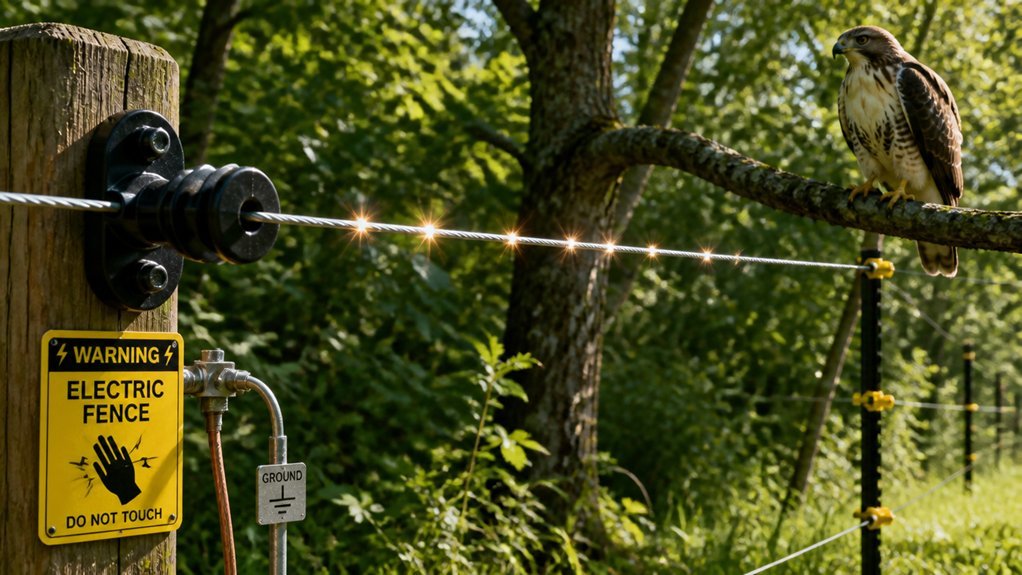
You use electric fencing to give your chickens a live predator barrier that shocks raccoons, coyotes, foxes, dogs, and other intruders before they can get in. It also helps keep your flock contained, so they’re less likely to wander into danger. Compared with chicken wire, it’s a stronger long-term deterrent and can save you from repeated losses. If you want the best setup, there’s more to know about height, grounding, and maintenance.
How Electric Fencing Protects Chickens
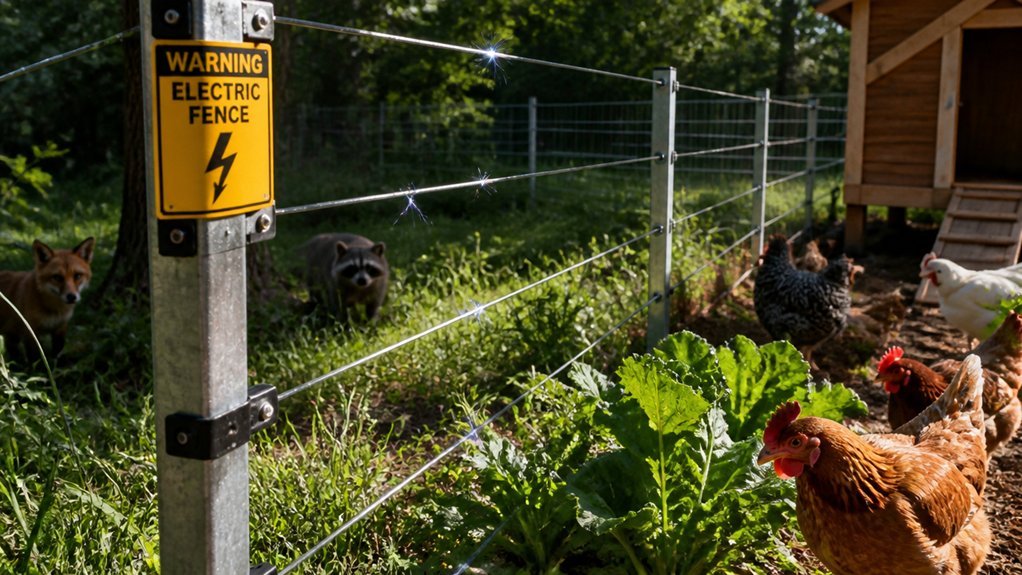
Electric fencing protects your chickens by creating a physical and psychological barrier that most predators quickly learn to avoid. When you install it around the coop or run, you add a live wire that delivers a brief shock on contact, teaching animals to back off fast.
You also keep your flock contained, so they can’t wander into danger or tempt trouble outside the enclosure. Because the fence is visible and charged, it changes predator behavior before an attack starts. Maintaining proper voltage, keeping vegetation from grounding the wire, and checking the system often are crucial for effective protection. Proper fence design enhances safety by reducing vulnerabilities and preventing escape or predator intrusion. With consistent power and a secure setup, you give your chickens a safer, more controlled space every day.
Which Predators Electric Fencing Stops Best
Electric fencing works best against predators that notice barriers, test them once, and decide the risk isn’t worth it. You’ll get the strongest results with animals that hunt by caution and curiosity.
- Raccoons usually touch the wire with paws or noses, get zapped, and move on.
- Coyotes often approach a coop, sample the fence, and abandon the easy meal.
- Foxes tend to patrol edges, so a surprising shock can push them elsewhere.
- Properly installed and maintained electric fencing with fence stability and high visibility can increase its deterrent effectiveness against smarter predators.
You’ll also slow down dogs, skunks, and opossums when the fence is charged well and kept clear of weeds.
Electric fencing doesn’t need to defeat every predator forever; it just needs to teach a quick lesson. If an animal learns that your coop hurts more than it pays, your flock stays safer tonight.
Electric Fence or Chicken Wire?
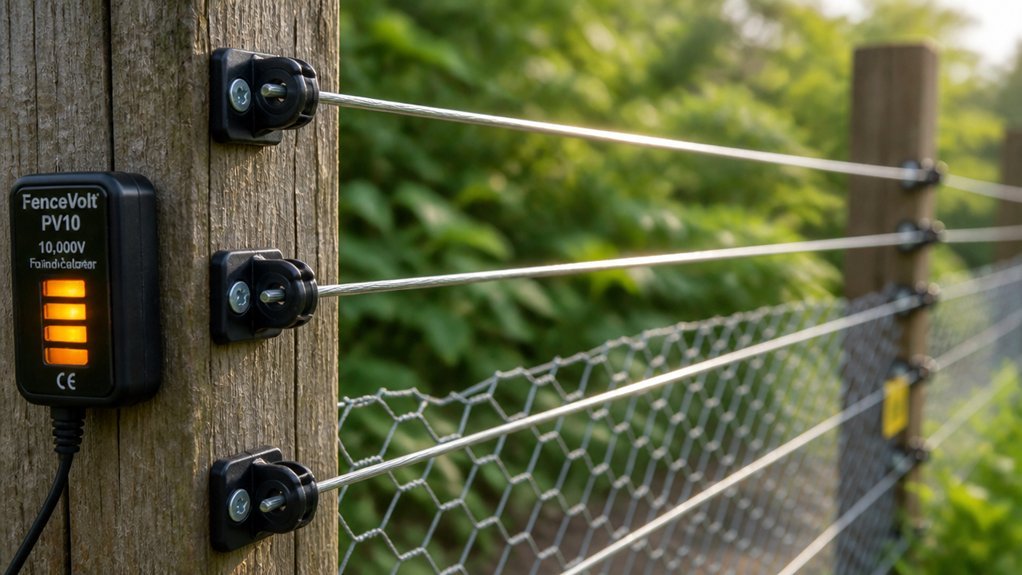
When you compare electric fence and chicken wire, you’ll see a big difference in predator deterrence strength. You’ll also want to weigh how easy each option is to install and adjust, along with the cost and durability over time. The right choice depends on how much protection and flexibility you need for your flock. Additionally, electric fences provide an active electrical deterrent, which can be more effective against persistent predators compared to static chicken wire.
Predator Deterrence Strength
If you want a fence that actually discourages predators, electric fencing usually outperforms chicken wire. You’re not just blocking entry; you’re creating a quick, painful lesson that most animals remember. Chicken wire can slow a determined raccoon, fox, or dog, but it won’t stop digging, climbing, or chewing for long.
- Electric shock triggers avoidance fast.
- Visible wires can make predators hesitate.
- Repeated contact builds lasting caution.
- Properly installed hardware cloth with the right specifications offers a durable barrier that predators find difficult to breach, especially when combined with electric wiring.
With chicken wire, a predator often tests the barrier until it finds a weak spot. Electric fencing changes that behavior by adding fear to the equation.
If you want real deterrence, this matters more than simple containment. An animal that respects the fence is far less likely to keep coming back, and that lowers nightly risk for your flock.
Installation And Flexibility
Beyond deterrence, setup can decide which fence makes sense for your flock. With electric fencing, you can move panels, adjust the layout, and expand the run when your needs change.
You’ll usually need posts, wire or tape, a charger, and grounding, but the system stays adaptable around odd corners, gates, and temporary pens.
Chicken wire is simpler to unroll and staple, so you can enclose a fixed coop quickly. Yet it’s far less forgiving if you want to shift boundaries, rotate pasture, or add height later.
If you like experimenting with run sizes or seasonal setups, electric fencing gives you more flexibility. If you want a permanent, straightforward enclosure, chicken wire feels more direct.
Proper installation methods ensure your fence remains secure and effective, especially when protecting against larger predators or ensuring minimal escape routes.
Cost And Durability
Cost matters up front, but durability shapes what you’ll spend over time. Chicken wire looks cheaper, yet you’ll often replace it after predators bend, tear, or climb it.
Electric fencing usually costs more at first, but it can last longer when you maintain it well and keep the charger working. You’ll save money if you choose strong posts, solid grounding, and quality wire.
- Chicken wire: low initial cost, shorter lifespan
- Electric fence: higher initial cost, better long-term value
- Repairs: easier and cheaper when you inspect regularly
If you want reliable protection for your flock, think beyond the sticker price. A durable electric fence can outlast repeated predator pressure, while chicken wire may only delay trouble. Weather-resistant materials are essential for ensuring the longevity of electric fences in various climates.
Choose the Right Electric Fence Height
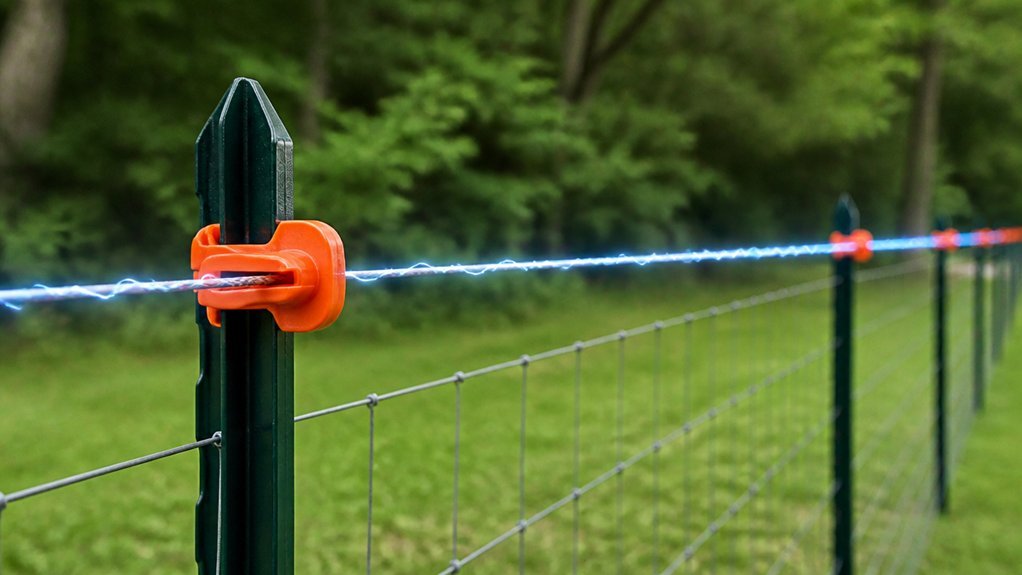
You need an electric fence tall enough to stop the predators common in your area. Set the height high enough to discourage jumping, but not so high that it becomes hard to install or maintain. The right fence height helps you protect your chickens with less risk of clever predators getting over it. Additionally, ensuring the fence incorporates sturdy frame materials can enhance durability and prevent predators from breaking through.
Ideal Fence Height
How tall should an electric fence be to keep chicken predators out? You should aim for a height that matches the animals in your area and your coop layout.
A fence that’s too short won’t deter many threats, while one that’s taller than needed costs more and can be harder to install.
- For small ground predators, 42 to 48 inches often works well.
- For mixed predator pressure, 48 to 52 inches gives you extra protection.
- For larger dogs or coyotes, 52 to 60 inches can be a smarter choice.
You can also add enough tension so the wire stays straight and effective.
Keep the fence aligned with your coop, and you’ll create a dependable barrier that helps protect your birds without wasting materials or effort. Mesh size is an important factor to consider to ensure the fence is secure against various types of predators.
Predator Jump Prevention
To stop predators from jumping into the run, choose a fence height that puts the top wire above their reach and leaves little room for a running start. You’ll get better protection when you pair height with strong tension and clear ground space around the fence. A well-designed fence also minimizes gaps where predators can squeeze through or climb over, ensuring predator-proof safety.
Choose Wire, Charger, and Posts
Because the right materials make all the difference, choose a wire that carries current well and can stand up to weather, a charger that matches the length of your fence and the predators you’re targeting, and sturdy posts that keep the line tight and properly spaced. You’ll get better performance when every part works together.
Using tamper-resistant components can help prevent animals from disabling your fence and ensure consistent protection.
- Pick galvanized or poly wire for reliable conductivity.
- Match the charger’s output to your fence length and animal pressure.
- Use strong posts that resist bending and hold insulators firmly.
Don’t skimp on quality, since weak components create voltage drops and frequent repairs. Check that your wire pairs well with your charger, and make sure your posts won’t shift in soft ground. With solid materials, you’ll build a fence that shocks predators fast and protects your flock better.
Plan a Predator-Proof Fence Layout
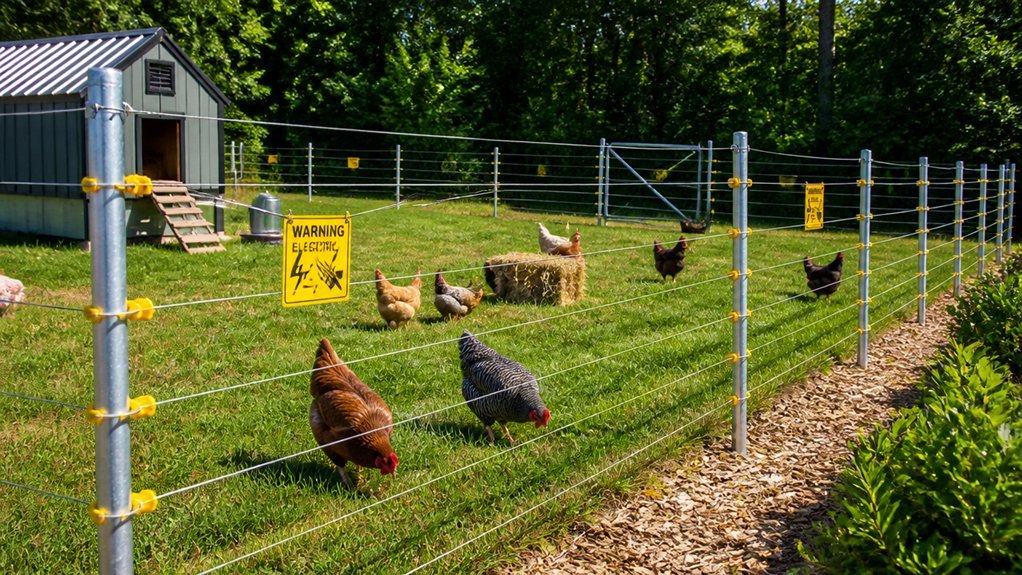
Now that you’ve chosen the right wire, charger, and posts, map out the fence so predators can’t find weak spots. Walk your coop, mark corners, gates, and pinch points, then sketch the line before you dig or drive posts. Keep the layout simple, with smooth turns and no hidden gaps near brush, sheds, or stacked supplies.
| Area | Risk | Your move |
|---|---|---|
| Corners | Pressure points | Reinforce them |
| Gates | Easy entry | Tighten spacing |
| Low shrubs | Cover for predators | Clear them |
| Feed storage | Attraction | Move it away |
| Coop walls | Jump zone | Extend the line |
Set your fence far enough out to protect run space, but close enough that you can inspect it fast.
Ground the Fence Correctly
A strong fence won’t work well if the grounding is poor, so drive your ground rods into moist soil and keep them fully connected to the charger.
You need a reliable path for electricity to return, or your fence won’t deliver a sharp shock. Use galvanized rods, space them apart, and join them with heavy-duty wire. Check every clamp for tight contact and remove rust or paint that blocks conductivity.
- Test voltage regularly with a meter.
- Keep soil around rods damp during dry spells.
- Inspect connections after storms or mowing.
When you ground it right, you help your fence hit hard and protect your flock.
Keep Digging Predators Out
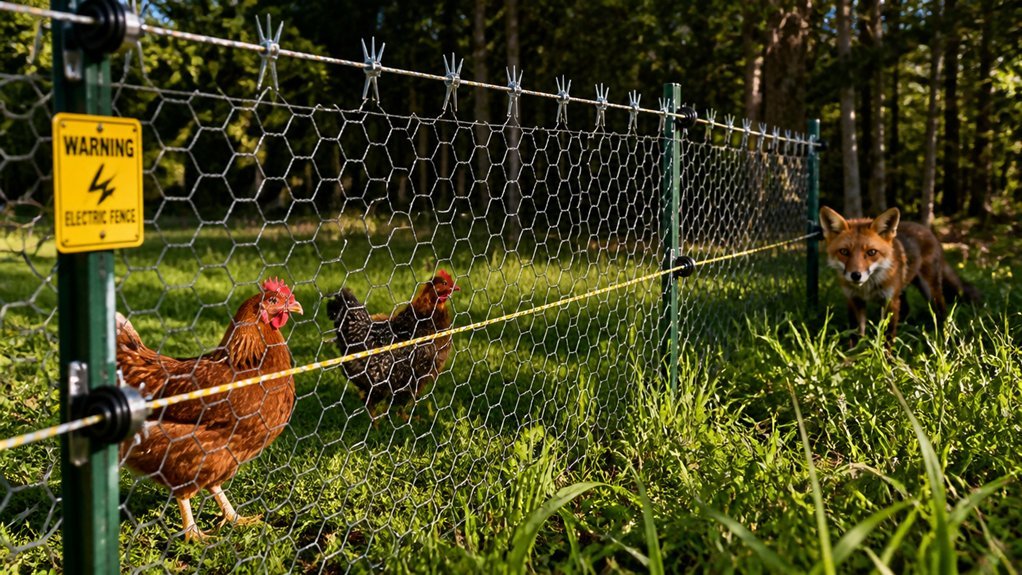
Even a charged fence can fail if predators simply tunnel under it, so you’ll need to block digging at the base. Bury the bottom of your fence several inches into the soil, or bend it outward in an apron to make a hidden barrier. Use sturdy wire mesh, treated boards, or heavy rocks along the perimeter if the ground stays loose.
Check for fresh scrapes, lifted edges, and soft spots after rain, because coyotes, dogs, foxes, and raccoons can widen small gaps fast. Keep grass trimmed close so you can spot damage early. Repack any disturbed soil immediately and reinforce weak sections before predators return.
If you maintain that lower edge carefully, you’ll make the whole enclosure much harder to breach and keep your chickens safer.
Block Flying Predators With Overhead Wire
You can stop hawks and other flying predators by stretching overhead wire across your chicken run.
Place the wire so it covers the full area without leaving wide gaps, and keep the spacing tight enough to make landing harder.
This simple barrier helps protect your flock from aerial attacks while still letting in light and air.
Overhead Wire Placement
To stop hawks and owls from dropping in, run a charged wire or two above the run, stretched taut across the top opening. You can anchor them to corner posts and add a center support if the span sags.
Keep the wires high enough that your birds won’t brush them, but close enough to make a landing impossible. Use insulated supports so the current doesn’t bleed off into wood or metal.
- Space the wires evenly across the opening.
- Tighten them after wind or snow.
- Check that gates still close cleanly.
You’ll get a simple roof barrier that works with the fence below, and you won’t need to cover the whole run with mesh or tarp.
Deterring Aerial Attacks
A charged overhead wire helps stop hawks, owls, and other flying predators before they can strike your flock. You create a risky landing zone, so hunters think twice before diving. Keep the wire taut and visible enough to discourage approaches, yet high enough that your birds move freely below. Use a simple layout like this:
| Predator | Threat | Wire Effect |
|---|---|---|
| Hawk | Dive attack | Shock deters |
| Owl | Silent swoop | Blocks approach |
| Falcon | Fast strike | Interrupts path |
| Crow | Harassment | Reduces confidence |
You’ll get the best results when you check voltage regularly and remove branches that give predators a perch. That way, your flock stays safer during daylight and dusk.
Chicken Run Coverage
Overhead protection works best when it covers the whole chicken run, not just the coop area. When you stretch electric wire across the top, you block hawks, owls, and other flying predators before they can swoop down.
Keep the layout tight, because gaps invite trouble and give birds room to swoop. Use sturdy posts and secure insulators so the wire stays at the right height and tension.
- Cover every open section of the run
- Leave no easy landing spots near edges
- Check for sagging wire after wind or rain
You’ll also protect hens while they forage, dust bathe, and move freely. A fully covered run gives you stronger security without trapping your flock in a cramped space.
Train Chickens to Stay Inside
Start by making the coop and run the chickens’ safest, most rewarding place to be. You can do that with fresh feed, clean water, shade, dust baths, and treats only inside the enclosure. Let your flock discover that staying put means comfort and easy food.
Keep them in the run until they’re calm and routine-driven, then release them for short, supervised outings. Call them back with a consistent cue and reward them when they return quickly. If a few birds wander, guide them back immediately so they learn the boundary.
Over time, repeat the same schedule each day. Chickens thrive on habits, and you’ll build strong muscle memory. When they expect security and good things inside, they’ll choose the coop and run more often.
Avoid Common Electric Fence Mistakes
Even a well-powered electric fence can fail if you put it in the wrong place or let it get sloppy. You need to avoid simple mistakes that invite predators in. Don’t run the wire too high, or raccoons and foxes may slip underneath. Don’t place posts on uneven ground, because gaps weaken the barrier. Don’t forget to test the voltage at several points, since a single dead section can ruin protection.
- Keep wire spacing tight enough to stop squeezes.
- Use clear markers so you don’t clip the line.
- Ground the system properly for a stronger shock.
Also, make sure vegetation isn’t touching the fence, and check gates for secure closure. Small errors add up fast, so build carefully and give predators no easy opening.
Maintain Electric Fencing Year-Round
To keep predators out, you need to maintain your electric fencing through every season, not just when it’s first installed. Inspect the wire, posts, and gates regularly, especially after storms, snow, or heavy rain.
Clear grass, weeds, and fallen branches that can steal power from the line. Check the energizer, ground rods, and battery or solar setup so the fence stays strong when weather changes. Tighten loose sections and replace cracked insulators before they fail.
In winter, watch for snow buildup; in summer, look for dry soil around grounding points. When you stay ahead of wear, you keep the fence reliable, save repair time, and give your chickens consistent protection all year long without extra hassle.
What to Do When Predators Test the Fence
When predators probe your fence, act fast and check the weak points they’re exploiting. Walk the line, look for bent posts, short grass, loose wires, and spots where voltage drops. Repair damage immediately so you don’t invite a repeat visit.
Act fast when predators test your fence—find weak spots, fix damage, and stop repeat visits.
- Re-tighten sagging wire and replace broken insulators.
- Clear weeds, snow, and mud from the fence path.
- Test voltage at several points to find weak sections.
Then watch for tracks, feathers, or digging near the breach. If you spot a pattern, raise the bottom strand, reinforce corners, or add a second strand where pressure is highest.
Keep your chickens inside the protected area while you work. Quick fixes and close observation help you stay ahead of persistent predators.
Is Electric Fencing Worth It for Chickens?
Yes—if you’re fighting foxes, raccoons, dogs, or coyotes, electric fencing can be well worth it for chickens. You get a strong deterrent that protects birds without constant chasing or trapping.
Once installed correctly, it can keep working day after day with little hands-on effort. You’ll likely save money too, because it can prevent losses that add up fast. It’s especially valuable if you free-range your flock or can’t build a fully enclosed coop.
Still, you need to train your chickens to stay clear and check the fence often for weeds, gaps, or weak chargers. If you want dependable predator control with less stress, electric fencing usually pays off.
Frequently Asked Questions
How Much Electricity Does a Chicken Fence Use?
You’ll use very little electricity—usually about 1 to 10 watts, so a chicken fence often costs just pennies a day. The energizer draws most power, and short, well-kept lines help you save more.
Can Electric Fencing Hurt My Chickens?
Usually, no—you’ll train your chickens to avoid it. You should use low-output poultry fencing, since a brief shock startles them without serious harm. Keep wires spaced well and inspect the fence regularly.
Will Electric Fencing Work in Snowy Weather?
Yes, it can work in snowy weather if you keep the fence clear and the ground connection strong. You’ll need to remove snow buildup, because buried wires and weak grounding cut power fast.
How Long Does a Chicken Fence Last Outdoors?
You can expect a chicken fence to last 5 to 15 years outdoors, depending on material, weather, and maintenance. You’ll extend its life by checking posts, tightening wire, and replacing damaged sections promptly.
Can I Move an Electric Chicken Fence Easily?
Yes, you can move it easily if you use lightweight posts and portable mesh. You’ll unplug the energizer, lift sections, and reset them fast, though rough ground and tangled wire can slow you down.
In Summary
Electric fencing gives you a strong, flexible way to protect your chickens from many common predators. It helps keep out raccoons, foxes, dogs, and other threats that can defeat weaker barriers. When you choose the right height, charger, and setup, you make your flock safer with less daily worry. If you maintain it well and fix problems quickly, electric fencing is often well worth it for chicken keepers who want dependable protection.