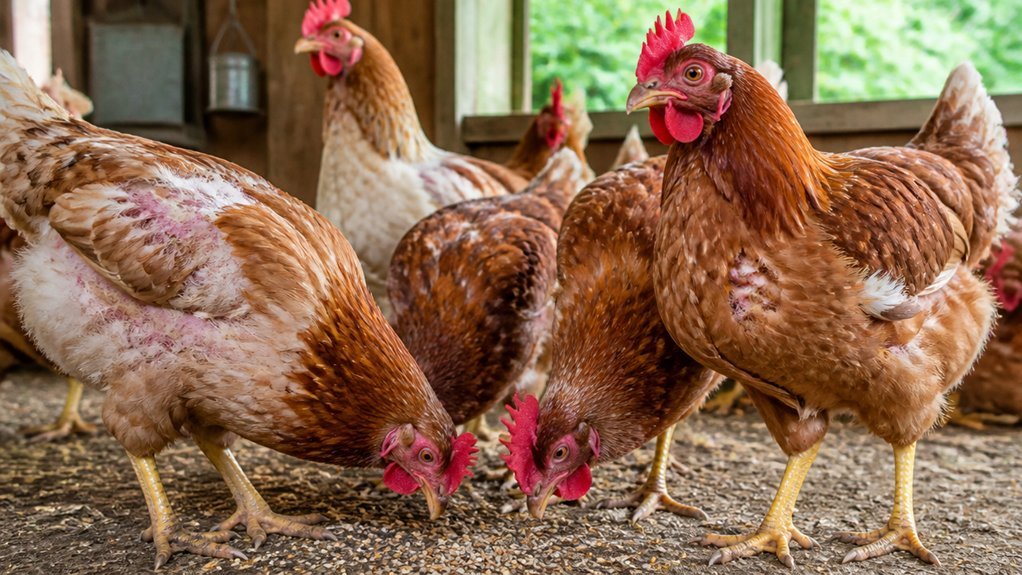
Chicken molting is a normal yearly feather-shedding cycle, so you don’t need to panic when your hens look scruffy. You’ll see bare patches, pinfeathers, and a pause in egg laying as energy shifts to feather regrowth. Support them with a higher-protein feed, clean water, and limited high-protein treats like mealworms or cooked eggs. Keep an eye out for weakness, weight loss, or parasites, because those signs mean something else may be going on, and there’s more to learn.
What Is Chicken Molting?
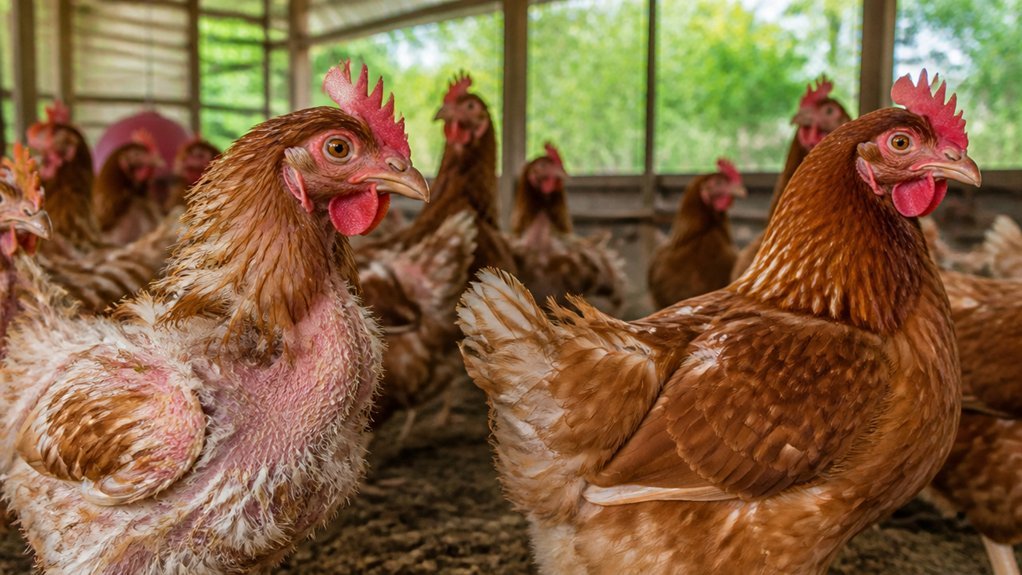
Chicken molting is a natural process where your hen sheds old feathers and grows in a fresh new coat. You’ll see this happen when her body shifts energy from laying to feather replacement, often once a year.
Chicken molting is a natural process when hens shed old feathers and grow a fresh new coat.
During this time, her metabolism changes, and she may need extra support from you to stay comfortable and healthy. Molting isn’t an illness, but it can leave her more vulnerable because her body’s focused on rebuilding.
You should expect reduced egg production, since she isn’t putting resources into laying. Instead, she’s repairing herself from the inside out.
Understanding proper wound care and preventative strategies, such as using poultry wound sprays, can help protect her from injuries during this vulnerable period.
If you understand molting as a normal reset, you can respond calmly, provide proper care, and avoid unnecessary worry when your flock goes through it.
What Chicken Molting Looks Like
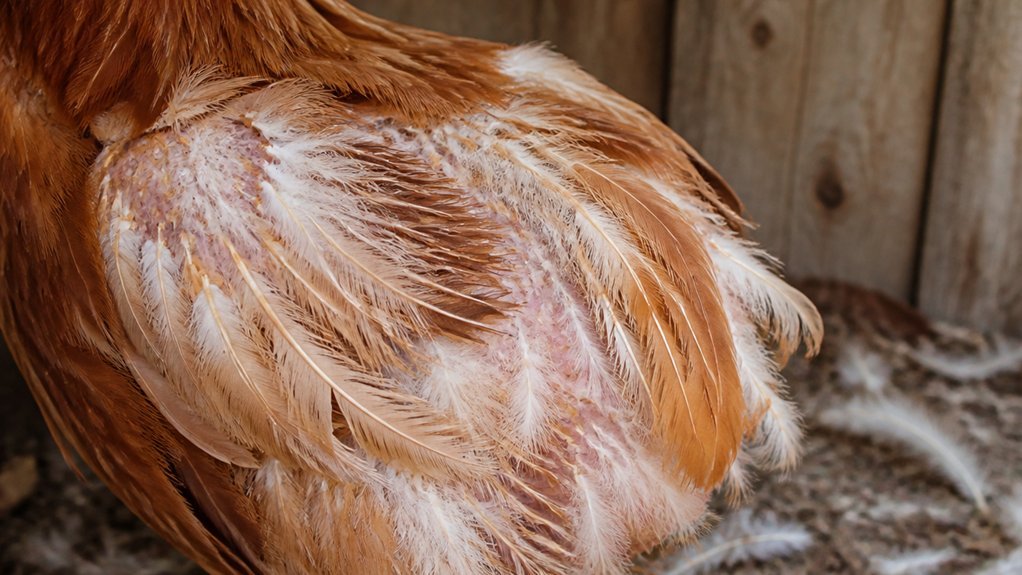
You can usually spot molting by the bare patches that appear as old feathers fall out and new pinfeathers push through. You’ll notice uneven feather loss on the neck, back, breast, and around the tail, while the head often stays fuller longer.
The new feathers look like short, stiff spikes, and they can make your birds look scruffy or ragged. You may also see feathers scattered in the coop or yard, especially after roosting. Some hens lose feathers slowly, while others shed them quickly, so the pattern can differ from bird to bird.
During this time, your flock may look patchy rather than sick, with no swelling or discharge. A close look at the skin and emerging pinfeathers helps you confirm molting.
How Molting Affects Chickens
Molting doesn’t just change how your chickens look; it also affects how they feel and behave. You may notice they act quieter, move less, and avoid flock competition.
As new feathers grow, your birds can seem irritable or wary, and egg laying often slows or stops. That pause can feel frustrating, but it’s a normal strain on their bodies.
You’ll also see them spend more time resting and less time scratching, dust bathing, or exploring. Their skin can become tender, so handling may upset them.
- You might worry when your hens seem withdrawn.
- You may feel uneasy seeing feathers drop so fast.
- You can take comfort knowing this stage is temporary.
How to Feed Chickens During Molting
When feathers are growing back, your flock needs extra protein, so offer a complete layer feed with 16% to 18% protein or a higher-protein flock ration if needed.
You can also add a small amount of high-protein treats, like black soldier fly larvae, mealworms, or cooked eggs, but keep treats under 10% of the diet. Make sure quality-controlled larvae and fresh water stays available at all times, because water supports feather production and overall recovery.
You should keep feed consistent and avoid sudden changes, since steady nutrition helps birds use energy efficiently. If your hens free-range, let them forage, but don’t rely on pasture alone during molt.
A mineral supplement can help, too. Focus on balanced nutrition, and your flock will rebuild plumage more smoothly and return to normal laying sooner.
When Molting Signals a Health Problem
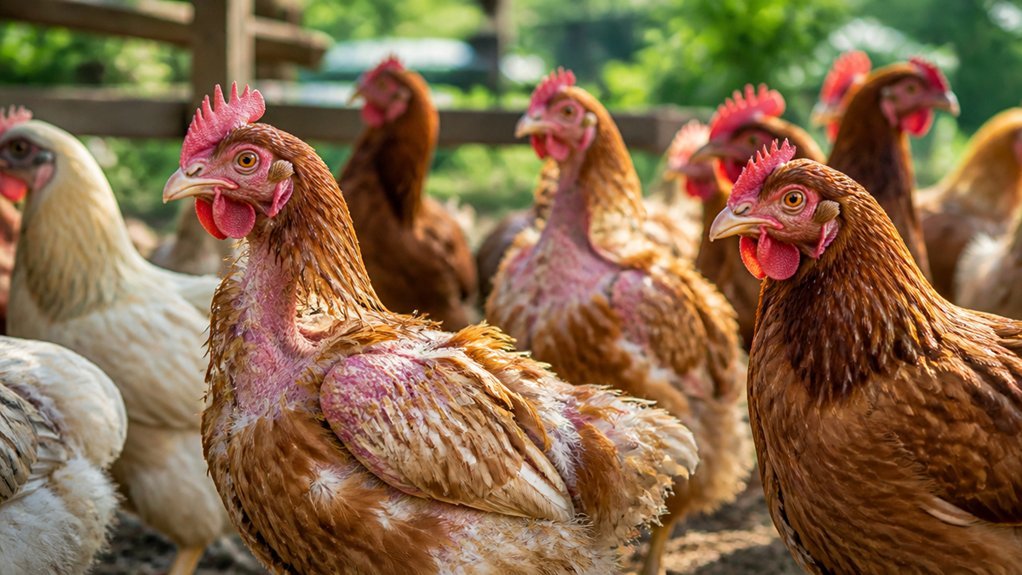
Sometimes feather loss isn’t just a normal seasonal molt, especially if your birds look weak, lose weight, stop eating, or develop bald patches that don’t match the usual pattern.
Feather loss isn’t always a normal molt—watch for weakness, weight loss, appetite changes, or unusual bald patches.
You need to watch for signs that point to parasites, stress, illness, or poor nutrition. If your hens seem tired, isolate themselves, or lay fewer eggs for longer than expected, don’t assume it’s normal.
Check skin for mites, inspect droppings, and review feed quality and coop conditions. Acting quickly can protect the flock and ease your worry.
- You may feel alarmed when a bird looks thin and fragile.
- You may feel frustrated when hidden mites keep stealing their comfort.
- You may feel relief when you catch the real cause early.
Frequently Asked Questions
How Long Does a Chicken Molt Usually Last?
A chicken molt usually lasts 6 to 12 weeks, though you’ll see some hens finish sooner and others take longer. You can expect feather loss first, then regrowth as they rebuild condition and energy.
Can Molting Affect a Hen’s Egg Taste?
Yes, molting can slightly change your hen’s egg taste because she’ll often eat less and lay fewer eggs, which can alter freshness. You might notice richer yolks or stronger flavor until she finishes molting.
Is It Safe to Handle a Molting Chicken?
Yes, you can usually handle a molting chicken gently, but you should avoid rough contact. You’ll stress her less if you move slowly, support her body, and wash your hands afterward to prevent irritation.
Do All Chicken Breeds Molt at the Same Time?
No, you won’t see all breeds molt at the same time. Your chickens’ breed, age, health, daylight, and stress levels affect timing, so some birds start earlier, while others molt later or more gradually.
Can Molting Chickens Still Free-Range Normally?
Yes, you can let molting chickens free-range, but you should watch them closely. They’re more vulnerable, so you’ll want to limit stress, provide extra protein, and protect them from cold, rain, and bullying.
In Summary
When your chickens start molting, you can help them through this natural cycle with good care and close attention. Offer a balanced, protein-rich diet, fresh water, and a calm, clean coop to support new feather growth and reduce stress. Watch for signs that molting may be more than seasonal shedding, like weight loss or lethargy. With the right support, your flock can recover faster and stay healthy through molt season.