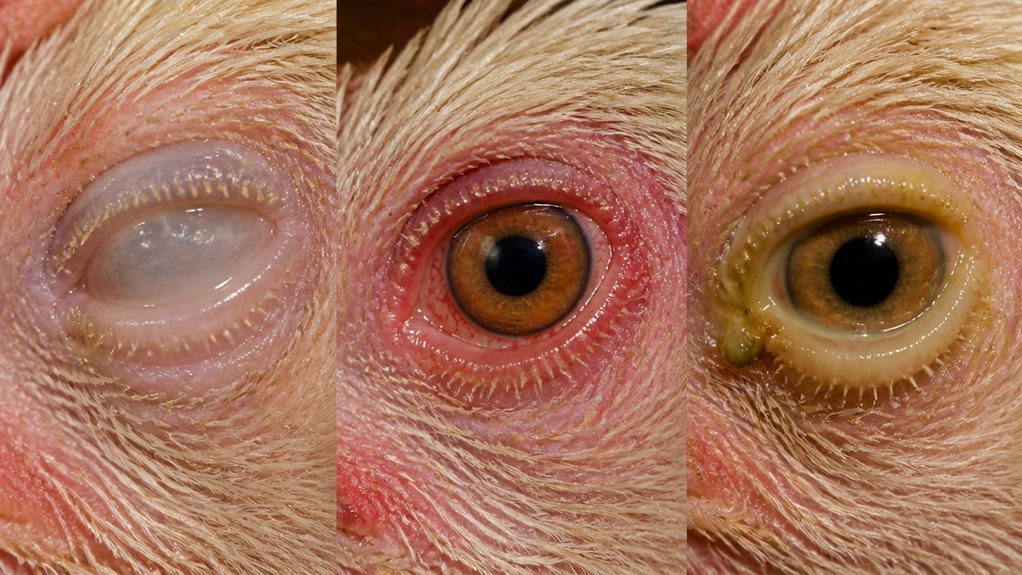
The top 3 chicken eye infections you’ll often see are conjunctivitis, sinusitis, and fowl pox. You may notice squinting, redness, swelling, watery discharge, crusty eyelids, or one-sided facial puffiness. Clean the eye with warm saline, isolate the bird, and keep the coop dry, clean, and well ventilated. Use prescribed antibiotic drops or ointments exactly as directed. If symptoms worsen or linger, call a poultry vet, and there’s more to know about spotting them fast.
Common Chicken Eye Infection Signs and Causes
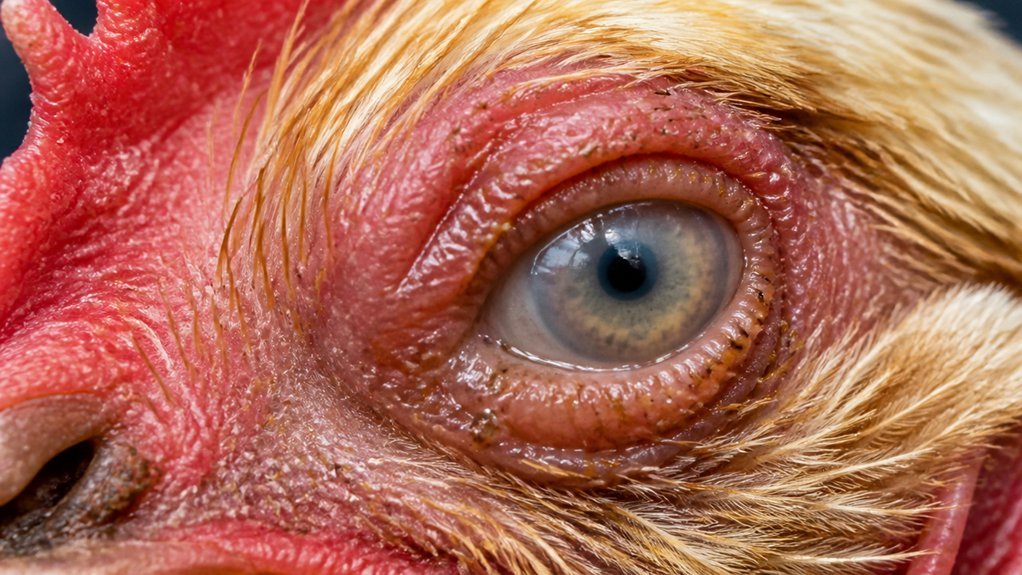
If you notice a chicken squinting, keeping one eye closed, or showing swelling, redness, or watery discharge, an eye infection may be the cause. You should watch for crusty eyelids, frequent blinking, pawing at the face, and a drop in appetite or activity.
Dust, ammonia buildup, pecking injuries, bedding debris, and respiratory illness can irritate the eye and open the door to infection. Cold drafts, poor coop hygiene, and overcrowding can also increase risk.
Proper disinfection of the coop and equipment helps reduce the presence of irritants and pathogens that can contribute to eye infections.
When you inspect your flock, look closely for one-sided symptoms, cloudiness, or a wet cheek area. You can catch trouble early by checking birds daily, keeping litter dry, and reducing airborne irritants. Quick attention helps you limit discomfort and stop the problem from spreading.
3 Common Chicken Eye Infections
Once you spot the signs of trouble, the next step is figuring out which eye infection your chicken may have.
Once you notice trouble, the next step is identifying which eye infection your chicken may have.
Three common problems stand out. Conjunctivitis causes redness, swelling, and watery discharge around the eye. Sinusitis affects the area behind the eye, often making one side of the face puff up. Fowl pox can form crusty sores near the eyelids and may spread to nearby skin. Each condition can look similar at first, so you need to watch closely for pattern and progression. Using poultry wound sprays can help manage secondary infections and support healing in affected areas.
How to Treat and Prevent Chicken Eye Infections
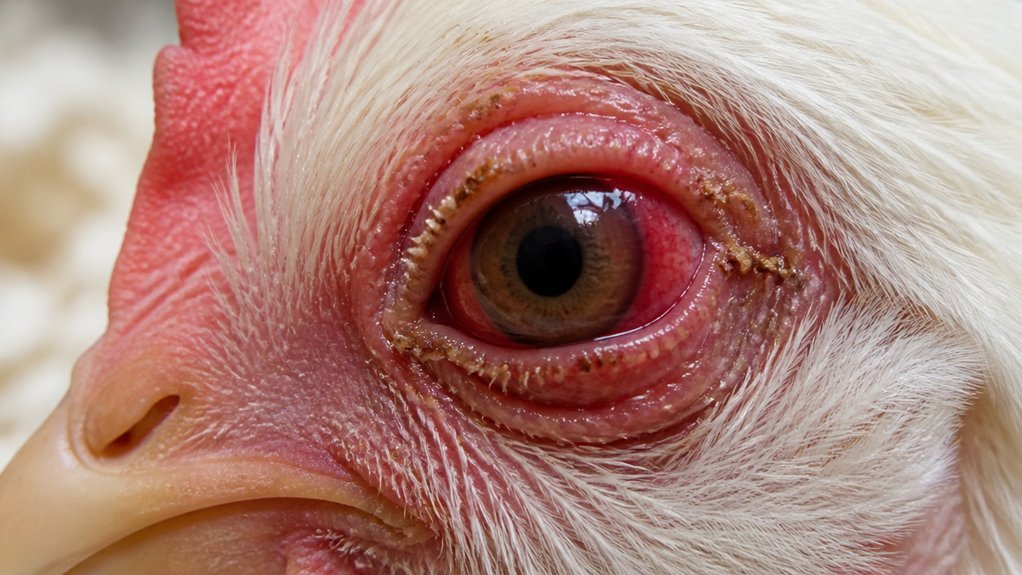
Treat chicken eye infections by isolating the bird, cleaning any discharge with warm saline, and keeping the coop dry and dust-free to reduce irritation. Using cameras with full-color night vision can help monitor symptoms and behavior changes throughout the night. Check the eye for swelling, redness, crusting, or cloudiness, and contact a poultry vet if symptoms worsen or don’t improve quickly. You should use prescribed antibiotic drops or ointment exactly as directed, and finish the full course even if the eye looks better. Prevent future infections by improving ventilation, reducing ammonia buildup, and changing wet bedding often. Keep feeders and waterers clean, and avoid overcrowding, which spreads germs fast. You can also protect your flock by watching for pecking injuries, trimming sharp coop edges, and quarantining new birds before mixing them with your flock.
Frequently Asked Questions
Can Chicken Eye Infections Spread to Other Birds?
Yes, chicken eye infections can spread to other birds if you don’t isolate sick ones quickly. You should separate affected chickens, clean equipment, and monitor flock mates for signs of illness and discharge.
How Long Do Chicken Eye Infections Usually Last?
They usually last a few days to two weeks, depending on the cause and treatment. You’ll often see improvement within 48 hours, but if symptoms linger, you should contact a vet promptly.
When Should I Separate an Infected Chicken?
You should separate an infected chicken as soon as you notice eye swelling, discharge, or sneezing, especially if it’s worsening. Isolate her until she’s improving, eating, and you’ve ruled out contagious illness.
Are Certain Chicken Breeds More Prone to Eye Infections?
Yes, you’ll notice some breeds with feathered faces or deep-set eyes get eye infections more often because debris traps easily. You can reduce risk with clean housing, good ventilation, and regular checks.
Can Chickens Recover Without Veterinary Treatment?
Yes, your chickens can sometimes recover on their own if the irritation’s mild, but you should watch closely. Clean the eye, isolate the bird, and seek veterinary help if swelling, discharge, or worsening appears.
In Summary
Now you know the common signs, causes, and top chicken eye infections to watch for. If you spot swelling, discharge, squinting, or cloudy eyes, act fast and isolate the bird if needed. You can help most cases by keeping the coop clean, reducing dust, and getting the right treatment early. Stay observant, because quick care protects your flock and helps your chickens heal faster and stay healthier overall.