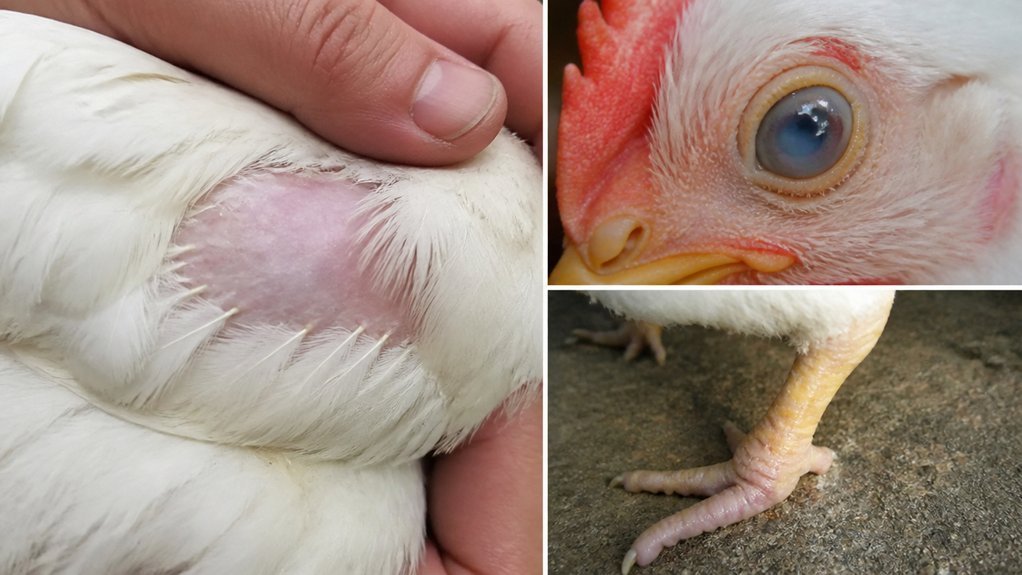
The 3 early signs of Marek’s disease in chickens are changes in appetite and weight, leg weakness, and eye problems. You may notice your bird eating less, losing weight, acting dull, or isolating from the flock. You might also see stumbling, one leg stretching forward and the other back, or partial paralysis. Cloudy eyes, uneven pupils, and poor vision can appear too. Spotting these early can help you act fast and learn what to watch for next.
Common Early Signs of Marek’s Disease

Marek’s disease often shows up quietly at first, so you may notice only subtle changes in your chickens before they become seriously ill. You might see one bird eat less, lose weight, or look generally dull. Its feathers can appear ruffled, and it may isolate itself from the flock.
You may also spot a pale comb, uneven growth in young birds, or a drop in egg production in laying hens. Some chickens develop cloudy eyes or a shifted pupil, which can affect vision and make them miss feed or water. Regularly disinfecting coop surfaces with safe, broad-spectrum products can help reduce the risk of disease spread.
Watch closely for any bird that seems off, because these early changes can move fast. If you notice several signs together, act quickly and contact a poultry veterinarian for guidance.
Leg Weakness and Paralysis
Leg weakness is one of the clearest early warning signs, and it can start with a chicken seeming unsteady or reluctant to move. You may notice your bird favoring one leg, stumbling, or sitting down after only a few steps.
As the disease progresses, the weakness can worsen into partial paralysis, often in one leg before the other. Your chicken might stretch one leg forward and the other backward, or drag a foot instead of lifting it.
You should watch for any loss of balance when your bird stands, walks, or tries to reach feed and water. These changes don’t come and go randomly; they tend to persist and worsen. Proper enclosure design, such as secure bedding and adequate space, can help minimize stress and injury that might exacerbate symptoms.
If you see them, isolate the bird and contact a poultry veterinarian promptly.
Eye Changes and Weight Loss
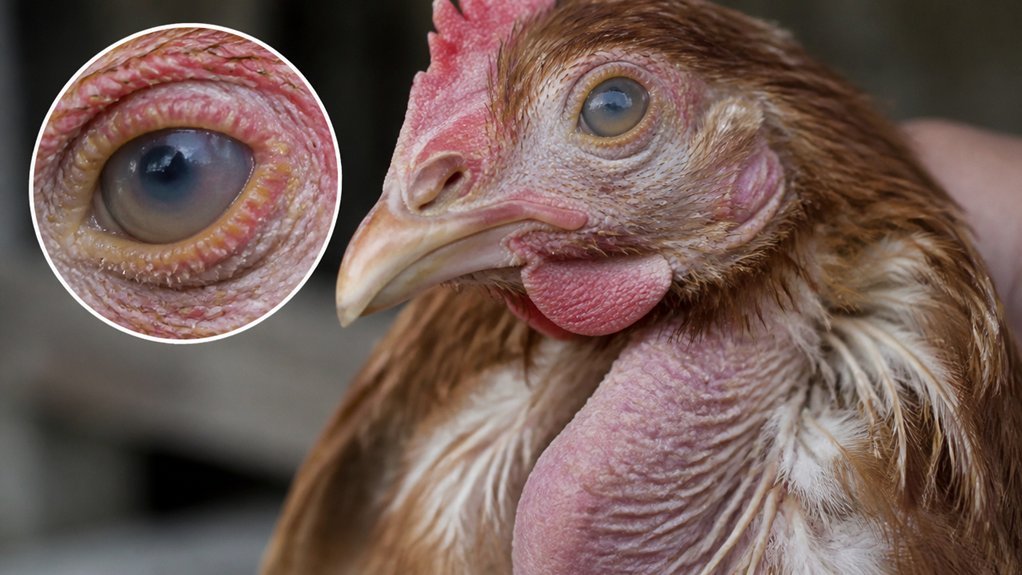
Another early clue is a change in the eyes, which may become cloudy, gray, or irregular in shape as Marek’s disease affects the nerves around the eye. You might notice one pupil staying larger than the other, or your chicken struggling to focus on feed and movement.
Cloudy, gray eyes or uneven pupils can be early signs of Marek’s disease.
These eye changes often show up with weight loss, even when your bird still pecks at food. Because the disease can damage digestion and energy use, your chicken may grow thinner fast.
- Watch for dull eyes or odd-looking pupils.
- Check if your chicken drops weight despite eating.
- Notice weakness that makes feeding harder.
- Supporting gut health with probiotics can help improve nutrient absorption during recovery gut health.
If you spot these signs, separate the bird and call a poultry vet quickly.
Frequently Asked Questions
How Is Marek’s Disease Diagnosed in Chickens?
You diagnose Marek’s disease by having a vet examine your chicken’s signs, then confirming it with necropsy, tissue histology, or PCR testing. These tests help you rule out similar illnesses quickly and accurately.
Is Marek’s Disease Contagious to Other Birds?
Yes, Marek’s disease is contagious to other birds through infected dander and dust. You’ll want to isolate sick birds, clean housing thoroughly, and vaccinate chicks early to reduce spread and protect your flock.
Can Vaccinated Chicks Still Get Marek’s Disease?
Yes, you can still see Marek’s disease in vaccinated chicks, but vaccination greatly lowers risk and severity. You should keep biosecurity strong, because no vaccine gives perfect protection against every infection.
What Age Are Chickens Most at Risk for Marek’s Disease?
You should watch chicks most closely between 6 and 20 weeks old, when they’re most vulnerable to Marek’s disease. Younger birds can still catch it, but signs usually show up after exposure earlier.
How Can Marek’s Disease Be Prevented in a Flock?
You can prevent Marek’s disease by vaccinating chicks at hatch, keeping your coop clean, reducing stress, isolating new birds, and limiting exposure to infected flocks. You’ll lower risk, though vaccination doesn’t guarantee protection.
In Summary
If you spot the early signs of Marek’s disease, act fast to protect your flock. Watch for leg weakness, paralysis, eye changes, and unexplained weight loss, and don’t wait to get help. The sooner you isolate sick birds and talk with a poultry vet, the better your chances of limiting the spread. Stay alert, keep your coop clean, and use good biosecurity to give your chickens the best protection you can.