
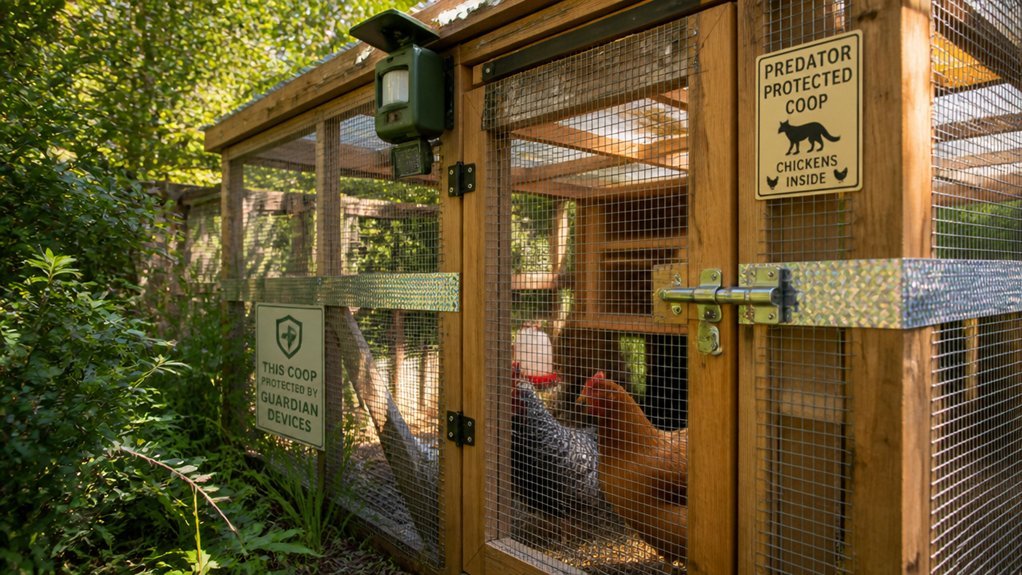
Know your city predators first: raccoons, rats, foxes, stray dogs, hawks, owls, and even cats can threaten chickens. Build a sturdy coop with 1/2-inch hardware cloth, tight latches, and sealed gaps. Bury wire or add an apron to stop digging. Store feed in sealed metal bins and clean up scraps daily. Use motion lights or sprinklers, then inspect weekly for wear, holes, or weak spots—you’ll spot the rest of the fixes soon.
Know Which Predators Threaten Chickens
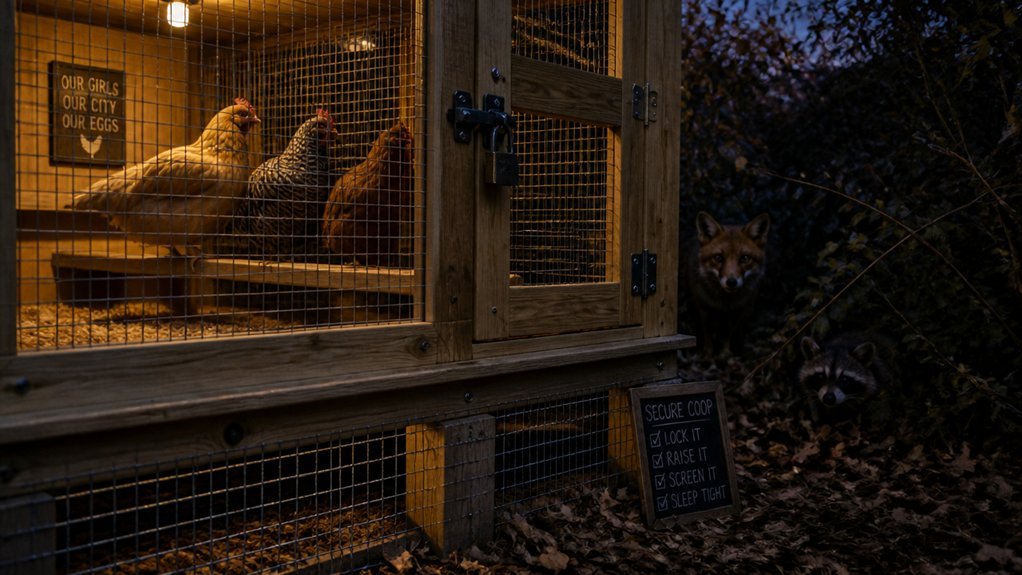
Before you can protect your flock, you need to know what’s after it: in cities and suburbs, chickens can attract raccoons, opossums, rats, foxes, stray dogs, hawks, owls, and even neighborhood cats.
You should watch for different threats by day and night. Raccoons and opossums often raid after dark, using quick hands and patience. Rats target feed and eggs, while foxes and stray dogs may dig, chase, or kill. Hawks and owls strike from above when birds roam openly. Cats usually bother chicks more than adults.
Monitoring predator behavior helps you set effective barriers, and understanding electric fencing can greatly improve your protection strategy. You can spot trouble by tracks, scattered feathers, missing feed, alarm calls, or restless birds. When you learn each predator’s habits, you’ll notice patterns sooner and respond faster, before a small problem turns into a loss.
Build a Predator-Proof Coop
You can protect your flock by building a coop with reinforced materials that hold up against chewing, clawing, and prying. Make sure every door latches tightly, and cover vents with sturdy hardware cloth so nothing can squeeze in. Small upgrades like these can make your coop much harder for predators to breach. Incorporating heavy-duty wire mesh around windows and access points adds an extra layer of security to prevent predators from gaining entry.
Reinforced Coop Materials
Strong coop materials make the difference between a secure flock and an easy target, so choose hardware cloth over chicken wire for all vents, windows, and run openings, then reinforce doors, latches, and corners with sturdy framing and predator-resistant fasteners.
You’ll also want materials that stand up to chewing, clawing, and weather without warping or splitting. Prioritize these upgrades:
- Use exterior-grade lumber for the frame.
- Fasten mesh with screws and washers.
- Add metal flashing to weak edges.
- Seal gaps with durable trim.
When you build with strong materials, you reduce weak points and make forced entry far harder. Check every joint, panel, and seam for flex, then tighten or replace anything that gives predators leverage. Incorporating hardware cloth with a 1/2 inch mesh and 19 gauge wire ensures your coop remains predator-proof while allowing proper airflow and visibility.
Secure Doors And Vents
Secure doors and vents are some of the easiest places for predators to test, so lock them down with predator-proof latches, tight-fitting frames, and hardware cloth backed by solid trim. You should choose latches that raccoons can’t flip, then add a secondary clip or carabiner for extra security.
Check every hinge, gap, and corner, because even a small opening invites trouble. Cover vents with 1/2-inch hardware cloth, not chicken wire, and fasten it with screws and washers so nothing can pry it loose. If you use sliding doors, make sure they can’t be lifted off the track.
Inspect closures nightly, since wear, swelling, and shifting wood can create new entry points fast. A secure coop starts with every opening sealed, reinforced, and easy for you to trust.
Additionally, using heavy-duty locking hardware such as secure latch mechanisms can prevent raccoons from manipulating the doors or vents.
Secure the Run Against Burrowing
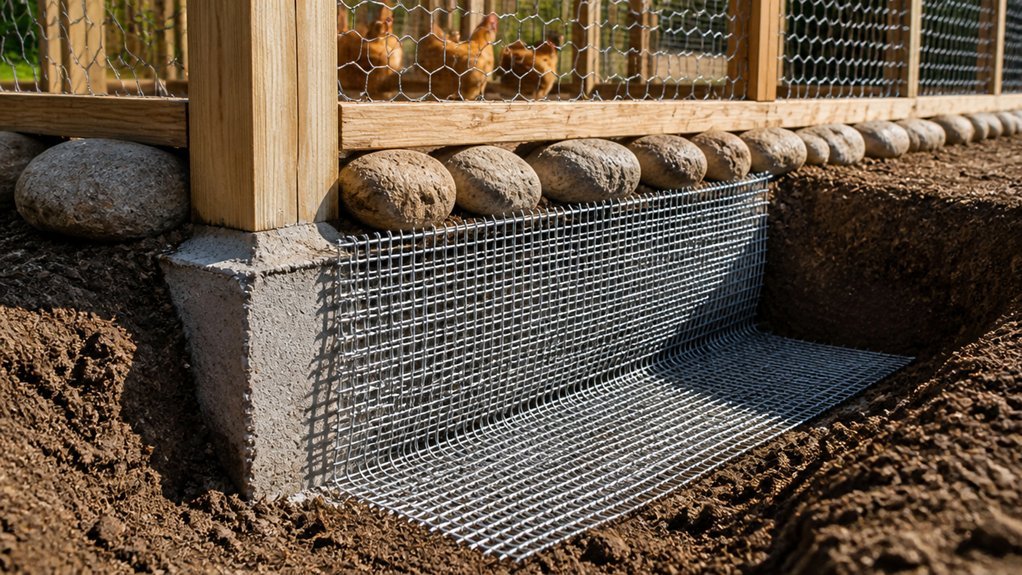
To stop diggers from getting under your run, bury hardware cloth around the perimeter. You can also install apron fencing, which flares outward at ground level and blocks burrowing predators. Together, these barriers make it much harder for raccoons, dogs, and foxes to tunnel in. Using posts with rugged double-spiked stakes ensures your fencing stays securely anchored against digging predators.
Bury Hardware Cloth
Even if your run has solid walls, predators can still dig underneath and slip in from below. To stop that, you should bury hardware cloth around the run’s perimeter so digging animals hit a tough barrier before they reach your flock. Use galvanized cloth with small openings, and anchor it tightly to the base of the run. 1. Dig a trench at least 12 inches deep. 2. Attach the cloth flush to the run frame. 3. Bury it vertically to block tunneling. 4. Backfill and pack the soil firmly. Make sure to check for any exposed gaps regularly, especially after rain or shifts in soil, as durability can affect its effectiveness over time. You’ll want the cloth to extend below every weak spot, including corners and gates. Check for gaps after rain or shifting soil. This simple upgrade makes your coop far harder to breach and helps keep your chickens safer day and night.
Use Apron Fencing
If digging predators keep testing your run, an apron fence adds another layer of defense by forcing them to hit buried wire before they can tunnel under the edge. To install it, fasten hardware cloth or welded wire to the bottom of your run, then extend it outward on the ground like a skirt. Cover it with soil, gravel, or mulch so it stays in place and doesn’t snag feet. Properly anchored underground, the apron acts as a durable underground barrier, making it much harder for burrowers to create an entry point. Most diggers won’t keep working once they meet that hidden barrier. You’ll also make inspection easier, since the apron shows signs of lifting or tampering fast. Check the perimeter often, especially after rain or freezing weather, and patch any gaps right away. Combined with buried wire, this simple step can greatly reduce burrowing attacks.
Lock Up Feed and Waste Daily
Lock up feed and waste every day so you don’t give predators an easy reason to visit. You should treat spilled grain, wet bedding, and scraps like magnets for rats, raccoons, and stray animals. Using a pest-resistant container with an airtight seal can further prevent pests from accessing stored feed. After each feeding, seal containers and clear the run before dusk. 1. Store feed in a metal bin with a tight lid. 2. Sweep up every kernel from the coop floor. 3. Bag manure and soiled bedding in a closed container. 4. Empty trash and compost often, then wash bins. When you keep food and waste locked away, you cut odors, limit pests, and make your yard less tempting. That simple routine protects your flock and keeps your space cleaner, safer, and easier to manage.
Install Predator-Deterring Lights
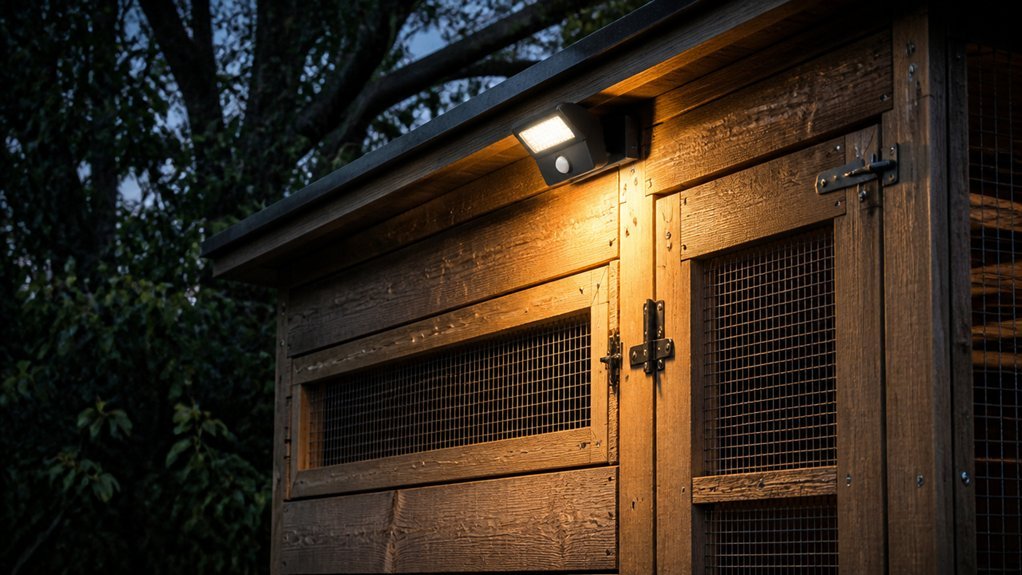
Motion-activated lights can make your coop and run a lot less appealing to nighttime predators. Mount bright LED fixtures around entry points, fence corners, and darker paths so raccoons, foxes, and stray cats don’t have easy cover.
Aim lights outward, not into your birds’ roosting area, so you won’t stress them with unnecessary glare. Use weatherproof models with adjustable sensitivity and timers to reduce false triggers from wind or passing cars. Check that cords stay protected and out of reach, and test the coverage after dark to spot shadows.
Good lighting helps you notice unusual movement faster, and it tells predators your coop isn’t an easy target. For best results, keep bulbs clean and replace weak batteries promptly. Utilizing predator mimicry features such as flashing red LEDs, dual LEDs, or strobe effects can increase deterrence effectiveness, especially when mounted at predator eye level for maximum visibility.
Add Motion-Activated Deterrents
Because predators often test the same weak spots repeatedly, you can make your coop less inviting by adding motion-activated deterrents that startle them before they get close. These devices work best when you place them along likely approach paths and keep their triggers aimed at ground level.
- Mount a motion sprinkler to surprise raccoons and skunks.
- Use a sensor light with a sharp beam to interrupt nighttime stalking.
- Try a motion alarm that emits an abrupt sound predators hate.
- Combine devices so one trigger creates a layered response.
You’ll teach curious visitors that your yard isn’t worth the risk. Choose models with adjustable sensitivity, then test them at dusk so you can catch false triggers and keep your flock calm. For added safety, consider selecting weatherproof deterrents, which are designed to withstand outdoor conditions and remain effective year-round.
Inspect and Reinforce Your Setup Regularly
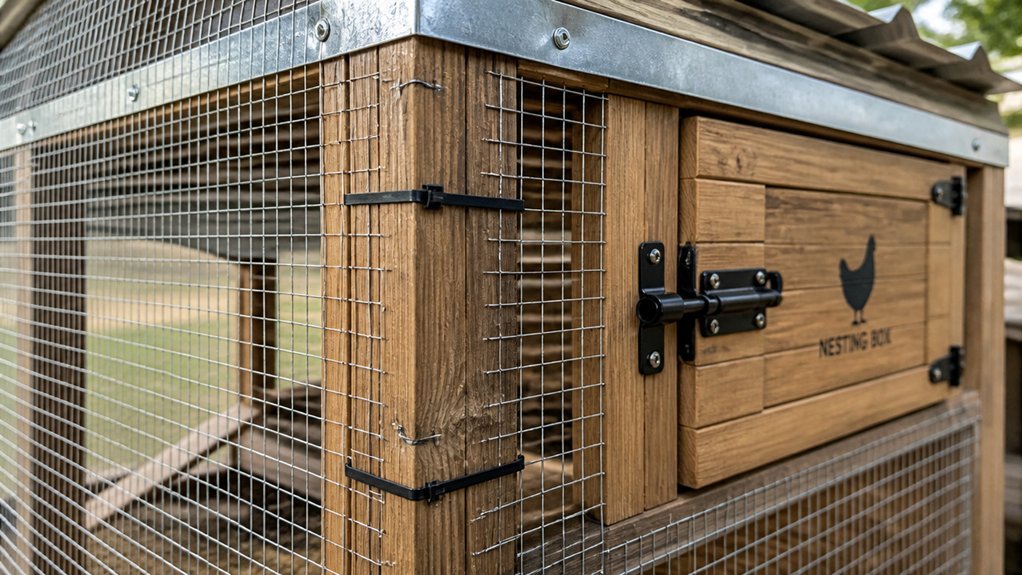
Even the best defenses can fail if you don’t check them often, so inspect your coop, run, and fencing regularly for loose hardware, gaps, chew marks, and weak spots. Walk the perimeter weekly and after storms, then tighten screws, replace bent staples, and patch damaged wire right away.
You should also test latches, hinges, and locks to make sure predators can’t lift or pry them open. If you spot tunneling or digging, add buried wire, pavers, or hardware cloth skirts before the problem grows. Trim back plants that hide access points, and reinforce doors where repeated pressure has started to wear the frame.
Small fixes now keep your flock safer, reduce repairs later, and help you catch trouble before a predator does.
Frequently Asked Questions
How Do I Protect Chickens While Free-Ranging in the Yard?
You can protect chickens by fencing the yard, supervising free-range time, locking them up at dusk, trimming cover, using overhead netting, and keeping feed secured. Add a rooster or guardian dog for extra vigilance.
What Plants Can Help Deter Predators Around My Chicken Coop?
You can plant rosemary, lavender, mint, and thorny shrubs near your coop. They won’t stop predators alone, but they may discourage some animals, mask chicken scent, and add a helpful barrier around your birds.
How Can I Tell if a Predator Visited Overnight?
You’ll spot tracks, dug soil, scattered feathers, bent wire, egg theft, or stressed hens. Check at dawn, because predators often leave fresh prints, droppings, and broken latches from nighttime visits.
Should I Use a Guard Dog With Backyard Chickens?
Yes, you can, if you train the dog well and supervise closely. You’ll need a calm breed, secure fencing, and gradual introductions, or the dog may stress, injure, or chase your chickens.
What Emergency Steps Should I Take After a Predator Attack?
You should count chickens immediately, isolate injured birds, clean wounds, and move them indoors. Then repair the coop, remove attractants, and set traps or cameras. Call a vet if injuries look serious or stress worsens.
In Summary
Keeping your chickens safe in the city takes a little planning, but it’s worth it. When you know the predators in your area, build a secure coop, protect the run, and store feed and waste properly, you cut the biggest risks fast. Add lights, motion-activated deterrents, and regular inspections to stay ahead of trouble. With these simple habits, you’ll give your flock a safer, calmer home and enjoy better peace of mind every day.



