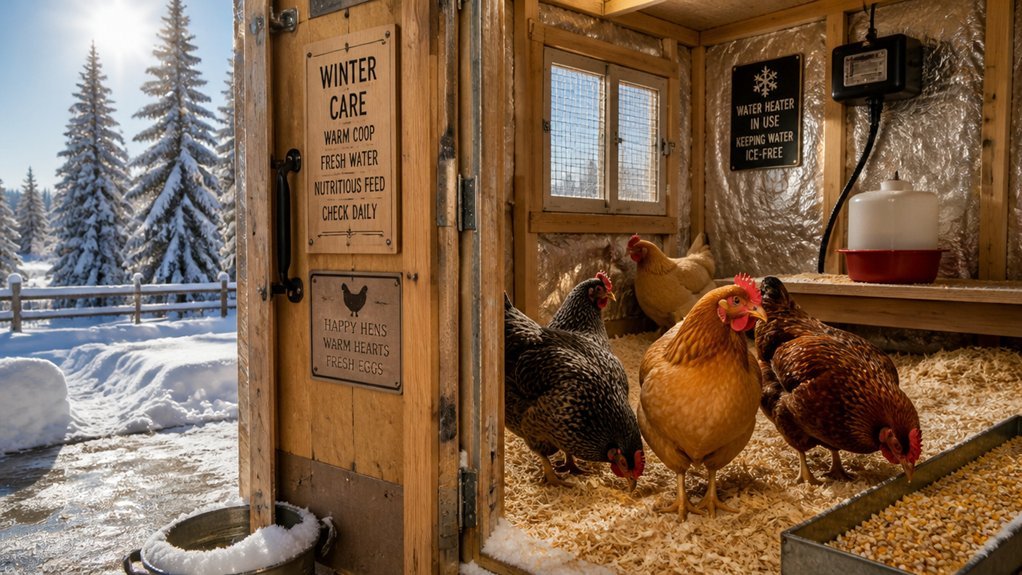
Keep your chickens warm by blocking drafts but leaving high vents open for gentle airflow, and add dry bedding so the coop stays dry. Prevent water and feed from freezing by checking them often, using heated waterers, and replenishing warm water as needed. Winterize the coop with well-insulated walls, secure gaps, and raised roosts off the floor. These simple steps help your flock stay healthy, and there’s more to do to keep them thriving.
Keep Chickens Warm in Winter
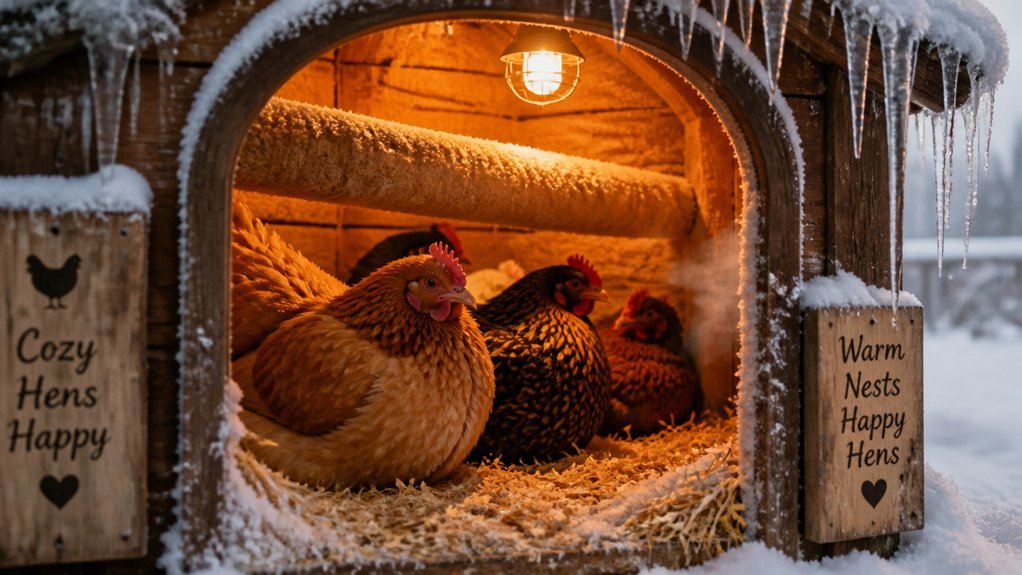
When temperatures drop, you need to help your chickens stay warm without trapping moisture in the coop. You should block drafts, but keep gentle airflow moving above the roosts so humid air can escape. A well-maintained heated waterer helps prevent water freezing and keeps your flock hydrated during cold weather. Add dry bedding and refresh it often, since damp litter steals body heat fast. Give your flock enough space to roost comfortably, and raise roosts off the floor to reduce contact with cold surfaces. Insulate the coop walls if needed, but never seal it airtight. You can also hang a clear windbreak over open areas to cut chill without smothering ventilation. Check your birds each evening for fluffing, huddling, or sluggishness, because those signs mean they need better protection.
Prevent Water and Feed From Freezing
Warm, dry housing only helps so much if your flock can’t reach unfrozen water and feed. You should check both several times a day during hard freezes. Use heated waterers, or swap in fresh warm water before it has time to ice over. Keep water containers off the ground on a stable stand so cold soil won’t chill them as fast. Durable materials will withstand harsh conditions and prevent leaks or cracks that could lead to freezing issues.
For feed, store extra bags in a dry place and bring out only what you’ll use soon. If you wet mash, offer it in small amounts so it doesn’t freeze into a block. Break any ice crust right away and remove spoiled feed.
When hens can drink and eat easily, they stay active, maintain body heat, and handle winter stress better.
Winterize the Coop for Healthy Chickens
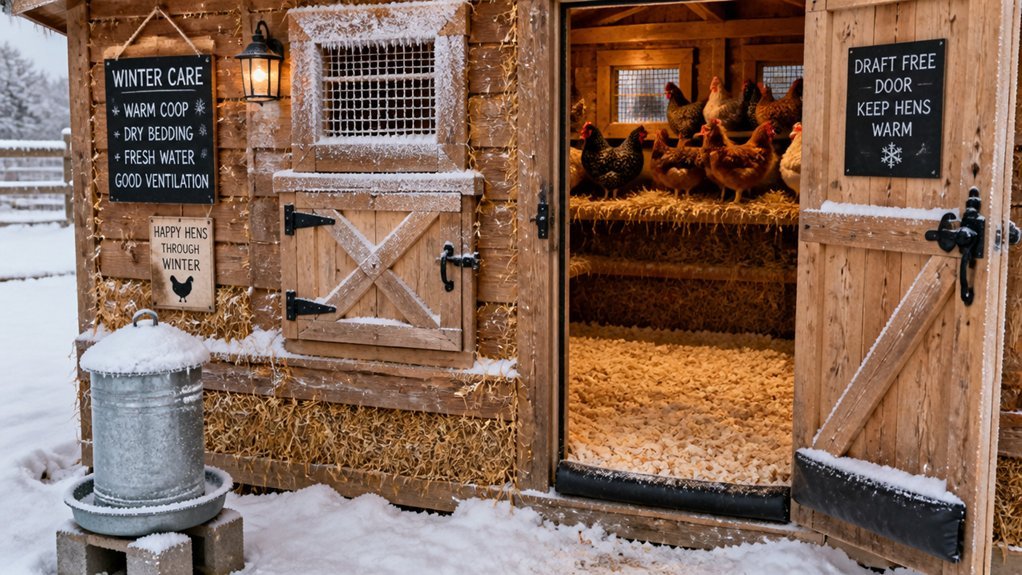
As temperatures drop, you need to seal out drafts, conserve heat, and keep the coop dry without cutting off ventilation. Check walls, doors, windows, and seams for gaps, then block them with weatherstripping, hardware cloth, or safe caulk.
Add clean bedding so chickens can burrow and stay off cold floors. Raise roosts away from damp ground and keep perches wide enough to protect their feet. Insulate the coop only where birds can’t peck it, and never trap moisture inside.
Install vents high above the roosts so stale air escapes while fresh air enters. Trim snow buildup around the structure and fix roof leaks quickly. Sufficient walk-in height access and proper door placement further aid in maintaining a comfortable environment.
A dry, draft-free coop helps your flock conserve energy and stay healthy all winter.
Frequently Asked Questions
How Often Should Chickens Be Checked for Frostbite in Winter?
You should check your chickens daily for frostbite during winter, especially on combs, wattles, and feet. If temperatures plunge or winds pick up, inspect them morning and evening so you can catch problems early.
What Bedding Works Best for Chicken Coops During Cold Months?
You’ll want dry straw or pine shavings, since they insulate well and stay absorbent. You can add deeper layers for extra warmth, but you shouldn’t use damp bedding because it’ll chill your birds.
Can Chickens Safely Free-Range in Snowy Weather?
Yes, you can let chickens free-range in snowy weather if you monitor them closely, provide dry shelter, and limit exposure during extreme cold. You’ll protect their feet and avoid frostbite better.
Should Chickens Get Extra Protein in Winter?
Yes, you should offer a bit more protein in winter because chickens burn extra energy staying warm. You can use higher-protein feed or treats, but don’t overdo it or crowd out balanced nutrition.
How Do You Keep Predators Away From Chickens in Winter?
You keep predators away by locking chickens in a sturdy coop at dusk, securing latches, covering runs with wire, removing food scraps, and checking for diggings. You can also use lights, dogs, and regular patrols.
In Summary
When winter hits, you can keep your chickens healthy with a few simple steps. Make sure they stay warm without overheating, and give them a draft-free coop with plenty of dry bedding. Check water and feed often so they don’t freeze, and refresh them as needed. A little winter prep goes a long way in protecting your flock, keeping them comfortable, and helping them stay happy and productive all season long.