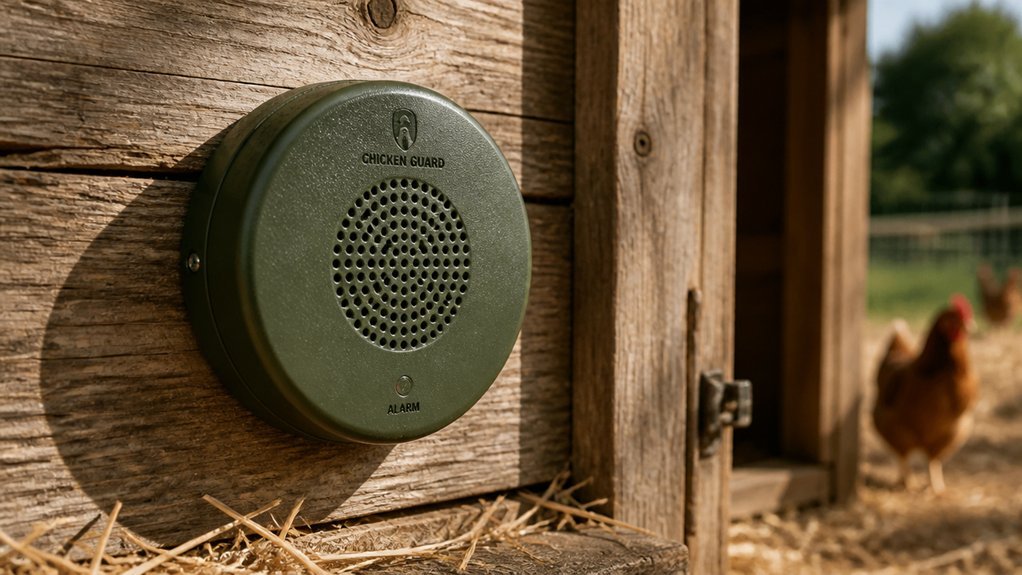
Sound alarms for chicken protection are devices that blast sudden noise to scare off predators and alert your flock. You can use motion, contact, or timed alarms to deter foxes, raccoons, coyotes, hawks, and dogs before they reach the coop. Place them near entry points and pair them with lights, fences, and locked coops for better results. If you keep going, you’ll see which alarm types, placements, and settings work best.
Do Chicken Sound Alarms Work?
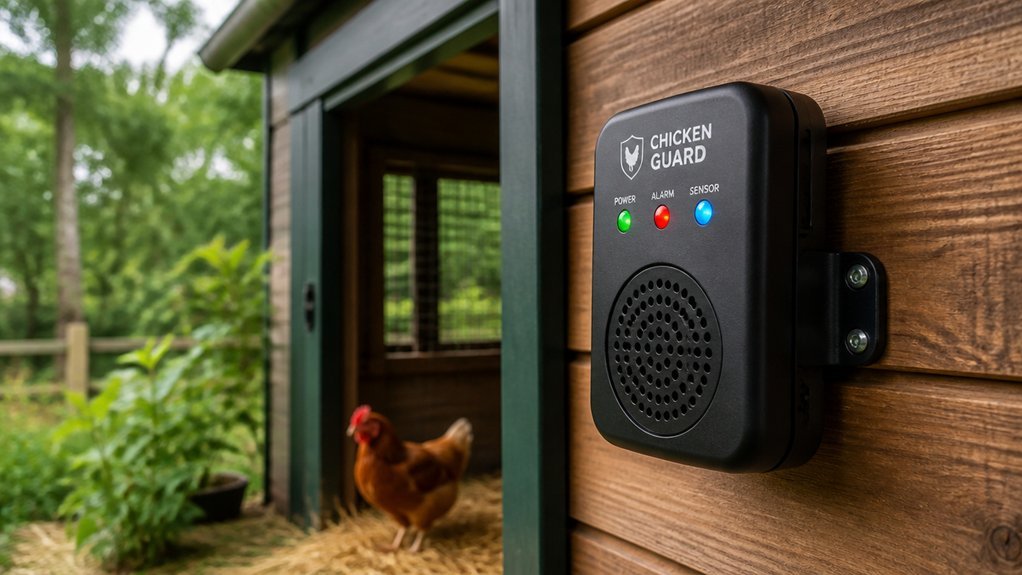
Yes, chicken sound alarms can work, but only if you use them the right way. You can scare off some predators by pairing sudden noise with movement, especially when you trigger the alarm as soon as you spot trouble. If you wait too long, the predator may ignore it or keep closing in. Additionally, using alarms that produce loud, harsh sounds, similar to predator calls or distress signals, usually grabs attention better than softer ones. Still, you shouldn’t rely on sound alone. Birds, foxes, and raccoons may get used to repeated noise, so you should vary your response and combine alarms with secure fencing, locked coops, and good lighting. Incorporating predator deterrent lights can enhance your overall defense effectiveness. Used as part of a broader security strategy, chicken sound alarms can help you protect your flock.
What Chicken Sound Alarms Do
You use chicken sound alarms to scare off predators with sudden noises that make your coop seem unsafe. They trigger when movement, heat, or vibration sets them off, so you don’t have to watch the flock every minute. Incorporating electric fence kits can further enhance predator protection by creating a secure barrier around your chicken coop.
Predator Deterrence Tactics
When a hen spots danger, her alarm call does more than signal panic—it can interrupt a predator’s approach, rally the flock, and buy time for the birds to scatter or hide. A well-placed alarm can also trigger a series of protection measures, alerting other hens to seek safe shelter quickly. You’ll hear this tactic at work when chickens freeze, crouch, and then explode into motion, making the flock harder to target. The sharp, urgent sound can also warn nearby birds outside the coop, pushing them to cover before a hawk, fox, or dog closes in.
Alarm Trigger Mechanisms
Chicken sound alarms trigger a rapid chain reaction: nearby birds stop foraging, scan for danger, and either freeze, crouch, or sprint for cover. You can think of the alarm as a cue linked to a specific threat pattern, such as a hawk shadow, sudden movement, or a distress call. When you hear it, you know the system is signaling urgency, not random noise. A well-designed alarm system considers the importance of weather resistance and predator protection, ensuring reliable operation even in challenging outdoor conditions. Some setups use motion sensors, microphones, or timed playback to detect predators and broadcast warning sounds. Others rely on manual activation when you spot trouble. In each case, the alarm’s job is simple: alert your flock fast enough that they react before the predator closes in. You get a practical response tool that helps your birds notice danger quickly and move toward safety.
Flock Stress Reduction
By giving the flock an immediate warning, sound alarms help cut confusion and keep panic from spreading. You give your chickens a chance to react together instead of scattering in fear. That quick response lowers stress because birds can move to cover, freeze, or regroup before danger gets close.
When you use a clear, consistent alarm, your flock learns the sound and settles faster after the threat passes. Less frantic movement also means fewer injuries, trampling, and lost eggs.
You’re not just scaring predators away; you’re helping your birds stay calmer under pressure. Over time, that calmer routine supports better feeding, resting, and overall health, so your flock can recover quickly and stay more resilient.
Which Predators They Deter
Sound alarms can discourage a wide range of chicken predators, especially the ones that hunt by surprise. You’ll often make coyotes hesitate, and you may also push foxes, raccoons, opossums, hawks, and neighborhood dogs away from the coop area.
Sudden noise breaks their focus, so they’re less likely to stalk, pounce, or dig. You can picture a fox freezing at the fence, a raccoon retreating from the run, or a hawk veering off mid-dive.
- A coyote stopping at the tree line
- A fox slipping back into brush
- A raccoon backing off the feed bin
- A hawk circling elsewhere
- A dog losing interest and wandering on
Additionally, sound alarms can help protect your coop by deterring rodents and pests, reducing the chances of them damaging the structure or contaminating feed.
Types of Chicken Sound Alarms
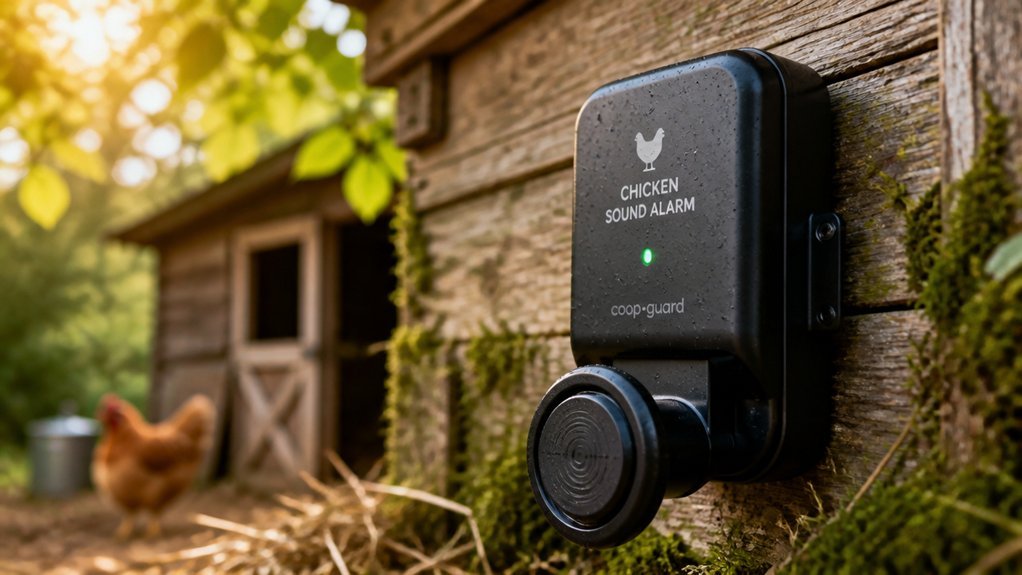
Once you know which predators sound alarms can turn away, the next step is choosing the right kind for your coop. You can pick motion-activated alarms that blast a siren when something triggers them, or timed devices that repeat a recorded distress call or predator warning.
Some units use loud bursts, while others cycle through several sounds to avoid sounding predictable. Battery-powered models work well if you need flexibility, and solar options help you cut upkeep. You’ll also find units with adjustable volume, so you can match the noise to your flock’s needs and your neighbors’ tolerance.
If you want a simple setup, choose a single-sound alarm; if you need stronger deterrence, select a model with multiple sound files and automatic replay. Incorporating poultry netting can also provide an additional physical barrier against predators while your sound alarm works to deter them.
Where to Place a Chicken Alarm
Where should you place a chicken alarm for the best protection? Put it where predators must cross open ground, so you catch them early. Mount the unit near the coop, but not inside the birds’ sleeping space.
Keep it elevated on a fence post, wall, or tree trunk to spread sound across the run. Aim it toward likely entry points, such as gaps, paths, and brush lines. Avoid thick cover that blocks noise or lets foxes sneak close.
- A coop corner overlooking the yard
- A fence line facing woods or fields
- A post above the run gate
- A barn wall near feed storage
- A shaded spot away from direct rain
Test the location by listening from your flock’s area and the approach routes predators use most. Ensure the alarm placement considers the hardware cloth layout for effective deterrence, especially near potential entry points.
How to Set Volume, Delay, and Timing
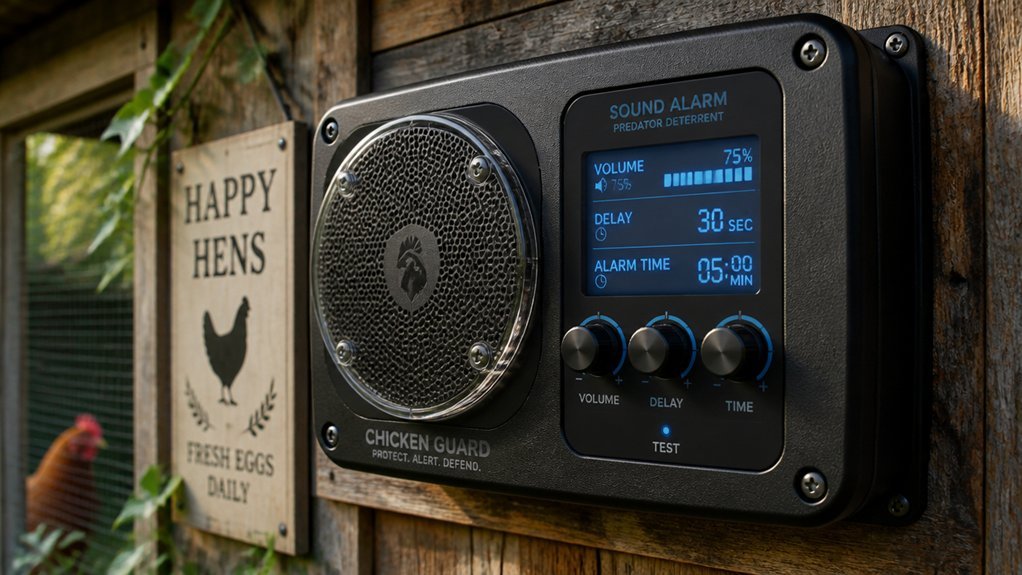
After you’ve picked the right spot, tune the alarm so it alerts you without stressing the flock. Start with a volume that you can hear from the house, then lower it until chickens stay calm. Set a short delay if you need to step away before the sound begins. Use timing that matches your routine, such as dusk checks or overnight watches. Test settings often, because wind, rain, and coop size change how the alarm carries. Incorporating easy-clean tray systems into your coop setup can also help you monitor and adjust alarm sensitivity more effectively.
Chicken Sound Alarms vs. Motion Lights
Chicken sound alarms and motion lights tackle threats in different ways, so the best choice depends on your coop setup and how your flock reacts.
Chicken sound alarms and motion lights guard coops differently, so the best choice depends on your flock and setup.
Sound alarms hit with noise, startling foxes, raccoons, and wandering dogs before they reach the run. Motion lights flash the yard bright, exposing movement and making predators feel watched.
You might picture:
- a dark fence line breaking into white light
- hens huddling beneath a roost
- a fox pausing mid-step
- an owl gliding past the coop
- a sudden burst of sound echoing through trees
If your birds stay calm with noise, alarms can work well. If your yard has limited visibility, lights may help more. Many keepers use both for layered protection.
Additionally, using high-quality, rust-resistant fencing ensures long-term durability and maintains the barrier’s effectiveness against small animals and predators.
How to Choose a Chicken Sound Alarm
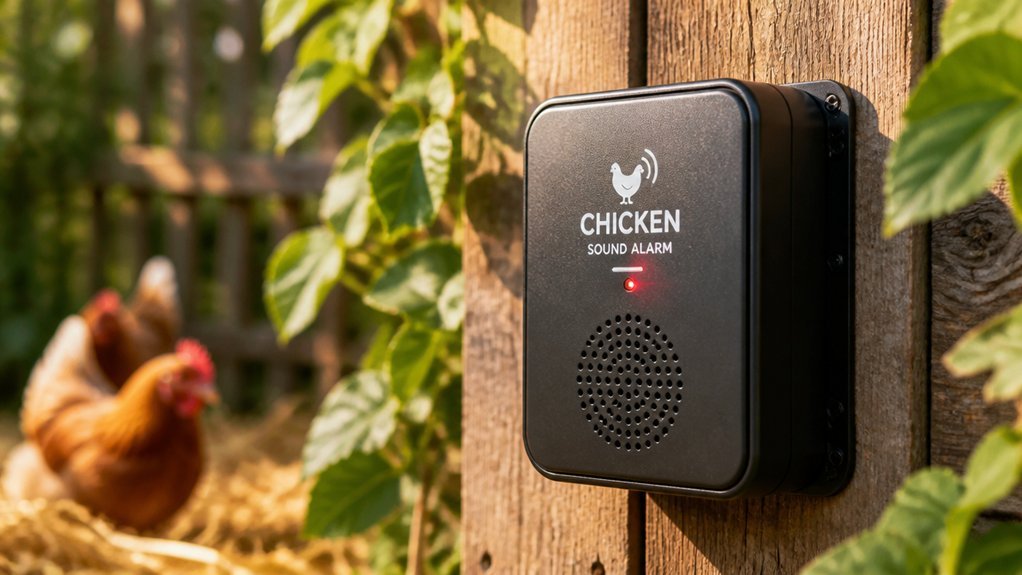
When you choose a chicken sound alarm, check the volume and range so it can cover your coop and yard without gaps. You’ll also want to match the trigger type and sensitivity to your setup, so the alarm reacts to real threats without constant false alerts. Additionally, consider the weather-resistant and durable materials used in the alarm’s construction to ensure it withstands outdoor conditions over time. Finally, think about the power source and placement, since both affect how reliably the alarm works day and night.
Alarm Volume And Range
Alarm volume and range matter because a sound alarm only protects your chickens if they can actually hear it. You want a unit loud enough to cut through wind, rain, and clucking, yet not so harsh that it startles you every time you pass the coop.
Think about the space around your birds: a small backyard needs less reach than a wide run or orchard.
- a coop tucked near a fence
- a run beside tall grass
- a barnyard with open air
- a row of trees swallowing sound
- a distant corner where hens forage
Choose a model with adjustable volume and a stated coverage distance. That way, you can place it where the warning rings clearly and helps keep your flock safe.
Trigger Type And Sensitivity
The trigger type decides what sets off the alarm, so choose one that fits your coop and routine. Motion triggers work well if you want the alarm to react to predators, but they can also react to chickens, wind, or passing pets.
Contact or vibration triggers suit doors, gates, and nesting areas because they alert you when something shifts or breaks in.
Audio triggers respond to unusual sounds, which helps if you need early warning at night.
Sensitivity matters just as much: set it too high, and you’ll get false alerts; set it too low, and you may miss a real threat. Start with a moderate setting, then test and adjust until the alarm catches danger without constant nuisance.
Power Source And Placement
Once you’ve matched the trigger type to your coop, look at how the alarm gets power and where you can mount it. Choose a battery unit if you want flexible placement, or pick solar if your run gets steady sun. If you already have wiring nearby, an outlet-powered alarm can save you battery checks.
Mount the speaker high enough to spread sound, but not so high that rain hits it hard. Aim it toward the approach paths predators use.
- A coop wall with easy access
- A post beside the run gate
- Under an eave for shade
- Near the feeder for quick response
- Close to a fence opening for coverage
Keep it reachable for testing, yet out of pecking range.
Training Chickens Around Alarms
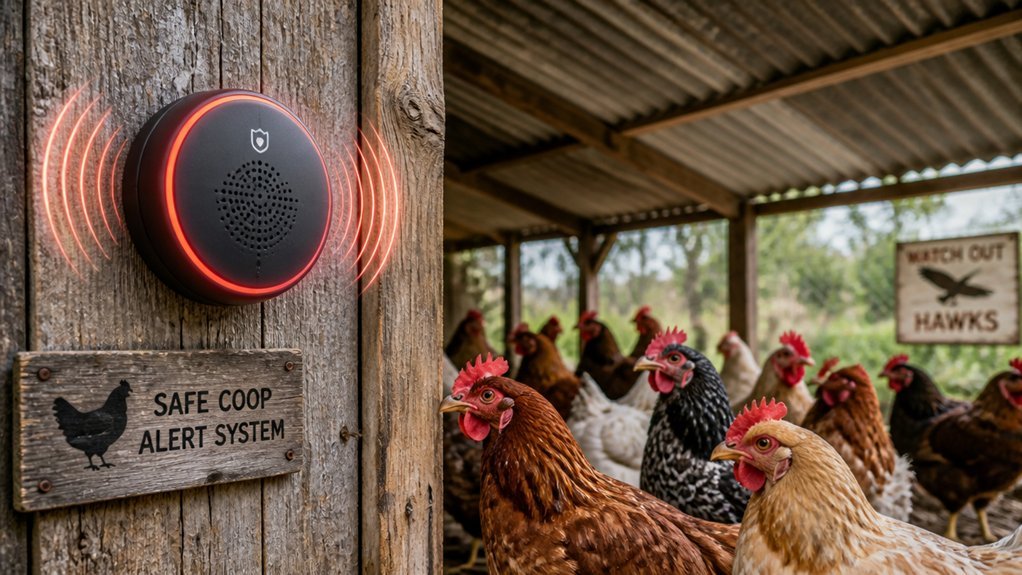
To help chickens stay calm around sound alarms, you’ll want to introduce the noise gradually and pair it with something positive, like treats or a familiar routine. Start at a low volume, then let the flock hear short bursts while they eat or explore.
Watch each bird closely so you can spot stress early and slow the process if needed. Repeat the exercise daily, and keep the setting calm and predictable. You can also stand near the coop during brief tests so your presence reinforces safety.
When the birds remain relaxed, increase the sound a little at a time. With patience, they’ll learn that the alarm signals nothing harmful. This steady approach helps you protect your flock without upsetting their normal behavior or egg laying.
Common Chicken Alarm Mistakes
You can weaken your chicken alarm setup if you place sound devices in the wrong spots, making them easy for predators to avoid.
You also risk stressing your flock with alarms that are too loud or too frequent, which can cause them to panic instead of stay alert.
If you ignore predator patterns, you’ll miss the timing and placement that make your alarms truly effective.
Poor Alarm Placement
Poor alarm placement can make even a good chicken sound system fail when it matters most. You need to position each unit where predators can’t sneak past unnoticed and where your flock can hear it fast.
Mount alarms near coop entrances, runways, and blind corners, then test coverage at dawn and dusk. Keep them clear of walls, hay bales, and dense shrubs that trap sound.
Think about:
- a coop door at first light
- a shadowy fence line
- a feed shed corner
- a tree branch overhang
- a muddy path to the run
When you place alarms well, you give chickens a better chance to react, scatter, and stay safe. Recheck placement after storms, coop changes, or fence repairs.
Excessive Noise Levels
If a chicken alarm is too loud, it can do more harm than good by startling your flock into panic instead of alertness. You should aim for a signal that cuts through background noise without shocking hens or neighbors. Test the volume at coop level, then lower it until birds stay calm but attentive.
| Setting | Result |
|---|---|
| Too loud | Panic |
| Moderate | Notice |
| Soft | Missed |
| Tuned | Calm |
| Tested | Reliable |
You can reduce strain by using adjustable speakers, short bursts, and regular checks. Keep the sound clear, not harsh, and place it where chickens hear it evenly. A balanced alarm helps you protect birds without training them to fear every cue.
Ignoring Predator Patterns
When you ignore predator patterns, a chicken alarm can miss the real threat even if it’s loud enough. You need to match the sound to the visitor, or your flock stays exposed.
A fox slips in low and fast, while an owl strikes from above at dusk. A raccoon prowls slowly, testing weak spots near the coop door.
Watch for tracks, feathers, and timing, then tune your alarm to those clues.
- Dawn shadows near the run
- Scratches on wire mesh
- Silent circling in tall grass
- Sudden hen panic under trees
- Nighttime movement by feed bins
When you learn these signs, you respond sooner, scare predators off, and protect your chickens with smarter, targeted alerts.
Battery, Solar, and Wired Power Options
Power choices shape how reliable your chicken alarm will be day after day. If you want flexibility, battery models let you place the unit wherever predators prowl, and you can swap or recharge cells when needed. Solar units save upkeep because they top themselves off during daylight, which suits you if you’d rather not check power often. Wired alarms give you steady output, but you’ll need a nearby outlet or installed line.
| Option | Best for |
|---|---|
| Battery | Mobile setups |
| Solar | Low-maintenance use |
| Wired | Constant power |
You should match the power source to your coop layout, daily routine, and how often you can monitor the system. That way, your alarm stays ready when it matters most.
Weatherproof Features That Matter
Weather-resistant alarms hold up better because your coop environment won’t always be dry, calm, or clean. You need gear that shrugs off rain, mud, dust, and morning dew without losing volume or reliability.
Weather-resistant alarms stay reliable through rain, mud, dust, and dew, protecting your coop without losing volume or performance.
Look for sealed housings, rustproof screws, and gaskets around battery compartments. UV-stable plastic also helps if sunlight hits the unit all day.
- A tight rubber gasket around the edge
- Covered speaker openings that block splashback
- Corrosion-resistant metal mounts
- Drain channels that shed standing water
- Durable casing that resists cracks
When you choose these details, you cut maintenance and extend service life. You’ll spend less time drying, scrubbing, or replacing parts, and more time keeping your flock protected.
When Chicken Sound Alarms Work Best
Sound alarms work best when you can give them a clear job: warning you fast enough to stop a problem before it spreads. You’ll get the most value when predators strike at night, when you can’t watch the coop closely, or when your flock free-ranges near cover.
Place alarms where chickens already feel pressure, like entry points, feeders, and nesting areas. Use them with motion sensors so you catch sudden movement, not constant noise.
You should test volume and range during dusk, because that’s when many threats show up. If you train yourself to respond quickly, you’ll turn a loud alert into real protection.
They’re also useful during breeding season, when hens stay focused and miss danger, and after storms, when fences and roofs need checking.
Frequently Asked Questions
Can Sound Alarms Scare Chickens as Well as Predators?
Yes, you can scare chickens too—loud sound alarms may startle them as much as predators. You’ll want to use brief, targeted sounds, because repeated noise can stress your flock and disrupt their feeding, laying, and resting.
Are Chicken Sound Alarms Safe Near Neighboring Homes?
Yes, if you keep them moderate, you’ll usually avoid bothering neighbors. You should aim alarms away from homes, limit volume, and use brief bursts, so you protect chickens without creating constant noise complaints.
Do Sound Alarms Affect Egg-Laying or Stress Levels?
Yes, they can stress your hens and reduce laying if you use alarms too often or too loudly. You’ll get better results by testing volume, limiting trigger times, and watching flock behavior closely.
Can Alarms Be Used With Automated Coop Doors?
Yes, you can pair alarms with automated coop doors if you wire or sync them properly. You’ll trigger alerts when doors open or close, helping you monitor security and keep chickens safer.
How Often Should Chicken Sound Alarms Be Tested?
You should test chicken sound alarms weekly, and after any storm, battery change, or repair. You’ll catch failures early, keep them loud, and make sure they still scare predators when your flock needs protection.
In Summary
Sound alarms can be a helpful layer of protection for your chickens, but they won’t do the whole job alone. When you place them well, keep them powered, and choose weatherproof models, they can scare off some predators and give your flock extra warning. You’ll get the best results when you pair alarms with strong fencing, secure coops, and good nighttime habits. Used together, these tools can help keep your chickens safer.