Move the chicken to a dry, draft-free space and keep it separate from the flock. Gently warm frostbitten combs, wattles, toes, or feet with your hands or a room-temperature room; don’t use hot water, hair dryers, or heat lamps. Clean the area with lukewarm water, pat it dry, and protect it from more cold and moisture. Watch for black tissue, swelling, odor, or pain, and call a vet if symptoms worsen. There’s more that can help.
How to Spot Chicken Frostbite

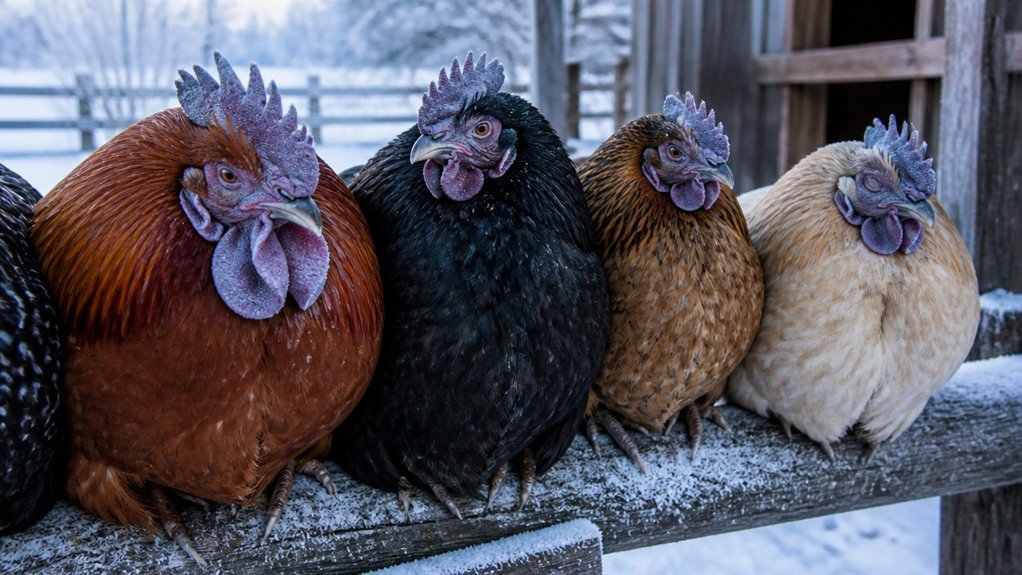
How can you tell if a chicken has frostbite? You’ll usually spot it on the comb, wattles, toes, or feet first. Look for pale, gray, or bluish skin that feels cold, firm, or waxy.
As damage worsens, the tissue may swell, darken, or turn black. Your chicken might limp, tuck a foot up more often, or act painful when you handle the area.
Watch for peeling skin or blisters after a cold snap, since these can signal frostbite too. Check birds carefully in the morning, when damage shows up best.
Don’t confuse frostbite with simple redness from cold exposure; frostbitten tissue often looks dull and swollen, not just chilled. If you catch these signs early, you can respond before the injury gets worse.
Proper wound care and quick response are essential to prevent further tissue damage and ensure complete healing.Isolate Frostbitten Chickens and Reduce Exposure
Once you suspect frostbite, move the chicken to a dry, draft-free space right away and keep it separate from flockmates that might peck at the injured tissue. Use a crate, spare coop, or enclosed pen with clean bedding so you can watch it closely.
Limit its time outdoors until weather improves, and block wind, wet litter, and icy surfaces that can worsen damage. Check the bird several times a day for swelling, discoloration, or changes in behavior, and make sure it has easy access to feed and water.
If you must handle it, do so gently and briefly to avoid stressing the bird. Keeping exposure low helps the tissue stay protected while you monitor recovery and decide if veterinary help’s needed. Additionally, providing a safe enclosure with good ventilation and protection from the elements can aid in minimizing further injury.
Warm Frostbitten Combs and Toes Safely

You should warm frostbitten combs and toes slowly with gentle methods, like moving the bird to a calm, temperate area. Don’t use direct heat, such as a heat lamp, hair dryer, or hot water, because that can damage the tissue more. Keep checking the area as it warms so you can watch for color return, swelling, or other signs of recovery. Using proper electrolyte balance can also support overall hydration and healing during recovery.
Gentle Rewarming Methods
When a chicken’s comb or toes have frostbite, warm them gradually with your hands or by placing the bird in a dry, draft-free area at room temperature. You should keep the bird calm and let the tissues thaw slowly on their own. Watch for color returning from pale to pink as circulation improves.
If the comb feels stiff, cradle it gently and avoid rubbing. Offer fresh water nearby so your chicken stays hydrated during recovery. Check the toes often for swelling or pain, and give the bird a quiet place to rest.
- Soft warmth from your palms
- A cozy, still coop corner
- Pink color slowly returning
- The bird standing quietly, alert
Avoid Direct Heat
Keep thawing slow and gentle, and don’t use direct heat on frostbitten combs or toes. You should let the tissue warm gradually at room temperature or with lukewarm water, never with a heat lamp, heater, hair dryer, or hot cloth. Direct heat can burn damaged skin and make the injury worse fast. Using safe disinfection methods can help prevent infection and promote healing.
If you need to bring a bird indoors, keep the area draft-free and dry, and handle the comb or toes carefully. You can use your hands to shield them from cold air, but don’t rub, massage, or press hard. Let the blood flow return on its own.
If the bird seems painful or the tissue looks severely damaged, contact a poultry veterinarian promptly for guidance and safer care.
Monitor Tissue Recovery
As the combs and toes warm, watch them closely for signs of recovery or worsening. You should see color return gradually, with skin becoming less pale and less rigid. Keep the bird quiet and dry while you check for swelling, blistering, or darkened patches that may signal deeper damage. Proper dust control enhances healing by reducing irritation and preventing further infection.
- A comb slowly pinking up in soft morning light
- Toes loosening as warmth creeps through them
- Skin that stays smooth instead of turning dusky
- A hen standing calmly on clean bedding
Don’t rub the tissue, and don’t force movement. If you notice foul odor, black tissue, or sudden pain, contact a veterinarian fast. Track changes several times a day so you can spot healing early and act before injury worsens.
Clean and Treat Frostbite Wounds
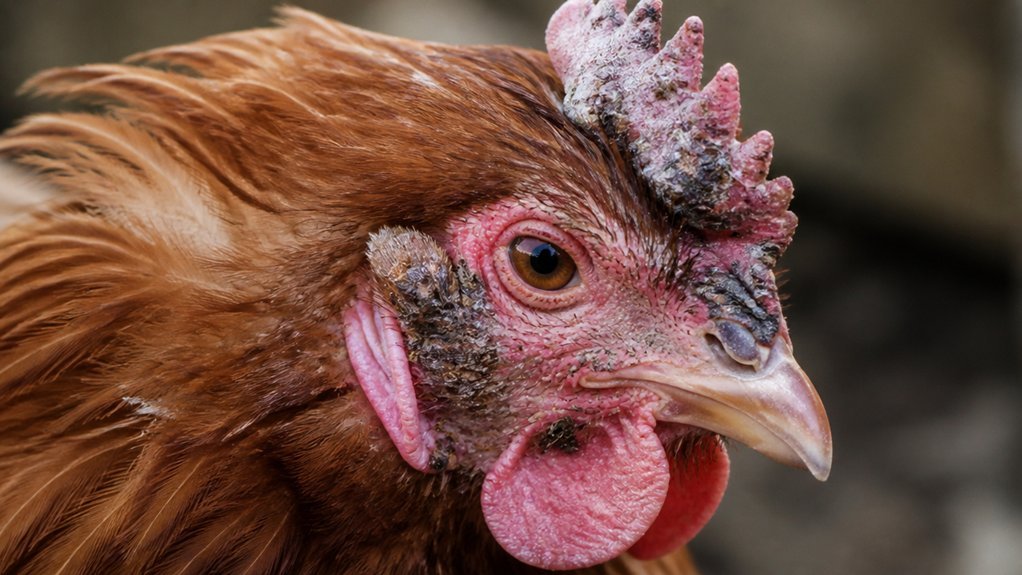
Once the tissue is warm, you can gently clean the affected areas with lukewarm water and a soft cloth.
Then you should apply a mild antiseptic to help lower the risk of infection. Keep the area protected so the healing tissue can recover without more damage.
Gently Clean Affected Areas
If the skin is still intact, gently rinse the frostbitten area with lukewarm water and a clean cloth to remove dirt, bedding, or manure without rubbing or scrubbing. You want the tissue to stay calm and undisturbed while you work.
Pat it dry with a soft towel, then let fresh air reach the spot so moisture doesn’t linger. Handle the bird quietly and keep the surrounding feathers neat so you can see any change.
- A pale comb softened by warm mist
- Feathers parted around a tender toe
- Clean water beading on fragile skin
- A calm hen standing on dry bedding
Check the area often for swelling, darkening, or cracking. Keep the coop clean and dry so grime doesn’t build up again, and consider using low-dust bedding to reduce further irritation and maintain a healthier environment.
Apply Antiseptic Care
After you’ve cleaned the area, apply a poultry-safe antiseptic to the frostbitten skin or small open spots to help lower the risk of infection. You can use a product your veterinarian recommends, such as diluted chlorhexidine or another bird-safe option.
Dab it on gently with clean gauze or a cotton swab, and don’t scrub the tissue. Keep your hands clean before and after you handle the bird, and use a fresh applicator each time so you don’t spread germs.
Using poultry-specific treatments can enhance healing and prevent secondary infestations or complications. Watch the skin for redness, swelling, discharge, or a foul smell, since those signs can point to infection. If the wound looks worse, or the chicken seems painful, lethargic, or stops eating, contact a vet quickly for guidance and treatment.
Protect Healing Tissue
To protect healing tissue, keep the frostbitten area clean, dry, and cushioned from further damage. You should gently rinse away dirt with warm saline, then pat the skin dry with clean gauze. Don’t pick at scabs or loose tissue; let the wound close on its own. Using food-grade diatomaceous earth around the area can help keep it dry and prevent infection, as it absorbs moisture and acts as a natural pest deterrent. Apply a thin layer of vet-approved ointment if your poultry vet recommends it, and cover the spot with a soft, breathable wrap only when rubbing is likely. Check the area daily for swelling, odor, or pus, because those signs mean infection may be starting.
When Chicken Frostbite Needs a Vet

When should you call a vet for chicken frostbite? If you see blackened tissue, swelling, a foul smell, or your bird won’t eat, you should act fast. A vet can check for deeper damage, infection, and pain that you can’t judge at home. Proper breed selection and understanding of poultry health can help prevent complications stemming from frostbite.
| Sign | What it may mean |
|---|---|
| Black comb or toes | Tissue loss |
| Bad odor | Infection |
| Limping or refusal to roost | Severe pain |
| Lethargy and poor appetite | Systemic stress |
You shouldn’t wait if the frostbite spreads or your chicken seems weak. A vet may prescribe pain relief, clean wounds safely, and tell you whether tissue can heal. Quick care can reduce suffering and improve recovery, especially when the injury looks worse than a mild cold spot.
Prevent Chicken Frostbite Next Winter
As winter approaches, you can lower the risk of frostbite by keeping your coop dry, draft-free, and well-ventilated, with plenty of clean bedding and enough space for every bird to roost comfortably. Each evening, you should check combs, wattles, and feet for dampness, then move birds inside before weather turns brutal. Using appropriate bedding options that promote dryness and reduce moisture buildup can also be highly effective in preventing frostbite. Offer extra feed and fresh water so they stay warm and active. Keep perches wide enough to protect toes, and avoid overcrowding, which increases chilling. When snow piles up outside, clear it so chickens don’t stand in wet slush.
Improve Coop Ventilation, Bedding, and Draft Protection
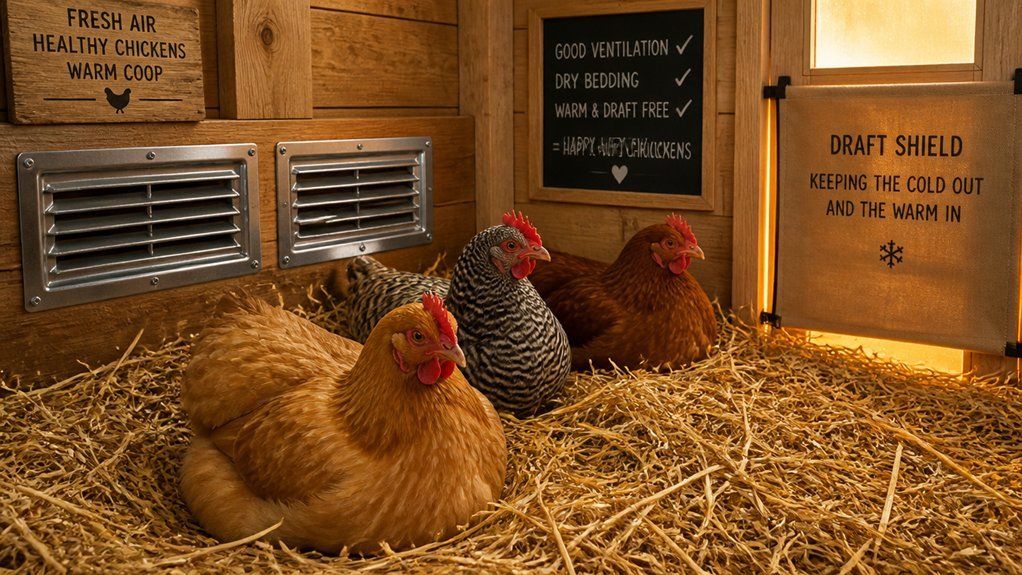
A healthy coop needs fresh air, but it shouldn’t have cold drafts blowing across your birds. You should vent moist air high above roost level so ammonia and condensation can escape.
Fresh air matters, but keep cold drafts off your birds by venting moisture high above roost level.
Keep windows or vents open enough for airflow, yet block wind at bird height with baffles, curtains, or solid panels. Add deep, dry bedding like straw or pine shavings and replace wet spots fast, because damp litter steals body heat.
Raise roosts off cold floors, and keep waterers from spilling. Seal gaps around doors and nesting boxes, but don’t plug every opening; trapped moisture raises frostbite risk.
Check the coop on windy nights, then adjust airflow until it feels crisp, not gusty.
Frequently Asked Questions
Can Frostbite Cause Permanent Damage in Chickens?
Yes, frostbite can cause permanent damage in chickens. You’ll sometimes see lost comb tips, damaged toes, or dead tissue. You should keep them warm, dry, and protected to prevent lasting injury and infection.
How Long Does Chicken Frostbite Take to Heal?
Chicken frostbite usually takes a few days to several weeks to heal, depending on severity. You’ll see mild cases improve faster, but severe tissue damage can take months and may not fully recover.
Should Frozen Combs Ever Be Rubbed or Massaged?
No, you shouldn’t rub or massage frozen combs. You can damage tissue further, cause pain, and worsen swelling. Instead, you should warm the bird slowly, keep it dry, and seek veterinary help if needed.
Are Some Chicken Breeds More Frostbite-Prone?
Yes—you’re right; some breeds are more frostbite-prone. You’ll notice large combs and wattles, like in Leghorns and Polish, freeze easier. Choose small-combed breeds, keep coops dry, and shield birds from drafts.
Can Frostbite Spread From One Chicken to Another?
No, frostbite itself doesn’t spread from chicken to chicken, but you can all be affected by the same cold, wet conditions. You’ll need to improve coop warmth, ventilation, and dryness to protect every bird.
In Summary
Frostbite in chickens can look scary, but quick action can make a big difference. Watch for pale, swollen, or blackened combs and toes, then move affected birds somewhere dry, warm, and draft-free. Warm the tissue slowly, clean wounds gently, and call a vet if damage looks severe. Most importantly, prevent frostbite next winter by improving ventilation, bedding, and shelter. A little care now helps your flock stay healthy and comfortable.