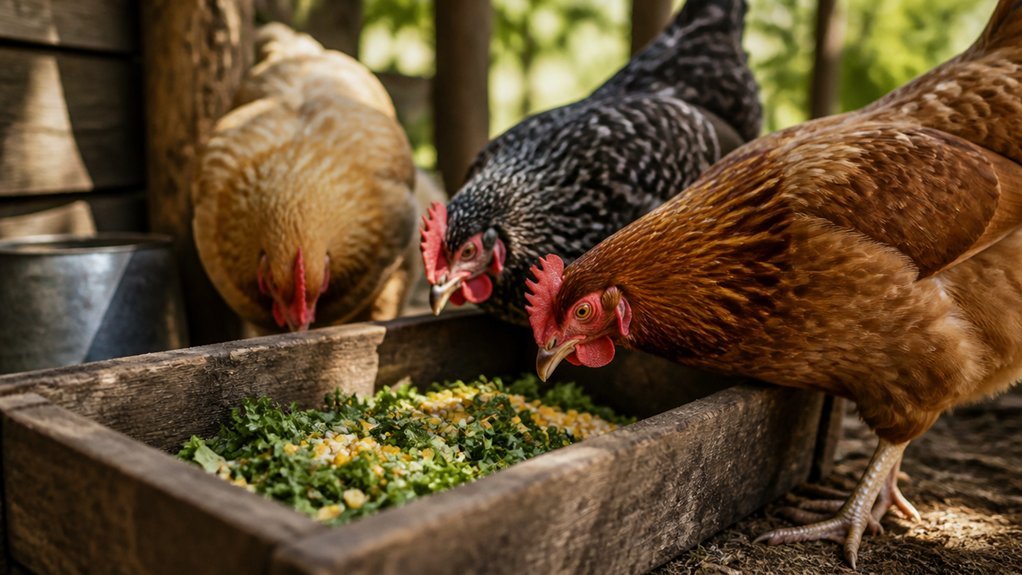
You should recognize bumblefoot in outdoor chickens early because a small sore can quickly turn into a painful infection, swelling, and limping. Catching it sooner helps you spot red, puffy feet, dark scabs, heat, or tenderness before the problem spreads deeper into the foot. Early action can reduce pain, protect movement, and avoid bigger health issues. If you want to keep your flock active and comfortable, there’s more to notice about the signs and fixes.
What Does Bumblefoot Look Like on Chickens?
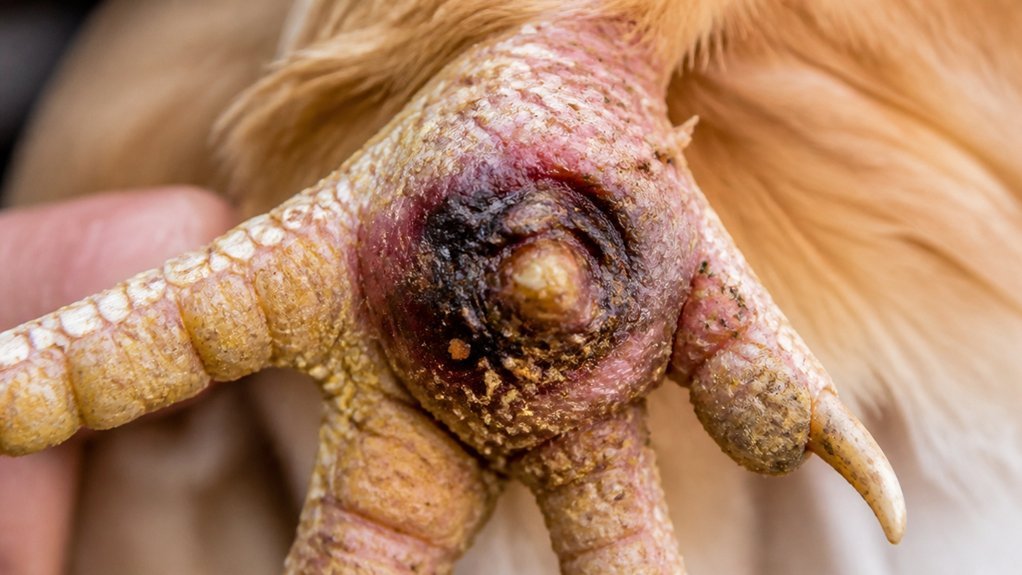
Bumblefoot usually shows up as a swollen, reddened foot with a dark scab or sore on the bottom, often centered on the pad of the foot. You may notice the foot looking puffy or misshapen, and the skin can feel warm or tight. Sometimes the swelling extends into the toes or ankle, making the bird favor one leg. The sore can look crusty, open, or plugged with a firm black center. In severe cases, you might see thickened skin, drainage, or a lumpy lump under the foot pad. Your chicken may avoid roosting normally because pressure hurts. If you handle the foot, it often feels firm and tender rather than soft, and the affected bird can limp or stand awkwardly. Using appropriate wound care sprays, such as silver-based or organic options, can support healing and reduce discomfort.
Early Signs of Bumblefoot in Chickens
Before a chicken develops the obvious swollen foot and dark scab, the earliest signs can be much subtler. You may notice her limping, favoring one foot, or shifting weight when she stands. She might move less enthusiastically, sit more often, or hesitate before jumping down from a perch.
Watch for toes that look slightly tense, a foot that feels warmer than the other, or a small tender spot that makes her pull away when you inspect it. You can also see reduced scratching, uneven stride, or reluctance to walk on rough ground.
These early changes often seem mild, but they matter. If you spot them quickly, you can check her feet closely and respond before the problem becomes harder to manage. Incorporating early detection methods can help you intervene promptly and prevent the progression of bumblefoot.
Why Chickens Get Bumblefoot
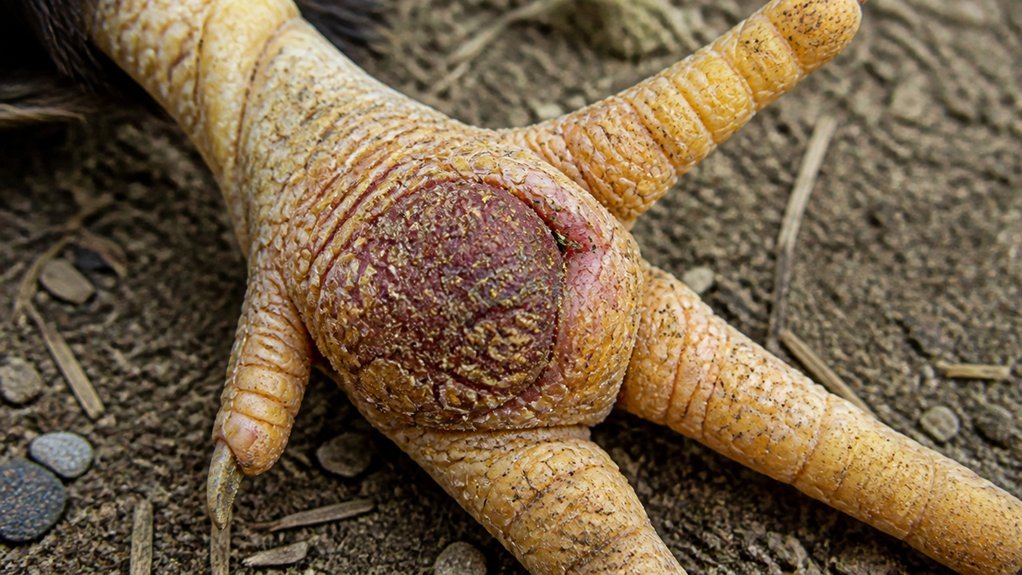
Chickens usually get bumblefoot when a small cut, scrape, or pressure point lets bacteria enter the foot and start an infection. You increase the risk when your birds walk on rough, muddy, or wet ground that keeps skin soft and vulnerable. Hard perches, sharp rocks, splinters, and abrasive flooring can also create tiny injuries. Using dust-free bedding helps minimize respiratory irritation and reduces the spread of bacteria that can cause infections. Heavy breeds face more pressure on their feet, so you’re more likely to see problems if they jump from high roosts. Dirty bedding and crowded runs expose feet to more bacteria, while poor footing makes cuts more common. If you keep your coop dry, provide smooth perches, and check for hazards often, you lower the chance that a minor injury turns into bumblefoot.
How Bumblefoot Hurts Your Chickens
When infection takes hold, the foot becomes painful, swollen, and warm, making it hard for your chicken to walk normally. You may notice her shifting weight, limping, or refusing to scratch and roam.
Each step can press on the sore pad, so the pain builds and she tries to protect the foot. As discomfort grows, she spends more time sitting, which can weaken her legs and reduce her activity. She may eat less because moving to feed or drink hurts.
The infection can also spread deeper into the tissue, increasing swelling and stiffness. If you don’t address it, your chicken’s mobility drops further, and she can become stressed, thin, and less able to keep up with the flock.
How to Check Chickens for Bumblefoot Safely

Gently pick up your chicken and support her body so she feels secure, then examine each foot in good light for swelling, redness, heat, scabs, or a dark central plug. A dust bath mixture can help keep her feathers healthy and prevent skin issues that contribute to bumblefoot. Hold her calmly against your chest and keep your movements slow so she doesn’t struggle. Lift each toe and look at the pads, the heel, and the joint above the foot. Compare both feet for differences in size, firmness, and tenderness. If she pulls away, pause and soothe her before continuing. Clean, dry hands help you feel for small changes without causing extra stress. Check the perch, coop floor, and run too, since rough or damp surfaces can irritate feet and make bumblefoot more likely. Routine checks help you notice problems early.
When to Treat Bumblefoot or Call a Vet
If you notice a swollen, red, warm foot with a scab or dark plug, it’s time to treat bumblefoot before the infection worsens. You can handle mild cases at home if your hen still walks well, eats normally, and the swelling stays limited. Clean the foot, soak it, and keep her on dry, soft bedding.
- Treat it yourself when the sore is small, the bird is bright, and you can see no deep drainage or spreading redness.
- Call a vet if the foot is very swollen, lameness is severe, the bumblefoot keeps returning, or your chicken seems depressed.
- Get help right away if you see pus, a foul smell, heat up the leg, or your bird stops bearing weight.
Frequently Asked Questions
Can Bumblefoot Spread to Other Chickens?
Yes, bumblefoot can spread indirectly when you share contaminated bedding, perches, or surfaces, and if multiple birds face similar injuries. You should isolate affected chickens, clean housing, and treat wounds promptly to reduce risk.
Does Bumblefoot Go Away Without Treatment?
No, it usually won’t go away on its own, and you’ll need to treat it. If you ignore it, the infection can worsen, causing pain, lameness, and possible abscesses or deeper tissue damage.
Can Chickens Still Lay Eggs With Bumblefoot?
Yes, your chickens can still lay eggs with bumblefoot, but pain and infection often reduce laying. You should treat the foot quickly, because stress, limping, and worsening infection can affect their health and egg production.
What Bedding Helps Prevent Bumblefoot?
You’ll help prevent bumblefoot with clean, dry, soft bedding like pine shavings, chopped straw, or hemp. Change wet spots often, avoid rough surfaces, and keep perches smooth so your chickens’ feet stay protected.
Is Bumblefoot More Common in Certain Chicken Breeds?
Yes, you’ll see bumblefoot more often in heavier breeds like Brahmas, Cochins, and Orpingtons because they put more pressure on their feet. You can reduce risk with clean bedding, dry ground, and regular foot checks.
In Summary
Recognizing bumblefoot early helps you protect your outdoor chickens from pain, infection, and long-term mobility problems. When you check their feet regularly, you can spot swelling, scabs, or limping before the condition gets worse. If you catch it soon, you’ll have a better chance of treating it successfully at home or with a vet’s help. Staying alert keeps your flock healthier, more comfortable, and ready to roam, scratch, and forage safely.