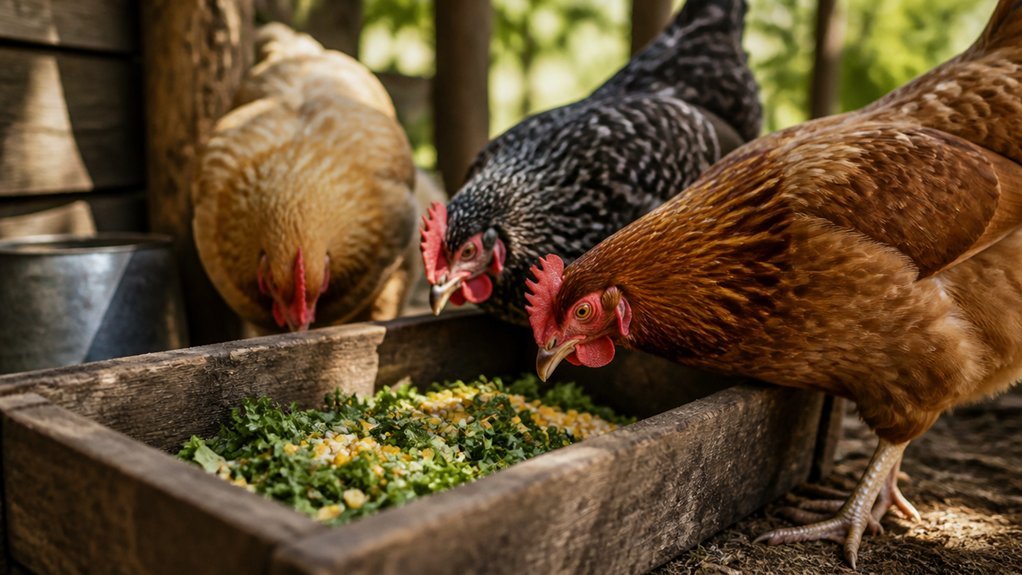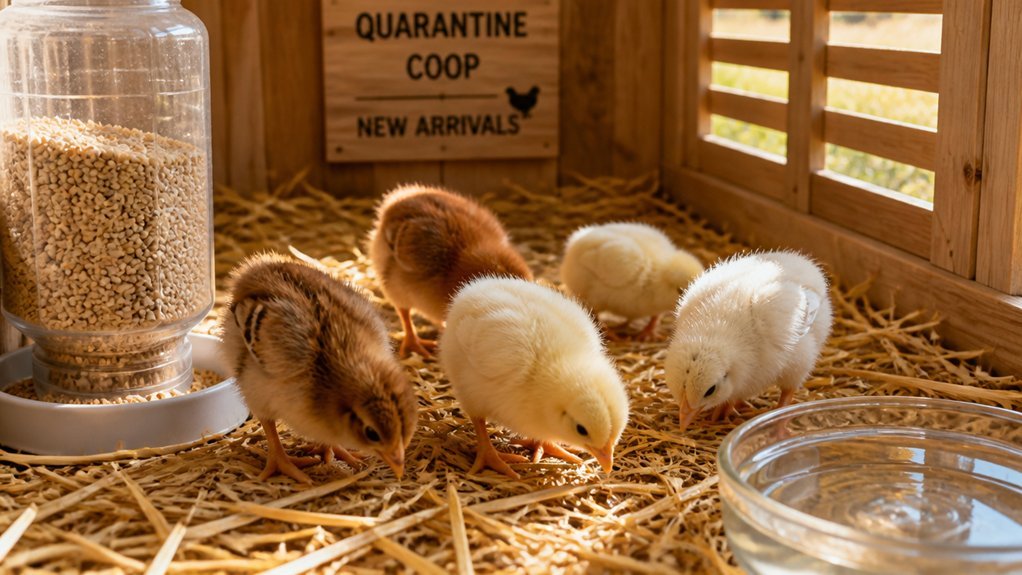
Quarantine new chickens for at least 30 days so you can spot sneezing, diarrhea, mites, or lethargy before they reach your flock. Keep them in a separate coop with good ventilation, dry bedding, secure latches, and their own feeders and waterers. Check them daily for eating, drinking, droppings, and breathing problems. Clean spills fast and replace water often. If they stay healthy and gain weight, you can introduce them slowly and safely—there’s more to know.
Why Quarantine New Chickens Matters

When you bring new chickens home, quarantining them matters because it gives you time to watch for signs of illness before they can spread to the rest of your flock. You can catch sneezing, diarrhea, lethargy, mites, or odd behavior early, when treatment’s easier and losses are lower.
Quarantine also helps you spot birds that aren’t eating, drinking, or adjusting well after transport stress. If you add newcomers right away, you’re gambling with the health of every hen and rooster you already care for.
Proper materials and durability features of the quarantine enclosure can withstand frequent cleaning and weather exposure, ensuring a safe environment for new arrivals.
Set Up a Safe Quarantine Coop
Now that you know why quarantine protects your flock, the next step is setting up a separate coop that keeps new birds contained and easy to monitor. Place the coop far enough from your main flock that birds can’t mingle, share feed, or drink from the same containers. Use sturdy walls, a secure roof, and predator-proof latches so nothing gets in or out. Provide good ventilation without drafts, dry bedding, and enough space for each chicken to move comfortably. Incorporate easy-clean tray systems to facilitate quick waste removal and maintain sanitary conditions. Keep tools, feeders, and waterers used there separate from your regular flock supplies. Make the area easy to clean so you can remove waste quickly and keep conditions sanitary. A simple, practical setup helps you manage quarantine safely and reduces the chance of accidental contact with your other chickens.
Check New Chickens for Signs of Illness

Before you move new chickens into the flock, watch them closely for any signs of illness. You should look for sneezing, wheezing, discharge from the eyes or nose, droopy wings, limping, or unusual tiredness. Check their droppings for diarrhea, blood, or worms, and notice whether they’re eating and drinking normally. Watch their posture, balance, and breathing, since labored breathing can signal trouble. Handle each bird calmly so you can inspect the comb, feet, and vents for swelling, crusts, or sores. Be mindful of disinfectant residue that can linger on surfaces and affect your birds’ health. If one bird seems off, keep it separate and monitor the others too. Catching problems early helps you protect your flock and respond before a mild issue spreads.
Feed and Clean the Quarantine Coop
Even in quarantine, your chickens need a steady routine of fresh feed and clean water every day. Use dedicated bowls and scrub them after each refill to limit germs. Sweep spilled feed, remove damp bedding, and spot-clean droppings so pests don’t build up. Additionally, choosing easy-clean waterers can help maintain water quality and minimize contamination. Keep the coop dry, shaded, and well aired, but avoid drafts that chill them.
- Refill feed at the same time daily.
- Replace water with cool, clean water twice a day.
- Disinfect roosts, feeders, and the floor on a regular schedule.
A tidy quarantine coop helps you observe appetite and droppings more clearly, and it reduces stress for your birds. Handle chores calmly, wash your hands before and after, and keep tools used here separate from the rest of your flock.
When New Chickens Can Join the Flock

How do you know when quarantine is over? You can move your new chickens in when they’ve stayed healthy for at least 30 days, and you’ve seen no sneezing, coughing, diarrhea, mites, or unusual behavior. Check that they’re eating, drinking, and gaining weight normally.
Monitoring their immune health is also important to ensure they are resilient before introducing them to the flock.
Before you mix them with your flock, watch them closely for a few days in a separate pen so you can spot any late symptoms. If your birds came from a farm with known disease issues, extend quarantine and consult a vet.
When you’re ready, introduce them gradually through a fence or wire panel so both groups can see and hear each other first. Then supervise the first direct meeting, provide extra space, and separate any bird that acts sick or aggressive.
Frequently Asked Questions
How Long Should Quarantine Supplies Be Kept Separate From Flock Supplies?
Keep quarantine supplies separate for the full quarantine period, usually 30 days, and sanitize them before reuse. You’ll protect your flock by using dedicated gear, feeding tools, and buckets until you’re certain birds are healthy.
Can Quarantined Chickens Interact With Pets or Wildlife?
No, you shouldn’t let quarantined chickens interact with pets or wildlife. You’ll reduce disease spread, stress, and contamination by keeping them fully isolated, using separate gear, and preventing any direct or indirect contact.
Should I Quarantine Birds Bought From the Same Seller Together?
Yes, you can quarantine birds from the same seller together if they arrived together and seem healthy, but you should still monitor them closely. If one looks sick, separate it immediately and contact a vet.
What Biosecurity Steps Should I Take Before Entering the Quarantine Area?
You should put on clean boots and coveralls, wash your hands, and use dedicated tools. Keep visitors out, disinfect surfaces, and enter the quarantine area after your healthy flock to avoid spreading germs.
How Do I Disinfect My Clothes and Boots After Handling Quarantined Chickens?
You should remove your clothes, wash them hot with detergent, and dry them thoroughly. Scrub your boots with soap, rinse them, then spray a poultry-safe disinfectant and let them air-dry completely before reusing.
In Summary
Bringing new chickens home is exciting, but a careful quarantine protects the flock you already have. When you separate newcomers, watch for illness, and keep their coop clean, you give everyone a healthier start. Stay patient and don’t rush the process, even if the birds seem fine. Once the quarantine period is over and they’re healthy, you can introduce them with more confidence and less risk. Your flock will thank you for it.