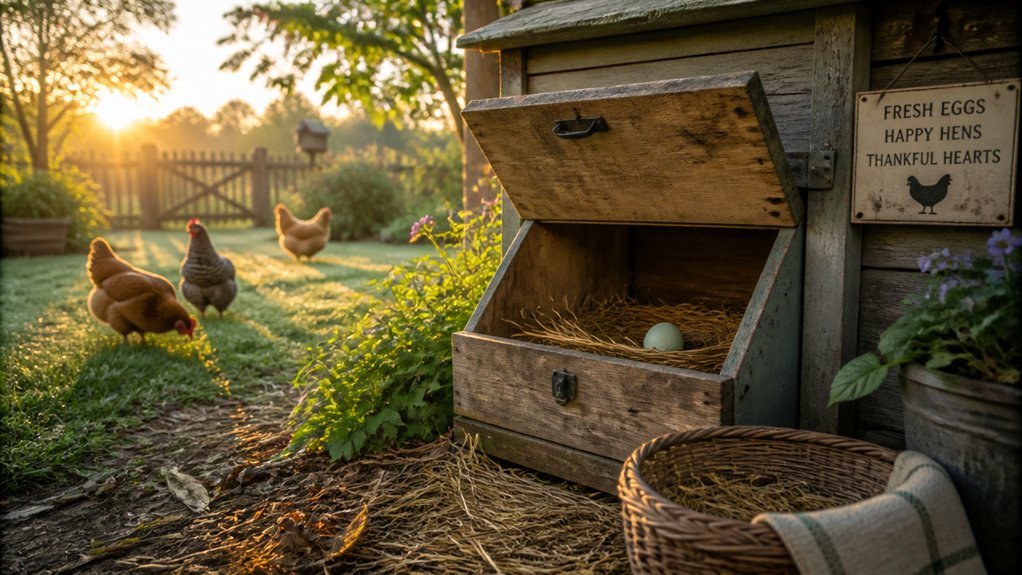
You should collect backyard eggs in the morning, ideally within a few hours after sunrise, because most hens lay then. A first check after sunrise catches the bulk of eggs while nests are still cool, clean, and less crowded. If you have late layers, do a second quick check in the mid-afternoon. This routine helps prevent cracks, dirt, pecking, and spoilage, and it keeps hens calm and your eggs fresher. There’s more to fine-tuning your timing.
What Time Do Chickens Lay Most Eggs?
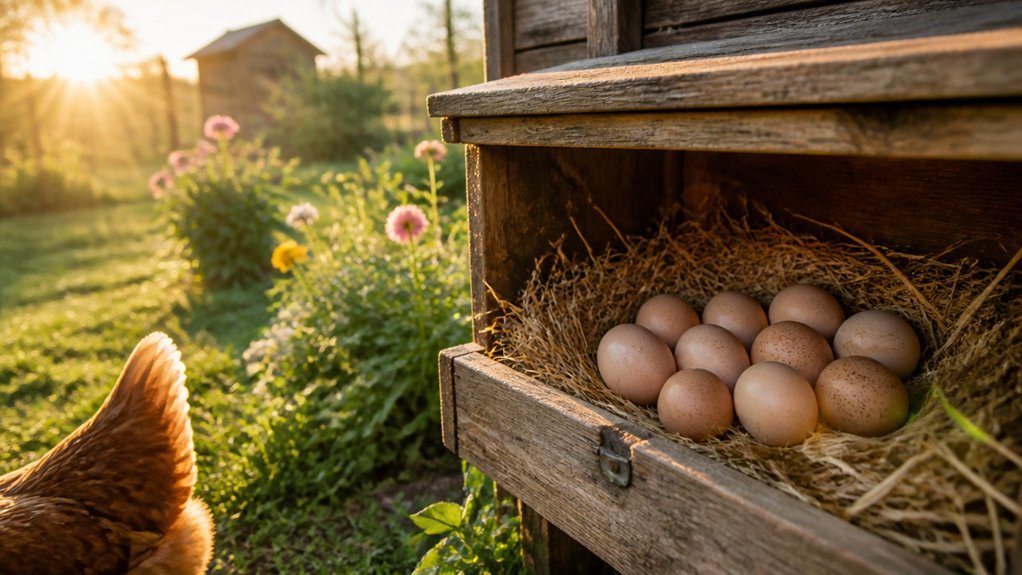
Chickens usually lay most of their eggs in the morning, often within a few hours after sunrise. You’ll notice this pattern most clearly when your hens settle into a steady routine. Light, feeding, and flock habits help trigger laying early in the day, so eggs often appear before noon. Some hens may lay later, but morning is the peak time for most backyard flocks. You can watch for signs like nesting box visits, restlessness, and quiet clucking as laying begins. If you understand this schedule, you can plan your coop checks more effectively and avoid missing fresh eggs. Weather, age, breed, and stress can shift timing a bit, but the morning trend stays common across many healthy hens and seasons. Maintaining a consistent light schedule supports regular laying and helps ensure eggs are available during peak morning hours.
When Is The Best Time To Collect Eggs?
You’ll usually get the best results if you collect eggs in the morning, soon after your hens finish laying. That gives you a good morning collection window before eggs sit in the nest too long. Proper collection timing helps maintain nest cleanliness and reduces the risk of contamination. Check again later in the day for any late layers, so you don’t miss fresh eggs.
Morning Collection Window
The best time to collect eggs is usually in the morning, after your hens have finished laying for the day but before the nest boxes get busy again. You’ll catch most fresh eggs at this point, and you’ll help keep them clean and intact. A gentle, consistent routine helps maintain egg freshness and minimizes disruption to the flock. Walk the coop calmly, check each nest box, and gather eggs gently so you don’t startle birds still settling in. A consistent morning routine also makes your hens easier to manage because they learn when you’ll arrive and where you’ll look first. If you gather promptly, you can reduce the chance of eggs getting stepped on or hidden under bedding. Keep your basket ready, move steadily, and finish the task before the flock becomes active and starts rearranging the nests.
Second Check Timing
If your first morning pass still leaves a few eggs behind, do a second check later in the day, ideally mid-afternoon before dusk. This timing helps you catch eggs laid after sunrise and before your hens settle down for the night. You’ll also reduce the chance of eggs getting dirty, cracked, or pecked. Using appropriately sized nesting compartments with roll-away trays can further facilitate quicker egg collection.
Keep your routine consistent so hens learn when you’re likely to visit the coop. If you notice a hen laying late, wait a bit and return, since disturbing her too soon can stress her.
On hot days, check earlier in the afternoon to prevent heat damage. In cold weather, collect promptly before temperatures drop. A dependable second check keeps your eggs fresher and your nesting boxes cleaner.
Why Does Morning Egg Collection Work Best?
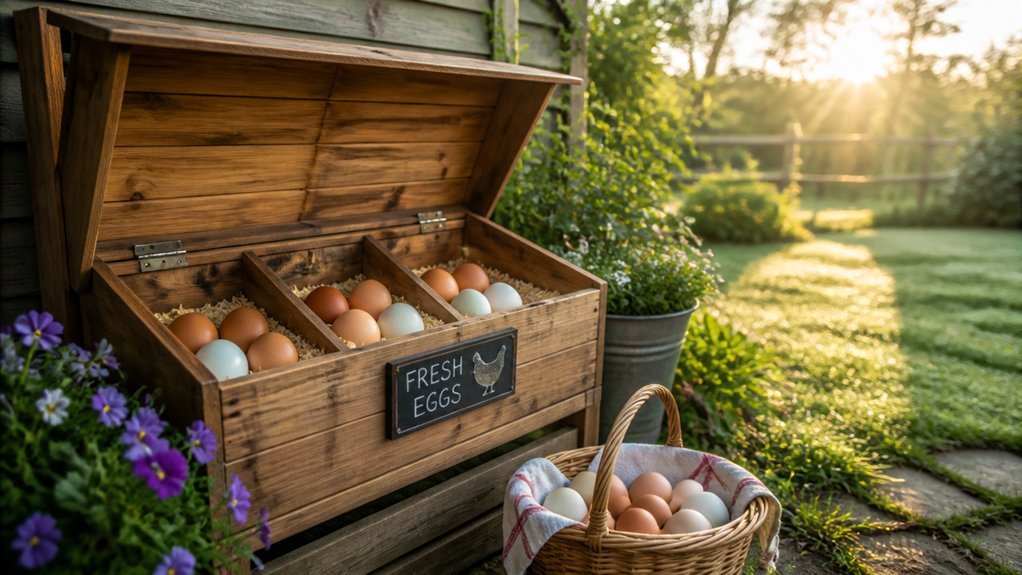
When you collect eggs in the morning, the nest stays cooler and more comfortable for fresh eggs. You also lower the chance of cracks because hens haven’t been active as long.
That makes morning collection a simple way to keep more eggs intact.
Cooler Nest Conditions
Cool morning temperatures help keep eggs fresher by slowing down bacterial growth and reducing moisture loss while they sit in the nest. When you collect early, you’re gathering eggs before the coop warms up and creates a humid pocket around them. That cooler environment helps protect quality while eggs wait for washing or storage. Additionally, collecting eggs in the cooler morning hours minimizes bacterial growth, ensuring eggs remain safer and of higher quality.
Fewer Broken Eggs
Morning collection can mean fewer broken eggs because the hens haven’t had as much time to shift, step on, or crowd the nest boxes. When you gather eggs early, you reduce the chance that a hen will accidentally crack one while settling in or scratching around. A timely collection also helps maintain feed freshness, preventing the buildup of dirt and moisture that could weaken eggshells. Fresh eggs also sit in one place less time, so they’re less likely to roll into each other or get bumped by a busy flock. If you wait until later, more hens enter and leave the boxes, and that traffic raises the risk of damage.
What Are The Risks Of Late-Day Egg Collection?
By late afternoon or evening, the risks of egg collection start to rise because hens may have already pecked, stepped on, or kicked eggs out of the nest. You also leave eggs exposed longer, which can invite dirt, cracks, and missed nests. If you wait too long, you may find hens crowding boxes and making collection harder for you. Additionally, delayed collection can compromise the eggs’ freshness and safety, increasing the chance of microbial growth or spoilage.
| Risk | What Happens | Your Result |
|---|---|---|
| Breakage | Eggs get bumped or crushed | More waste |
| Soiling | Litter sticks to shells | Extra cleaning |
| Missed eggs | Hidden eggs stay in nests | Lower yield |
You can avoid these problems by checking nests earlier and often. Quick collection keeps eggs cleaner, safer, and easier to gather.
How Does Weather Affect Egg-Laying Time?
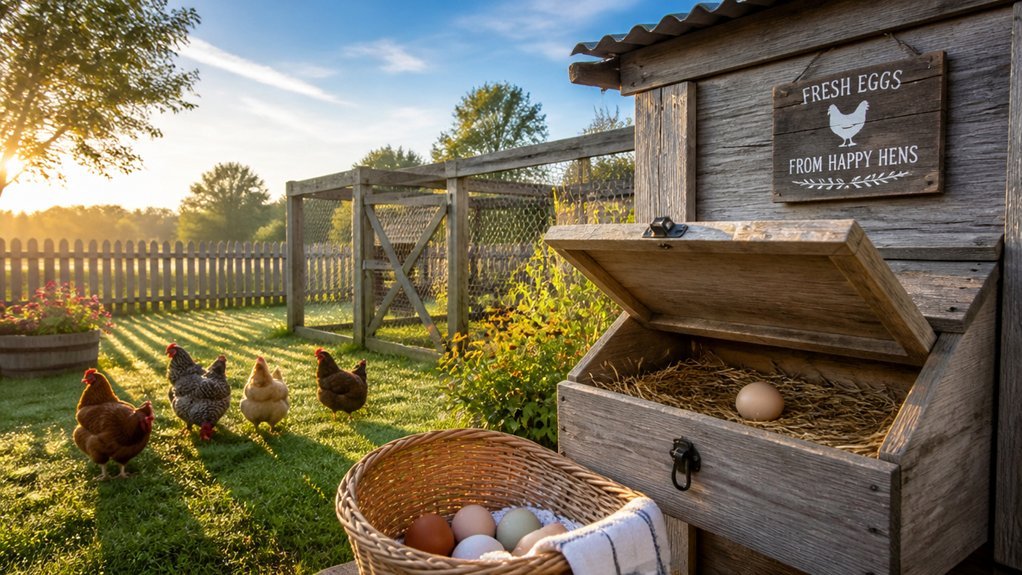
Weather can shift when your hens lay, with cooler mornings or sudden heat changing their routine. Rainy days may keep them inside longer, while seasonal daylight changes can move egg-laying earlier or later. Maintaining proper electrolyte balance can also influence their energy levels and laying schedule during extreme weather conditions. If you watch these patterns, you’ll spot the best collection time more easily.
Temperature Shifts
When temperatures swing, your hens usually shift their laying schedule with them. In cool weather, they may lay later in the morning, waiting until their bodies warm up. In hot spells, they often beat the heat by finishing earlier, so you’ll want to check sooner.
You can also observe changes in breed behavior that might influence their laying times, as some breeds respond differently to temperature fluctuations.
You can use these cues to stay ahead:
- Dawn chill may delay the first egg, leaving you waiting.
- Afternoon heat can make hens tuck in early and surprise you.
- Mild days often bring the most predictable collection time.
Watch your flock’s habits for a week, and you’ll spot the pattern fast. Then you can collect eggs at the right window, keep shells cleaner, and avoid missing those fresh, warm eggs altogether.
Rainy Day Patterns
Rain can throw your hens’ routine off just like temperature changes do, only in a different way. You may notice they linger in the coop longer, step outside less, and lay a bit later after a wet morning.
Damp bedding, noisy rain, and muddy runs can make them uneasy, so they often wait until conditions feel safer before settling to lay. If you collect eggs at the same time every day, you might miss a few on rainy days, especially when hens hide in sheltered spots. Check the nesting boxes later than usual, and look again after the storm eases.
Providing weatherproof materials and ensuring your coop stays dry can help maintain consistent egg-laying patterns despite the rain. Keep the coop dry, well-ventilated, and calm so your flock can return to its normal laying rhythm sooner and stay comfortable.
Seasonal Daylight Changes
As the seasons shift and daylight changes, your hens may start laying earlier or later in the day, even if their routine stays otherwise the same. Short winter days can delay laying, while long summer light often nudges eggs into the morning.
You’ll get the best results when you watch your flock’s pattern, not the clock alone.
- Notice the change — a later egg can mean shorter daylight.
- Collect twice if needed — this keeps eggs clean and reduces stress.
- Adjust expectations — weather won’t ruin production, but it can shift timing.
If you stay flexible, you’ll miss fewer eggs and feel more in tune with your hens. Their rhythm changes with the seasons, and that’s normal.
Which Chicken Breeds Lay Earlier Or Later?
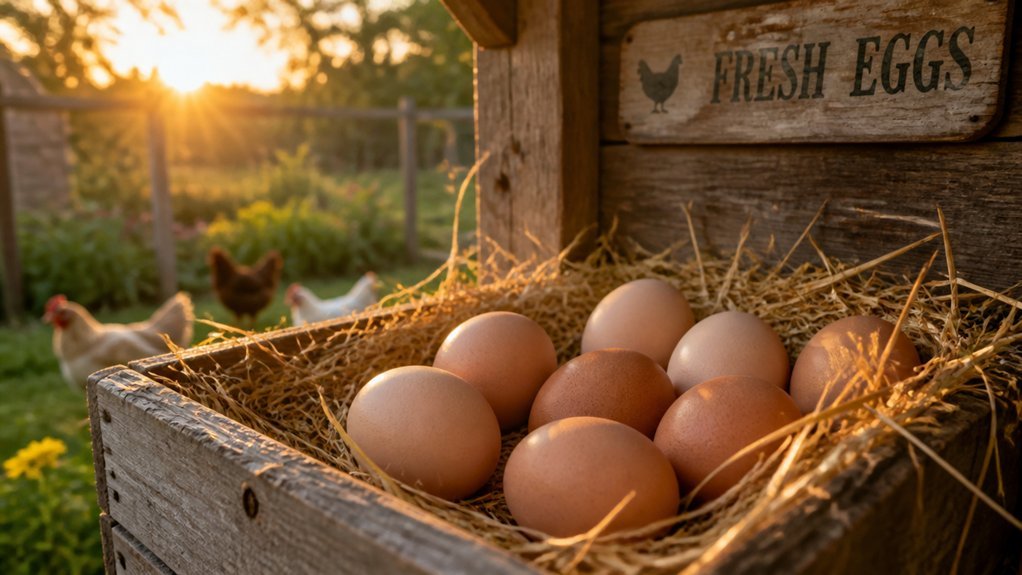
Some chicken breeds start laying earlier than others, and that can affect when you’ll begin finding eggs in the coop. If you raise Leghorns, Sex Links, or Australorps, you may see eggs around 18 to 20 weeks.
Some breeds start laying early—Leghorns, Sex Links, and Australorps may produce eggs by 18 to 20 weeks.
Heritage breeds and larger dual-purpose birds, like Orpingtons, Plymouth Rocks, and Brahmas, often wait until 22 to 28 weeks, and some take even longer.
You’ll also notice that winter hatched pullets may mature more slowly than spring birds because growth and daylight both matter.
Breed doesn’t guarantee an exact schedule, but it gives you a solid estimate. If you want faster results, choose a breed known for early lay. If you prefer patience and size, slower-maturing breeds can still reward you with steady production once they start.
When Should You Check Nest Boxes?
Check nest boxes early in the morning, then again later in the day if you can, because most hens lay by midmorning and you’ll catch eggs before they get dirty, cracked, or hidden under fresh bedding. That simple habit keeps your eggs cleaner and your flock calmer.
You’ll also spot trouble fast, like a hen that’s broody, stressed, or avoiding the boxes.
- Morning checks help you collect warm eggs before they sit too long.
- A second look later can save you from broken shells and surprise messes.
- Quick, quiet visits build trust, so your hens feel safe returning to lay.
When you move calmly and watch the boxes, you protect each egg and make the whole coop feel orderly, peaceful, and rewarding.
How Often Should You Collect Eggs?
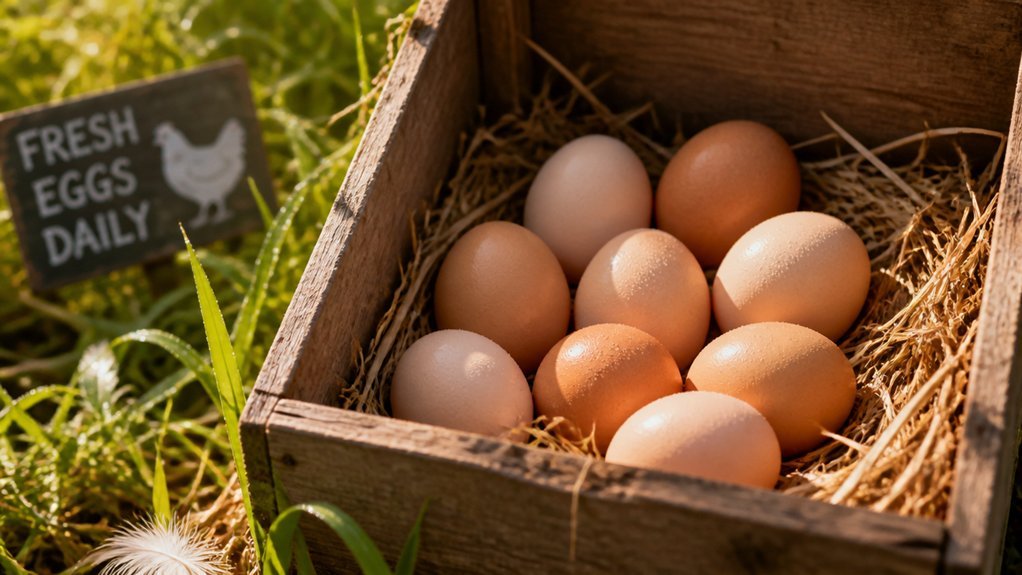
If you can, collect eggs at least once a day, and twice daily is even better during heavy laying. That rhythm helps you stay ahead of your flock’s output and makes egg gathering part of a simple routine.
When you wait too long, hens may keep sitting on fresh eggs, and the nest can fill up fast. Daily collection also lets you notice which hens are laying well and which nests get used most often.
In hot weather, earlier collection is especially smart because eggs sit in less heat. In cold weather, a steady schedule still matters, since regular checks help you avoid missed eggs.
Aim for consistency, and your birds will adapt. If your schedule changes, collect as soon as you’re able.
How Do You Keep Eggs Clean And Unbroken?
Keep nests clean, dry, and padded so eggs stay free of dirt and cracks. You can protect them by checking boxes daily, replacing soiled bedding, and collecting eggs before hens trample them.
Handle each egg with both hands, turn it gently, and never stack warm eggs under weight. If a shell has a little dirt, brush it off with a dry cloth instead of washing it hard.
- Add soft straw or shavings to cushion eggs.
- Remove broken shells and wet bedding fast.
- Carry eggs in a snug basket, not a loose bucket.
These small habits keep your harvest pretty, safe, and satisfying. When you move calmly, your hens stay relaxed, and your eggs arrive home clean, bright, and whole.
What Happens When Eggs Sit Too Long?
When you leave eggs out too long, rising temperatures can speed up spoilage and shorten their safe storage time.
Dirt and bacteria can also build up on the shell, increasing contamination risks. Over time, the eggs’ quality drops, so the whites get thinner and the yolks flatten.
Temperature Effects
Eggs left in the coop or nest box too long can warm up quickly, and that extra heat starts speeding up quality loss almost immediately. When you collect late, the egg’s natural chill disappears, and the contents begin aging faster than you’d like.
You’ll notice three effects:
- The whites thin out sooner.
- The yolk weakens and spreads more easily.
- The egg loses its fresh, firm feel.
Warm eggs also cool unevenly once you bring them inside, which can shorten their best-keeping window.
If your hens lay early, try to gather eggs before the day heats up. On hot afternoons, even a short delay can make a difference. Cooler collection helps you protect texture, freshness, and your confidence in every carton.
Dirt and Bacteria
If you leave eggs sitting in the nest box too long, dirt and bacteria have more time to cling to the shell and work their way through tiny pores. When you collect eggs early, you cut down on contact with bedding, droppings, and damp spots that can spread contamination.
A clean shell matters because you’ll likely crack it open later, and anything on the outside can move inside when you handle it. You should check nests often, especially in warm, humid weather, since microbes grow faster then.
Remove eggs gently, and place them in a clean basket right away. Then store them in a cool, dry spot to slow further contamination.
This simple habit helps you keep your flock’s eggs cleaner and safer every day.
Egg Quality Decline
As eggs sit in the nest box, their quality starts to slip even if they still look fine on the outside. You’ll notice the whites thin out, the yolk weakens, and the air cell grows larger as moisture escapes.
That means fresher eggs cook up firmer, taste cleaner, and hold together better than ones you leave behind.
- You lose that bright, high dome in the yolk.
- You risk more fragile shells and sloppy cracking.
- You give bacteria more time to slip through pores.
If you collect sooner, you protect flavor, texture, and confidence at the stove. Don’t let a busy morning steal the payoff from your flock.
A quick daily check keeps every egg at its best and saves you from disappointing breakfast.
When Is The Best Time To Collect Eggs In Hot Weather?
In hot weather, the best time to collect eggs is early in the morning before the nest boxes heat up, and again later in the evening if your hens lay throughout the day. You’ll help keep eggs cleaner and reduce the chance they sit in a warm box too long.
Check nests often on very hot days, especially if your flock is active and laying frequently. If you can’t collect right away, move eggs to shade as soon as possible and bring them inside promptly.
You should also watch for hidden nests outside the coop, since hens may seek cooler spots. Regular collection during the coolest parts of the day keeps your egg basket fresher and makes handling easier for you.
When Is The Best Time To Collect Eggs In Cold Weather?
During cold weather, the best time to collect eggs is as soon after your hens lay as you can, ideally in the morning and again later in the day if needed. You’ll protect the eggs from chilling, freezing, and cracking, and you’ll keep them cleaner too.
Move quickly, but gently, so you don’t jostle a fragile shell or leave fresh eggs exposed to damp air. A steady routine helps you feel confident and keeps your basket full.
- Check nests early.
- Return later if the flock keeps laying.
- Bring eggs inside right away.
When you collect promptly, you reduce worry and avoid losing good eggs to bitter weather. Your hens stay comfortable, and you get safer, fresher eggs without extra hassle.
How Do Nesting Habits Affect Laying Time?
Hens usually lay around the same time each day, so watching their nesting patterns helps you predict when to check for eggs. When you see a hen settling into a box, fluffing straw, or returning repeatedly to one spot, she’s likely preparing to lay soon.
Some hens prefer quiet morning hours, while others wait until late morning or early afternoon. If your flock follows a strong routine, you can check nests shortly after their usual laying window and catch eggs before hens sit on them too long.
Nesting behavior also shifts with age, breed, and stress, so keep notes on each bird’s habits. By learning these cues, you’ll collect eggs at the right moment and avoid unnecessary disturbance.
How Do You Set A Reliable Egg Collection Routine?
A reliable egg collection routine starts with checking your coop at the same times each day, so you don’t miss fresh eggs or leave them sitting too long. Pick morning and late afternoon, then stick to those windows even on busy days.
Your hens learn the pattern, and you’ll feel calmer knowing what to expect. Build your routine around:
- A quick coop walk to spot hidden nests.
- A clean basket or carton ready before you enter.
- A consistent storage spot in your kitchen.
When you collect often, you protect egg quality, reduce breakage, and discourage hens from pecking or brooding in dirty boxes. If your schedule shifts, set phone reminders so your routine stays steady, and your flock stays happier.
Frequently Asked Questions
Do Hens Ever Lay Eggs at Night?
No, you usually won’t find hens laying eggs at night because they need light to trigger laying. You’ll collect eggs later from nests, though a hen may stay on a finished clutch overnight.
Can Egg Collection Time Affect Egg Freshness?
Yes, you can affect freshness by collecting eggs soon after they’re laid. You’ll keep them cleaner, reduce temperature swings, and slow spoilage. If you wait too long, moisture, dirt, and microbes can get inside.
Should I Leave One Egg in the Nest Box?
No, you shouldn’t leave one egg in the nest box unless you’re encouraging hens to lay there. You’ll risk breakage, dirt, and broodiness; instead, collect eggs promptly and keep nesting material clean.
Do Roosters Change Egg-Laying Schedules?
No, roosters don’t change when you collect eggs; hens lay on their own cycle. You’ll still find eggs at similar times daily. Roosters mainly protect, breed, and sometimes disrupt hens’ nesting.
What if a Hen Lays Outside the Coop?
If your hen lays outside the coop, you should collect the egg promptly and check for hidden nests. You can move her toward a safer nesting area and keep her comfortable, secure, and routine-oriented.
In Summary
To keep your eggs clean, fresh, and safe, you should collect them in the morning whenever possible. Most hens finish laying early, so a morning routine helps you beat heat, dirt, and egg-eating pests. In hot weather, grab eggs even sooner, and in cold weather, don’t leave them out long enough to crack. If you stay consistent, your hens will settle into a predictable pattern, and you’ll make backyard egg collection much easier.