When you find orphaned chicks, warm them slowly, check for injury or dehydration, and keep handling gentle and brief. Set them in a quiet, draft-free brooder with dry bedding, a safe heat source, fresh starter feed, and shallow water they can’t drown in. Watch for weakness, pasty vents, or breathing trouble, and keep notes on appetite and droppings. As they grow, move them to a larger clean space with care, and you’ll know what to watch next.
What Orphaned Chicks Need Right Away
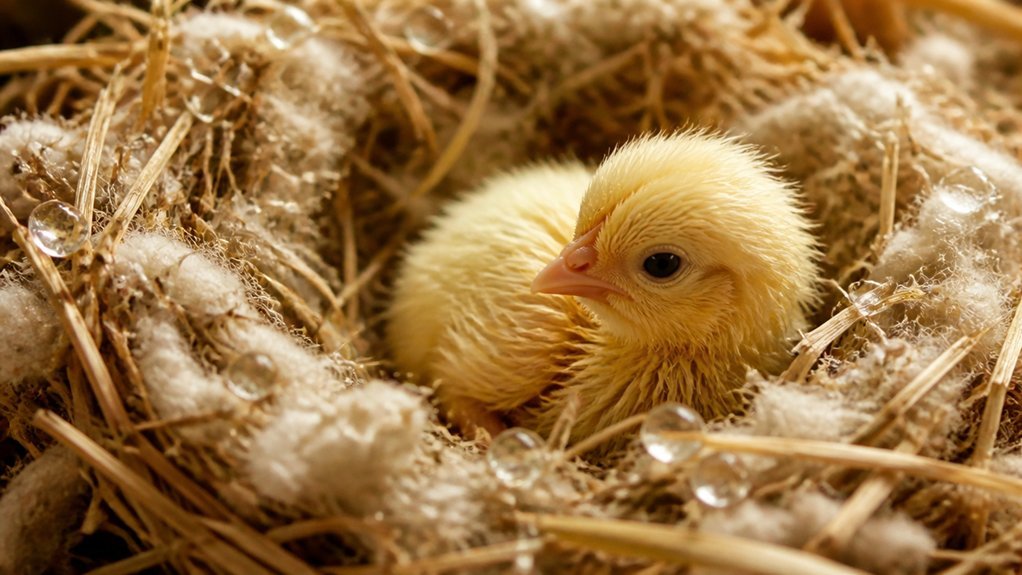
If you find orphaned chicks, their first needs are warmth, safety, and a quick check for injury or dehydration. You should gently cup each chick in your hands, keep them away from pets, and watch for limping, bleeding, or closed eyes.
If a chick feels cool, warm it slowly against your body or with a safe heat source. Offer fresh water right away, but don’t force drinking; instead, dip the tip of its beak lightly if needed.
You’ll also want to check the crop and watch for weakness, wheezing, or pasted vents. Handle them quietly and only as much as necessary.
Quick, calm action helps them stabilize, and you can decide the next steps once they’re warm, alert, and safe. Proper temperature control is essential to ensure their proper growth and avoid stress.
Set Up a Draft-Free Brooder
Place the brooder in a quiet, indoor spot where chicks won’t face sudden temperature swings or traffic.
Position the heat lamp securely so it warms the space evenly without creating hot spots or fire risk. Add draft shields around the brooder to block cold air while still keeping fresh air moving.
Brooder Location
Where should you set up a brooder for orphaned chicks? Pick a quiet indoor spot that stays warm, dry, and protected from drafts. A laundry room, spare bathroom, or enclosed utility area often works well because you can control traffic and temperature. Keep the brooder off the floor if possible, so cold air and dampness don’t settle around it. Choose a location with easy access to water and cleaning supplies, but away from pets, children, and noisy appliances that can stress chicks. Proper ventilation is also essential to prevent moisture buildup and respiratory issues.
Heat Lamp Placement
Once you’ve picked a quiet, draft-free spot for the brooder, focus on putting the heat lamp in the right position. Suspend it securely above one side of the brooder so the chicks can warm themselves without crowding. Keep the lamp high enough to prevent burns, but low enough to maintain the proper brooder temperature. Aim for one warm zone and one cooler zone, so chicks can move away if they get too hot. Check the floor temperature near the lamp with a thermometer, not just the air. Use a sturdy clamp, chain, or fixture that won’t slip or tip. Secure all cords away from bedding and curious beaks. Test the setup before adding chicks, and watch their behavior closely after they arrive. Ensuring proper heat output control and stable mounting helps create a safe and comfortable environment for orphaned chicks.
Draft Shielding
Even a small draft can chill orphaned chicks fast, so you need to block cold air before you bring them into the brooder. Check windows, vents, and door gaps, then seal them with towels, cardboard, or plastic sheeting. Keep the brooder indoors, away from fans and busy walkways. You should also raise the brooder off the floor, where cold air settles. For precise temperature monitoring, consider using a reliable brooder thermometer, which helps ensure the environment stays within the ideal range for chick development.
| Draft source | Quick fix |
|---|---|
| Window crack | Tape plastic over it |
| Door gap | Roll a towel there |
| Floor chill | Elevate the brooder |
After setup, test the space with your hand around the edges. If you feel moving air, adjust the barrier until the chicks stay warm. A draft-free brooder helps them rest, digest, and grow.
Keep the Brooder Warm and Dry
Place the heat source so it warms the brooder evenly without creating hot spots, and make sure the chicks can move away if they get too warm.
Add dry bedding in clean layers to help them stay comfortable and absorb moisture. Check the brooder often for damp spots, since keeping it dry helps prevent chills and illness. Using the right type of brooder heating plate can improve safety and efficiency in maintaining a consistent temperature.
Heat Source Placement
A reliable heat source keeps orphaned chicks warm, but its placement matters just as much as the temperature itself. Position the lamp or brooder plate so chicks can move closer or farther away with ease. That way, they’ll self-regulate without stress. Aim the warm zone to one side, not the center, and leave a cooler area for relief. You should also secure cords and fixtures so they can’t tip or dangle. Check the setup often, especially after feeding or handling. Proper heating wattage ensures safe and effective warmth without overheating the brooder.
Dry Bedding Layers
Dry bedding acts like a quiet shield, keeping the brooder warmer and drier for fragile chicks. You should line the floor with several inches of clean pine shavings, chopped straw, or another safe absorbent material.
This layer traps body heat, cushions tiny feet, and helps chicks stay comfortable as they move around. Keep the bedding loose and fluffed so it insulates well instead of packing down. You can add fresh dry material on top when the surface starts to look tired or thin.
Avoid slick paper or damp bedding, since both can chill chicks and make the brooder less inviting. A dry base also helps you create a stable, cozy space where chicks can rest, eat, and grow without extra stress from cold floors or wet spots. Using bedding with high absorbency ensures moisture is quickly managed, keeping the environment dry and healthy.
Moisture Control Checks
Even with good bedding, moisture can build up fast in a brooder, so check it often and act before it turns cold or damp. Use your hand to feel for wet spots under waterers, around corners, and beneath sleeping chicks. If you find damp litter, scoop it out right away and replace it with dry bedding. Utilize absorbent bedding materials to help manage moisture levels effectively. Keep water containers shallow, stable, and raised slightly to cut spills. Improve airflow without creating drafts, because stale air traps humidity and chills chicks. Watch for drooping bedding, clumped shavings, or a musty smell; those signs mean you need to dry things out. When you spot condensation on walls or lids, reduce moisture sources immediately. A warm, dry brooder helps chicks stay active, eat well, and grow safely.
Feed and Water Orphaned Chicks
When you’re caring for orphaned chicks, feed and water them promptly so they stay warm, hydrated, and strong. Offer a chick starter crumble made for young birds, and make sure it’s fresh, fine, and easy to peck. If the chicks seem unsure, tap the feed lightly to catch their attention.
Give clean water in a shallow dish with pebbles or marbles to prevent drowning. Change the water often so it stays clear and cool. Place both feed and water where chicks can reach them without crowding or stress. Keep the setup close to their heat source, but not so close that it overheats.
Watch that each chick eats and drinks regularly, and remove wet or soiled feed quickly to keep the brooder tidy. Providing balanced nutrition in starter feed supports healthy growth and immune function during this critical stage.
Check Chicks for Signs of Illness

As you care for orphaned chicks, check them often for signs of illness so you can act fast if something seems wrong. Watch for drooping wings, puffed-up feathers, labored breathing, discharge from the eyes or nostrils, and pasty droppings.
A diverse probiotic blend can support their gut health and immune function, especially during stressful times or dietary changes. Healthy chicks stay alert, move easily, and eat with interest. If one sits apart, seems weak, or stops peeping, take notice right away. Feel for unusual coldness or heat, and compare its behavior with the rest of the group. Keep a simple daily record of appetite, droppings, and activity so you can spot changes quickly. If symptoms persist or worsen, contact a poultry vet or experienced breeder for guidance. Early attention can prevent a small problem from becoming a serious one.
Handle Chicks Without Stress
Gentle handling keeps orphaned chicks calm and helps them stay warm and secure. You should move slowly, speak softly, and limit noise around them.
When you pick one up, support its body fully with both hands so it doesn’t dangle or feel exposed. Hold it close to your chest for extra warmth, but don’t squeeze. If a chick struggles, pause and let it settle before you try again.
Keep handling sessions brief and purposeful, so you don’t tire or frighten it. Wash your hands before and after contact to reduce stress and keep things clean.
If you need to inspect a chick, do it in a quiet spot with steady light. Consistent, calm handling builds trust and helps your chicks relax.
Move Chicks to a Bigger Space

Once your chicks are steady on their feet and using the brooder confidently, move them to a larger space so they’ve room to grow and explore. Choose a clean enclosure with dry bedding, secure walls, and good airflow, then keep heat, feed, and water close together at first. Increase space gradually so they can roam without chilling or becoming crowded.
Watch their behavior: if they’re piling up, they may need warmth; if they’re spreading out and scratching, they’re comfortable. Raise feeders and waterers as they grow to reduce spills and keep the area sanitary. Remove wet bedding often, and check that drafts, predators, and sharp edges can’t reach them.
A bigger space helps chicks exercise, stay healthy, and develop naturally.
Frequently Asked Questions
How Do I Tell if an Orphaned Chick Is Male or Female?
You usually can’t tell by looks alone. You’ll need to wait for feathering, comb growth, or sex-specific behaviors, or have a breeder or vet sex the chick. Vent sexing isn’t something you should try yourself.
When Can Orphaned Chicks Be Introduced to Other Chickens?
You can introduce orphaned chicks when they’re fully feathered, healthy, and at least 6 to 8 weeks old. Quarantine them first, then supervise gradual introductions through a barrier before letting them mingle.
What Vaccinations Do Orphaned Chicks Need?
You’ll usually vaccinate chicks against Marek’s disease, coccidiosis, Newcastle disease, and infectious bronchitis, depending on local risks. Check with your vet or hatchery, because you may need different shots for your flock and area.
How Often Should Brooder Bedding Be Replaced?
You should replace brooder bedding daily, or sooner if it’s damp, soiled, or smells. You’ll keep chicks healthier by removing waste often, adding fresh dry bedding, and checking moisture several times each day.
Can Orphaned Chicks Be Raised Indoors Long-Term?
Yes, you can raise orphaned chicks indoors long-term, but you’ll need ample space, ventilation, warmth, and daily cleaning. You should also provide proper nutrition, socialization, and eventually plan for bigger housing as they grow.
In Summary
Caring for orphaned chicks means giving them warmth, food, water, and a safe, draft-free brooder right away. Keep their space clean, dry, and cozy, and watch closely for any signs of illness or stress. Handle them gently and only when needed so they stay calm and healthy. As they grow, move them into a bigger space with care. With patience and consistency, you’ll help your chicks thrive and get a strong start.