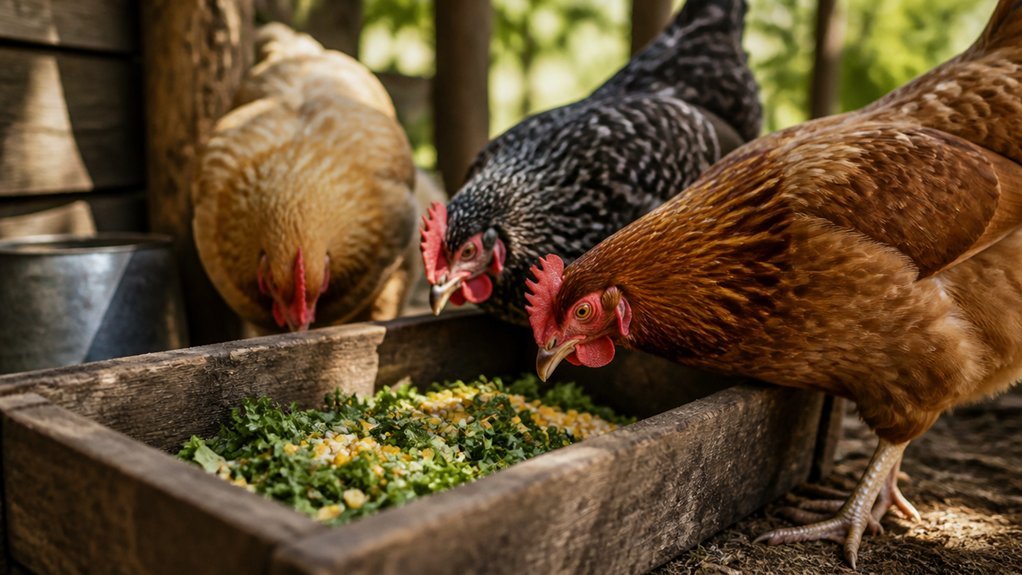
Choose a true broody hen first: pick one that stays on the nest, growls, fluffs up, and has healthy body condition. Next, set her in a quiet, dim nesting box with clean, dry bedding and easy access to food and water. Add fertile eggs at night or early morning, then leave her mostly alone so she feels safe. Watch from a distance, candle eggs after a week, and you’ll learn the finer points below.
Choose a Broody Hen

Start by choosing a hen that already shows strong broody behavior, since not every chicken will sit on eggs willingly. Watch for a hen that stays on the nest longer than the others, growls when you reach for her, and fluffs her feathers when disturbed.
You can also notice if she collects eggs or tucks herself into a corner and refuses to leave easily. A true broody hen will often stop laying and focus on nesting.
Pick a healthy bird with good body condition, steady weight, and no signs of illness or parasites. Avoid hens that seem weak, stressed, or overly young.
When you select the right hen, you give chicks a better chance because she’ll already have the instincts needed to sit, protect, and raise them well. Broody behavior can be influenced by environmental factors and breed characteristics, so observing these signs increases your chances of success.
Prepare a Quiet Nesting Box for Brooding
Once you’ve picked a reliable broody hen, give her a nest that feels calm and protected so she can settle in without distraction. Place the box in a dim, draft-free corner where traffic stays low and other birds can’t crowd her. Use clean, dry bedding, and shape it into a shallow bowl so eggs won’t roll away. Keep feed and water close enough that she can reach them, but not so near that they disturb her rest. Incorporate nesting box features that facilitate quiet and secure brooding to encourage her to stay committed. Check the nest daily, but move slowly and speak softly. This helps her feel safe, settle faster, and brood more consistently.
Place Fertile Eggs Under Her

When she’s settled and broody, gently place fertile eggs beneath her at night or in the early morning, when she’s least likely to be disturbed.
Choose clean, fully fertilized eggs from healthy hens, and avoid cracked or oddly shaped shells. Slip three to twelve eggs under her, depending on her size and the breed’s usual clutch.
Let her body warmth cover them evenly, then step back and let her accept the new clutch naturally. Mark the eggs you set so you can track them later.
If she nudges one out, wait and see whether she tucks it back herself. Keep the number manageable, because too many eggs can crowd the nest and reduce hatch success.
Ensuring the eggs are shell integrity can also improve hatching success, as stronger shells are less likely to crack or be rejected.
Keep the Hen Calm and Undisturbed
Keep the hen calm by giving her a quiet, low-traffic nesting area where she won’t be bothered by people, pets, or other chickens. You should limit sudden noises, bright lights, and frequent handling so she can settle in and stay focused on nesting. Make sure her food and water are close by, so she doesn’t need to leave often or feel stressed searching for them. If you keep the coop clean and dry, she’ll feel more secure and comfortable. Regular access to wide access doors allows for easier inspection and maintenance, helping to keep her environment consistent and calm. Avoid moving her nest once she’s settled, because changes can make her abandon it. When you approach her, move slowly and speak softly. Your goal is to protect her sense of safety, since a relaxed hen is more likely to stay broody and care for her chicks well.
Monitor Brooding and Hatching Progress
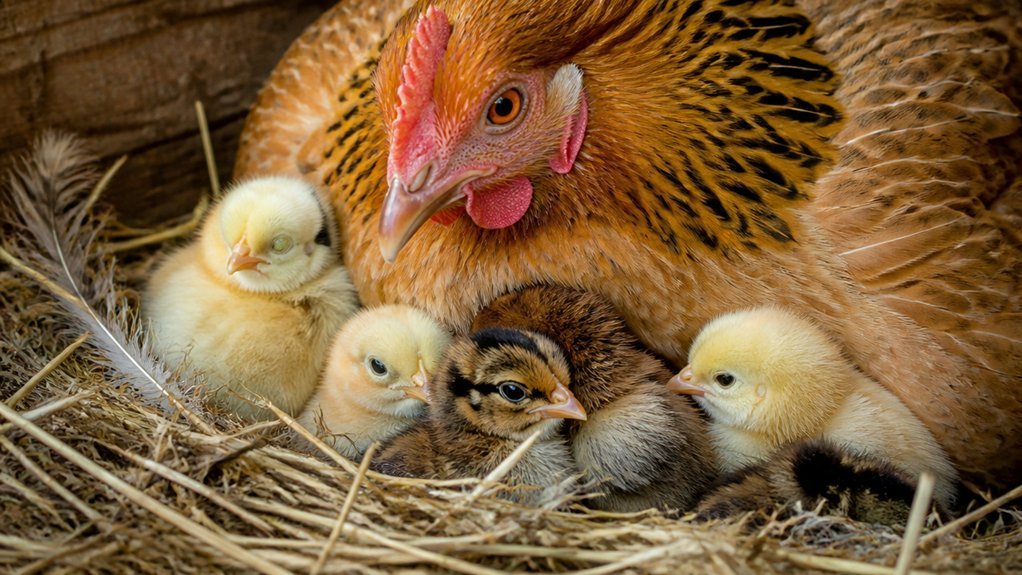
As your hen settles into brooding, check her progress regularly without disturbing her too much. Watch from a distance for steady sitting, relaxed feathers, and normal eating, drinking, and droppings. If she leaves the nest briefly, make sure she returns on her own. Mark the eggs when she starts, then candle them after about a week to see development and remove clear eggs if needed. Keep the nesting area clean, dry, and well ventilated, and replace broken bedding quickly. Proper nest sizing and placement can also prevent egg pecking and promote calm laying behavior. Near hatch time, listen for peeping and look for pipping without rushing to help. Let nature work unless the chick seems stuck or the hen abandons the nest. After hatching, confirm each chick is warm, dry, and active before you manage them.
Frequently Asked Questions
How Do I Know if My Hen Will Accept Chicks?
You’ll know if she’ll accept chicks when she stays calm, clucks softly, and lets them under her. Test her with a few nearby; if she pecks or bolts, she isn’t ready yet.
Can Young Hens Become Broody Too?
Yes, you can see young hens go broody, though it’s less common than in older birds. You’ll notice nesting, puffed feathers, and staying put. Don’t force it; let her mature and trust her instincts.
What Breeds Brood Chicks Most Reliably?
You’ll usually get the most reliable broodies from Silkies, Cochins, Orpingtons, Brahmas, and Australorps. You can count on them more often than hatchery breeds, though any hen might surprise you with broody behavior.
Should I Separate a Broody Hen From the Flock?
Yes, you should separate her if you can; you’ll reduce stress, prevent egg breakage, and let her settle. Keep her near the flock, but give her a quiet, private nesting spot and food.
How Long Should a Hen Brood Before Intervention?
You should let her brood about 21 days before intervening, since that’s the normal incubation period. If she’s leaving too often, eating poorly, or the eggs aren’t developing, you should step in sooner.
In Summary
By choosing the right broody hen and setting up a quiet nesting box, you give her the best chance to hatch healthy chicks. Once you place fertile eggs under her, keep her calm and avoid disturbing her too much. Watch her progress closely, but let nature do most of the work. With patience and a little care, you can help your hen brood successfully and welcome a healthy, happy flock of chicks.