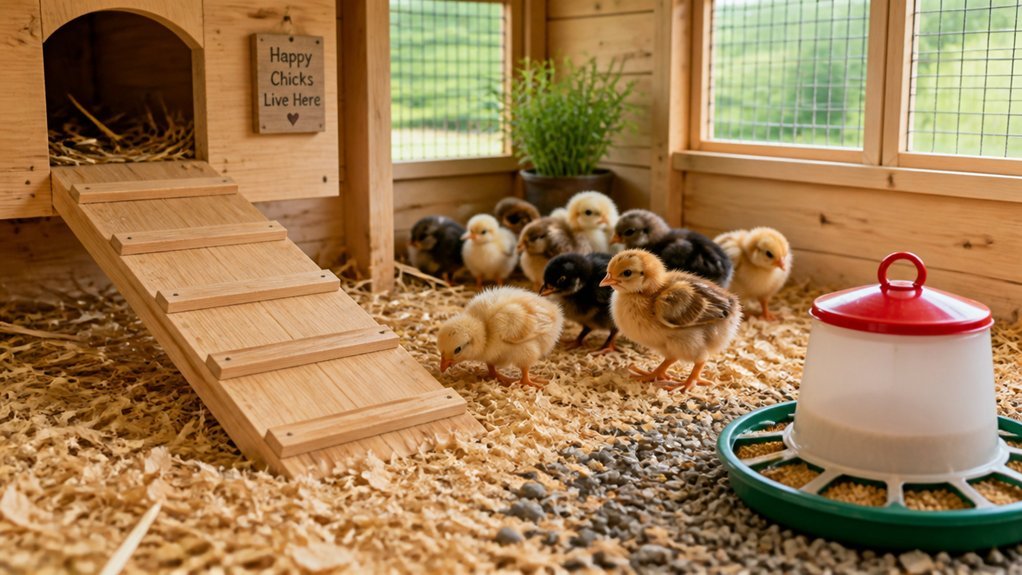

Set your broody hen and chicks up in a sturdy, enclosed brooder with a roof, dry bedding, and no drafty gaps. Keep them warm, especially at night, and use heat only if the hen can’t cover them well. Feed the hen a balanced ration and give chicks starter feed plus fresh water in shallow dishes. Watch for pecking, stress, or injury, and separate the hen only when chicks eat, drink, and stay warm on their own.
Set Up a Safe Brooder Space
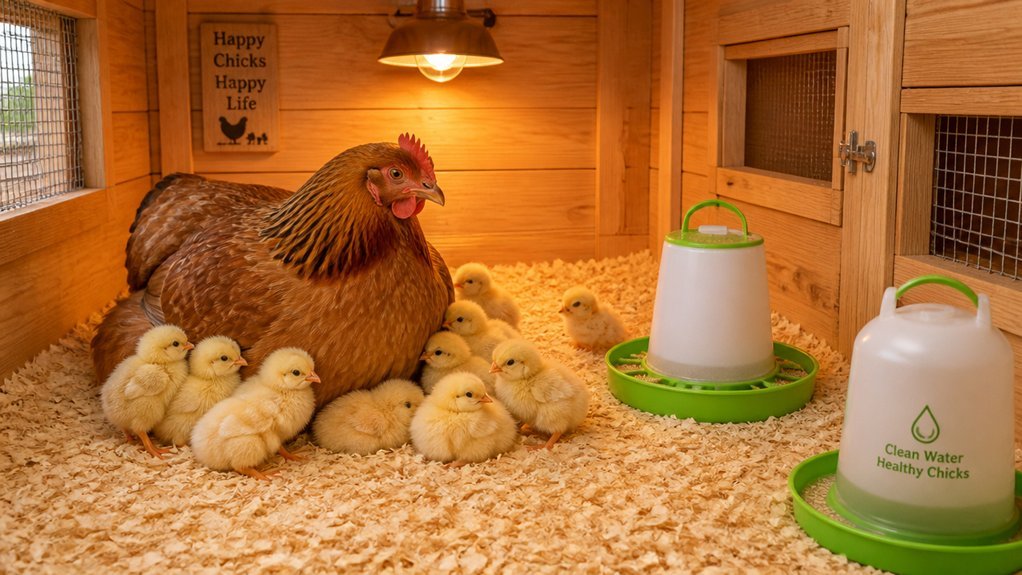
Before you let a broody hen raise her chicks, set up a secure brooder space that keeps them warm, dry, and protected from predators. Choose a clean, enclosed area with sturdy walls and a roof or cover that keeps out rats, cats, dogs, and hawks. Use dry bedding, such as pine shavings, and remove anything sharp, slippery, or drafty. Give the hen enough room to move, nest, and feed without crowding, but keep the area small enough that chicks can’t wander off. Place feed, water, and a low nesting box where she can reach them easily. Check locks, gaps, and corners daily, because chicks can slip through tiny openings. A safe setup helps you reduce stress and manage the flock with confidence. Incorporating impact-resistant construction in your brooder ensures durability and safety, especially as chicks grow and become more active.
Keep Brooding Hens and Chicks Warm
Even with a broody hen, you still need to make sure the chicks stay warm enough, especially during the first few days after hatching. Watch the hen closely and confirm she settles over the chicks often, especially at night. Using a reliable thermometer can help monitor the temperature inside the coop and ensure it remains within the ideal range. If the weather turns chilly, block drafts, dry any damp bedding, and keep the coop well insulated without trapping moisture. You can add a low heat source only if the hen can’t cover every chick or if the coop drops too cold, but keep it safe and out of reach. Check for shivering, crowding, or loud peeping, which can signal discomfort. Give the family a dry, sheltered corner where they can rest together, and avoid unnecessary handling that could separate the chicks from warmth.
Feed Brooding Hens the Right Diet
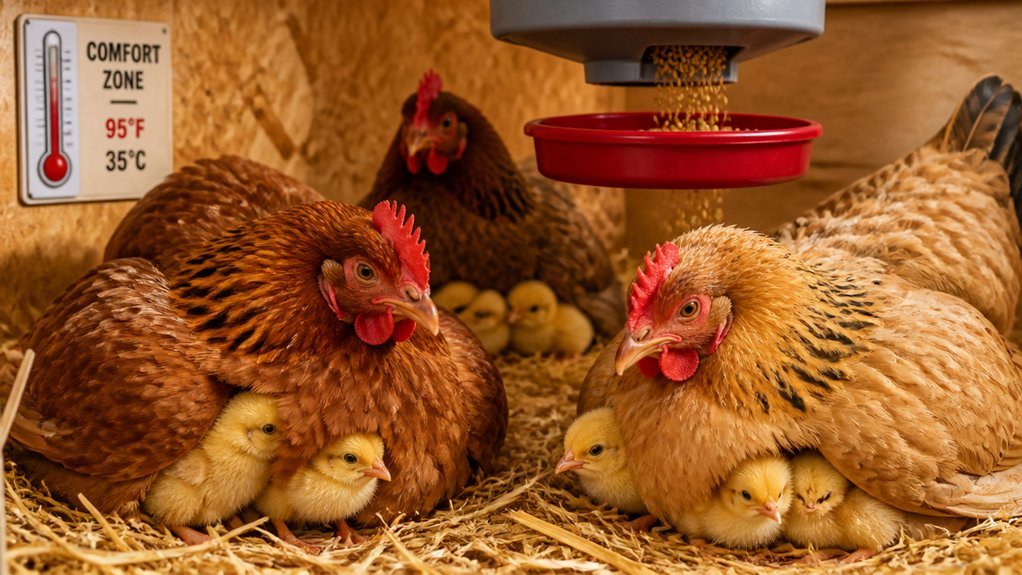
A broody hen needs steady nutrition to stay healthy while she’s caring for chicks, so keep her on a balanced layer or breeder feed with enough protein, calcium, and energy to support both her and the brood.
Ensuring she gets adequate calcium intake is especially important to maintain strong eggshells and overall health during brooding.
Let her eat freely, and refresh the feeder often so she doesn’t run short during long sitting spells. You can also offer a little scratch grain as an occasional treat, but don’t let it replace her main ration.
If she seems thin or weak, check that she’s actually getting enough feed and isn’t being pushed away by other birds. For chicks, make sure they can reach starter feed separately so they grow well without competing with the hen.
Good nutrition helps her stay strong, keep brooding, and care for her chicks.
Give Hens and Chicks Fresh Water
Keep fresh water close by at all times, because broody hens and growing chicks can dehydrate quickly, especially in warm weather. Place shallow waterers where they can reach them without climbing or crowding, and refill them before they run dry. Use clean, cool water and scrub the container daily so algae and dirt don’t build up. Ensuring the water stays free of algae and debris is easier with light-blocking designs that slow algae growth.
Watch for Pecking, Stress, and Injury
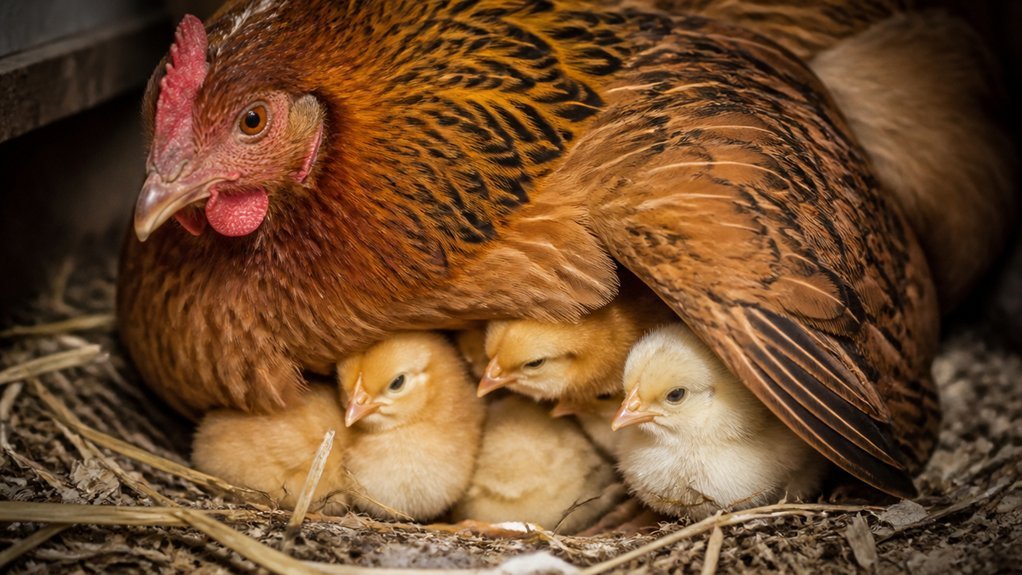
Watch the flock closely for pecking, agitation, or any sign a chick is being pushed away from food, water, or the hen. If you see repeated pecks, raised hackles, or frantic chirping, step in right away.
You can separate an injured chick, clean any wounds, and check for limping, bleeding, or drooping wings. A stressed chick may hide, refuse feed, or stay on the edge of the group, so watch those changes too. You should also notice whether the hen becomes overly rough or abandons a chick after a scuffle.
Additionally, ensuring proper feather regrowth support can help prevent further pecking injuries and promote recovery. Keep handling calm and brief, and remove any bird that keeps attacking. Quick action helps prevent small problems from becoming serious injuries and keeps the brood settled, healthy, and easier for you to manage day by day.
Make Sure the Brooder Has Enough Space
You need enough floor space so the hen and chicks can move comfortably without crowding or stress. Give them room to stretch, rest, and keep clear of each other as they grow. Set up separate feeding zones so everyone can eat without competition. Consider the size and space considerations to ensure the brooder is appropriately sized for optimal growth and health.
Adequate Floor Space
Even the best brooder can become a problem if it’s too crowded, so give the hen and her chicks enough floor space to move, scratch, rest, and feed without constant jostling. When you provide extra room, you help the hen keep order and reduce stress for the chicks. They can step away from heat, spread out while sleeping, and avoid piling up in one corner.
Crowding also makes it harder for you to spot weak chicks or notice early signs of trouble. Aim for a pen size that fits the hen comfortably and still leaves open areas around her. If the flock starts pressing together too often, expand the space right away.
A roomy brooder supports calm behavior, healthier growth, and smoother daily care for everyone involved, especially when using the right heating equipment.
Separate Feeding Zones
If the brooder is roomy enough, set up separate feeding spots so the hen and chicks don’t crowd one another at the dish. You can place the hen’s feed on one side and the chicks’ starter crumble on the other, so everyone eats calmly and you reduce trampling. Keep water close to both areas, but not where bedding can soak in. Introducing adjustable height settings can help accommodate the chicks’ growth and prevent spillage as they get bigger.
Know When to Separate the Brooding Hen
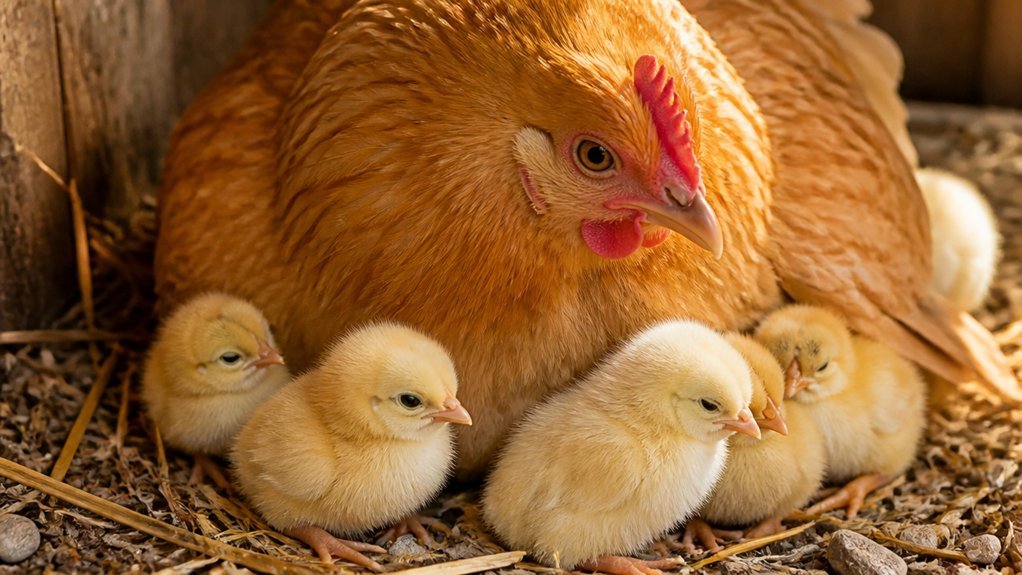
You should watch for signs of distress, like the hen pecking the chicks, refusing food, or seeming overly agitated.
When the chicks start eating, drinking, and staying warm on their own, you can plan the separation. Timing it right helps keep both the hen and chicks healthy and calm.
Additionally, ensure the adequate space in the enclosure to minimize stress and prevent overcrowding during recovery.
Signs Of Distress
Watch for signs that the brooding hen is under too much stress, because a healthy mother usually stays alert, calm, and focused on her chicks.
If she paces nonstop, abandons the nest repeatedly, pecks chicks hard, or calls loudly without settling, she may be struggling. You should also notice droopy wings, rapid breathing, panting, or a hunched posture that signals discomfort. A broody hen that won’t eat, drink, or rest can quickly weaken herself and her chicks.
Check for feather loss around the breast, dirty vents, or obvious agitation when you approach. If she seems confused, overly defensive, or uninterested in warmth and protection, something’s wrong.
Trust these warning signs and act promptly to reduce stress and protect the flock.
Ideal Separation Timing
The best time to separate a brooding hen depends on how long she’s cared for the chicks and whether she’s still calm and attentive. You should usually wait until the chicks are fully feathered and eating well on their own, often around 4 to 6 weeks old.
Watch how she behaves: if she starts pecking them away, moving off repeatedly, or showing less interest, she may be ready to part. Separate her sooner if she becomes aggressive, injured, or stressed, because that can put the chicks at risk.
When you do remove her, give the chicks warmth, feed, and water right away so they can adjust smoothly. If you keep them together too long, she may tire, and the chicks may delay independence. Understanding feed and nutrition protocols can also help ensure the chicks develop properly after separation.
Frequently Asked Questions
How Long Do Brooding Hens Usually Stay With Their Chicks?
Usually, your brooding hen stays with her chicks about 6 to 8 weeks, though some leave sooner or later. You’ll notice she weans them gradually, teaching them to forage and roost independently.
Can a Brooding Hen Hatch Eggs From Another Flock?
Yes, you can let a brooding hen hatch eggs from another flock if they’re healthy and similar age. You’ll need to monitor them closely, because she may reject unfamiliar eggs or chicks.
What Breeds Make the Best Brooding Mothers?
You’ll usually get the best brooding mothers from Silkie, Cochin, Orpington, Australorp, and Brahma hens; they’re calm, protective, and persistent. Choose healthy, steady birds, and you’ll boost your chances of strong, attentive chicks.
How Do I Introduce New Chicks to a Brooding Hen?
Place the chicks under your brooding hen at night when she’s calm, then watch closely. You’ll want similar-sized chicks, a quiet coop, and separate feeding nearby. If she pecks hard, remove them quickly.
Can Brooding Hens Go Outside With Their Chicks?
Yes, you can let them outside once the chicks are strong, feathered, and the weather’s mild. You should supervise closely, provide shade, water, and safe shelter, and bring them back in at dusk.
In Summary
By setting up a safe space, keeping everyone warm, and giving your hen the right feed and water, you’ll help her raise strong, healthy chicks. Keep an eye out for stress, pecking, or injury, and make sure the brooder isn’t overcrowded. When the time comes, you’ll know when to separate the hen and let the chicks grow on their own. With a little care, you can make brooding easier for both hen and flock.