You need proper brooding light because newly hatched chicks can’t regulate body temperature well, and steady warmth keeps them alive, active, and growing. A good brooder light or heat plate helps them stay warm, digest feed, and avoid chilling or stress. Watch their behavior: huddling means they’re cold, while panting and spreading away means they’re too hot. With the right setup, you’ll keep them comfortable, safe, and thriving as they feather out, and there’s more to know.
Why Chicks Need Brooder Heat
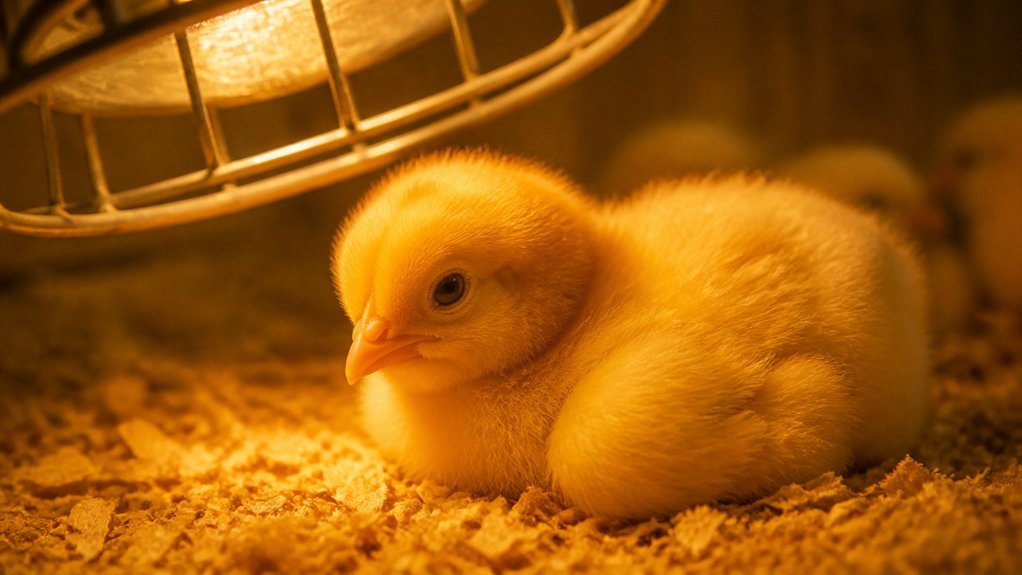
Newly hatched chicks need brooder heat because they can’t regulate their own body temperature well enough to stay warm on their own. You have to provide a steady source of warmth so they can survive the first days after hatching. Without it, chicks lose energy fast, become chilled, and can’t grow or eat normally. Their tiny bodies have little insulation, and their down feathers don’t trap enough heat yet. Using a radiant heat source like a brooder heating plate helps mimic mother hen warmth, supporting healthy growth.
How Brooder Heat Keeps Chicks Warm
Brooder heat keeps chicks warm by replacing the body heat they can’t yet produce on their own. You give them a steady, gentle source of warmth so their tiny bodies can maintain safe temperatures while they’re still developing.
Without it, they lose heat fast because they’re small, lightly feathered, and unable to regulate temperature well. A properly heated brooder helps stabilize their internal functions, supporting digestion, growth, and overall health.
You should keep the heat consistent, since sudden drops can chill them quickly and make it harder for them to stay warm. When you provide reliable brooder heat, you create a controlled environment that lets chicks conserve energy for growing instead of spending it on staying warm through their first weeks.
How Chicks Behave in the Brooder
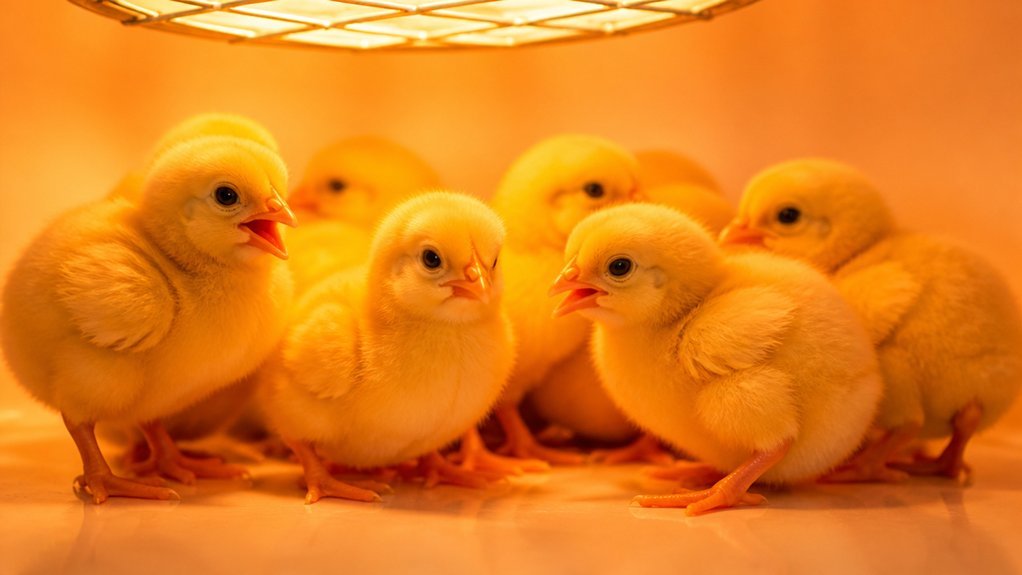
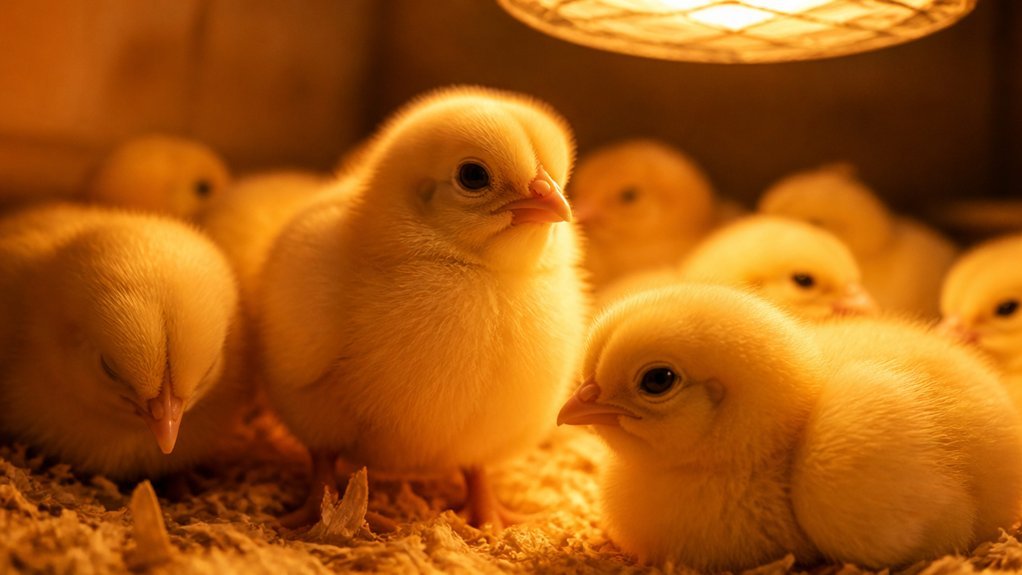
Once the brooder is warm, you can watch how chicks react to tell whether they’re comfortable. When they’re settled, they’ll spread out, peep softly, and explore feed and water with steady energy. You’ll see them rest without piling up, then move again in short bursts. If they seem active and balanced, your setup is likely on track. Keeping the correct temperature control is essential for their comfort and healthy development. Pay attention to these signals throughout the day. Chicks can shift quickly, so check often. Their movements tell you far more than guesswork, and you can respond before stress builds.
Heat Lamps vs. Heat Plates
When you’re choosing brooder heat, heat lamps and heat plates each offer a different setup for your chicks.
A heat lamp warms the whole brooder from above, so your chicks can move in and out of the warmth as they want. It’s simple to set up, but you’ll need to secure it carefully because bulbs can fail or create fire risk.
A heat plate works more like a mother hen. Your chicks tuck underneath it to rest, then step out when they’re ready to explore. That creates a darker, calmer brooder and uses less power.
If you want a more natural routine and lower glare, a plate often fits better. If you prefer broad, visible warmth, a lamp may suit you.
Heat plates typically provide a thermal shock resistance environment, helping protect delicate chicks from sudden temperature changes.
How Much Heat Chicks Need
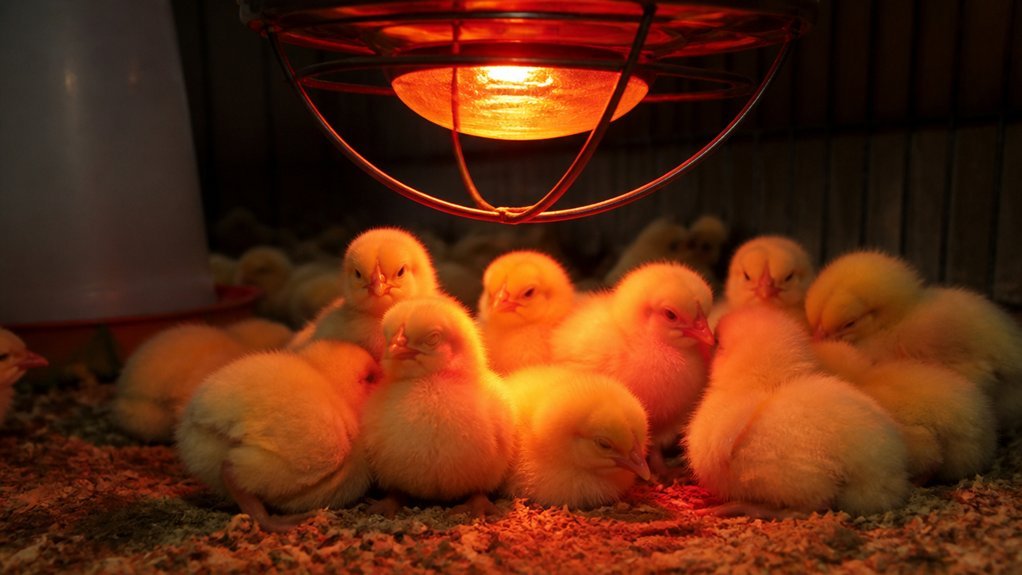
Newly hatched chicks need steady warmth, but not constant high heat. You should start brooding at about 95°F for the first week, then lower the temperature by roughly 5°F each week.
Watch your chicks, not just the thermometer: if they huddle tightly under the heat source and peep loudly, they’re cold; if they spread far away and pant, they’re too hot. Comfortable chicks move around, eat, drink, and rest evenly. Keep the brooder warm enough that they can regulate themselves without stress.
As they grow feathers, they need less heat and more room to choose their comfort zone. By six weeks, many chicks can handle much cooler conditions, depending on weather, breed, and housing. Adjust gradually, and you’ll help them thrive. Ensuring accurate temperature readings plays a crucial role in maintaining the right environment for healthy chick development.
Where to Place the Brooder Heat Source
You should place the brooder heat source near the center so chicks can reach warmth easily from every side. This setup lets them move between warm and cool zones as they need, which helps them regulate their body temperature. Proper bedding placement is essential to ensure the environment remains dry, clean, and comfortable for the chicks. Keep the brooder in a safe spot away from drafts, cords, and anything that could tip or catch fire.
Centered Heat Source
A centered heat source gives chicks equal access to warmth and helps them spread out naturally instead of crowding into one hot corner. You should hang or mount the brooder lamp over the middle of the pen so heat reaches the flock evenly. This placement lets each chick choose its spot without jostling for comfort. Additionally, using materials with water-resistant fabric can help maintain a clean and dry environment around the heat source. Keep the fixture secure, level, and high enough to reduce fire risk and prevent direct contact with bedding or curious beaks. Centering the light also makes temperature checks easier, since you can watch how the flock responds from one consistent point. If chicks cluster tightly, you may need to adjust height or wattage. When you place the source correctly, you support calm behavior, steady feeding, and healthier early growth overall.
Warm And Cool Zones
Place the brooder heat source so one side of the pen stays warm while the opposite side stays cooler, giving chicks a clear temperature gradient to move through. You want chicks to choose their comfort zone, not guess at it.
When they crowd near the heat, they’re telling you they need more warmth; when they spread out or rest farther away, they’re likely comfortable. This setup helps you monitor their behavior and adjust the temperature without stressing them.
A strong warm-to-cool shift also prevents overheating, because chicks can move away before they get too hot. Keep the gradient consistent across the brooder, and you’ll give every chick a better chance to settle, rest, and grow evenly. Additionally, using thermostatic control bases can help maintain ideal temperatures automatically, ensuring their environment stays safe and comfortable.
Safe Brooder Placement
Keep the brooder heat source secure, centered for even coverage, and out of reach of curious chicks and flammable bedding. You should mount it so chicks can’t knock it down, and you’ll want cords routed safely away from water, litter, and traffic.
Place the lamp or panel high enough to reduce fire risk, but low enough to keep the brooder warm.
- Center the heat source to support balanced chick movement.
- Use clamps, guards, or brackets for extra stability.
- Keep bedding trimmed back from hot surfaces.
- Check daily for shifting, overheating, or loose wiring.
- Consider the fire safety ratings of your heating equipment to ensure optimal safety.
When you position the brooder wisely, you create safer conditions and help chicks settle in without stress. A stable setup also makes temperature control easier, so you can respond fast if they crowd, pant, or wander.
Set the Brooder Temperature
You’ll want to keep the brooder at the ideal temperature so your chicks stay warm, active, and comfortable. Watch their behavior closely, since huddling or spreading out tells you whether the heat is too low or too high. Then adjust the temperature gradually so they can adapt without stress. Proper feeder and waterer setup ensures consistent access to essentials, supporting healthy growth and reducing stress during brooding.
Ideal Brooder Temperature
How warm should your brooder be? You should keep it at 95°F for the first week, then match the chicks’ comfort, not guesswork.
Place a reliable thermometer at chick level, where they actually feel the heat, and check it often. If they huddle under the lamp, it’s too cool; if they crowd the edges, it’s too hot. A steady, draft-free brooder helps you maintain even warmth and reduces stress. Good heat control supports appetite, sleep, and strong growth.
- Use a thermometer, not your hand.
- Keep bedding dry and insulating.
- Watch chick behavior as your best guide.
- Maintain consistent heat across the brooder.
- Consider weatherproofing for outdoor setups to ensure stable temperature regulation in varying conditions.
Adjusting Heat Gradually
As your chicks grow, lower the brooder temperature gradually by about 5°F each week until they’re fully feathered. You should watch their behavior closely, because it tells you more than the thermometer alone.
If they huddle under the lamp, they’re too cold; if they crowd the edges and pant, they’re too warm. Make small changes instead of sudden ones, and give them time to adjust after each shift.
Use a reliable thermometer at chick level, not just room temperature, so you can keep conditions steady. By easing heat down step by step, you help your chicks develop strong, healthy bodies without stress.
Consistent adjustments also make the progression to cooler housing smoother and safer.
Adjust Heat as Chicks Grow
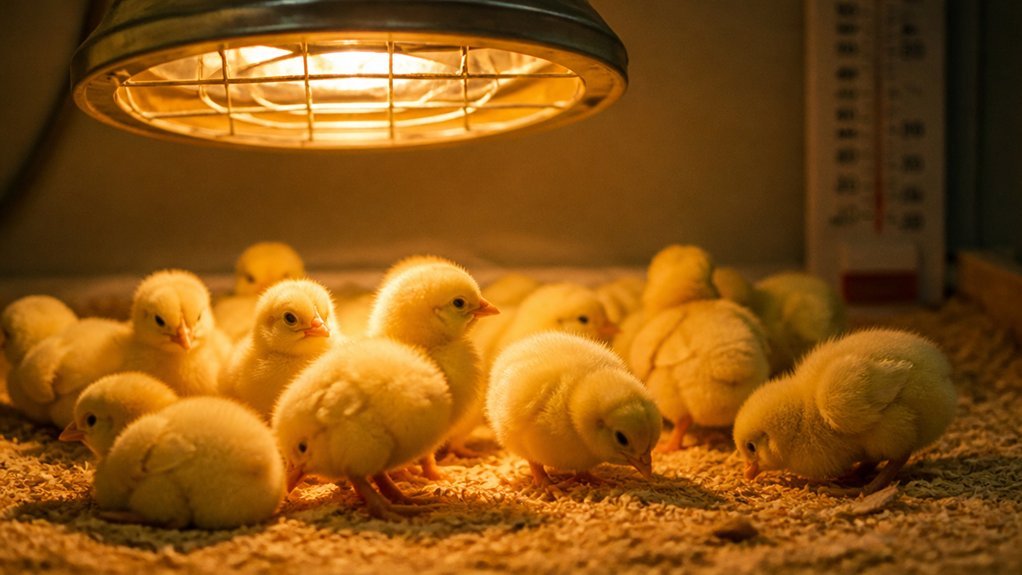
Start reducing the brooder temperature once the chicks begin to feather and spend more time away from the heat source. You’ll guide them through a smooth changeover by lowering warmth in small steps, usually every few days, rather than making sudden changes.
Keep the brooder light steady and the space comfortable, so the chicks can explore, rest, and eat without stress. As they grow, their need for intense heat drops, and your goal is to match that shift with careful adjustments.
- Watch their feather development
- Lower temperature incrementally
- Keep feed and water accessible
- Maintain a stable brooder setup
Signs Chicks Are Too Cold
If you lower the heat too quickly, chicks will let you know. You’ll see them crowd tightly under the brooder lamp, piling on top of one another to share warmth. They may chirp loudly and constantly, sounding anxious or distressed.
Chicks that are too cold often become sluggish, huddle in one spot, and hesitate to move toward feed or water. Their feet and bodies may feel cool when you gently pick them up. You might also notice them sleeping fitfully instead of resting calmly.
Check the brooder temperature and raise it gradually if these signs appear. Keep the heat source centered and give them space to move closer or farther away so they can regulate their comfort and stay active, healthy, and growing well.
Signs Chicks Are Too Hot
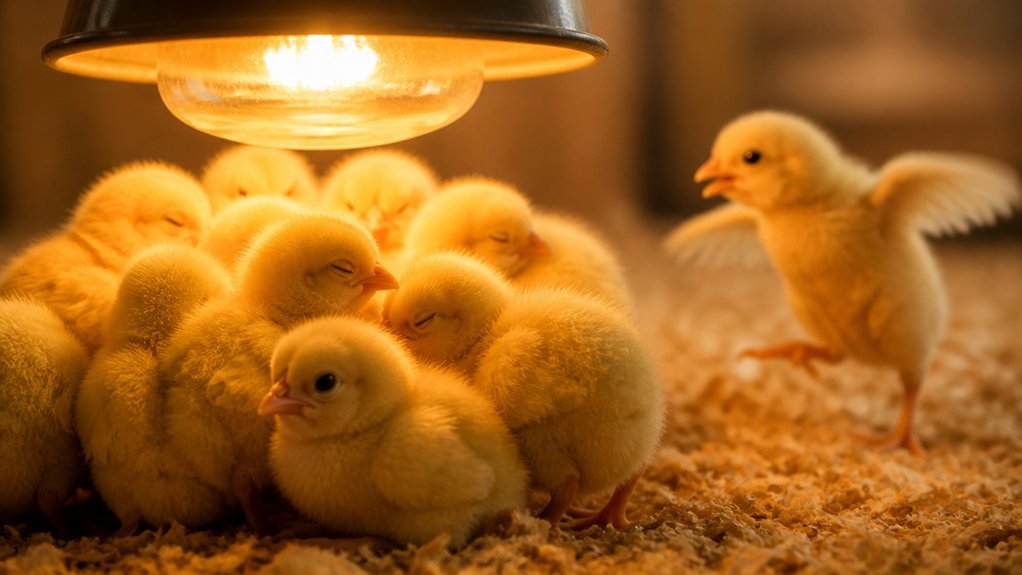
If your chicks are too hot, you’ll often see them panting and spreading their wings to cool down.
They may also crowd away from the heat source instead of gathering under it.
Watch for these signs so you can adjust the brooder right away.
Panting And Spreading
When chicks get too warm, they’ll often start panting and spreading out their wings to release heat. You’ll see quick, open-mouthed breathing, and their bodies may look tense as they try to cool down. This is your cue to check the brooder temperature right away and make small adjustments before stress builds.
Watch for these signals:
- rapid breathing
- wings held slightly away from the body
- droopy posture
- reduced activity
If you notice all four, your chicks aren’t comfortable. Lower the heat a bit, improve airflow, and give them space to regulate. Good brooding light helps you spot these changes early, so you can act fast and keep your flock healthy, calm, and growing steadily.
Crowding Away From Heat
Another clear sign your chicks are too hot is when they crowd away from the heat source and bunch up at the cooler edges of the brooder. You’ll notice them avoiding the lamp, especially if they stay pressed against walls, corners, or waterers. That behavior tells you they’re trying to escape excess heat, not seek comfort. Check the brooder quickly and lower the temperature or raise the lamp if needed.
| Sign | What it means |
|---|---|
| Chicks pile at edges | Heat’s too strong |
| They avoid the center | They want cooler air |
| They keep moving away | They’re stressed |
| They rest far from lamp | Brooding light is excessive |
| They look restless | Adjust heat now |
When you spot this pattern, act fast and restore a balanced warm zone.
Keep Brooder Heat Safe
Keep brooder heat safe by placing the lamp or heater securely so it can’t tip, fall, or touch bedding and create a fire risk. You should inspect cords, plugs, and sockets before each use, because damage can spark trouble fast. Keep water away from electrical parts, and use a fixture rated for heat, not a makeshift clamp.
Check the temperature often so you don’t overheat chicks or dry the bedding too much.
- Fasten the heat source above the brooder
- Route cords where chicks can’t peck them
- Clear dust, feathers, and loose litter
- Shut off power before adjusting equipment
When you stay alert, you protect both chicks and coop. Safe heat supports steady growth and calmer birds.
Which Brooder Setup Is Best?
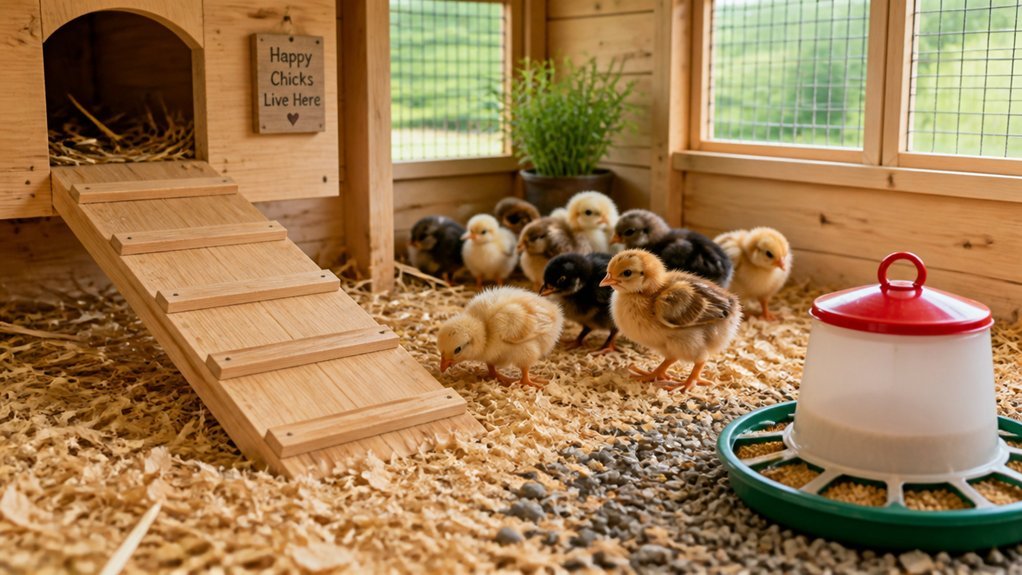
A good brooder setup gives chicks steady warmth, fresh air, and enough space to move away from the heat if they need to. You can use a plastic tote, stock tank, or sturdy cardboard box lined with clean bedding. Choose a brooder with smooth sides so chicks can’t escape or get trapped.
Place the heat source on one end, not the center, so they can choose a cooler spot. Keep water and feed easy to reach but far from the heat lamp to prevent spills and burns. Add a thermometer at chick level to check conditions quickly.
Good ventilation matters, too, because stale air can stress chicks. If you keep the brooder dry, draft-free, and roomy, you’ll help your chicks stay active, comfortable, and healthy.
When to Reduce Brooder Heat
As chicks grow, you can start lowering the brooder temperature by about 5°F each week, usually beginning around the second week of life. Watch their behavior, not just the thermometer, because healthy chicks spread out and move calmly when they’re comfortable.
If they huddle tightly, you’ve cooled things too fast. If they pant or stay far from the heat source, it’s too warm. Adjust heat in small steps so you don’t stress them.
- Check chicks several times a day.
- Keep bedding dry and draft-free.
- Use a reliable thermometer at chick level.
- Note feather growth and activity.
When they seem steady, alert, and evenly spaced, you’re likely on track. Consistent observation helps you reduce heat with confidence and support strong early development.
Wean Chicks Off Heat
Start weaning chicks off heat gradually once they’re fully feathered and consistently comfortable in the brooder, usually around 5 to 6 weeks old.
Lower the temperature a few degrees each week, or raise the lamp a little higher if you use one. Watch their behavior closely: if they spread out and sleep calmly, you’re on track; if they pile up, shiver, or peep loudly, add warmth back.
Let the brooder stay draft-free, dry, and well lit so they can adjust without stress. By day and night, give them space to regulate their body heat and build resilience.
Once they no longer crowd the heat source, you can remove it entirely and keep monitoring for a few days to make sure they stay active, comfortable, and healthy.
Frequently Asked Questions
Can Brooder Light Affect Chicks’ Eating and Drinking Habits?
Yes—too dim or too bright, and you’ll see chicks eat and drink less. You need steady, warm light so they find feed and water easily, stay active, and build healthy growth habits quickly.
Does Brooder Light Influence Chicks’ Sleeping Patterns?
Yes, your brooder light can shape chicks’ sleep. You’ll want steady, dim nighttime darkness so they rest well. Bright or irregular lighting can keep them active, stress them, and disrupt healthy sleep rhythms.
What Color Light Is Best for Brooding Chicks?
You should use warm, dim red or amber light for brooding chicks. It keeps them calm, supports rest, and reduces pecking. Avoid harsh white light, which can stress them and disrupt sleep.
Can Chicks Be Brooded Without Any Artificial Light?
Yes, you can brood chicks without artificial light if you provide steady warmth, natural daylight, and enough visibility to eat and drink. You’ll need a safe, draft-free setup and closer monitoring, though.
How Long Should Brooder Light Stay on Each Day?
You should keep your brooder light on 24 hours a day for newly hatched chicks, then gradually reduce it as they grow. You’ll follow their behavior, ensuring they’re warm, active, and resting comfortably.
In Summary
You need proper brooding light because it helps your chicks stay warm, active, and healthy during their most vulnerable days. When you watch their behavior, you can tell if the heat is right and adjust it as needed. Whether you use a heat lamp or a heat plate, safe, steady warmth matters. As your chicks grow, you can slowly reduce brooder heat and wean them off it with confidence.