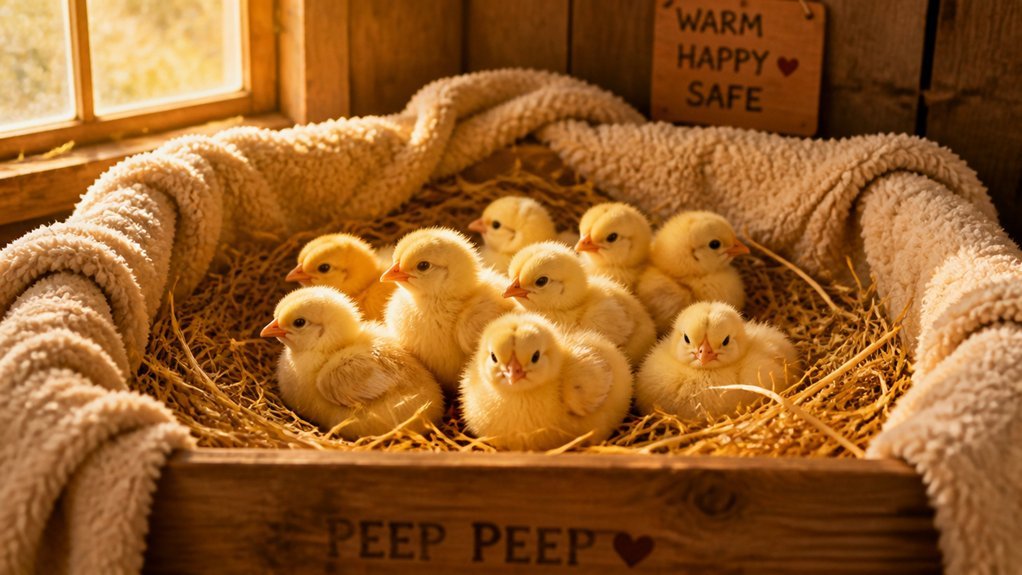
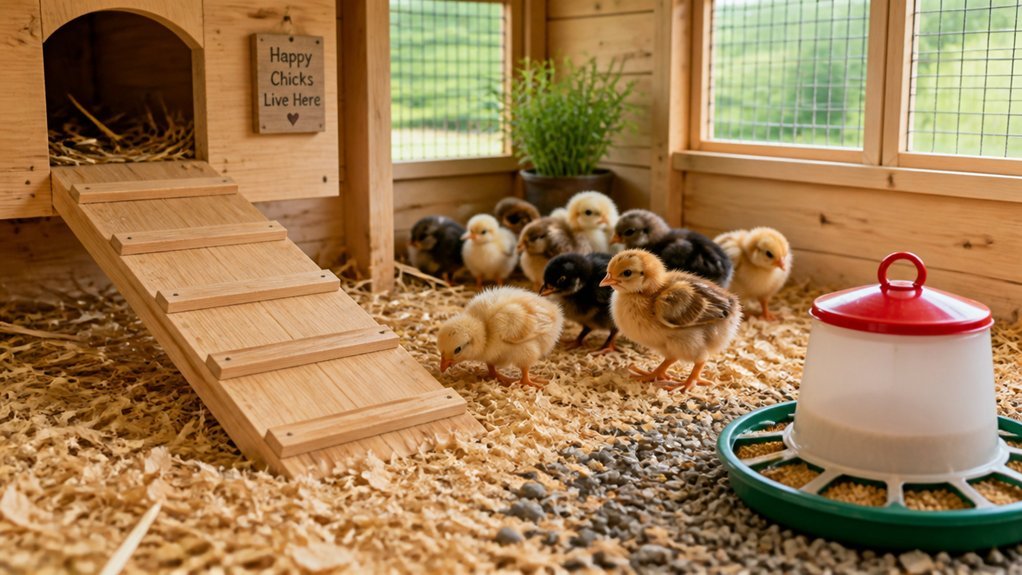
Wait until your chicks are fully feathered, confident, and eating and drinking on their own before moving them. Prep the coop first by removing hazards, blocking drafts, and adding clean bedding, good ventilation, and easy-to-reach feed and water. Move them gently in mild weather, then give them a quiet, calm first hour to settle in. Watch closely for cold stress, huddling, or bullying, and you’ll spot a few more simple ways to make the move smoother.
Check If Chicks Are Ready for the Coop

Before you move chicks into the coop, make sure they’re truly ready for the change. You should wait until they’re fully feathered, since bare patches leave them vulnerable to chills.
Wait until chicks are fully feathered before moving them into the coop, so they stay warm and protected.
Watch their behavior, too; confident chicks explore, peck, and rest without huddling under a heat source. If they still crowd together or seem sluggish, give them more time.
Check the weather as well. Mild days and stable nights help them adjust better than sudden cold snaps.
You also want to confirm that each chick eats and drinks well on its own. Healthy growth, steady weight gain, and alert eyes show progress.
When your chicks handle cooler temperatures and stay active, you can move them with far less stress and a smoother shift overall.
Additionally, ensure that their airflow is adequate to prevent overheating and humidity buildup, which can affect their health during the transition.
Prepare the Coop for Chicks
Start by making the coop safe, warm, and easy for chicks to settle into. Remove sharp edges, block drafts, and check that ventilation still allows fresh air without chill. Add clean bedding so they can walk and rest comfortably. Set feed and water at chick height, and keep them easy to reach. Use a low heat source only if your weather still demands it, and watch that the space feels dry, not damp. A tidy coop helps them feel secure and lowers stress. Incorporating low dust bedding can further improve their environment by reducing respiratory risks and maintaining cleanliness.
Move Chicks to the Coop Safely

Once the coop is ready, move the chicks in carefully so they can settle without stress. Use a small carrier or box with good ventilation, and keep the trip short and smooth. Support each chick fully, avoid sudden movements, and never crowd them together. Carry them during mild weather so they won’t get chilled or overheated.
Place them gently inside the coop and close the door right away to prevent escapes. It’s important to ensure the enclosure has adequate ventilation and shelter features to promote healthy recovery.
- Handle chicks one at a time.
- Keep hands clean and dry.
- Move them when they’re calm.
- Check that the coop door latches securely.
Watch for slipping, loud noises, or rough surfaces along the way. If you stay calm and deliberate, you’ll reduce stress and help the flock adjust safely to their new space.
Help Chicks Settle Into the Coop
Give the chicks a calm first hour in the coop so they can adjust without extra stress. Keep the lights low, speak softly, and let them explore at their own pace.
Place feed and water where they can spot them easily, and make sure the coop feels familiar by using the same bedding or small items from their brooder.
You can guide them gently toward the roost area, but don’t force them to stay there. Stay nearby for a while so they learn the space from your calm presence.
If you have older birds, introduce them gradually after the chicks have settled.
Offer a quiet routine, and avoid sudden movements that might make them uneasy. A steady, predictable start helps chicks relax and accept the coop as home.
Additionally, providing expandable or connectable panels can help create a safe and versatile environment as your flock grows.
Watch for Stress, Cold, and Bullying

Even in a calm coop, keep a close eye on the chicks for signs of stress, chilling, or aggression from older birds. Watch posture, drooping wings, huddling, and loud peeping, because these mean they’re uncomfortable or scared.
If the coop feels drafty, add extra bedding or a heat source nearby, but never overheat them.
You should also step in if older hens peck, chase, or block feed and water. Separate bullies quickly so the chicks can recover and eat.
Additionally, ensure the brooder environment maintains a consistent temperature to prevent stress and promote healthy growth, as fluctuating heat can lead to discomfort and illness. Brooder Temperature Control
- Check chicks often during the first days.
- Provide warm, dry bedding and shelter.
- Offer multiple feeders and waterers.
- Remove aggressive birds before injuries start.
Frequently Asked Questions
How Long Should Chicks Stay in a Brooder Before Moving Outside?
You should keep chicks in a brooder until they’re fully feathered, usually around 5 to 6 weeks old. Then you can move them outside if nighttime temperatures stay warm and draft-free.
What Vaccinations Do Chicks Need Before Joining the Flock?
You’ll usually vaccinate chicks for Marek’s disease, coccidiosis, and sometimes Newcastle or bronchitis, depending on local risks. Check with your vet, since you don’t need every vaccine everywhere, but you should protect your flock early.
Should I Quarantine New Chicks Before Introducing Them to Others?
Yes, you should quarantine new chicks for at least 2 weeks before mixing them with others. You’ll catch illness early, watch eating and droppings, and reduce stress, parasites, and disease spread in your flock.
How Many Chicks Can Fit Comfortably in a Small Coop?
You can fit about 2 to 3 bantam chicks or 2 standard chicks comfortably in a small coop, but you’ll need more space as they grow, plus room for roosting, nesting, and moving around.
Can Chicks Go Outside During Rainy or Windy Weather?
Yes, you can, but you shouldn’t let them stay out long in rainy or windy weather. You’ll need dry shelter, protection from drafts, and close supervision so they don’t chill, panic, or get soaked.
In Summary
Getting your chicks into the coop is easier when you move step by step. Make sure they’re ready, set up a safe and warm space, and handle the move calmly. Once they’re settled, keep a close eye on them for stress, cold, or pecking issues. With a little patience and care, you’ll help your chicks adjust smoothly and grow into healthy, happy hens.