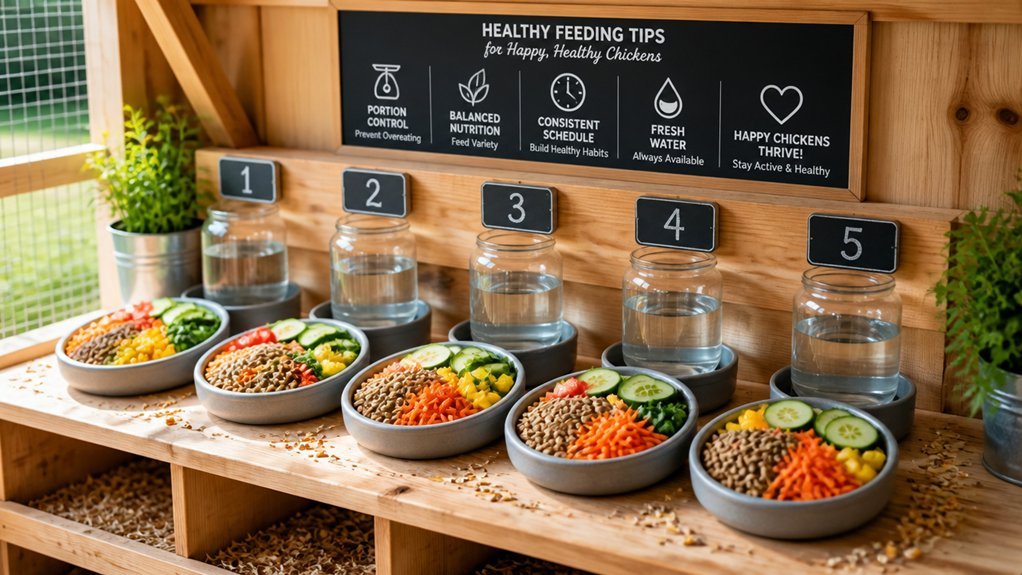
You can cut waste in chicken farming by setting up a clean, low-waste coop with smooth surfaces, wide doors, and off-floor feeders and drinkers. Use deep litter with dry carbon bedding, and manage manure with droppings boards or compost. Reduce feed loss with narrow hoppers, and save water with nipple drinkers. Feed scraps safely, reuse dry bedding as mulch, collect eggs gently, and keep a simple daily routine. There’s more to do that can make this system even tighter.
Choose a Low-Waste Coop Setup
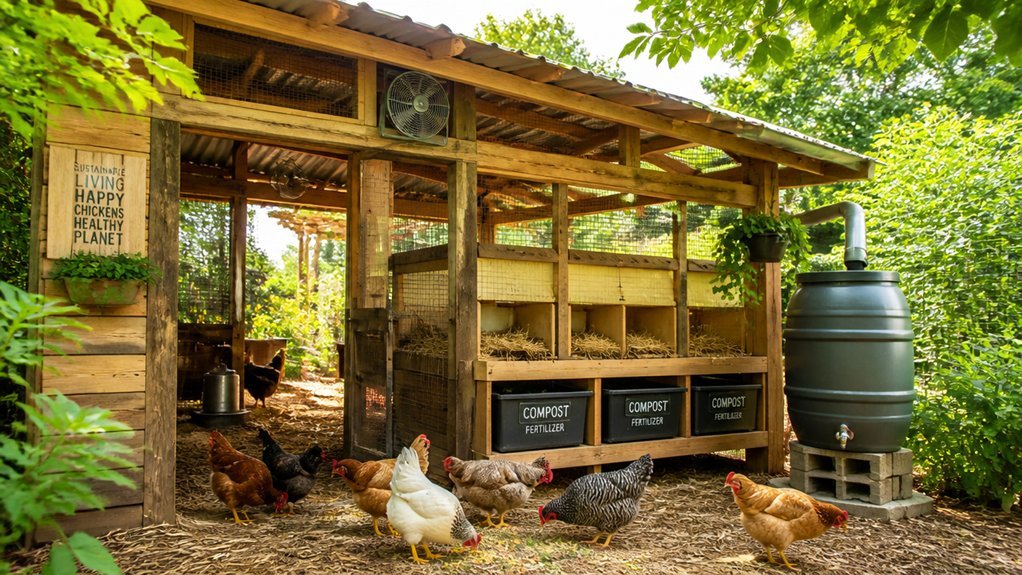
A low-waste coop setup starts with thoughtful design, because the easier you make cleanup, the less bedding, feed, and labor you’ll waste. Place feeders and waterers off the floor so your chickens can’t scratch litter into them. Use hanging or wall-mounted equipment to keep feed cleaner and reduce spoilage. Choose smooth interior surfaces, simple corners, and wide doors so you can sweep out droppings quickly. Size the coop correctly for your flock; overcrowding drives mess and waste. Add good ventilation to keep moisture down and bedding drier. Install roosts over easy-to-clean zones so droppings don’t build up in hard-to-reach spots. When you plan for access, airflow, and containment, you’ll save resources and keep your coop efficient. Incorporating easy-clean tray systems can also significantly streamline waste removal and maintenance routines.
How to Use Deep Litter in a Coop
Start by laying down a thick base of carbon-rich bedding like straw, pine shavings, or dry leaves in your coop.
You’ll want to add fresh bedding as needed, then turn it regularly to keep it dry, airy, and working well. With steady upkeep, deep litter can break down waste, cut odors, and help you manage your coop with less cleanup. Using dust-free bedding ensures a healthier environment for your flock and prevents respiratory issues.
Preparing Coop Bedding
Once your coop is clean and dry, you can set up deep litter by adding a base layer of carbon-rich bedding such as pine shavings, straw, or shredded leaves. Aim for 4 to 6 inches so the flock has enough material to absorb moisture and cushion the floor.
Spread it evenly under roosts, nest boxes, and high-traffic spots, since those areas collect droppings fastest. If you use straw, fluff it so air can move through it; if you use shavings or leaves, break up clumps before you pour them in.
Keep the bedding loose, dry, and breathable from the start, because that helps your chickens scratch naturally and keeps the coop comfortable. Choose one main material and stick with it for consistent texture. Utilizing low-dust hemp bedding can significantly improve airflow and reduce respiratory irritants in the coop.
Managing Deep Litter
With the bedding in place, you can begin managing the deep litter system by letting the flock work it for you. Add fresh carbon-rich material, like straw or shavings, whenever the surface looks damp or packed.
Your chickens will scratch, turn, and mix the litter, which helps break down manure and control odors. Keep the coop dry by fixing leaks and improving airflow, because moisture causes ammonia and pests to build up fast. Using odor neutralizers can further support this process by neutralizing ammonia at the source.
Stir the litter lightly if it mats down, but don’t overwork it. Remove clumps, wet spots, or caked areas right away. As the layer deepens, compost forms below, creating insulation and reducing waste.
In cold weather, this system can help retain warmth while lowering bedding replacement needs.
Reduce Feed Waste With Smart Hoppers

When you upgrade to smart hoppers, you can cut feed waste by keeping grain where your chickens can reach it, not where wind, rain, and scratching feet can ruin it. Choose models with narrow openings, weighted lids, and adjustable flow so feed drops only as birds eat.
Mount hoppers at back height to prevent scratching and spilling. Check them daily and clean out fines, clumps, and stale feed before they build up. Using weather-resistant materials minimizes damage and prolongs the lifespan of your feeders.
If you use hanging hoppers, keep them steady and high enough to discourage roosting. Fill them in smaller amounts more often so feed stays fresh and birds empty the tray instead of flinging grain aside. You’ll save money, keep the coop cleaner, and reduce pests that come for spilled feed.
Reuse Water With Better Drinkers
You can cut water waste by switching to nipple drinkers, which release only what your birds need. Leak-proof seals ensure minimal dripping and prevent unnecessary wastage. Add catchment trays underneath to catch drips and keep spilled water from soaking the litter. Together, these changes help you reuse more water and keep the coop drier.
Nipple Drinkers Save Water
Nipple drinkers can cut water waste fast by delivering only the amount hens actually peck for, instead of letting birds splash and spill from open containers. You’ll use less water because each bird draws a small, controlled flow only when it taps the pin. That means you’re not refilling big troughs that chickens foul or tip over. You’ll also keep the flock’s bedding drier, which helps you avoid extra cleanup and lowers the water you lose to mess. Installing light-blocking design features can further prevent algae buildup, keeping water cleaner and reducing maintenance.
Choose the right height for your drinkers, and check them often so they stay unclogged and responsive. When you match the system to your flock size, you reduce waste without adding complexity. Over time, that simple switch can trim your water bill and support cleaner, more efficient poultry care.
Catchment Trays Reduce Spills
Catchment trays underneath drinkers help you reclaim water that would otherwise hit the floor and disappear into bedding. You keep litter drier, which lowers ammonia, cuts caking, and makes the coop easier to manage.
When birds bump the drinkers or miss the cup, the tray catches runoff and sends it back for use or keeps it contained for cleaning. You should pair trays with well-adjusted drinkers so they don’t overflow in the first place.
Choose durable, easy-to-remove designs so you can rinse them quickly and prevent slime buildup. If you monitor tray levels daily, you’ll spot leaks early and reduce waste before it spreads. Utilizing leak-resistant cups can further minimize water spills and messes.
This simple add-on helps you use water more efficiently while keeping your flock’s environment healthier and less messy.
Feed Kitchen Scraps Safely
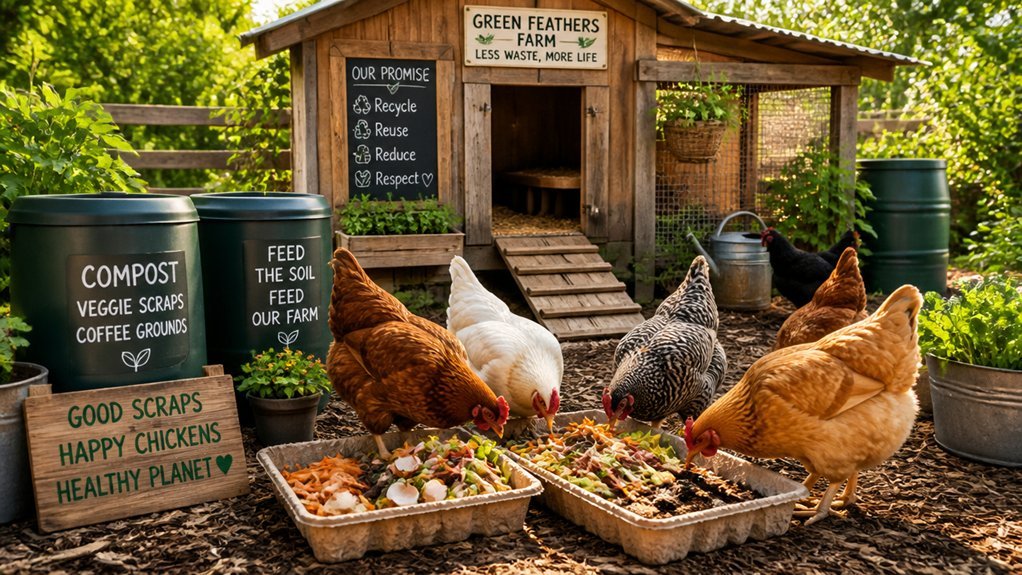
When you want to cut waste and lower feed costs, kitchen scraps can help—if you handle them safely. You should offer only fresh, clean scraps that chickens can eat quickly, like vegetable trimmings, cooked rice, oats, or plain pasta.
Keep out moldy food, salty leftovers, citrus peels in excess, avocado, chocolate, onions, and anything greasy or spoiled. Chop scraps into small pieces so your birds can peck them easily and waste less.
Feed only what your flock finishes in a short time, then remove leftovers before they attract pests. Store scraps in a covered container and keep your kitchen separate from poultry areas. Proper storage helps prevent spoilage and pests, ensuring your scraps remain safe for your flock.
Compost Chicken Manure
You can collect chicken manure from coops, runs, and bedding, then move it into a compost pile or bin. Mix it with carbon-rich materials like straw or leaves, keep it aerated and moist, and let it break down fully. When it’s finished, you’ll have a rich soil amendment that can boost garden fertility and improve soil structure. Ensuring proper ventilation & airflow features is essential for healthy composting and odor control.
Manure Collection Methods
Where does all that chicken manure go in a low-waste system? You collect it fast, before it gets trampled or soaked. Use droppings boards under roosts, slide-out trays, or deep-litter bedding you can rake into a bin. A small scraper, bucket, and covered tote help you move waste without fuss. Keep collection paths short so you don’t spill nutrients on the ground.
| Method | Why it helps |
|---|---|
| Droppings boards | Catch manure cleanly overnight |
| Slide-out trays | Let you remove waste quickly |
| Deep litter | Mixes bedding and manure for easy gathering |
Label containers, store them near the coop, and empty them often. That keeps your flock tidy, reduces flies, and gives you a steady stream of manure for composting later.
Composting Best Practices
Chicken manure turns into a valuable soil amendment only if you compost it right. Mix it with carbon-rich bedding like straw, dried leaves, or wood shavings, and aim for a balanced pile that heats up fast.
Keep the pile moist like a wrung-out sponge, but don’t soak it. Turn it regularly so air reaches every layer and speeds decomposition. Monitor the center with a thermometer; you want sustained heat that helps break down waste and reduces odors.
If the pile smells sour or slimy, add more dry material and turn it again. Let the compost mature until it looks dark, crumbly, and earthy. Then you can store it safely and use it when your garden or pasture needs it.
Soil Amendment Benefits
Once your composted manure has matured, it can do a lot more than just recycle waste. You can work it into garden beds to improve soil structure, boost water retention, and feed beneficial microbes.
Its slow-release nutrients help your vegetables, herbs, and fruit trees grow steadily without the sharp burn that fresh manure can cause. You’ll also reduce your need for synthetic fertilizer, which cuts costs and keeps your farm more self-reliant.
Spread a thin layer and mix it into the topsoil, or use it as mulch around established plants. If you test your soil first, you can match application rates to your crops’ needs and avoid overfertilizing.
Turn Bedding Into Garden Mulch
When your coop bedding is mostly dry and broken down, you can reuse it as mulch instead of tossing it. First, check that it smells earthy, not sharp, and that it no longer feels wet or soggy.
Then spread a thin layer around established trees, shrubs, or garden paths. Keep it a few inches away from stems so you don’t trap moisture against plants. This bedding helps cover bare soil, slow evaporation, and suppress weeds while returning organic matter to the ground.
You can refresh the layer as it settles, but don’t pile it too thick. If you’ve used shavings, straw, or leaves, blend them evenly before spreading. By reusing clean bedding this way, you cut waste and support healthier soil.
Collect Eggs With Less Breakage

A steady routine helps you collect eggs with fewer cracks and fewer losses. Visit nests often, especially in the morning, so eggs don’t pile up and get stepped on. Use a clean basket or carton with soft lining, and keep one hand under each egg as you lift it. Don’t grab from the top; cradle each egg gently.
| Action | Benefit |
|---|---|
| Check nests twice daily | Less crowding and breakage |
| Carry eggs in padded trays | Fewer bumps in transit |
| Store eggs promptly | Cleaner shells and fresher eggs |
If a shell feels thin, set that egg aside first. Train hens to lay in nest boxes by keeping them dry, dim, and roomy. Close off damaged boxes until you fix them. Your careful handling saves food and reduces waste.
Reuse Feathers and Molted Material
As your birds molt, you can turn loose feathers and shed material into useful farm resources instead of tossing them out. You can save clean feathers for compost, bedding mix, or craft fill, and you can add them sparingly to carbon-rich piles to help balance moisture and airflow.
Gather the material from coop floors, nesting boxes, and run corners during regular cleanouts, then sort out manure, wet litter, and debris. If you keep feathers dry, they break down more cleanly and won’t smell.
You can also blend small amounts into garden mulch or use them as a light insulating layer in cold-weather beds. Handle them with gloves, store them in breathable containers, and process them soon so pests don’t build up.
Build a Zero-Waste Chicken Routine

To make zero-waste chicken keeping practical, build a simple routine that lets you collect, sort, and reuse farm materials before they pile up. You’ll save time, cut odors, and turn scraps into useful inputs every day.
Build a simple routine to collect, sort, and reuse coop materials before they pile up.
Follow a steady loop:
- Check feeders, waterers, and nesting boxes each morning.
- Gather manure, bedding, eggshells, and unused feed in separate containers.
- Compost organic waste, then return finished compost to your garden beds.
- Rinse tools, repair damaged gear, and store reusable items for next use.
When you repeat these steps, you reduce waste at the source and spot problems early. Keep labels, bins, and a weekly schedule near the coop so the process stays quick.
Small habits add up, and your flock benefits from a cleaner, more efficient system.
Frequently Asked Questions
What Breeds Are Best for Low-Waste Chicken Farming?
You’ll want dual-purpose breeds like Rhode Island Reds, Plymouth Rocks, Sussex, and Orpingtons because they convert feed well, lay reliably, and grow meat efficiently, so you waste less feed, space, and effort overall.
How Much Space Do Chickens Need for Efficient Waste Reduction?
You’ll want about 3–4 square feet per chicken indoors and 8–10 outdoors. That space lets you manage droppings better, keeps birds healthier, and reduces wasted feed, bedding, and cleanup effort overall.
Can Low-Waste Methods Work in Cold Weather?
Yes, you can use low-waste methods in cold weather if you protect birds from drafts, keep bedding dry, and boost ventilation carefully. You’ll reduce moisture, ammonia, and feed loss while chickens stay healthier.
How Do You Control Pests Without Increasing Waste?
You control pests by sealing feed, cleaning spills fast, using traps, and rotating bedding so you don’t create extra waste. You’ll keep rodents down, protect chickens, and compost manure efficiently without overusing chemicals.
What Startup Costs Should I Expect for a Low-Waste Coop?
You’ll typically spend $500 to $3,000 on materials, feeders, waterers, bedding, fencing, and predator-proofing. You can save more by repurposing wood, buying used gear, and building smaller, simpler systems first.
In Summary
By choosing low-waste chicken farming methods, you’ll save feed, reduce mess, and make better use of every resource on your homestead. When you set up a smart coop, manage bedding well, and reuse scraps, water, eggs, and feathers, you’ll cut waste without adding extra work. Small changes add up fast, so keep refining your routine. With a little planning, you can raise healthier chickens and run a cleaner, more efficient flock.