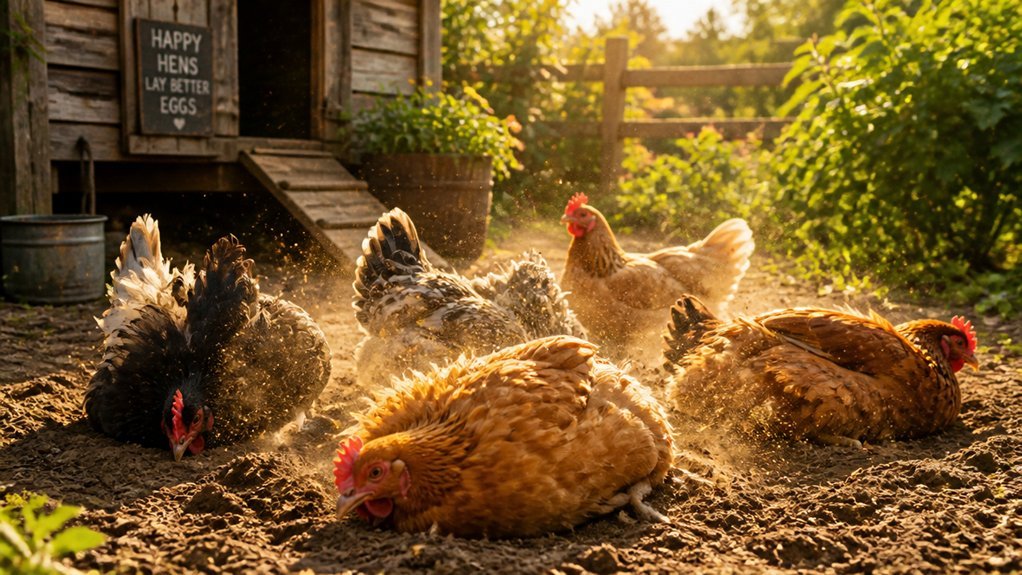
You can help chickens dust bathe together by offering a roomy, dry, sheltered spot with sand, fine dirt, or wood ash. Let several birds use it at once so they can mirror each other, feel safe, and settle social ranks naturally. Watch for bold hens to bathe first and quieter birds to join at the edges. Keep the bath fluffy, clean, and dry to reduce stress, boredom, and pests, and you’ll see what makes flock harmony grow.
Why Chickens Dust Bathe Together
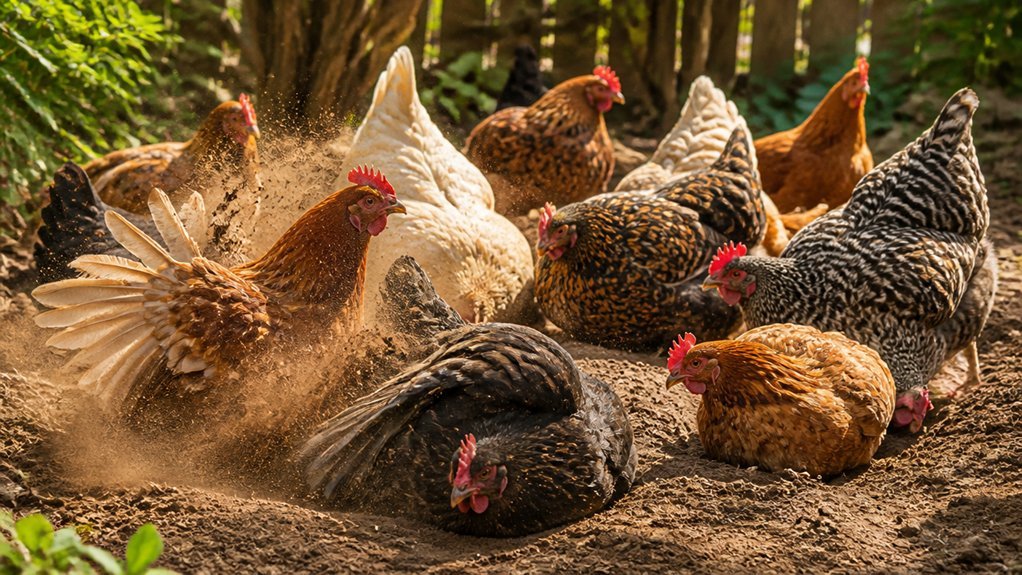
When you watch chickens dust bathe together, you’ll notice it’s more than just random behavior. You’re seeing a social ritual shaped by instinct and flock awareness. Chickens often choose the same spot because one bird’s activity signals safety and interest to others.
You may also see them mirror each other’s movements, scratch the soil, and settle in side by side. This shared behavior helps them stay connected while they maintain personal space within the group. Since chickens are flock animals, they often prefer to act together when the environment feels right.
Dust bathing in a group can also reflect simple social learning: when one chicken starts, others quickly follow. Over time, you’ll notice these gatherings become a normal part of daily flock life. Additionally, the use of natural dust bath mixes like volcanic ash or zeolite supports healthy feather and skin care, reinforcing their natural grooming habits.
Benefits of a Shared Dust Bath
A shared dust bath does more than give chickens a place to clean themselves—it also strengthens flock harmony. When you let your birds bathe together, you encourage calm interaction and natural pecking-order behavior without forcing contact.
You’ll often see them relax, scratch, and preen side by side, which can reduce boredom and keep minor squabbles in check.
- Shared bathing helps birds feel safer around one another.
- Group dust bathing can lower stress and support better behavior.
- Regular social time gives you a clearer view of flock dynamics.
You also get a simple way to spot health changes, since healthy hens usually bathe with energy and interest.
When your flock shares this ritual, you’re supporting both hygiene and social balance.
Proper dust bath size is crucial to ensure all birds can comfortably participate and enjoy the benefits.Set Up a Shared Dust Bath Area
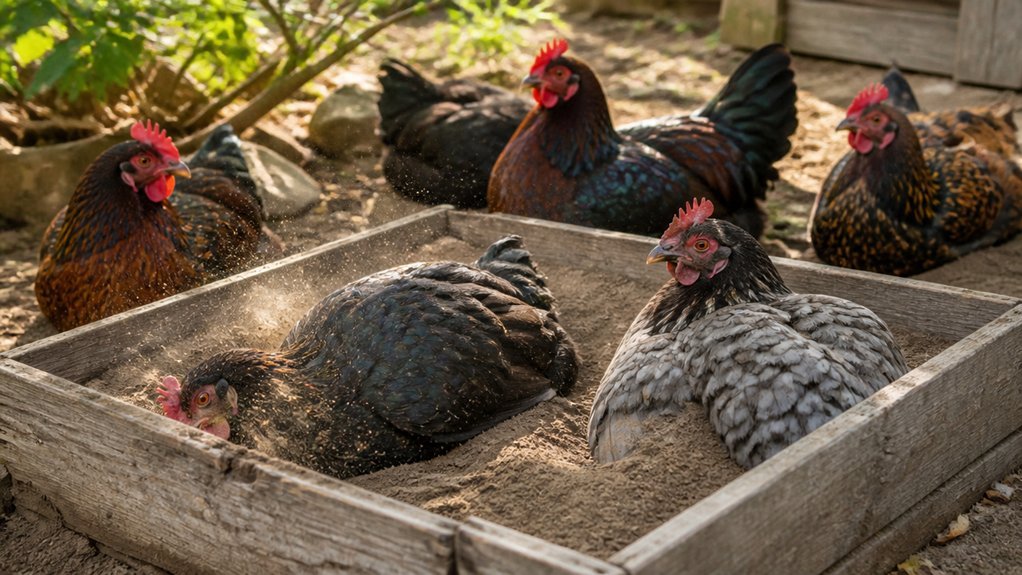
To make shared dust bathing easy, give your flock a roomy, dry area where several birds can fit without crowding. Choose a sheltered spot that stays out of rain and doesn’t turn muddy. You can use a shallow wooden box, a low pen corner, or a dug-out patch with loose soil. Mix in sand, fine dirt, and a little wood ash if you want a softer, more workable bath. Keep the edges low so hens can step in and out easily. Refresh the material when it gets damp, clumpy, or soiled. Using bedding with dust control properties ensures cleaner, healthier dust baths and reduces respiratory irritation. Place the bath where birds already spend time, so they’ll use it naturally. Add a bit of shade nearby, and your chickens will have a comfortable place to groom, relax, and socialize.
Notice Pecking Order Behavior at Bath Time
At bath time, you’ll often see the flock’s pecking order play out in small ways. You might notice one hen stepping in first, while others wait their turn or circle nearby.
Watch how birds claim space, share the middle, or yield when a more confident chicken arrives. These moments help you read flock dynamics without interfering.
- A bold hen may scratch and settle first.
- Submissive birds often bathe at the edge.
- Quick nudges usually signal rank, not aggression.
You can use these cues to understand who feels secure and who’s still learning the social rules. Stay observant, and let the flock sort itself out unless a bird gets repeatedly driven away or seems tense. Proper saddle fit can also influence social interactions, helping reduce stress and aggressive behaviors during bath times.
Keep the Dust Bath Clean for Flock Harmony
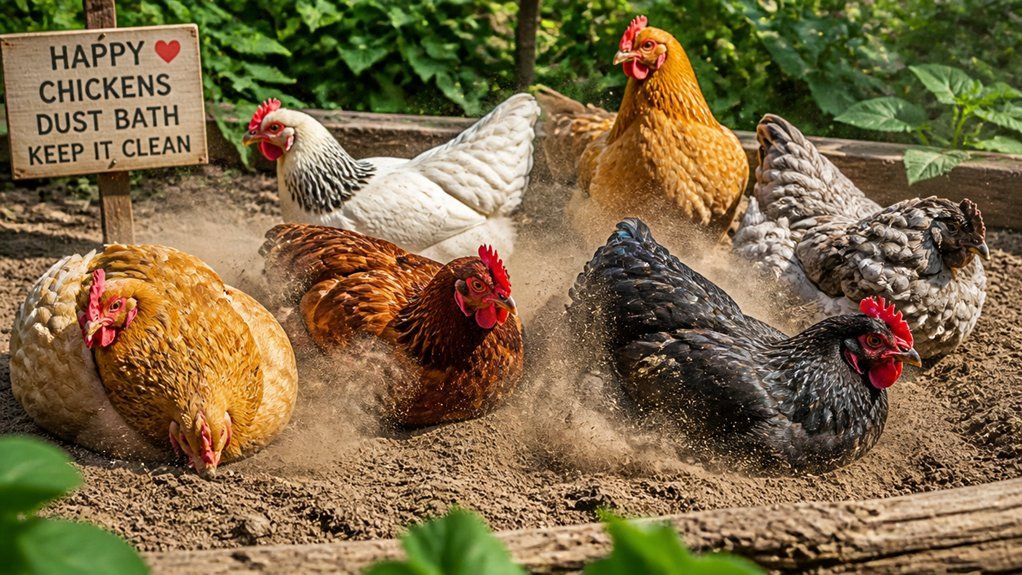
When the dust bath stays clean and dry, your flock is more likely to share it peacefully. You should scoop out wet clumps, feathers, and droppings every day, then fluff the soil so it stays loose. Add fresh sand or dirt when the surface gets packed. If rain hits, cover the bath or move it under shelter. This keeps hens from arguing over a muddy pit and lowers the chance of mites lingering. Using food-grade diatomaceous earth can help maintain a pest-free environment, but it’s important to keep the bath dry to preserve its effectiveness.
| Task | Why it helps |
|---|---|
| Remove droppings | Reduces germs |
| Break up clumps | Keeps dust fluffy |
| Add dry material | Restores bathing texture |
| Drain standing water | Prevents mud |
| Refresh often | Supports flock harmony |
Frequently Asked Questions
How Often Should Chickens Dust Bathe?
You should let chickens dust bathe whenever they want, often daily. They’ll usually choose dry, sunny spots to clean feathers and control parasites. If conditions stay damp, you can provide a dry area for them.
What Dust Bath Materials Are Safest for Chicks?
You’ll want fine, dry dirt, play sand, and a little wood ash; avoid cedar, chemicals, and clumping cat litter. Keep materials shallow, clean, and dust-free enough so chicks can scratch safely and breathe easily.
Can Dust Baths Help Prevent Mites and Lice?
Yes—dust baths can help reduce mites and lice by letting you smother and dislodge pests naturally. They won’t replace treatment, but you’ll support healthier feathers if you keep baths dry, clean, and well maintained.
Should Wet Chickens Be Allowed to Dust Bathe?
No, you shouldn’t let wet chickens dust bathe. You’ll want to dry them first, because damp feathers trap dirt and can chill them. Once they’re dry, they can dust bathe safely and effectively.
How Can I Train Chickens to Use a New Dust Bath?
You can train chickens by placing the bath in a sunny, familiar spot, adding soft dirt, and sprinkling treats nearby. You’ll encourage curiosity, then reward them when they scratch, roll, and return often.
In Summary
If you give your flock a shared dust bath, you’ll help them stay clean, relaxed, and socially balanced. Watch how they take turns, settle in, and sort out their pecking order while they bathe. Keep the area dry, loose, and fresh so everyone can enjoy it without conflict. With a little upkeep, you’ll support healthier feathers and happier hens. A simple dust bath can do a lot for flock harmony.