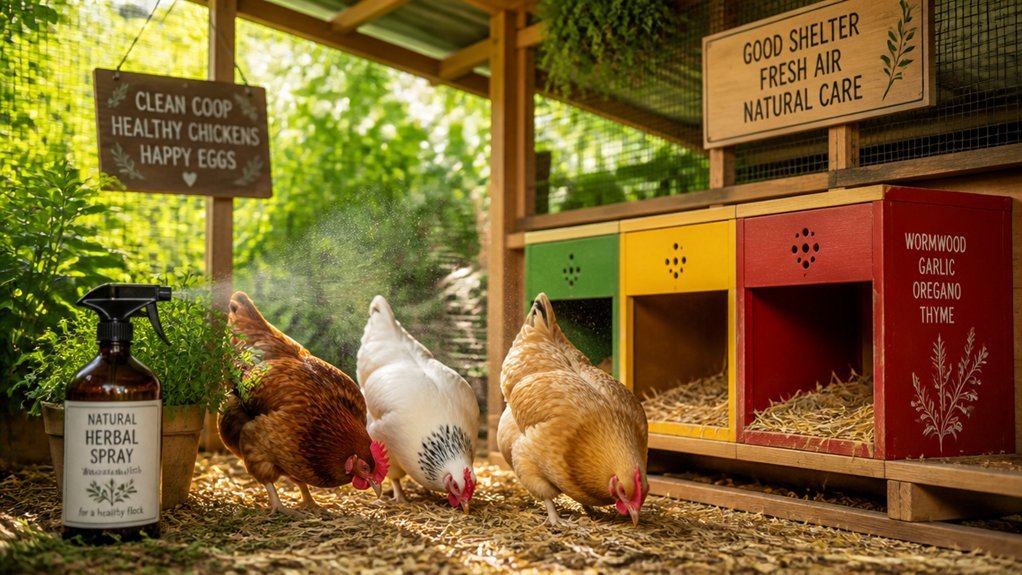
You can shield chickens from seasonal illnesses by keeping the coop dry, airy, and secure. In hot months, boost ventilation, add shade, and offer cool water with frozen bottles; in cold weather, block drafts without sealing out fresh air and keep bedding dry. Feed a balanced layer ration with oyster shell, scratch grain in winter, and greens in summer. Watch for panting, shivering, huddling, or sneezing so you can act fast and keep them healthier year-round.
Seasonal Chicken Coop Setup Tips

As the seasons change, you can help your flock stay healthier by adjusting the coop to match the weather.
In hot months, you should boost airflow with screened windows, vents, and shade, and you can add frozen water bottles for relief.
In cold weather, block drafts without sealing the coop tight, since fresh air still matters. Add dry bedding often so moisture doesn’t build up and chill your birds. You’ll also want to keep the floor elevated, the roof leak-free, and the run drained after rain or snow. Check doors, latches, and wire for gaps that let predators or pests in. Using appropriate ventilation fans can help maintain consistent airflow and prevent heat stress or dampness inside the coop.
When you match insulation, ventilation, and dryness to the season, you give your chickens a safer, sturdier home year-round.
How to Feed Chickens for Seasonal Health
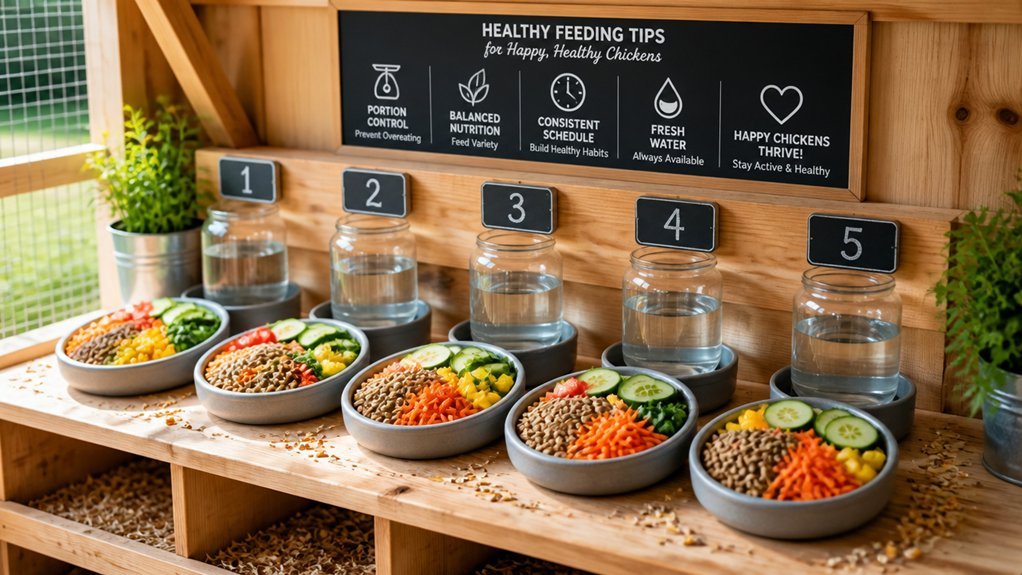
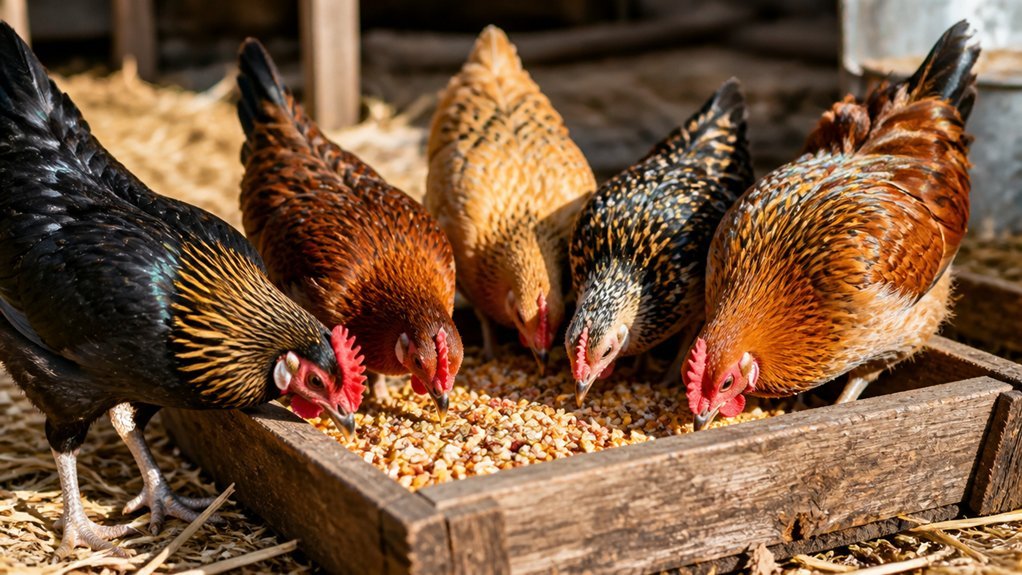
Feeding your chickens well through the seasons can make a big difference in how they handle stress, temperature swings, and disease. You should offer a balanced layer or flock feed as the main diet, because it gives steady protein, vitamins, and minerals year-round.
In colder months, you can add a little scratch grain at dusk so they’ve extra energy overnight, but don’t let treats replace complete feed. During hot weather, give cool, clean water and moist greens like lettuce, cucumber, or chopped herbs to encourage eating.
You can also provide oyster shell for calcium and grit for digestion. Keep feed fresh, dry, and protected from pests. When you change diets, do it gradually so your birds keep eating well without digestive upset.
Ensuring proper mineral balance supports overall health and helps your flock withstand seasonal challenges.
Spot Signs of Seasonal Stress and Illness
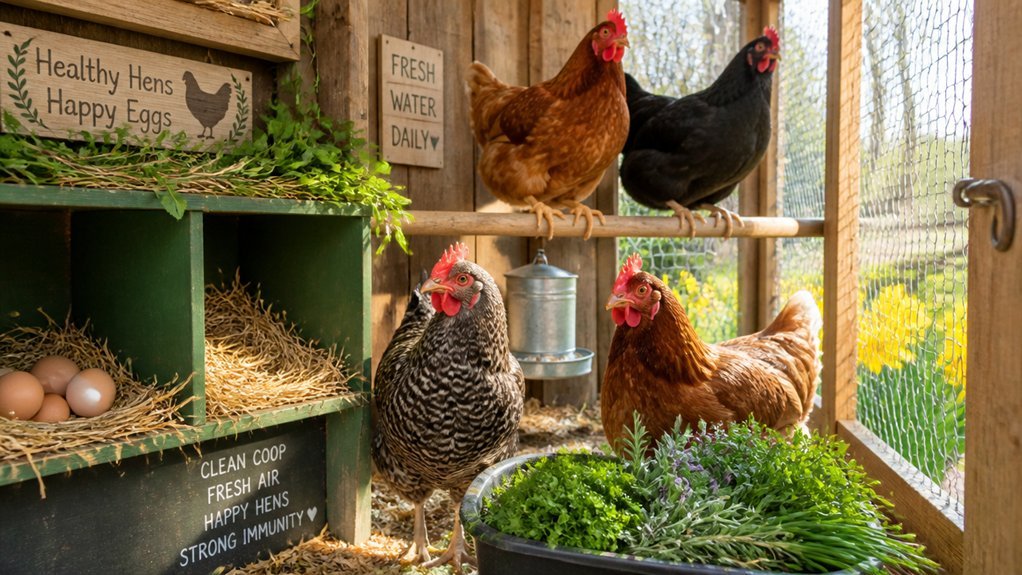
Good feeding helps, but you also need to watch how your flock looks and acts through changing weather. If chickens huddle, droop their wings, or stay apart from the group, they may be stressed.
Check for panting in heat, shivering in cold, and reduced egg laying, which often signals trouble early. You should also notice sneezing, wheezing, watery eyes, swollen combs, or dirty vents, since these can point to illness.
Feel their body condition and watch droppings for sudden changes in color or texture. A healthy bird stays alert, eats enthusiastically, and moves with purpose.
When you spot these warning signs fast, you can isolate sick birds, adjust shelter, and call a vet before seasonal problems spread through your flock. Maintaining proper electrolyte balance during hot weather can help prevent dehydration and heat stress, supporting overall flock health.
Frequently Asked Questions
How Often Should I Disinfect Waterers During Seasonal Changes?
You should disinfect waterers weekly during seasonal changes, and more often if they get slimy, dirty, or contaminated. Rinse them daily, scrub thoroughly, and let them dry before refilling to keep your flock healthier.
Can Vaccination Schedules Reduce Seasonal Illness in Backyard Chickens?
Yes, you can reduce seasonal illness with a vet-guided vaccination schedule. You’ll boost flock immunity, cut outbreaks, and support healthier birds. Match vaccines to local risks, and don’t skip hygiene, nutrition, or parasite control.
What Bedding Materials Help Chickens Stay Healthier in Wet Weather?
You can use clean straw, pine shavings, or hemp bedding to keep chickens drier and healthier. You’ll want to replace wet spots often, because damp bedding breeds bacteria, mold, and foot problems quickly.
When Should I Isolate a Chicken Showing Early Illness Symptoms?
Isolate her right away when you first notice symptoms like lethargy, sneezing, diarrhea, or reduced appetite. You’ll protect the flock fastest, and you can monitor her closely while you clean and limit spread.
Are Supplements Necessary for Chickens During Extreme Temperature Swings?
Not usually; you can focus on clean water, balanced feed, shade, and shelter first. If your birds seem stressed, you might add electrolytes or vitamins briefly, but you shouldn’t rely on supplements alone.
In Summary
By keeping your coop clean and dry, you can give your flock a healthier place to ride out changing weather. When you adjust feed for the season, you help chickens stay strong and better able to fight off illness. And when you watch for early signs of stress, you can act fast before small problems get worse. Stay consistent, trust your instincts, and your chickens will have a better chance of staying safe and thriving year-round.