
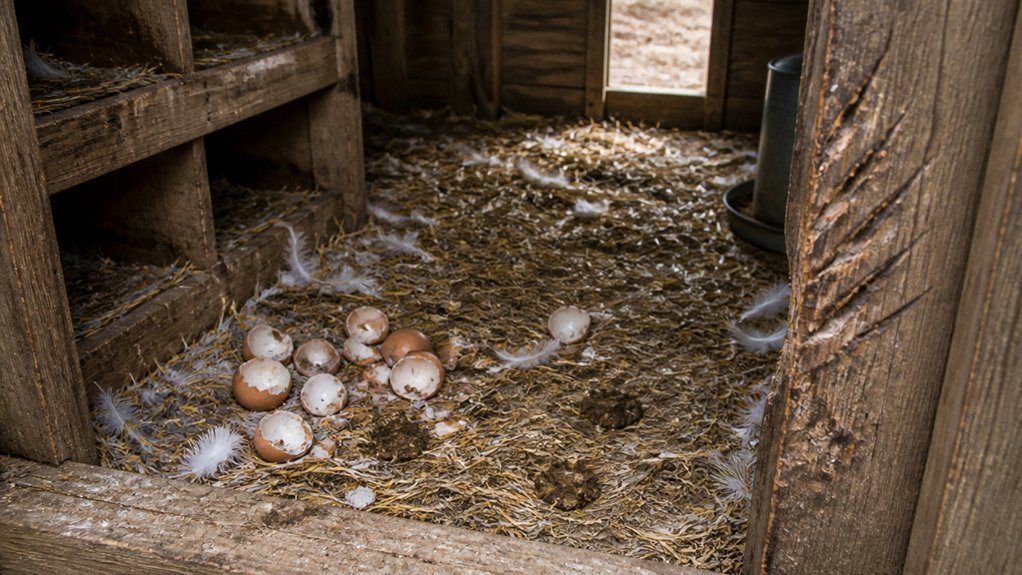
The best signs of a predator attack on your chickens are sudden alarm calls, crowding near cover, or a flock rushing to the coop at dusk. You may also notice missing birds, empty nesting boxes, scattered feathers, bite marks, blood, torn skin, or broken quills. Check for tracks, droppings, drag marks, damaged wire, and hidden carcasses near brush or boards. Nighttime noise, restless hens, and repeated losses can point to the predator behind it all.
First Signs of a Predator Attack
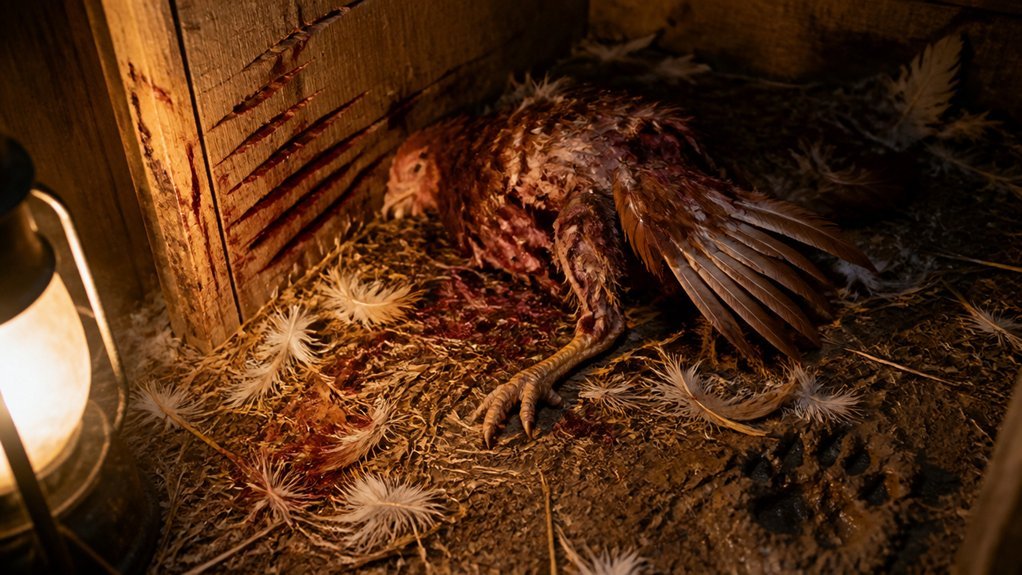
If a predator has targeted your flock, you’ll usually spot the first signs before you ever see the animal itself. You may notice your hens acting jumpy, freezing at sudden sounds, or crowding together near cover. They might refuse to range as far, stay silent, or dart back to the coop at dusk.
You can also see feathers scattered near fences, under roosts, or by favorite dust-bathing spots. Scratches in soil, disturbed bedding, and broken branches can show where a hunter probed the area. Watch for tracks, droppings, or drag marks around the run.
These clues tell you something has been prowling nearby, and they help you act fast before the next attack gets worse. Regularly inspecting your fence’s integrity and security can help identify potential weak points predators might exploit.
Missing Chickens and Empty Nesting Spots
If you notice a chicken missing without warning, a predator may have struck.
Empty nesting boxes can also signal trouble, especially when hens vanish during the night or early morning. These clues often point to a predator that hunts when your flock is least protected.
Keeping an eye on predator protection measures can help prevent these incidents from happening.
Sudden Chicken Disappearance
Have you noticed a chicken vanish overnight or found nesting spots suddenly empty? That sudden loss can point to a predator strike, especially if your flock was secure the night before.
You may not see feathers, blood, or a struggle because some hunters carry birds away fast, leaving little behind. Foxes, raccoons, hawks, and coyotes can all snatch a chicken in moments.
If only one bird disappears, check whether it was weak, isolated, or roosting low, since predators often target easy prey. Look for disturbed soil, tracks, broken wire, or a gap in fencing nearby.
Also count your flock daily so you can spot losses quickly and respond before another bird disappears. Regularly inspecting your coop’s door locks and trap enclosures can help prevent predators from entering or escaping with chickens.
Empty Nesting Boxes
Empty nesting boxes can be another warning sign of a predator problem, especially when hens stop laying in their usual spots or seem too uneasy to settle in. If you notice this change, check the coop for signs of stress or disturbance.
A helpful tip is to also examine the lockable latch features, as predators may attempt to manipulate or pry open unsecured doors or nesting boxes.
- Look for feathers or droppings near the boxes.
- Check for scratches, broken straw, or moved bedding that show something startled your birds.
- Inspect for missing eggs and restless hens that avoid the nests altogether.
You might also see birds crowding elsewhere, preferring corners or roosts over the boxes. When predators pressure your flock, hens often abandon comfort and routine.
Treat empty nesting spots as a clue, not a coincidence, and inspect the coop before the problem gets worse.
Likely Predator Timing
Predators often strike when chickens are least protected, which means missing birds and abandoned nesting spots usually point to a nighttime or early-morning attack. If you check the coop at dawn and notice a hen gone without feathers, blood, or a broken fence, a predator likely grabbed her before sunrise.
Raccoons, foxes, owls, and even neighborhood dogs often hunt when your flock is roosting and quiet. You may also find eggs untouched but nests empty, showing the attacker focused on birds instead of feed. Track the timing, because repeated losses around dusk or dawn help you narrow the threat.
Secure doors before dark, lock pop doors, and inspect for digging or claw marks to stop the next strike. Using high-visibility electric fencing and properly maintained netting can enhance predator resistance during vulnerable times.
Feathers Scattered Around the Coop
When you see feather piles near the coop, you should treat them as a warning sign. Torn feathers often point to a predator attack, especially if they’re scattered in one area. A closer look at the fence height and potential gaps can reveal how the predator gained entry. You’ll want to inspect the ground and nearby fencing for more clues right away.
Feather Piles Near Coop
If you find feathers piled or scattered around the coop, it often means a predator got close enough to start an attack. You should treat that pile as a warning sign, not just a messy yard. Check the area right away and look for gaps, tracks, or disturbed bedding. Then you can narrow down where the animal came from and how it entered. Using appropriate hardware cloth, especially with a 1/2 inch mesh and 19 gauge wire, can help prevent predators from breaking through in the future.
- Inspect fences, wire, and latches for weak spots.
- Look for feathers gathered in one spot near posts, doors, or corners.
- Secure feed, close pop doors at dusk, and reinforce the run.
When you act fast, you reduce the chance of another visit. Keep watching the coop each morning, because fresh feather piles can show a predator is still hunting nearby.
Torn Feathers Evidence
Torn feathers scattered around the coop often point to a struggle, not just a passing visit. You’ll usually find them where a predator grabbed a bird, slammed it down, or dragged it away. Look for broken quills, blood, or feathers stuck to fencing, nesting boxes, or brush nearby.
If the feathers belong to one chicken, check that bird first for wounds, stress, or missing parts. Fresh feathers feel soft and clean at the torn end, while older ones look dry and faded. Don’t confuse this with normal molting, which leaves even, loose feathers without signs of panic.
When you see scattered torn feathers, act fast: secure the coop, inspect gaps, and track where the attack likely started. Proper cover reinforcement and predator-proof fencing can help prevent future attacks.
Bite Marks on Chickens and Eggs
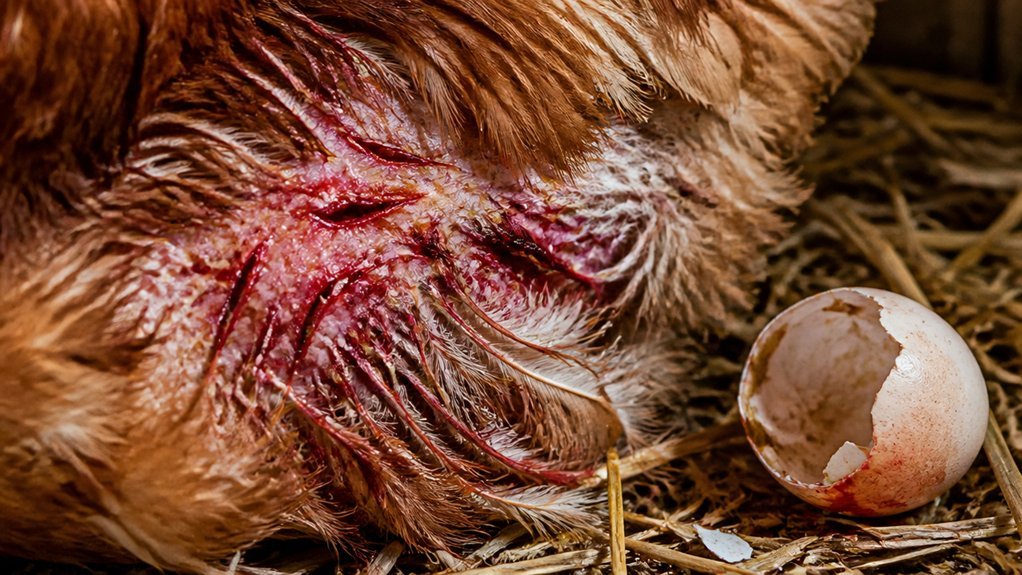
Bite marks on chickens and eggs often point to a predator that’s testing fences, coops, or nests for an easy meal. You’ll usually spot small punctures, shallow dents, or cracked shells where teeth met the surface.
Check eggs in the nesting box, on the ground, and near entry points, because predators often grab, drop, or sample them. On birds, look for neat tooth impressions on combs, toes, or legs.
- Inspect fresh eggs daily for pinholes, chips, or scraped shells.
- Compare damaged spots with coop gaps or loose wire.
- Track when marks appear to identify nighttime visitors.
- Ensure your enclosure materials are predator-resistant, with reinforced wire mesh and sturdy locks, to reduce the chances of attacks.
If you see repeat damage, tighten openings, raise nests, and remove attractants. Quick checks help you catch the pattern before predators get bolder.
Blood, Wounds, or Missing Parts
Blood, wounds, or missing parts are strong signs that a predator made physical contact with your flock. You may find torn skin, puncture injuries, or feathers soaked with blood after an attack. A bird might limp, hold a wing oddly, or hide because it’s in pain.
If a head, foot, comb, or toe is gone, a predator likely grabbed and injured the chicken before leaving. Check each bird closely, since some wounds can look small at first but worsen fast.
Separate the injured chicken right away, clean the area if you can, and contact a vet when needed. These injuries tell you the predator got close enough to grab, bite, or tear at your birds, so you should act quickly to protect the rest of the flock.
Signs a Predator Broke Into the Coop
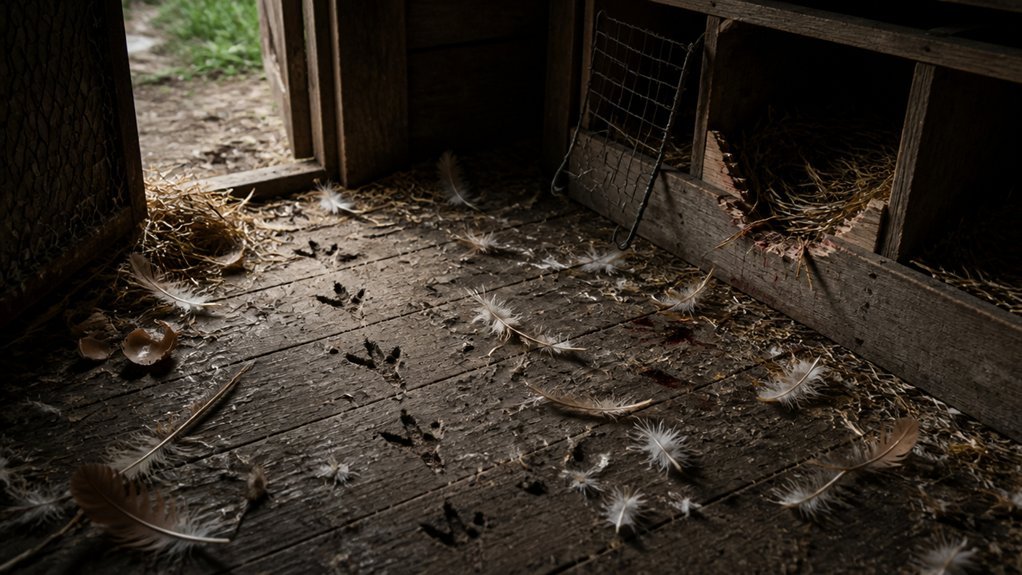
If a predator broke into the coop, you’ll often see damage around the entry point first. Check doors, latches, wire, and vents for bending, splintering, or pry marks that show force. You may notice bedding kicked aside near the opening, or a frame shoved out of alignment.
Look for these signs:
- A latch that’s loose, twisted, or hanging open
- Chewed wood, torn mesh, or gaps big enough to squeeze through
- Scratch marks on the door, walls, or floor near access points
- Walk-in coop features like accessible doors and removable panels can sometimes be forced or compromised during a break-in.
Inside, the birds may seem frantic, huddled, or missing from their usual spots. If the coop smells strongly of stress or feathers, something likely scared them. Secure the weak spot quickly so you don’t invite another break-in tonight.
Tracks, Droppings, and Predator Prints
Next, look for tracks, droppings, and prints around the coop, run, and nearby soil or snow. You can often match hoof, paw, or claw marks to the predator that visited your birds.
Fox tracks usually show tight, oval pads with sharp nails, while raccoon prints look handlike with long fingers. Dogs leave rounder paw prints, and weasels or mink create small, paired bounds. Check droppings too. Fresh scat may contain feathers, hair, bones, or seeds, and its size and shape can narrow down the culprit.
If you find tracks leading to a fence gap, burrow, or damaged wire, take photos before rain or cleaning erases them. These clues help you identify the threat and strengthen your coop defenses quickly.
Noises and Activity After Dark
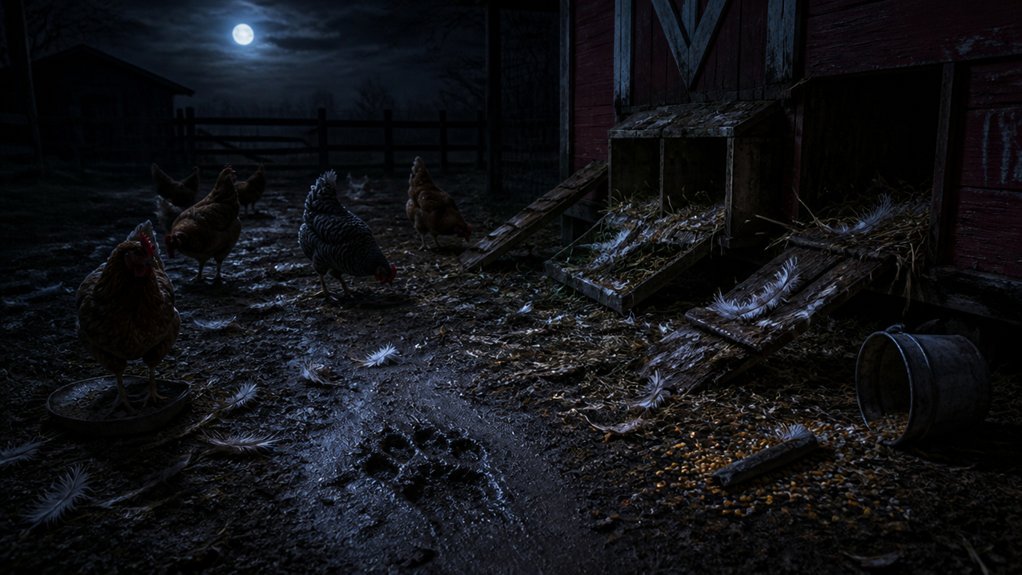
At night, unusual sounds can be your first warning that a predator is nearby. You might hear frantic clucking, wing beats, or sudden silence when your flock senses danger.
Watch for repeated alarms, pacing, or birds crowding the coop entrance instead of roosting calmly. Predators often trigger agitation long before you see them, so trust those changes.
- Listen for sharp squawks, hissing, or fast movement around the coop.
- Notice chickens leaving roosts, piling together, or refusing to settle.
- Check for dogs, owls, raccoons, or foxes lingering near fences or trees.
If the flock acts restless after dark, inspect your coop right away and secure openings. Quick attention can stop an attack before it starts.
Uneaten Carcasses Hidden Nearby
If a predator has attacked your flock, you might find an uneaten carcass hidden in brush, under boards, or just beyond the coop. You may also notice drag marks in the dirt or grass where it pulled the bird away.
Check nearby feeding spots too, since predators often leave signs where they stopped to eat.
Hidden Carcass Locations
Sometimes the clearest sign of a predator attack is a bird that’s gone missing, only for you to find its carcass hidden nearby. You might spot it under brush, behind boards, in a shed corner, or tucked inside a nesting box. Predators often stash what they kill, so check quiet, shaded places around the coop and yard.
- Look along fence lines and under low cover.
- Search bins, crates, and feed-room shadows.
- Inspect any sheltered spot with little disturbance.
You may notice the body mostly intact, which means the attacker returned before feeding much. If you find one, assume the predator could still be close and check the area carefully. Quick cleanup helps you protect the flock and identify where the animal feels safe.
Signs of Dragging
A predator may not leave a carcass where it killed the bird; instead, it can drag the chicken to a hidden spot and leave it uneaten or only partly eaten nearby. You might see a trail of feathers, disturbed grass, or soil marks showing where the bird was pulled.
The body may be out of sight under brush, behind a shed, or along a fence line. Look for twisted wings, broken legs, and torn skin that suggest the bird was moved after the attack.
If the coop door, run mesh, or latch shows damage, a predator likely got in, grabbed a chicken, and hauled it away. These clues tell you the attack didn’t end at the kill site, so you should search the surrounding area carefully and quickly.
Nearby Feeding Spots
Nearby feeding spots often show that a predator dragged a chicken away and started eating it close by. You may find feathers, blood, and a partially eaten body under brush, beside a fence, or in tall grass.
Check the area carefully, because predators often return to finish the meal.
Look for:
- Scattered feathers in one direction
- Uneaten organs or torn skin
- Tracks, droppings, or paw prints nearby
If you spot a hidden carcass, you’ve likely found the attack site. Don’t touch it barehanded; use gloves and mark the spot.
Then inspect your coop, run, and surrounding cover for holes, gaps, or ambush points. Removing brush and securing feed can help keep predators from using the same route again.
Fox, Hawk, and Raccoon Attack Signs
Fox, hawk, and raccoon attacks leave different clues, and spotting them quickly can help you protect the rest of your flock.
If a fox strikes, you’ll often find dragged birds, torn feathers, and disturbed soil near holes or fence gaps. Hawks usually hit in daylight, so you may see scattered feathers, a missing bird, or a carcass with the breast exposed.
Raccoons act more methodically; they can reach through wire, leaving head wounds, missing limbs, or partially eaten birds close to the coop. You might also notice bent latches, claw marks, and signs they tested doors.
Check for repeated damage around the same spot, because predators often return. When you identify the pattern, you can tighten security and respond faster next time.
Frequently Asked Questions
How Can I Protect Chickens After a Predator Attack?
You can protect chickens by moving them into a secure coop, repairing weak spots, adding hardware cloth, locking them up at dusk, using motion lights, and removing food, cover, and easy predator access.
Which Coop Materials Best Prevent Future Predator Entry?
You’ll do best with welded wire hardware cloth, sturdy lumber, metal roofing, and predator-proof latches. Bury wire around the coop, seal gaps, and reinforce vents so raccoons, foxes, and dogs can’t get in.
Should I Quarantine Surviving Chickens After an Attack?
Yes, you should quarantine survivors immediately. You’ll reduce stress, watch for injuries, and catch infections early. Move them to a clean, quiet space, provide water and feed, and check them closely twice daily.
How Often Should I Inspect the Coop for Weak Spots?
You should inspect your coop weekly, and after storms or predator activity, check it again right away. Walk the perimeter, test locks, and patch damage quickly so you catch weak spots before predators do.
What Predators Attack Chickens Most Often at Night?
Raccoons, foxes, opossums, coyotes, and weasels attack chickens most often at night. You’ll also face stray dogs and bobcats in some areas. Secure your coop tightly, because they’ll exploit any weak spot fast.
In Summary
Knowing the warning signs of predator attacks helps you protect your flock before more damage happens. If you notice missing chickens, scattered feathers, bite marks, blood, tracks, or strange nighttime activity, act fast. Check your coop, reinforce weak spots, and secure food and nesting areas. Don’t wait until another bird is gone. Stay alert, because spotting these clues early can save your chickens and keep predators from coming back.



