
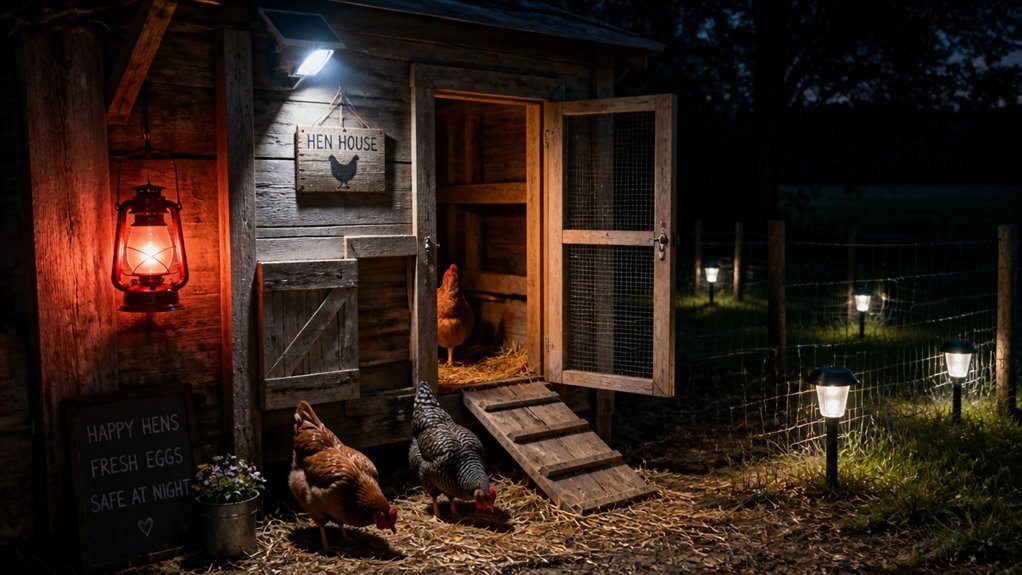
Use motion-activated coop lights so predators get startled when they approach, and pick bright, weather-resistant models with quick response times. Place lights at doors, pop holes, fence gaps, and along dark approach paths, aiming some at the ground where paws land. Keep the light focused on key entry points, then move it around sometimes to avoid habituation. That way, you can keep predators guessing and discover a few extra tricks that really help.
Choose Motion-Activated Coop Lights
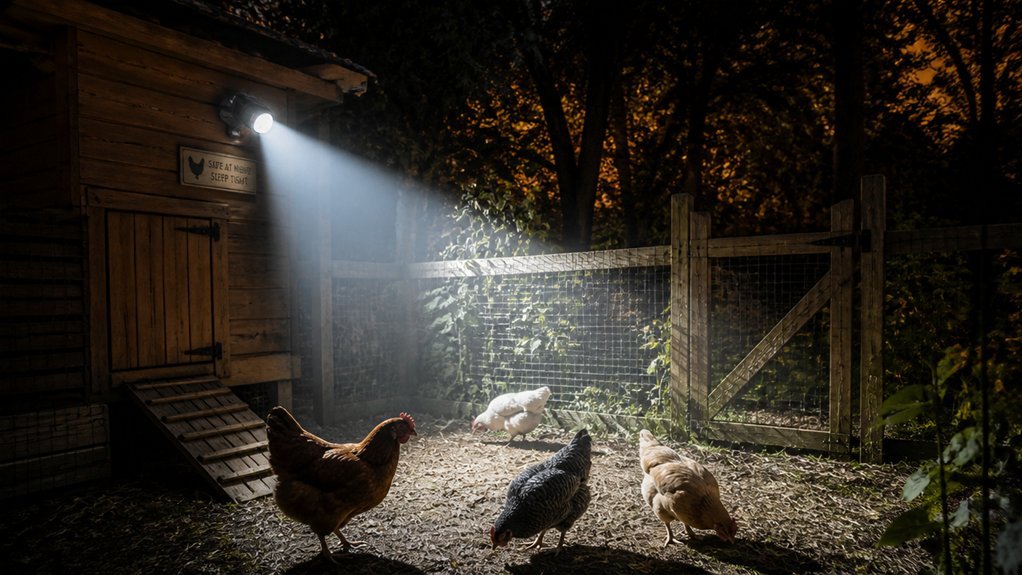
Motion-activated coop lights can help scare off predators by startling them the moment they approach your chickens. You should choose a light with a wide detection range, bright LEDs, and weather-resistant housing so it works reliably outdoors.
Look for a model that turns on quickly and stays lit long enough to discourage curious raccoons, foxes, or stray dogs. You can mount it near the coop and test it at dusk to make sure it reacts when needed. If the sensitivity feels too low or too high, adjust it until it fits your yard.
Battery-powered or solar options can save you wiring work, and either choice can keep your flock safer without adding much maintenance.
Being aware of the weatherproof ratings helps ensure your chosen light withstands the outdoor elements and remains effective year-round.
Place Lights Where Predators Enter
After you’ve picked the right coop lights, put them where predators are most likely to come in. Focus on doors, pop holes, fence gaps, and the path to your run, because those spots give raccoons, foxes, and stray dogs the easiest access. You want the beam to hit the approach before an animal reaches the coop, so it feels exposed and exposed. Try this layout:
Place coop lights at doors, pop holes, and fence gaps where predators are most likely to enter.
- Mount a light above each entry point.
- Aim another light at the ground where paws or claws land.
- Brighten dark corners near feed bins, gates, and brush.
- Consider using motion sensors to activate the lights only when movement is detected, making it harder for predators to approach unseen.
Keep the coverage tight and direct, not scattered. When you light the places predators use first, you make your coop look watched and much less inviting.
Rotate Light Placement to Prevent Habituation
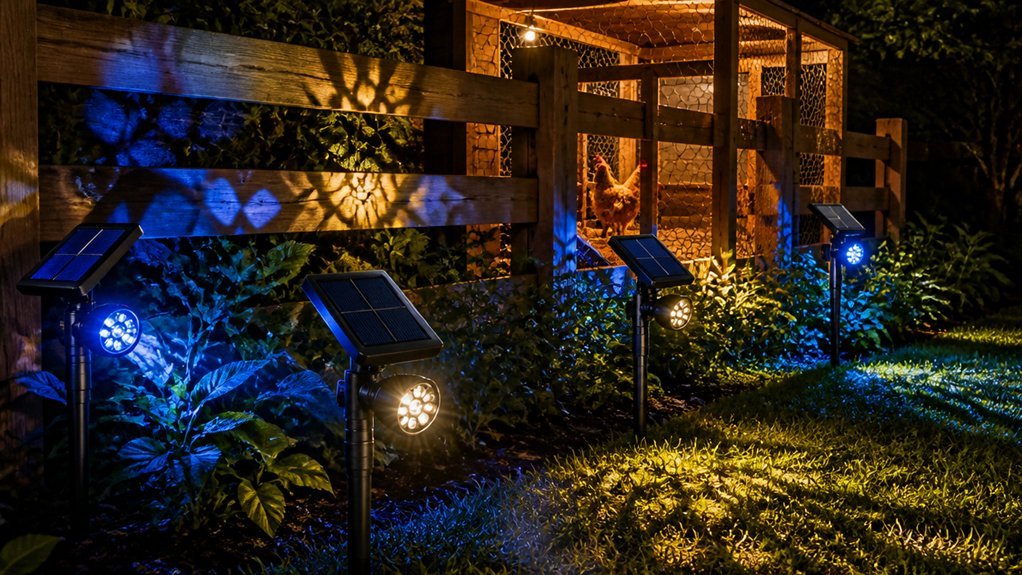
Predators can get used to the same light pattern, so shift your lights every so often to keep them uncertain. Move motion lights between coop corners, gates, and fence lines, and change the angle so you don’t create a predictable glow. You can also swap bright bulbs for dimmer ones in different spots, then test which setup makes raccoons, foxes, and stray dogs hesitate. Incorporating weather resistance into your lighting strategy helps maintain effectiveness during storms and rain, ensuring predators remain confused and less likely to target your flock.
Frequently Asked Questions
What Bulb Color Works Best for Deterring Predators?
Bright white or cool blue bulbs usually work best because you can see threats clearly, and many predators avoid harsh light. You’ll deter them better by using motion-activated fixtures and keeping the area well lit.
How Many Lights Should a Chicken Coop Use?
You should use two to four lights, depending on coop size and dark corners. You’ll want enough coverage to eliminate shadows, but not so much that you stress your chickens or waste energy.
Can Solar Lights Reliably Protect Chickens at Night?
No, you can’t rely on solar lights alone to protect chickens at night. You should use them as a deterrent, but you’ll still need sturdy fencing, secure locks, and monitored coop lighting for real safety.
Should Coop Lights Be on All Night?
No, you shouldn’t keep coop lights on all night; you’ll stress your chickens and disrupt their sleep. Use lights briefly if needed, then switch them off so they rest naturally and stay calmer.
Do Lights Affect Chickens’ Sleep Patterns?
Yes, you can disrupt chickens’ sleep if you leave lights on too long; they need darkness to rest well. Use low, brief lighting only when necessary, and you’ll help them keep a healthy routine.
In Summary
By using motion-activated coop lights, you can startle predators before they reach your flock. Place those lights at common entry points so you catch trouble where it starts. Don’t keep them in one spot for too long, though—rotate their placement to avoid helping predators get used to them. With a little planning and regular adjustment, you’ll make your coop less inviting and give your chickens a safer night’s sleep.



