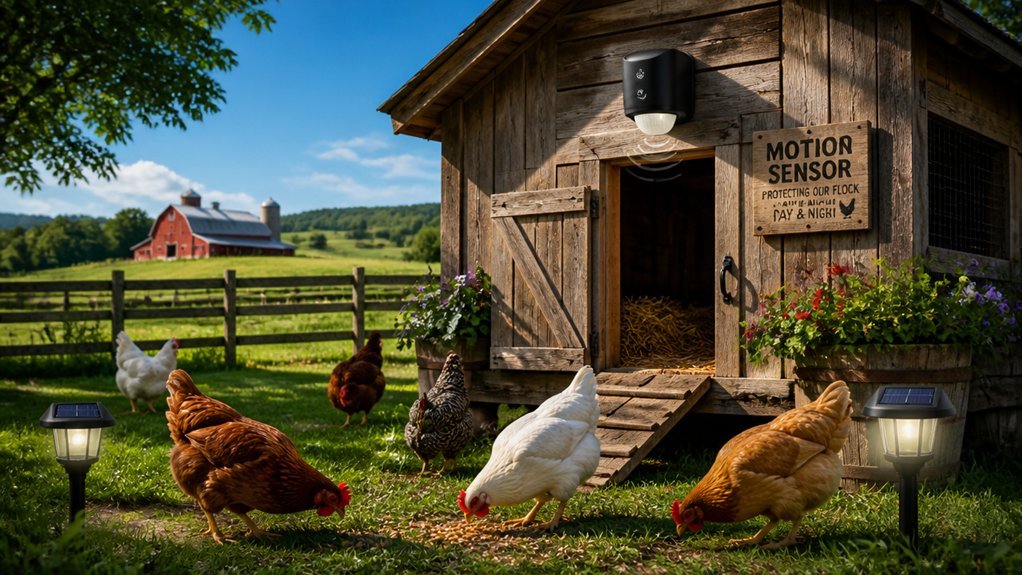
Choose a motion sensor that fits your coop, like passive infrared for warm-bodied intruders or dual-tech for tricky weather and brush. Place it where predators actually come in, such as gates, fence gaps, run corners, and brush lines, so you catch them early. Add motion-activated lights and a loud alarm near doors and weak spots to scare raccoons, foxes, and stray dogs fast. With the right setup, you’ll spot smarter ways to protect your flock.
Choose the Right Motion Sensor for Chickens

When you’re choosing a motion sensor for chickens, start by matching the sensor to your coop’s layout and the threats you want to stop. You’ll want a model that detects animals reliably without reacting to every breeze or passing leaf.
Passive infrared sensors work well for warm-bodied intruders, while microwave or dual-technology options can handle more challenging conditions. Pick a unit with adjustable sensitivity so you can reduce false alarms around roosting birds, shifting shadows, or nearby vegetation. Weatherproof housing matters if you mount it outdoors, and battery life matters if you can’t run power.
Additionally, choosing sensors with ultrasonic or visual deterrent capabilities can enhance overall protection by supplementing motion detection. Link your sensor to lights, alarms, or cameras so you can respond fast when something moves near your flock at night.
Place Motion Sensors Where Predators Enter
Start by putting motion sensors at the places predators are most likely to enter, not just anywhere around the coop. Focus on gates, run corners, gaps in fencing, and paths leading from woods, brush, or sheds.
You should also watch low spots where animals can crawl under wire and high points where raccoons or opossums can climb. Aim each sensor so it covers the approach, not the whole yard. That helps you catch movement before a predator reaches the birds.
Check for trails, droppings, and disturbed soil, then adjust sensor placement as signs change. If you move feeders, nesting boxes, or fencing, reposition the sensors too. Good placement gives you faster notice and helps you protect your flock before a predator gets close.
Additionally, consider the security features of your coop door latches, such as self-locking mechanisms and padlock compatibility, to further deter raccoons and other predators from gaining access.
Add Lights and Alarms to Deter Predators
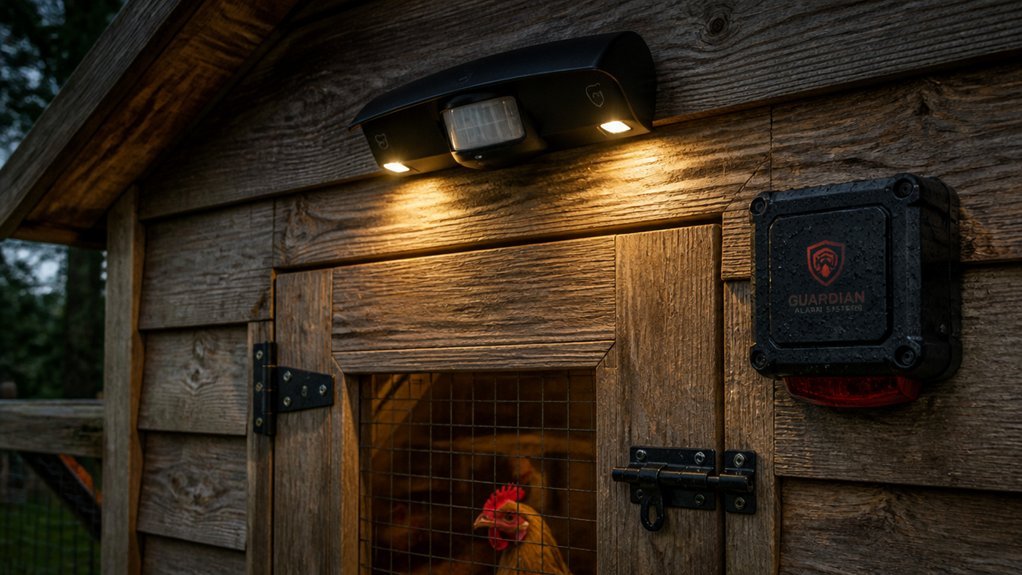
Bright lights and loud alarms can stop a predator before it tests your coop. Install motion-activated floodlights near doors, runs, and fence gaps so sudden glare startles raccoons, foxes, and stray dogs.
Pair the lights with a siren or buzzer that sounds the moment the sensor trips. Keep the alarm loud enough to reach your house, but not so harsh that it bothers neighbors every night. Test both devices after dusk and adjust the sensitivity so wind or moving branches won’t trigger false alerts.
If your system allows it, choose different sounds and flashing patterns, because predators often adapt. You can also connect the alarm to a camera, which helps you confirm threats and respond fast. Using electrified fencing in combination with motion sensors adds an extra layer of protection against persistent predators.
Frequently Asked Questions
How Often Should Motion Sensors Be Checked for Battery Life?
Check them monthly, and more often in cold weather or after frequent alerts. You’ll catch weakening batteries early, avoid dead sensors, and keep your setup reliable. Replace batteries as soon as performance drops.
Can Motion Sensors Scare Chickens as Well as Predators?
Yes, they can. You might startle chickens if sensors trigger lights, alarms, or sudden movement nearby. Place them carefully, test settings, and use gentler alerts so you deter predators without upsetting your flock.
What Weather Conditions Affect Outdoor Sensor Performance?
You’ll notice rain, snow, fog, heat, and strong winds can reduce outdoor sensor accuracy. You should shield units from moisture, avoid direct sunlight, and clear debris, because temperature swings and ice can trigger false alarms.
How Can I Prevent False Alarms From Branches or Pets?
You can trim branches, angle sensors away from swaying limbs, and set the sensitivity lower. Train pets to avoid the area, or use pet-immune sensors, then test at night and fine-tune coverage zones.
Do Motion Sensors Work With Solar-Powered Chicken Coop Systems?
Yes, you can use motion sensors with solar-powered coop systems if you choose low-power units. You’ll need a battery buffer, proper positioning, and efficient wiring so your sensors stay reliable through cloudy nights.
In Summary
By choosing the right motion sensors, placing them where predators are most likely to enter, and adding lights or alarms, you’ll make your coop a much harder target. These simple steps can help you spot trouble early and scare off threats before they reach your chickens. Stay consistent with checks and maintenance, and you’ll give your flock a safer, more secure home. Small upgrades can make a big difference in protecting your birds.