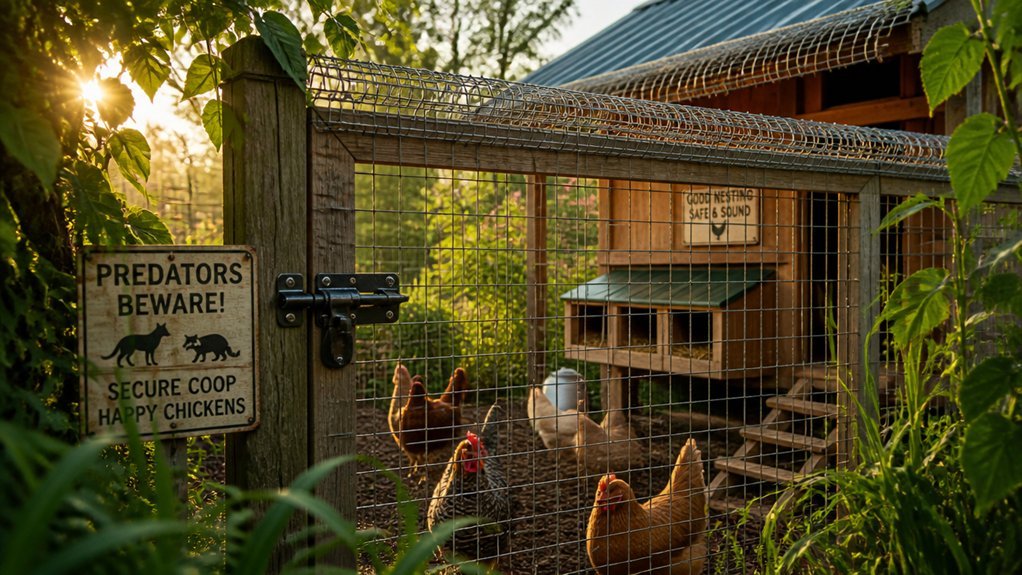
Protect your chickens with a layered defense: inspect the coop and run for gaps, loose boards, and damaged wire; use sturdy galvanized mesh, not poultry netting; bury hardware cloth 12 inches deep with an L-shaped bend; lock doors with two-step latches and backup clips; and close pop hatches tightly at night. Remove feed, water, and hiding spots, then add motion lights and overhead netting. Keep going, and you’ll uncover the strongest upgrades next.
Check Your Coop and Run for Weak Spots
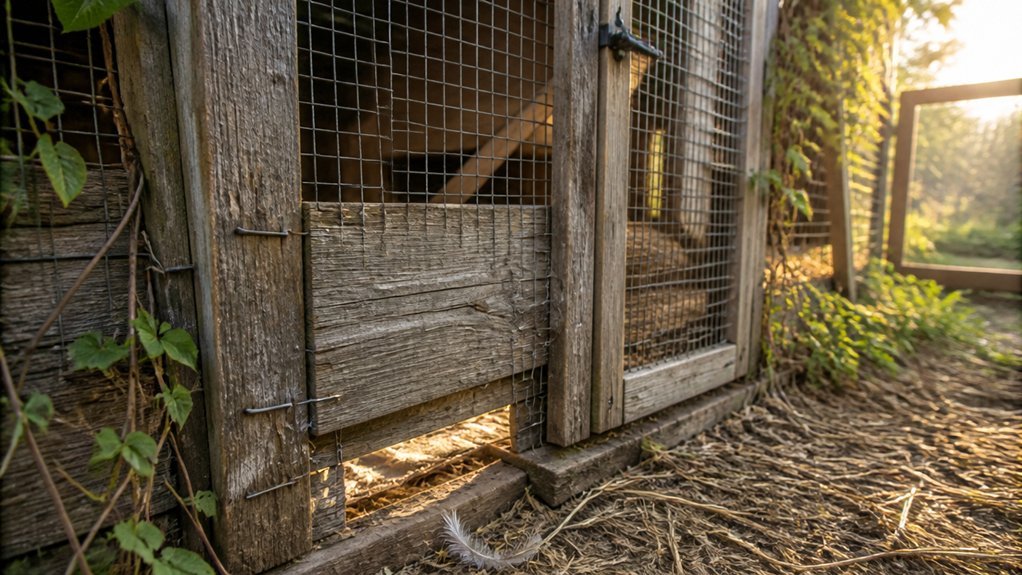
Before predators can find a way in, you need to inspect your coop and run for any weak spots. Walk the perimeter and look for gaps, loose boards, warped siding, and damaged wire. Check doors, latches, hinges, and roof edges, since even a small opening can invite trouble. If you spot rot or rust, fix it right away so the structure stays solid.
Pay close attention to corners and places where materials meet, because predators often test those areas first. Inside the run, notice any spots where birds can slip through or where shelter has worn thin. Reinforce weak sections promptly, and don’t wait for a problem to grow. A careful inspection helps you catch vulnerabilities early and keeps your flock safer every day. Additionally, using hardware cloth with a proper mesh size and gauge can greatly reduce the risk of predator entry.
Install Predator-Proof Run Fencing
To keep predators out, you’ll want to install sturdy wire mesh around your run. Bury the fence edges deep so animals can’t dig underneath, and secure every gate with strong latches. Using a no-dig installation method with reinforced stakes can further enhance the fence’s stability and deter digging attempts.
Choose Sturdy Wire Mesh
Choose sturdy wire mesh for your chicken run, since it gives your flock a strong first line of defense against digging, chewing, and clawing predators. You should pick galvanized hardware cloth, not flimsy poultry netting, because it resists tearing and holds its shape under pressure. Use tight openings so raccoons can’t reach through or pry at weak spots. Check the gauge, too: thicker mesh lasts longer and stands up better to daily wear. Ensuring consistent fence height helps maintain effective electric shock delivery and prevents predators from slipping through or climbing over. Secure each panel firmly to your frame, and inspect joints often. If the mesh stays taut and intact, you’ll make it much harder for predators to get close.
Bury Fence Edges Deep
Even the toughest wire mesh won’t help if predators can dig underneath it, so bury your fence edges deep to stop that route in its tracks. Dig a trench along the run perimeter at least 12 inches deep, then fold the bottom of the mesh outward or straight down into the soil. This creates a barrier that blocks dogs, foxes, raccoons, and coyotes from tunneling in. Properly anchoring posts with double spikes or galvanized stakes further prevents predators from displacing or climbing over the fence. Pack dirt tightly around the buried section so there aren’t loose gaps they can exploit. If your soil is soft, go deeper or add hardware cloth apron around the base. Check the line after heavy rain or freeze-thaw cycles, since erosion can expose weak spots. A secure underground edge strengthens your run and keeps your flock safer every day.
Secure Gates And Latches
A sturdy fence won’t protect your chickens if the gate is weak, so make sure every gate closes tightly and locks securely. Use heavy-duty hinges that won’t sag, and check that the gate meets the frame without gaps.
Install a latch that raccoons can’t twist, lift, or pry open, and add a carabiner, clip, or padlock for extra security. You should inspect hardware often because weather, use, and shifting ground can loosen fasteners over time.
If you use a sliding bolt, mount it where predators can’t reach through the wire. Keep the area around the gate clear so nothing blocks the latch. When you open or close the run, make sure it shuts fully every time, since one careless step can invite trouble.
Regularly check for weatherproof materials and damages that could weaken your fencing and compromise security.
Bury Hardware Cloth to Stop Diggers
Bury hardware cloth around the coop and run to block predators that dig under fences. Use 1/2-inch galvanized mesh, and sink it at least 12 inches deep.
For extra protection, bend the bottom outward in an L-shape, so a digging animal meets a buried barrier before it reaches the pen. You can also lay the cloth flat under a soil or gravel apron outside the fence line.
Staple or fasten each seam tightly, and overlap panels so no gap opens with weather or movement. Check the buried edge after heavy rain or frost, since shifting ground can expose weak spots. This simple upgrade makes it much harder for foxes, raccoons, dogs, and other burrowers to get in and bother your flock. Using corrosion-resistant materials for your hardware cloth ensures longevity and ongoing protection.
Lock Down Doors, Latches, and Pop Hatches
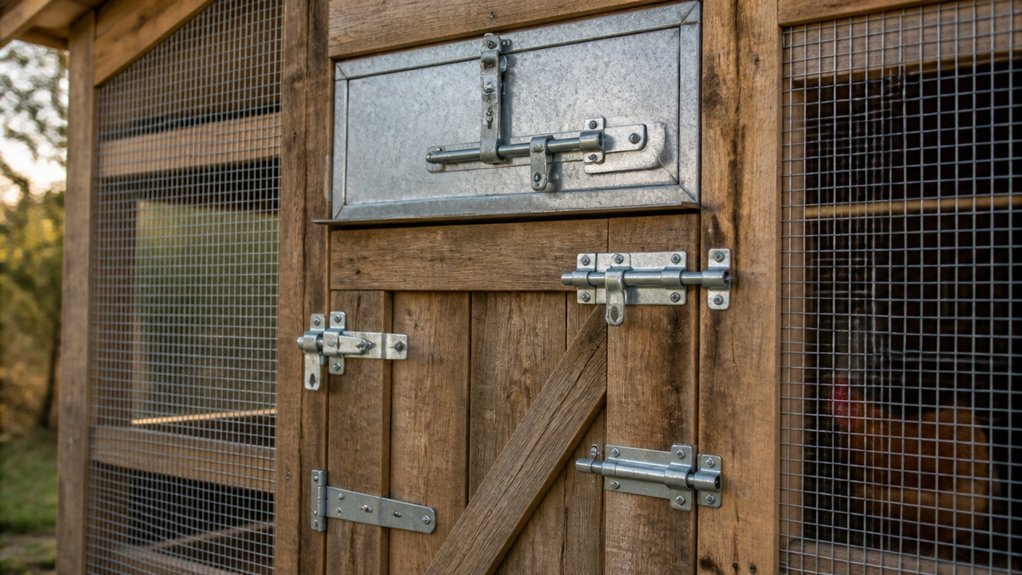
You should lock every coop door with sturdy latches that predators can’t easily pry open. Reinforce pop hatches with strong hardware so they stay tight after each close. When you secure these entry points, you make your chickens much safer overnight. Additionally, using predator-proof materials such as galvanized wire fencing and secure locks further reduces the risk of unwanted intruders.
Secure Coop Latches
Security starts with the weak points predators target first: coop doors, latches, and pop hatches. You need hardware that stays shut when raccoons tug, dogs shove, or wind rattles the frame.
Choose two-step latches, spring-loaded catches, or padlocks on the main door. Test every closure nightly, and replace anything that wiggles, sticks, or opens too easily.
- Use metal latches, not flimsy hooks
- Add a carabiner or clip for backup
- Check alignment so doors close flush
- Keep handles out of easy reach
- Inspect fasteners for rust or bending
Walk the coop perimeter after dark and listen for gaps. If you can open it fast, a predator can too.
Additionally, selecting weatherproof materials for your coop hardware helps ensure longevity and consistent security through harsh conditions, so consider options like rust-resistant metal or reinforced plastics.weather-resistant materials
Reinforce Pop Hatches
Pop hatches need the same hardening as your main coop door, since raccoons and foxes often work the smallest opening they can find. Use solid wood or metal framing, and replace weak hinges with heavy-duty ones that won’t flex. Add a predator-proof latch that requires two motions to open, then secure it with a carabiner or padlock. Check that the hatch sits flush, because gaps invite paws and teeth. If you use an automatic opener, test it often and keep the track clean so it closes fully every night. Reinforce edges with metal flashing or wire mesh, and inspect for warping after rain or heat. Ensure the wire mesh around your pop hatch is dense and securely attached to prevent predators from squeezing through gaps. When you lock down doors, latches, and pop hatches, you deny predators easy access and protect your flock better.
Make the Coop Safe at Night
As dusk falls, make sure every chicken is inside the coop and lock it up tight before predators start moving. You should check latches, doors, and windows each evening so nothing gets left open. Add a sturdy padlock if raccoons are common, and don’t trust flimsy hooks.
Inside, keep the floor dry and the roosts secure so birds settle quickly and stay calm. Additionally, inspecting the coop for predator-resistant features ensures that no gaps or vulnerabilities are overlooked during closure.
- Close all access points
- Secure feed to avoid nighttime visits
- Remove water spills that attract pests
- Check for gaps around walls and vents
- Use motion lights near the coop
Walk the coop perimeter after dark and listen for scratching or digging. If you spot weak spots, fix them right away. A tight, tidy coop gives your flock a safer night and gives you real peace of mind.
Use Covered Runs to Block Hawks and Owls
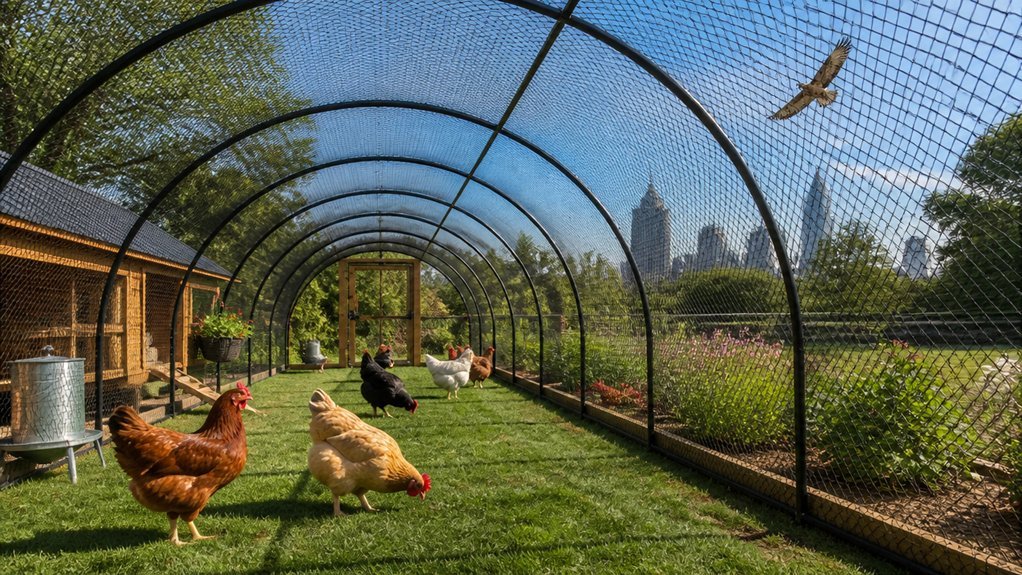
Covered runs help you keep hawks and owls from reaching your chickens. You can add secure overhead netting to stop sudden attacks, and a solid roof gives even better protection.
With both in place, your flock gets a safer space to roam during the day.
Secure Overhead Netting
When hawks circle overhead or owls hunt after dark, a covered run gives your flock an essential layer of defense. Secure overhead netting so birds can’t swoop in or startle chickens from above.
You should choose strong mesh, fasten it tightly, and inspect it often for sagging or tears.
- Use UV-resistant netting for longer life
- Anchor edges with sturdy clips or staples
- Overlap seams so predators can’t slip through
- Trim nearby branches that let predators land
- Check after storms for holes or loose ties
With a snug cover, your chickens stay calmer and spend more time feeding, dust bathing, and roaming safely.
Overhead netting works best when you keep it tight, visible, and well maintained.
Solid Roof Coverage
A solid roof over your run gives hawks and owls far less chance to strike from above, especially at dawn, dusk, and through the night. You can use metal, polycarbonate, or sturdy plywood to create full coverage that keeps birds of prey out and gives your flock shade and shelter. Make sure the roof reaches every corner, with no gaps where a talon can slip through.
If snow, rain, or falling branches are a concern, build the frame strong enough to handle the load. A covered run also helps your chickens stay dry, calm, and less visible to predators. When you pair a roof with secure fencing and locked doors, you make your coop area much harder for hawks and owls to target.
Remove Feed, Water, and Hiding Places
To make your coop and run less inviting, remove anything that gives predators a reason to linger. Store feed in sealed metal bins, and don’t leave scratch grains scattered overnight. Bring waterers inside or empty them after dusk so raccoons, skunks, and rats have nothing to drink. Trim tall grass, stack lumber neatly, and clear brush so you can spot approaching threats.
- Pick up spilled feed right away
- Keep garbage lidded and secure
- Move pet food indoors
- Remove boards, pallets, and debris
- Check for burrows under fences
When you deny easy meals, water, and cover, predators usually move on. A tidy area also helps you notice signs like tracks, droppings, or disturbed soil before trouble starts.
Set Up Motion Lights and Deterrents
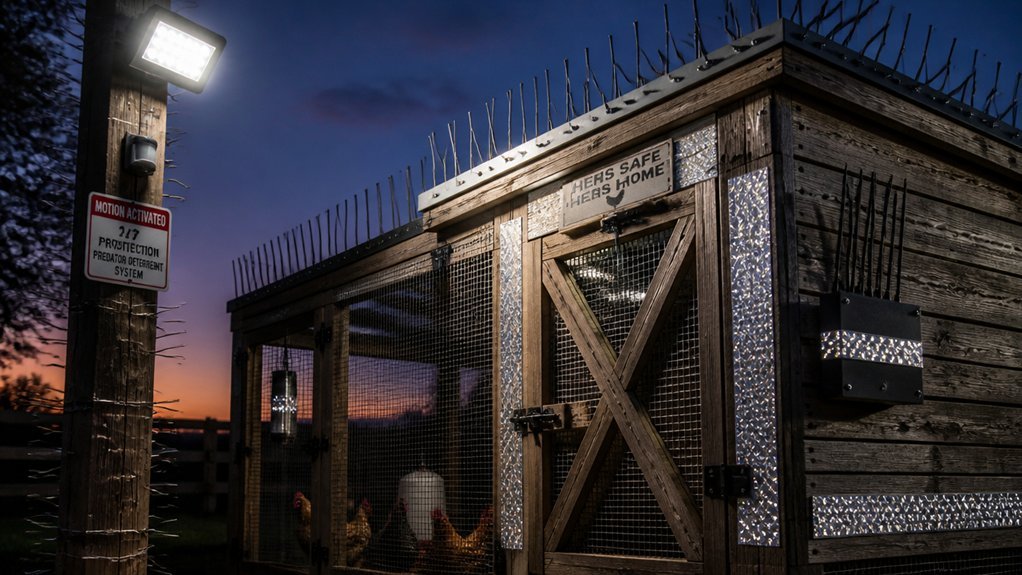
Motion-activated lights can startle predators and make your coop feel risky, especially around dusk and after dark. You can mount bright LEDs near coop doors, runs, and paths so sudden movement triggers a flash before an intruder gets close.
Pair lights with simple deterrents like reflective tape, pinwheels, or wind chimes to create extra noise and motion that keeps wildlife uneasy. Test each setup at night to spot dark corners and adjust angles so the sensor covers the right area without blinding your birds.
Keep batteries charged or use weatherproof solar units so your protection works every night. If you notice repeated trigger patterns, move the sensor and trim nearby branches that might cause false alarms and waste power.
Protect Chickens From Dogs, Coyotes, and Foxes
Dogs, coyotes, and foxes can wipe out a flock fast, so you need barriers that stop them before they reach the birds. Build a secure run, close every gap, and keep doors latched each night.
Build a secure run, seal every gap, and latch doors nightly to keep predators out.
Bury wire or add an apron so diggers can’t tunnel under fencing. Use small mesh that keeps snouts from slipping through.
- Inspect fence lines daily for weak spots
- Lock hens in a sturdy coop at dusk
- Trim brush that gives predators cover
- Store feed indoors to avoid attracting them
- Supervise free-ranging birds at risky times
If a dog roams nearby, act quickly and report it. For coyotes and foxes, don’t leave birds out after dark.
Strong habits and tight boundaries give your flock the best chance to stay safe.
Top Predator-Protection Upgrades
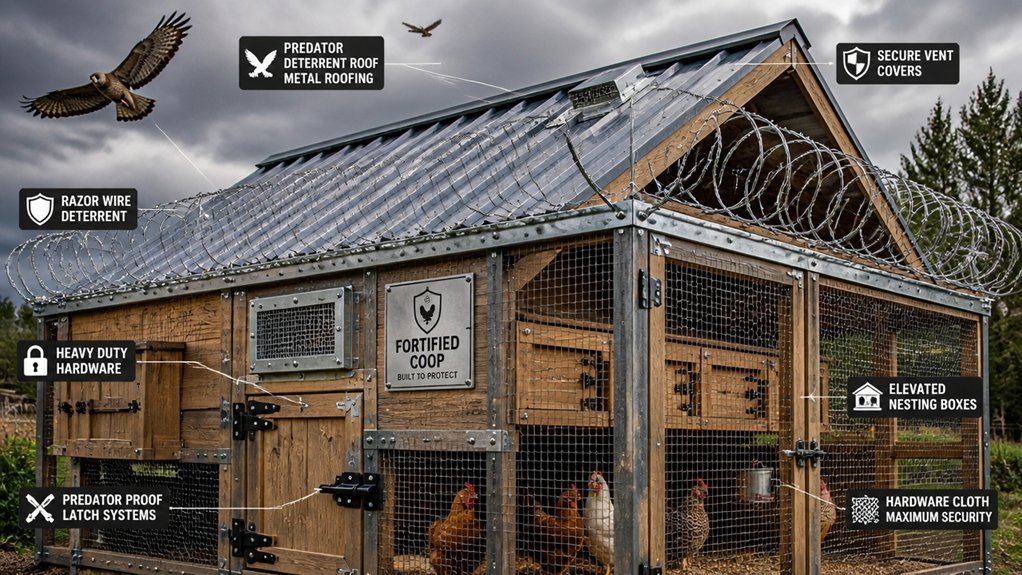
Upgrading your setup can make a huge difference when predators keep testing your defenses. Start with hardware cloth on all openings; it stops raccoons, weasels, and stray dogs better than chicken wire. Add buried wire or an apron around the coop and run so diggers can’t tunnel in.
Use predator-proof latches, not simple hooks, because clever animals can flip them. Install automatic coop doors to lock birds in at dusk, and motion lights to startle nighttime visitors. Reinforce windows with sturdy mesh, and cover the run roof with netting or wire to block hawks.
If you can, raise the coop slightly and clear brush nearby so predators lose cover. These upgrades work best together, giving your flock multiple layers of defense.
Frequently Asked Questions
How Often Should I Inspect Chicken Predator Defenses?
You should inspect them weekly, and after storms or any predator sign. Check locks, fencing, gaps, and roofing. If you spot damage, fix it right away so you don’t leave your flock exposed.
Which Predators Are Hardest to Deter Around Backyard Coops?
Raccoons and foxes are toughest because you’ll face clever, persistent, and strong attacks; coyotes, rats, and mink can also slip through weak spots, so you’ll need sturdy latches, buried wire, and vigilance.
Can Free-Ranging Chickens Ever Be Safely Protected?
Yes, you can protect free-ranging chickens, but you’ll need constant supervision, secure fencing, shelter, and quick recall training. Even then, you can’t eliminate every risk, so you should always balance freedom with safety.
What Signs Show a Predator Has Targeted My Flock?
You’ll notice missing birds, scattered feathers, alarmed hens, torn fencing, tracks, or bite marks. Your flock may stop ranging, crowd together, and act skittish. Nighttime disturbances and broken eggs also signal predators nearby.
Do Predator-Proof Measures Need Seasonal Adjustments?
Yes, you do need seasonal adjustments. You’ll want tighter fencing in spring, extra shelter in winter, and better ventilation in summer. Check locks, gaps, and cover often, because predators change tactics with weather.
In Summary
Keeping your chickens safe from predators starts with a strong coop, secure fencing, and good nightly routines. Check for weak spots, lock every door, and remove anything that might attract trouble. Add motion lights, buried hardware cloth, and other upgrades for extra protection. Stay alert for dogs, coyotes, and foxes, and you’ll give your flock a much better chance to stay healthy, calm, and secure every day.