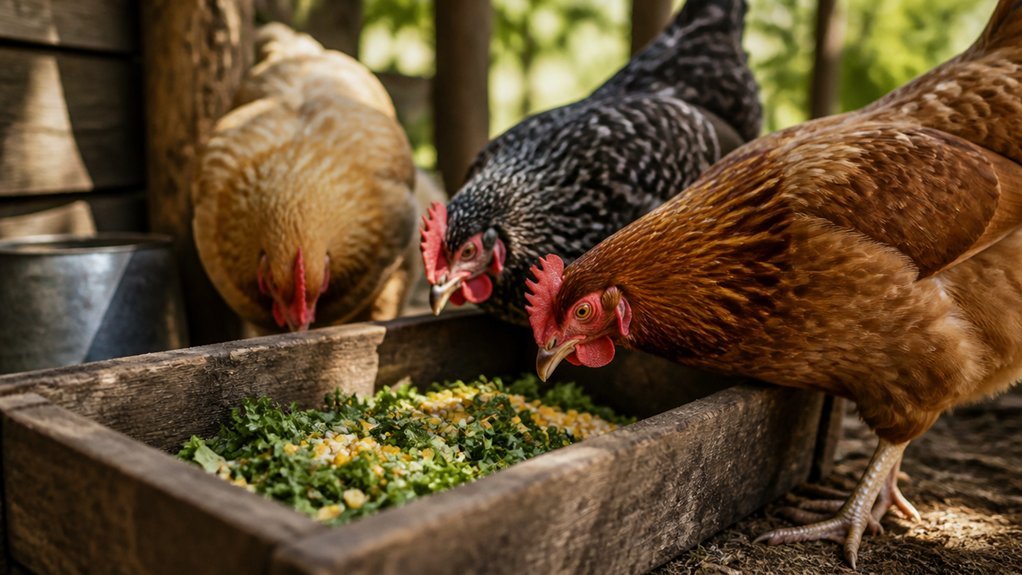
To treat chicken egg-laying disorders, first watch for signs like straining, pale combs, restlessness, or fewer eggs. Next, fix the diet with a quality layer ration, enough protein, calcium, clean water, and free-choice oyster shell. If you suspect egg binding or prolapse, keep her warm, calm, and moist, and call a vet fast. Also check for infections or parasites, then improve coop cleanliness, ventilation, and light. Keep going, and you’ll uncover more useful fixes.
Signs Your Hen Has a Laying Problem

When your hen’s laying cycle changes, you’ll often notice it before you see the egg problem itself. You may spot fewer eggs in the nesting box, but other clues show up first.
Your hen might spend longer in the coop, strain while squatting, or visit the nest without producing. She can seem restless, quiet, or less willing to scratch and roam. You might also notice pale comb color, rough feathers, or droppings that look different from usual.
If she paces, fluffs up, or stays hunched for long periods, pay close attention. A healthy layer usually follows a steady pattern, so any sudden shift matters. Regular monitoring helps detect early signs of laying disorders, so you can intervene promptly. Watch her closely for several days, because early changes help you catch a laying disorder before it becomes serious.
Fix Diet Gaps That Stop Egg Laying
A poor diet can quickly throw off a hen’s laying cycle, so start by checking whether she’s getting enough protein, calcium, and overall balance in her feed. Use a quality layer ration as the base, since it supplies the nutrients egg production needs.
If you’ve been mixing scratch, kitchen scraps, or too much grain, cut those back so they don’t dilute her diet. Offer oyster shell free-choice if she needs extra calcium, and keep clean water available all day because dehydration can also reduce laying.
You should also avoid sudden feed changes, which can stress her system. If several hens stop laying, review the whole flock’s nutrition, storage, and feeding routine to make sure nothing’s missing. Ensuring consistent feed form and mineral balance helps promote steady egg production.
Treat Egg Binding and Prolapse

If a hen strains, pants, stands puffed up, or seems unable to pass an egg, treat egg binding as an emergency. Move her to a warm, quiet place and keep stress low. You can offer gentle steam from a nearby shower or a warm, humid room to help relax her muscles.
Lubricate the vent with clean, water-based lubricant, and never pull the egg. If you can feel the egg at the opening, you may gently support her while she squats. If the egg won’t pass quickly, call a veterinarian.
If tissue protrudes, keep it moist with saline or sterile lubricant, isolate her, and seek urgent help. Fast action protects her and lowers the risk of injury or shock. Using gentle wound sprays designed specifically for poultry can help prevent infection and support healing if any injury occurs during the process.
Treat Infections and Parasites
Infections and parasites can weaken a hen, reduce egg production, and make laying painful. You should watch for diarrhea, swollen vents, discharge, coughing, mites, and lice. Separate the affected bird and call a poultry-savvy vet for a diagnosis, because the right treatment depends on the cause. Using appropriate disinfectants and maintaining good hygiene can help prevent the spread of pathogens and parasites in your flock biosecurity measures. Keep giving fresh water and a balanced feed so she can recover and resume laying more comfortably.
Improve Coop Conditions to Restore Laying

Once you’ve ruled out illness, focus on the coop itself, because poor conditions can stress hens and shut down laying. Clean bedding often, remove ammonia buildup, and keep the house dry and well ventilated. Give each hen enough perch space so they can rest without crowding. Provide 14 hours of light daily with a timer if needed, and block sudden drafts that can chill birds. Using dust-free bedding helps maintain a cleaner environment and supports healthier hens.
Frequently Asked Questions
Can Stress Alone Stop a Hen From Laying Eggs?
Yes, stress alone can stop your hen from laying eggs temporarily. You should reduce loud noises, crowding, and sudden changes. Once you calm her environment, she’ll often start laying again within days or weeks.
How Long Do Hens Typically Pause After Molt?
You’ll usually see hens pause 4 to 8 weeks after molt, though some stop longer. Give them steady feed, daylight, and calm housing, and they’ll often restart laying sooner and more reliably.
Are Some Chicken Breeds More Prone to Laying Disorders?
Yes—you’ll notice some breeds do have higher risks. Heavy layers, like Leghorns and hybrid hens, can develop more laying issues, while heritage breeds often stay steadier. You can reduce risk with balanced feed, good lighting, and careful monitoring.
When Should a Vet Examine a Non-Laying Hen?
You should call a vet if your hen hasn’t laid for several days, seems weak, strains, has a swollen abdomen, stops eating, or breathes oddly. Don’t wait, because egg-laying problems can worsen fast.
Can Age Permanently Reduce a Hen’s Egg Production?
Yes, age can permanently reduce your hen’s egg production. As hens mature, you’ll usually see fewer eggs, larger breaks, and eventual stopping. Good nutrition, light, and health care can help, but they can’t reverse aging completely.
In Summary
If your hen stops laying, start by checking her for signs of trouble, then fix her diet, coop, and stress levels right away. You can often help her recover with better nutrition, cleaner housing, and quick treatment for egg binding, prolapse, infections, or parasites. When you act fast and stay consistent, you give her the best chance to lay again and stay healthy. Watch closely, respond early, and keep her comfortable.