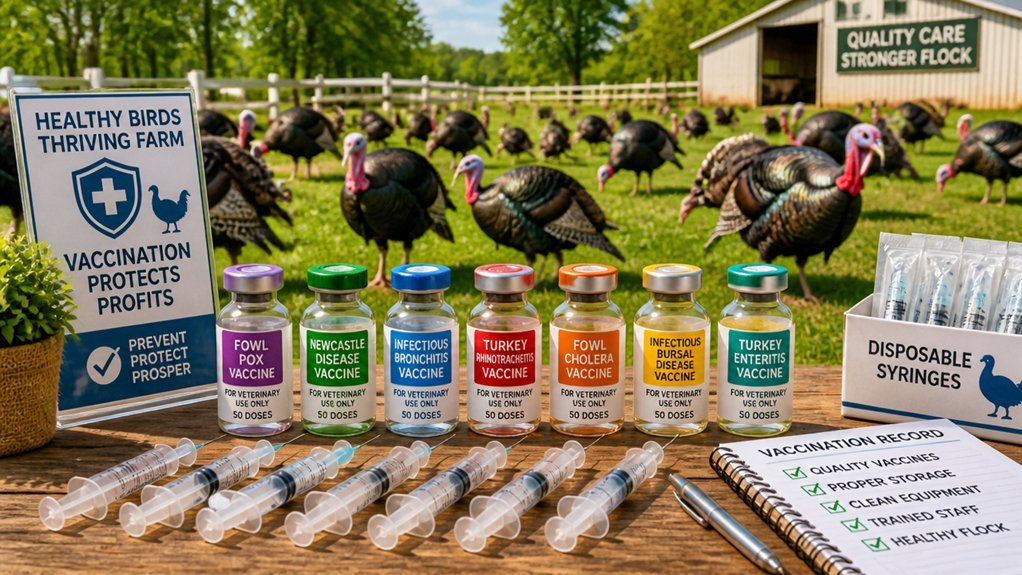
For healthy turkey flocks, you should start with the vaccines your vet says match your local risks and housing setup. The main priorities often include Marek’s disease, hemorrhagic enteritis, coccidiosis, avian pox, Newcastle disease, infectious bronchitis, avian metapneumovirus, and sometimes fowl cholera. Give early protection in the first week when poults are stable, then space boosters as directed. Good records, clean conditions, and vet guidance help keep birds protected, and there’s more to know next.
Which Turkey Vaccines Come First?

When you plan turkey health care, which vaccines come first? You should prioritize protection against the diseases that threaten young birds most, then build a practical schedule with your veterinarian.
Start by evaluating your flock’s local disease risks, hatchery history, and housing conditions. That information helps you choose vaccines that match your turkeys’ needs instead of following a generic list.
In many flocks, you’ll focus first on core respiratory and intestinal threats because they can spread fast and reduce growth. You also need to coordinate vaccine timing with stress, feed changes, and handling so your birds respond well.
Additionally, understanding the importance of vaccine efficacy can help you select the right immunizations and optimize their effectiveness. Keep records for every dose, watch for adverse reactions, and adjust the plan as conditions change. Careful planning now gives your turkeys a stronger start and a healthier future.
Turkey Vaccines in the First Week
In the first week, you need to time hatchery vaccines carefully so chicks get protection right away. A precise vaccination schedule can prevent early disease outbreaks and help ensure a healthy start for your flock. You should focus on the earliest threats first and make sure those first doses are handled gently and given on schedule. Good early timing helps your flock start strong and stay protected.
Hatchery Vaccine Timing
The first week sets the tone for a turkey flock’s immune protection, so hatchery vaccines need careful timing to work as intended. You should coordinate vaccination with hatchery flow, chick or poult handling, and shipment schedules so each bird gets the dose before stress peaks.
When you vaccinate too early, the flock may not respond consistently; when you vaccinate too late, you lose valuable setup time. You’ll get better results when you follow label directions, keep vaccines at the right temperature, and use clean equipment that delivers the full dose.
Make sure your team records the exact time of administration and checks that every box or tray moves through the same process. Consistency at the hatchery helps you start strong and avoid gaps in immune coverage. Proper probiotic use can also support gut health during this critical period, ensuring your poults are better prepared to respond to vaccines and environmental stressors.
Early-Week Protection Priorities
During the first week, you should focus on the vaccines that protect turkeys before early disease pressure can take hold. You’ll want to prioritize coverage against the most common threats your flock faces right after placement, especially respiratory and enteric challenges that can slow growth fast.
Work with your veterinarian to match vaccine choices to local risk, breeder status, and farm history, because the best early protection depends on what’s circulating in your area. Keep your birds warm, hydrated, and unstressed so they can respond well.
Monitor them closely for missed coverage, uneven growth, or signs of weak immunity. Early protection isn’t about giving everything at once; it’s about building a practical shield that helps your poults stay healthy, active, and ready for the weeks ahead.
Handling First Doses
Once your poults get their first vaccines, handling matters just as much as the product itself, because stress can blunt the response. You should keep them warm, dry, and quiet before and after dosing.
Mix live vaccines exactly as directed, use clean equipment, and finish the batch fast so potency doesn’t drop. If you’re giving eye drops, spray, or water-administered doses, make sure every bird gets full contact or enough intake.
Don’t crowd birds during handling, and avoid rough catching that can trigger chilling or piling. Watch them closely for a few hours, then note any weak birds or missed doses.
Using proper disinfectants and maintaining a clean environment can help prevent disease transmission, supporting a healthier flock.
Good first-dose handling sets up stronger immunity and helps you keep the flock on schedule through the rest of the first week.
Essential Vaccines for Growing Turkey Poults
As your turkey poults grow, you’ll need to time each vaccine carefully to keep protection strong.
You can help them stay ahead of early disease threats by following a schedule that fits their age and risk level.
A timely booster can also extend hatchery immunity and give your flock a better start.
Poults Vaccine Timing
Timing matters a lot for poults, because their immune systems need protection before disease pressure builds. You should plan vaccine dates around hatch, brooding, and flock movement, so each dose fits your birds’ age and condition. Using appropriate camera features to monitor flock behavior can help identify optimal times for vaccination based on activity levels and health indicators. Work with your veterinarian to match timing to local risk and product instructions.
- Give the first vaccine when poults are stable, alert, and eating well.
- Space follow-up doses so each one can boost protection.
- Avoid vaccinating during heat stress, shipping, or other handling.
- Record every date, dose, and lot number for your flock records.
When you stay consistent, you help your poults build a stronger immune response and keep your program organized.
Early Disease Protection
Early in a poult’s life, you need vaccines that help block the diseases most likely to hit before the flock’s own immunity matures. You should prioritize protection against illnesses that spread fast in brooder houses, especially those that can weaken growth, appetite, and survival.
A balanced vaccination program also supports natural pest control by reducing the chance of infestations that can compromise overall health. Work with your poultry veterinarian to match vaccines to your region’s disease pressure and your birds’ risk level. Give each dose on schedule, keep records, and handle vaccines carefully so they stay effective.
You also need clean water, dry litter, good ventilation, and low stress, because vaccines work best when poults stay healthy. When you combine timely vaccination with strong management, you give your growing turkeys a much better chance to thrive through those vulnerable first weeks.
Hatchery Immunity Boost
At the hatchery, you can give poult immunity a strong head start with vaccines that guard against the diseases most likely to threaten young turkeys before they leave the brooder phase. You’ll reduce early setbacks when you match vaccines to local disease pressure and handle chicks with clean, careful technique. Work with your veterinarian to time each dose and confirm compatibility with breeder health plans. A thorough understanding of the pest control products used in poultry environments can also support overall health and reduce stress during vaccination procedures. 1. Use Marek’s vaccines to help limit nerve and organ damage. 2. Add coccidiosis protection if your farm faces wet litter or heavy challenge. 3. Consider Newcastle and hemorrhagic enteritis coverage where risk is high. 4. Verify storage, mixing, and injection or spray methods so every poult gets reliable protection.
When Should You Vaccinate Against Fowl Cholera?
You should vaccinate against fowl cholera before the disease has a chance to spread through your flock, especially if turkeys face ongoing exposure to wild birds, rodents, contaminated water, or frequent flock turnover. Time it early, while birds are healthy and before stress peaks from transport, weather swings, or overcrowding. Your veterinarian can help you choose the right schedule for poults, growers, and adults. A well-timed vaccination can also help bolster overall immune health in your flock.
How to Prevent Blackhead Disease in Turkeys

Because blackhead spreads through coccidia-carrying earthworms and contaminated ground, prevention starts with smart flock management. You can lower risk by keeping turkeys on clean, well-drained lots and rotating them off old ground before parasites build up.
Blackhead prevention starts with smart flock management: keep turkeys on clean, well-drained ground and rotate them often.
- Separate turkeys from chickens and other birds.
- Move feeders and waterers often, so droppings don’t accumulate.
- Remove wet bedding, manure, and spilled feed promptly.
- Keep young poults away from areas where turkeys have roamed before.
- Regularly inspect and treat soil with appropriate disinfectants to reduce parasite presence.
You should also control earthworms by limiting access to damp soil after rain. Watch for droopy birds, sulfur-colored droppings, or reduced appetite, and act quickly with a poultry vet if you suspect trouble.
Good sanitation and thoughtful pasture use give you the best protection.
How to Protect Turkeys From Pox
Pox spreads differently than blackhead, but it still thrives where mosquitoes and biting insects are common. You can lower the risk by keeping water from pooling, emptying containers, and trimming weeds where pests hide.
Screen windows, use fans in shelters, and clean manure often so insects have fewer places to breed.
When you notice scabs on combs, wattles, or legs, separate the bird right away and check the rest of the flock. Handle sick turkeys last, and disinfect feeders, perches, and tools after use.
Keep newcomers apart before mixing them in.
If pox keeps appearing in your area, ask your veterinarian about vaccination for your flock and follow local guidance. Fast action helps you limit spread and protect growth.
Vaccines for Turkey Respiratory Diseases

Respiratory diseases can move quickly through a turkey flock, so vaccination is often one of the best tools for prevention. You can lower losses by choosing vaccines that target common threats like avian metapneumovirus and infectious bronchitis when your vet recommends them.
- Check local disease pressure before you vaccinate.
- Follow label timing exactly.
- Handle vaccines cold and clean.
- Keep birds calm during and after application.
A thorough understanding of wound care options can also help in managing injuries that may occur during outbreaks or handling.
You should also support vaccines with strong ventilation, dry litter, and low stress, because a healthy environment helps your flock respond better.
If you spot coughing, sneezing, nasal discharge, or swelling around the eyes, act fast and call your poultry vet. Vaccination won’t fix poor management, but it can sharply reduce risk and help you keep turkeys growing well.
Do Turkeys Need Marek’s Vaccine?
Marek’s vaccine isn’t routinely used in turkey flocks the way it’s in chickens, so you usually don’t need it unless your poultry vet has a specific reason to recommend it.
Marek’s vaccine isn’t routinely used in turkey flocks, so you usually don’t need it unless your poultry vet advises it.
Turkeys don’t face Marek’s disease in the same way chickens do, and the vaccine isn’t a standard part of most turkey health programs.
You should focus instead on sanitation, good brood management, biosecurity, and the vaccines your vet advises for the diseases that actually threaten turkeys in your area.
If you raise turkeys with chickens, separate them carefully and ask your vet whether mixed species housing changes your risk.
Don’t guess based on poultry advice for layers or broilers. Your vet can help you decide if any special protection makes sense for your flock.
When To Give Turkey Vaccine Boosters
You should plan turkey vaccine boosters around the first dose, since timing helps keep protection strong.
As your birds grow, you can follow an age-based schedule that matches each vaccine’s recommended interval. You’ll also want to watch for signs that a booster is due, like rising disease risk or a lapse in immunity.
Booster Timing Basics
Because booster timing shapes how well turkey flocks stay protected, give follow-up doses according to the vaccine label, your vet’s plan, and the birds’ age and risk level.
You should also track disease pressure, weather stress, and flock moves, since these can weaken protection faster than you expect.
Check records before each booster so you don’t miss a scheduled dose. When in doubt, ask your vet to confirm the right window rather than guessing.
- Follow the product directions exactly.
- Use the same route and handling method.
- Keep boosters tied to flock health checks.
- Document every dose right away.
Good timing helps you maintain steadier immunity, reduce gaps in coverage, and keep your turkeys better prepared for common threats.
Age-Based Booster Schedules
Age matters when you plan turkey vaccine boosters, since younger birds often need tighter follow-up than older flocks. You should match booster timing to growth stage, flock history, and your veterinarian’s plan. Early poults may need a quicker repeat after the first series, while growers often shift to longer intervals. Adult breeders usually follow seasonal or pre-breeding reminders.
| Age group | Booster window | Your focus |
|---|---|---|
| Day-old to 2 weeks | Short interval | Build early protection |
| 3 to 6 weeks | Follow series | Keep immunity rising |
| 7 to 12 weeks | Planned check | Maintain coverage |
| 13 to 24 weeks | Before stress | Support development |
| Breeders | Pre-season | Protect production |
Keep records, because age-based scheduling helps you stay consistent without guessing.
Signs Booster Is Due
When should you give a turkey vaccine booster? Watch your flock closely and act when protection may be fading, because timing matters.
You should plan a booster if you notice:
- Increased exposure risk after introducing new birds, visiting shows, or moving turkeys to a new pen.
- Rising disease pressure nearby, such as local outbreaks or poor biosecurity.
- Stressed birds after transport, extreme weather, or feed changes, since stress can weaken immunity.
- Past vaccine intervals nearing the end of the recommended protection window.
If your turkeys show mild respiratory signs, reduced appetite, or slower growth, talk with your veterinarian before you boost. They can help you decide whether to vaccinate now, delay, or check for illness first.
What To Ask Your Vet About Turkey Vaccines
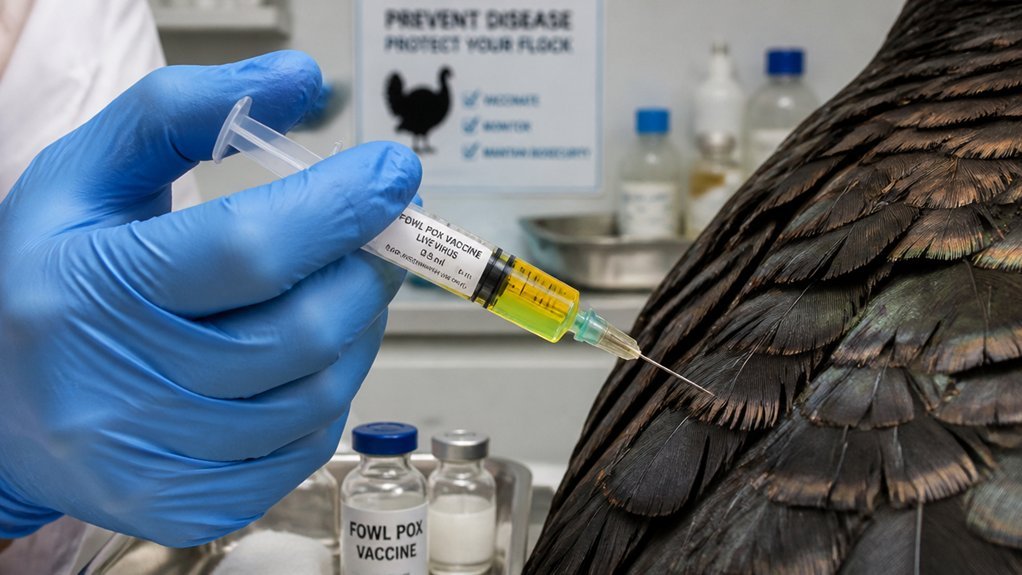
Before you vaccinate, ask your vet which diseases pose the biggest risk to your turkey flock in your area and which vaccine schedule fits your birds’ age, housing, and purpose. Ask whether you need protection for blackhead, Newcastle disease, avian pox, or other local threats, and whether any vaccines are off-label for turkeys. Confirm dose, route, storage, withdrawal times, and mixing instructions so you don’t weaken the vaccine.
| Ask your vet | Why it matters |
|---|---|
| Disease risk | Targets the real threats |
| Timing and route | Improves protection |
| Side effects | Helps you monitor birds |
Also ask how to vaccinate stressed or sick birds, and what records to keep. If you raise breeding stock, meat birds, or exhibition turkeys, your vet can tailor advice. Clear answers help you vaccinate safely and avoid gaps.
Frequently Asked Questions
Can Vaccinated Turkeys Still Spread Disease to Other Birds?
Yes, vaccinated turkeys can still spread some diseases if they’re infected, though vaccination usually lowers symptoms and shedding. You should still isolate sick birds, practice hygiene, and monitor flock health closely.
How Should Turkey Vaccines Be Stored Before Use?
You should store turkey vaccines exactly as the label says, usually refrigerated, never frozen, and protected from light. You’ll keep them sealed, check expiration dates, and use them promptly after mixing.
Do Vaccines Affect the Taste of Turkey Meat?
No, vaccines usually don’t affect turkey meat’s taste when you vaccinate properly. You’ll keep the flock healthy, and you’ll still get normal-flavored meat. Follow label directions and withdrawal guidelines carefully.
Can I Vaccinate Turkeys During Cold Weather?
Yes, you can vaccinate turkeys in cold weather, but you should keep vaccines properly chilled, avoid freezing, and handle birds gently. You’ll get better protection if you warm birds afterward and reduce stress quickly.
Are Homemade Turkey Vaccines Ever Safe?
No, homemade turkey vaccines aren’t safe; you can’t control sterility, dose, or efficacy. You should use only veterinarian-approved products, because improper mixtures can sicken birds, fail to protect them, and spread disease.
In Summary
Keeping your turkey flock healthy starts with the right vaccine plan at the right time. You should focus on early protection, follow-up boosters, and disease risks like fowl cholera, blackhead, and respiratory illness. Since not every flock needs the same shots, you’ll get the best results by working with your vet. With a smart schedule and close monitoring, you can help your turkeys grow stronger and stay protected all season.