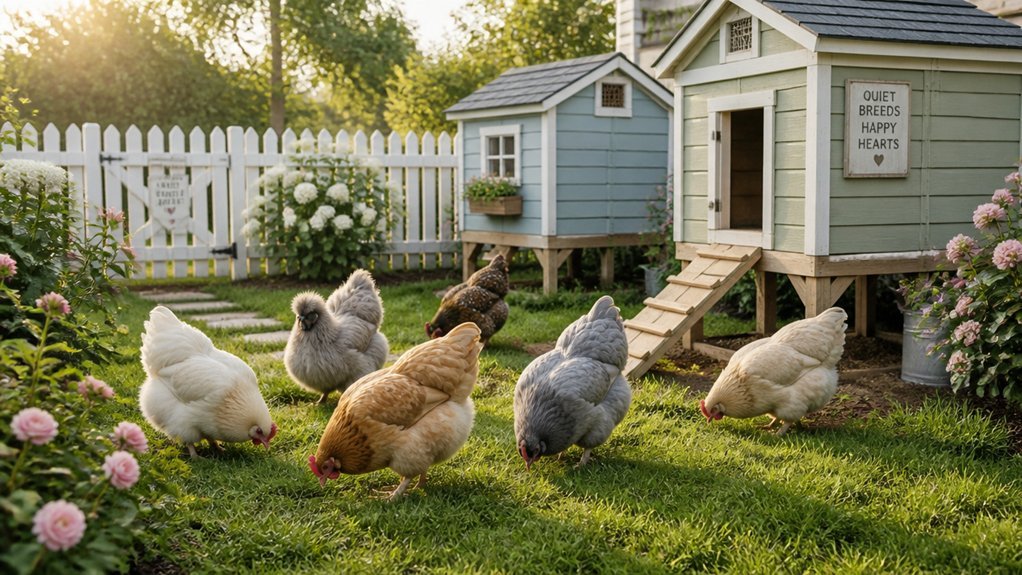
If you want quiet chicken breeds for suburbs, choose calm hens like Buff Orpingtons, Australorps, Brahmas, Cochins, Silkies, Wyandottes, Sussex, or Plymouth Rocks. These breeds usually make soft clucks, stay mellow, and handle close quarters well, so you’re less likely to annoy neighbors. Hens-only flocks stay quieter than mixed groups, and a secure coop with regular care helps keep them calm. Keep going, and you’ll see which breeds fit your yard best.
Why Quiet Chickens Are Great for Backyards
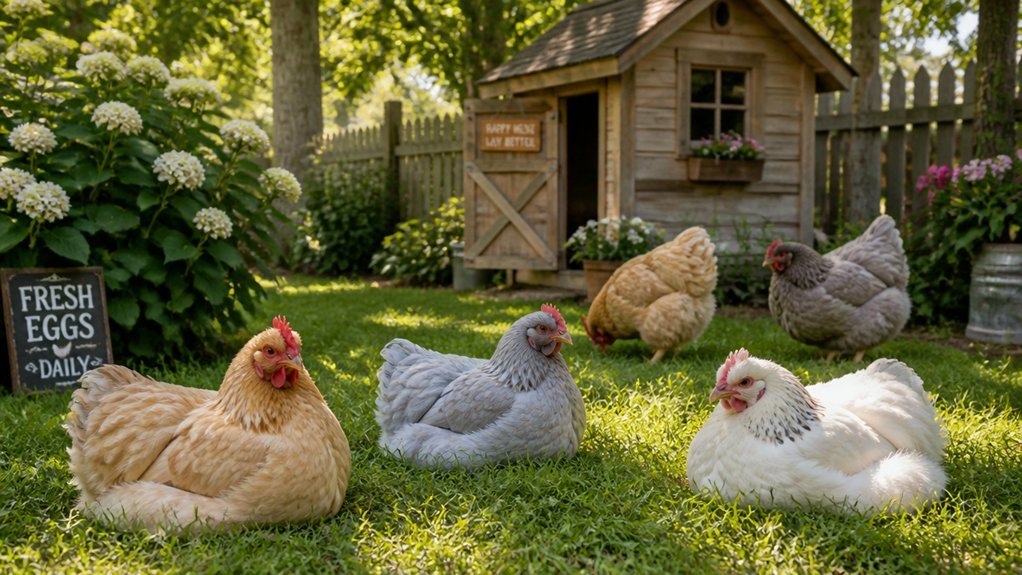
Quiet chickens are a smart choice for backyards because they help you enjoy fresh eggs without disturbing the neighborhood. You can collect eggs close to home, save time, and keep a steady supply for breakfast, baking, and sharing.
Quiet chickens make backyard egg gathering easy, giving you fresh eggs close to home without disturbing the neighborhood.
Because they’re less likely to create noise, you’re less apt to upset neighbors or draw complaints. That peace matters when your yard sits near fences, sidewalks, or shared spaces.
You also get the pleasure of watching hens scratch, dust bathe, and settle into a daily rhythm that fits suburban life. A calmer flock can make your backyard feel more relaxing, too.
Additionally, choosing breeds with lower noise levels can further enhance neighborhood harmony and your enjoyment of backyard chicken keeping. Instead of noise becoming a nuisance, your coop can add charm, interest, and a little self-sufficiency to your routine.
How to Choose Quiet Chicken Breeds
When you choose quiet chicken breeds, start by checking how much noise they usually make. You’ll also want to look at temperament, since calmer birds often fit suburban life better. A breed that stays low-key and friendly can make your backyard much easier to enjoy. Additionally, considering breed hardiness can help ensure your chickens adapt well to your local climate and remain peaceful.
Noise Level Matters
Noise level matters because some chicken breeds chatter far more than others, and that can make a big difference in a suburb. You should look for breeds known for soft clucks rather than loud cackles, especially if your yard sits close to neighbors. Providing appropriate perch height can also help reduce stress and noise, as chickens feel more secure when they can comfortably rest at their preferred levels. Roosters usually bring the most noise, so choosing hens-only flocks helps you keep sound down. Even hens can get louder when they lay, feel startled, or compete for food, so your coop setup matters too. Give them enough space, fresh feed, and regular care to reduce stress-driven squawking. Check breed profiles before you buy, and listen for words like calm, quiet, or docile in noise descriptions. If you want peace and good neighborly relations, choose birds that stay mellow and low-key.
Breed Temperament Counts
Temperament matters just as much as volume when you’re choosing chickens for a suburban yard. You want birds that stay calm, handle handling, and don’t panic every time a dog barks or a neighbor mows the lawn.
Docile breeds usually peck less aggressively, crow less often, and settle into routines faster, which makes daily care easier for you. Look for hens known for being friendly, steady, and low-strung, because those traits often pair with quieter behavior. Avoid overly skittish or dominant breeds if you want less noise and fewer surprises.
You’ll also save yourself stress by choosing chickens that tolerate close quarters well. A mellow flock fits suburban life better, and it’ll likely keep both your yard and your neighbors happier overall. Understanding electrolyte balance, or how stress impacts poultry behavior, can help you select breeds that are naturally more resilient to environmental changes.
Buff Orpingtons for Quiet Backyard Flocks
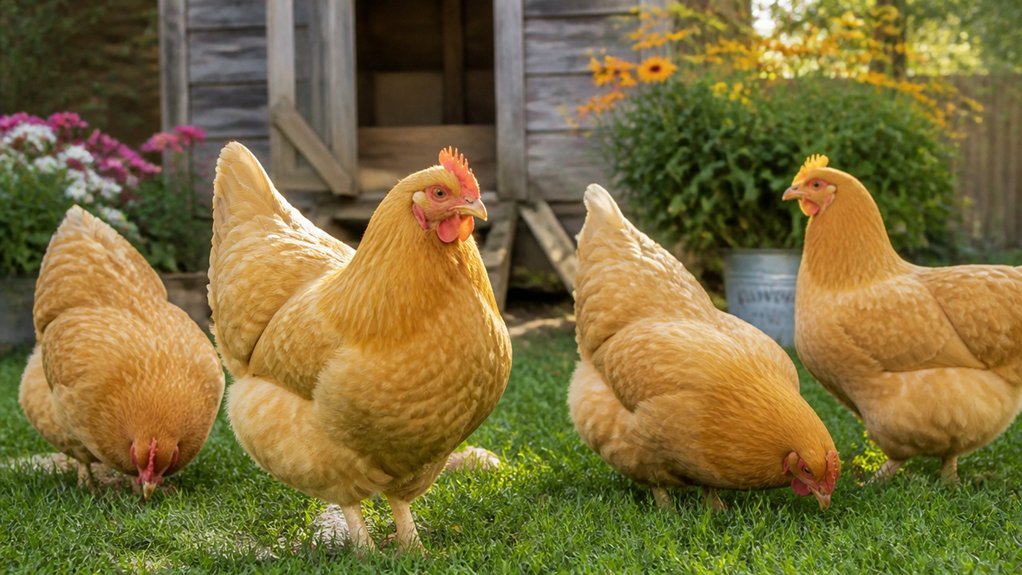
Buff Orpingtons are a standout choice if you want a calm, low-drama flock in a suburban yard. You’ll notice their soft clucks and easygoing nature, which help them fit neatly into close neighborhoods.
They usually move with confidence but don’t dash around or squabble much, so you can keep your coop routine simple. If you handle them often, they’ll stay friendly and relaxed, making feeding and egg collection easy. Their steady behavior also helps you avoid the stress that noisy, high-strung birds can bring.
Give them a secure run, clean bedding, and regular attention, and they’ll reward you with pleasant company and dependable layers. For a quiet backyard setup, they bring a balanced mix of charm, manners, and manageable sound. Ensuring proper coops and roosts helps keep their environment comfortable and their noise levels low.
Australorps for Low-Noise Coops
When you want a flock that stays calm and doesn’t broadcast every little movement to the neighborhood, Australorps are an easy fit. You’ll value their steady, unfussy nature in a suburban coop. They usually cluck softly, move with purpose, and rarely turn small disruptions into noisy alerts. If you keep them well fed, shaded, and secure, they tend to settle in without drama. Their easygoing behavior makes daily care simpler, and you won’t feel like every visit to the run starts a chorus. You can also expect reliable egg production without the constant chatter some louder breeds bring. For a low-noise setup, give them enough space, clean bedding, and a predictable routine. They’ll reward you with calm presence and manageable sound. Proper nutrition supports their strength and overall health, helping them stay quiet and content.
Brahmas and Cochins for Gentle Temperaments
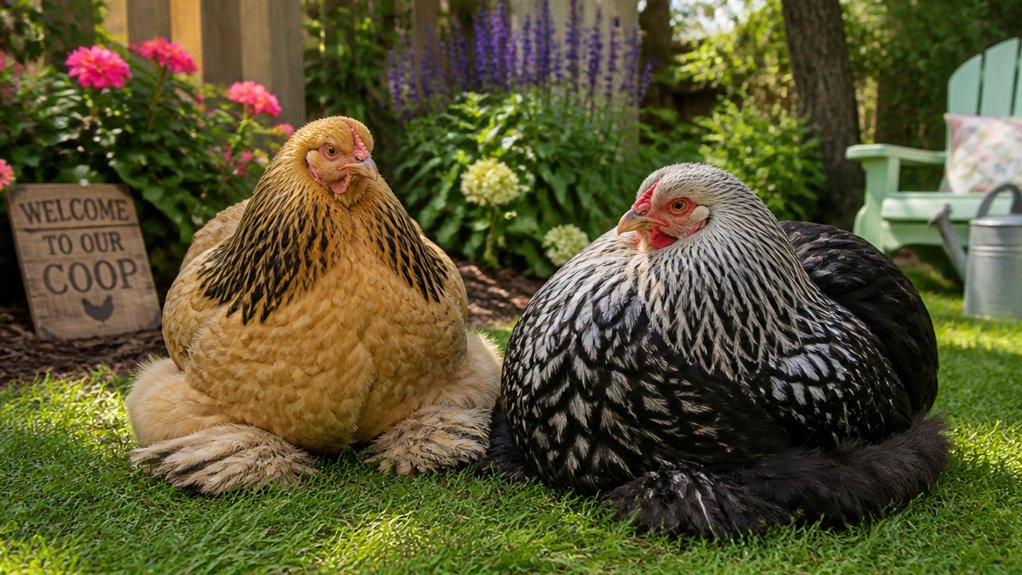
If you want chickens that feel calm and less likely to create a ruckus, Brahmas and Cochins are strong choices for a suburban coop. You’ll notice their slow, steady movements and relaxed personalities, which help keep your yard peaceful. They usually tolerate handling well, so you can manage feeding, health checks, and coop cleaning without much fuss. Proper saddle fit can also support these gentle breeds by protecting them during interactions with more active flock members.
| Breed | Key Trait |
|---|---|
| Brahma | Large, calm, and quiet |
| Cochin | Fluffy, gentle, and easygoing |
Because these birds don’t rush or startle easily, they often settle into routines nicely. You’ll still want to give them enough space, secure shelter, and regular attention, but their mild temperaments make daily care feel simple. If you value tranquility, these breeds fit suburban life well.
Silkies as Quiet Chicken Pets
Silky little companions, Silkies are a great pick when you want a chicken pet that stays calm and doesn’t add much noise to a suburban yard. You’ll notice their soft voices and easygoing nature make them less likely to disturb neighbors.
Their fluffy feathers and friendly personality also make them feel more like lap pets than barnyard birds. If you want a bird that enjoys being handled, follows you around, and settles in well with a small backyard setup, Silkies fit that role nicely.
You should still give them a secure coop, dry bedding, and steady care, since quiet birds still need protection and routine. With gentle handling and a peaceful environment, you’ll enjoy a charming flock that adds character without creating a lot of racket. Additionally, providing them with a weatherproof environment ensures they stay comfortable and healthy year-round, even in varying climate conditions.
Wyandottes and Sussex for Balanced Flocks
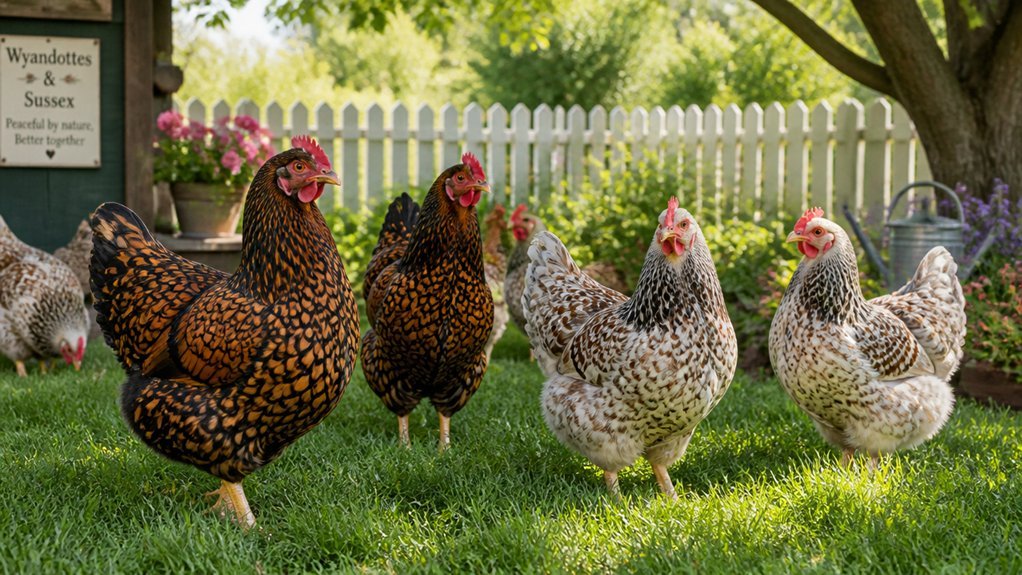
Wyandottes and Sussex give you a nice middle ground if you want a flock that’s calm, productive, and still manageable in a suburban setting. You’ll get hens that usually stay composed, move with purpose, and fit well into a mixed flock without dominating the space.
Wyandottes bring attractive plumage, solid egg output, and a steady temperament that helps your coop feel settled. Sussex add a friendly, easygoing presence and often adapt well to close quarters.
If you want birds that give you dependable eggs without the high-strung energy of louder breeds, these two can work nicely for you. They’re also good choices when you want variety in size, color, and personality while still keeping your flock relatively peaceful overall.
Choosing properly socialized birds is essential for maintaining a calm environment in your suburban flock and ensuring they get along well.
How to Keep Chickens Quiet
Even calm breeds like Wyandottes and Sussex can get noisy when their needs aren’t met, so keeping chickens quiet starts with good management.
You should feed them on time, offer fresh water, and collect eggs daily. When hens know food and care arrive predictably, they’re less likely to call loudly for attention.
Handle birds gently, because rough chasing or sudden noises can rattle them and trigger alarm calls. Keep your flock comfortable through shade, dry bedding, and enough space to move without crowding.
One way to maintain a calm environment is by using the right bedding options, which help reduce stress and odor while also supporting their comfort.
- Give treats only after they’ve settled.
- Check for stress, hunger, or pests quickly.
- Spend a few minutes with them each day so they stay calm around you.
Consistent routines help your birds feel secure, and secure birds usually stay quieter.
Coop Setup Tips That Reduce Noise
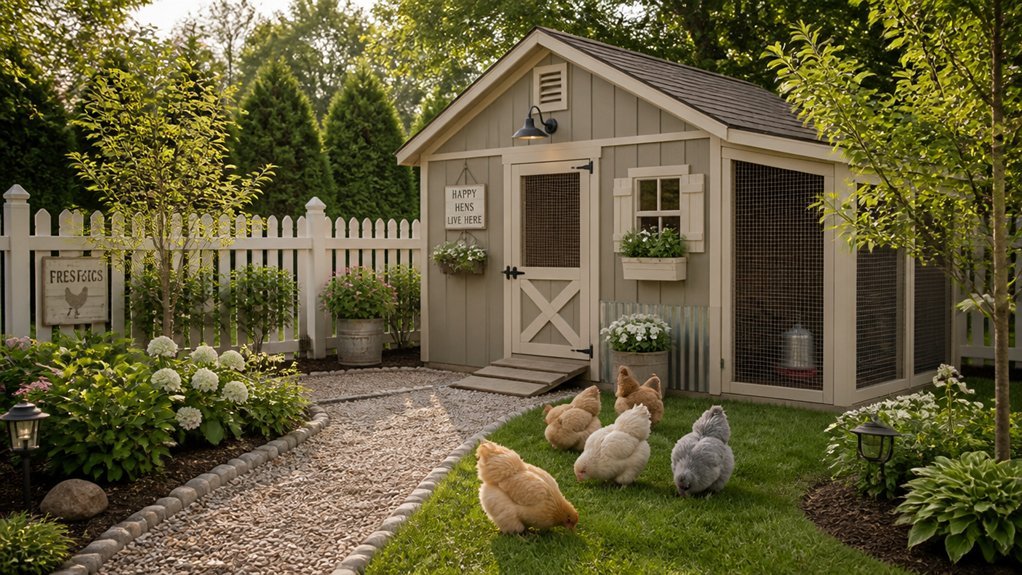
A quiet coop starts with the right layout, so place it where the flock feels sheltered from wind, traffic, and other sudden disturbances. You’ll cut stress by giving birds solid walls, a dry floor, and enough space to move without crowding. Add deep litter to soften scratching sounds and absorb clatter from dropped feed. Use rubber mats under waterers and feeders to steady them.
| Setup Choice | Noise Effect | Your Action |
|---|---|---|
| Solid coop walls | Blocks outside triggers | Face openings away from streets |
| Deep litter | Dulls foot noise | Refresh bedding often |
| Stable fixtures | Stops rattling | Secure hooks and latches |
Keep roosts low and smooth, and avoid metal parts that bang. Quiet hardware helps the whole coop stay calm.
Choosing the Best Quiet Breed for Your Yard
When you’re choosing a quiet breed for a suburban yard, match the bird’s temperament to your space and your neighbors.
Start with hens that stay calm under stress, because nervous birds cluck more and react to every movement. Look for breeds known for soft voices, steady laying, and friendly behavior in small flocks. You’ll also want birds that tolerate confinement well if your yard isn’t huge.
- Buff Orpingtons often stay mellow and easygoing.
- Plymouth Rocks usually adapt well and don’t get frantic.
- Wyandottes can work if you want hardy, quieter hens.
Visit breeders or owners first, listen to the flock, and choose birds that seem relaxed around people, pets, and everyday noise.
Frequently Asked Questions
Do Quiet Chicken Breeds Still Lay Enough Eggs for Families?
Yes, you usually do—quiet breeds like Australorps, Buff Orpingtons, and Sussex still lay well. You’ll get steady family eggs, though not nonstop production; good feed, light, and care help them stay productive.
Which Quiet Breed Handles Hot Suburban Summers Best?
You’ll usually get the best hot-summer performance from Australorps; they stay calm, tolerate heat fairly well, and still lay reliably. You can also consider Leghorns, which handle heat excellently if you provide shade and water.
Can Quiet Chickens Live Safely With Dogs or Cats?
Yes, you can keep quiet chickens with dogs or cats if you supervise introductions, secure their coop, and train pets to stay calm. You’ll reduce stress and prevent injuries by monitoring every interaction closely.
Are Quieter Chicken Breeds Harder to Find at Hatcheries?
Yes, you’ll usually find fewer truly quiet breeds at hatcheries, because they stock popular layers and dual-purpose birds. You can still ask early, check specialty hatcheries, or buy chicks from local breeders instead.
Do Quiet Chicken Breeds Need Different Feed Than Others?
No, you don’t need special feed for quiet breeds. You should feed them the same balanced ration as other chickens, adjusting for age, laying, or flock goals, since temperament doesn’t change nutrition needs.
In Summary
When you choose quiet chicken breeds, you make suburban chicken keeping easier for you and more enjoyable for everyone nearby. Buff Orpingtons, Australorps, Brahmas, Cochins, Wyandottes, and Sussex all offer calmer temperaments and lower noise levels. You can keep your flock even quieter with a well-designed coop, regular care, and enough space. Pick the breed that fits your yard, and you’ll enjoy fresh eggs without the extra racket.