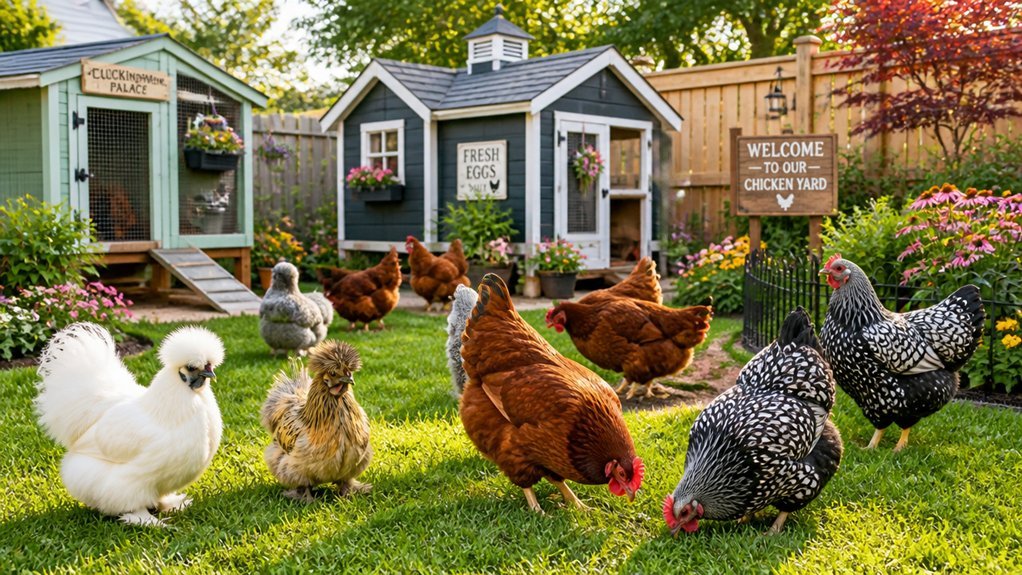
If you’ve got a small yard, you’ll do best with calm, compact breeds like Silkies, Bantam Cochins, Australorps, Orpingtons, Wyandottes, and Plymouth Rocks. These chickens handle tighter spaces well, stay easier to manage, and usually make less noise, which is great if you’ve got close neighbors. If egg production matters, consider Leghorns, Rhode Island Reds, Sussex, or Easter Eggers. With the right setup, you can keep a happy, productive flock and discover even better breed matches below.
Best Chicken Breeds for Small Yards
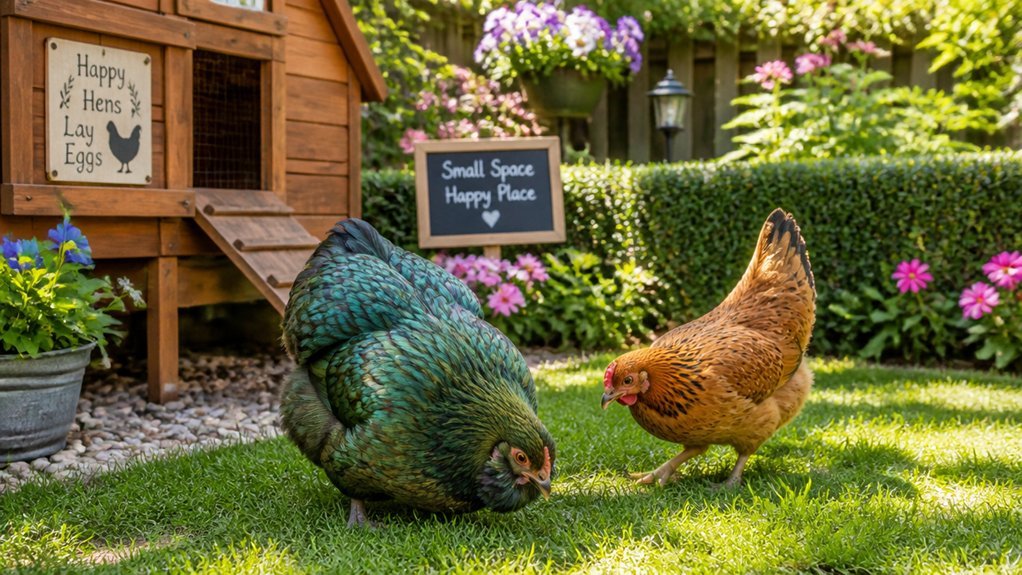
If you have a small yard, you’ll want chicken breeds that stay calm, need little space, and still give you steady eggs. You can do well with Silkies, which stay gentle and easy to handle, or Bantam Cochins, which fit neatly into compact runs.
Australorps also make a smart choice because they lay well and usually adapt nicely to close quarters. If you want a hardy bird with a friendly temperament, consider Orpingtons; they’re larger, but they often remain relaxed and cooperative.
Wyandottes can work too, since they handle confinement better than many breeds and keep a dependable laying schedule. When you choose among these options, look for birds that match your space, noise limits, and egg goals without creating extra stress for you or your flock. Breed adaptability is an important factor to ensure your chickens thrive in small yards.
How Small Yards Affect Breed Choice
When you have a small yard, you need breeds that stay comfortable in limited space without feeling cramped. You’ll also want chickens whose behavior fits your setup, since calmer, less destructive birds make yard management easier. Additionally, selecting breeds with compact coops and manageable sizes can help optimize limited space and keep your flock comfortable. Noise matters too, so quieter breeds can help you keep peace with neighbors and your household.
Space Needs
Space matters more in a small yard than many new chicken keepers expect, so you’ll want breeds that stay comfortable without needing a lot of roaming room. You should favor chickens that handle limited ground space well and still stay healthy with a secure coop, a tidy run, and regular out-of-pen time.
Smaller breeds often fit better because they use less space, weigh less, and don’t crowd feeders or perches as quickly. You’ll also want to plan for vertical space, since roosts, shelves, and nesting boxes can make a compact setup feel larger.
Even with less yard room, you can raise a productive flock if you match breed size to your available square footage and keep the area clean, shaded, and easy to manage. Proper coop design is essential for ensuring your chickens thrive in limited space.
Behavior Fit
Breed size is only part of the equation; temperament can make or break a small-yard flock. You’ll do best with chickens that stay calm, adapt quickly, and respect boundaries. In tight quarters, curious but gentle birds fit better than pushy ones, because they’re less likely to crowd feeders or uproot plants. You should also favor breeds that handle handling well, since you’ll be closer to them more often. Additionally, sturdy perches and secure roosting options can help keep your flock comfortable and safe in limited space.
Noise Levels
In a small yard, noise matters more than you might expect, because sound carries easily and can quickly become a nuisance for you and your neighbors. You’ll want quieter breeds if you live close to others or keep hens near bedrooms, patios, or fences. Some chickens, like Silkies, Orpingtons, and Brahmas, usually stay relatively calm and make softer vocalizations. Proper electrolyte balance can also help reduce stress-induced noise in hens during hot weather. Roosters, by contrast, crow loudly and often, so they’re a poor fit unless you’ve checked local rules and don’t mind the racket. Even hens can get louder when they’re startled, laying, or competing for food. Choose birds known for easygoing temperaments, and place the coop away from shared walls if you can. That way, you’ll reduce complaints and enjoy your flock without constant noise stress.
Calm Chicken Breeds for Small Yards
If you’ve got a small yard, calm chicken breeds can make daily care much easier. You’ll want birds with gentle temperaments that stay relaxed around people and pets. Low-noise breeds also help keep your yard peaceful and your neighbors happy. Choosing breeds with appropriate band sizing ensures you can monitor and identify your flock easily without causing stress or discomfort.
Gentle Temperaments
When you have a small yard, a calm flock can make daily chicken-keeping far more enjoyable. You’ll want breeds that handle handling well, settle quickly around people, and don’t turn every visit into a scramble.
Gentle birds make feeding, cleaning, and egg collecting easier because they stay relaxed when you move through the run. They also fit better with families, since you can supervise kids without constant worry.
Look for chickens known for steady, friendly behavior, such as Buff Orpingtons, Plymouth Rocks, and Sussex. These breeds usually adapt well to close quarters when you give them enough space, routine, and a secure coop.
If you choose birds with mild temperaments, you’ll spend less time managing stress and more time enjoying your flock each day. Providing the right gloves can also help during handling and coop cleaning, ensuring safe and comfortable interactions with your gentle chickens.
Low-Noise Behavior
For a small yard, quieter breeds can make chicken keeping much more neighbor-friendly and less stressful for you. You’ll notice calm birds often cluck softly, settle quickly, and avoid the constant fuss that turns a coop into a noise problem. That matters when your flock sits close to patios, windows,, or fences. A quieter temperament often correlates with low-noise behavior, making these breeds especially suitable for confined spaces. Choose hens that stay composed during feeding, nesting, and routine handling. You’ll enjoy morning eggs without waking the block, and your chickens will feel less frantic too. Low-noise behavior doesn’t just protect harmony; it also signals a flock that’s relaxed, confident, and easier for you to manage in tight spaces.
Quiet Chicken Breeds for Close Neighbors
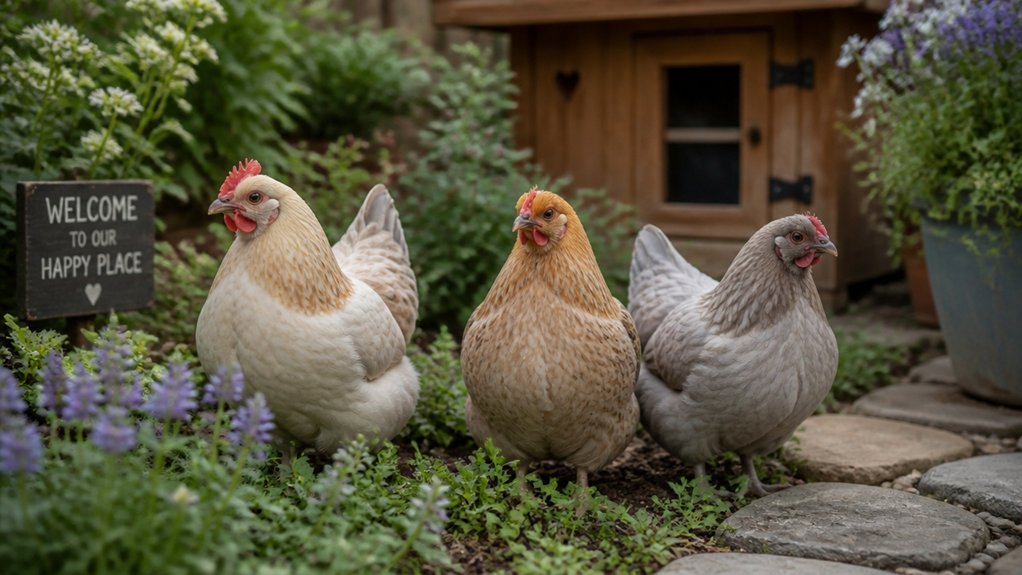
If you live close to your neighbors, choosing a quieter chicken breed can make backyard keeping far more pleasant for everyone. You’ll usually do well with breeds like Australorps, Orpingtons, Brahmas, and Silkies, since they tend to stay calmer and vocalize less than many active layers. Their softer clucks and fewer alarm calls help you avoid constant noise bouncing across fences. Additionally, selecting breeds with proper sizing and comfortable fit can further reduce stress and disturbance, contributing to a more peaceful environment. You should still expect some chatter, especially when hens lay or spot a hawk, but these breeds generally keep the volume lower. Give them steady routines, enough space, and shelter from stress, and you’ll often hear less fuss. When you pick birds with a mellow temperament, you make daily care easier and keep peace with nearby households too.
Top Egg-Laying Breeds for Small Spaces
Even in a small yard, you can still get plenty of eggs if you choose high-producing breeds that fit your space well. You’ll want hens that lay reliably and stay compact, so your flock feels rewarding without crowding your yard. Selecting breeds that are naturally good for small spaces can help maximize your egg yield while keeping your flock comfortable. | Breed | Why it works |
| — | — |
|---|---|
| Leghorn | Lays lots of white eggs |
| Rhode Island Red | Hardy and productive |
| Australorp | Great layers with calm habits |
| Sussex | Steady egg supply |
| Easter Egger | Fun egg colors, solid output |
You can mix two or three of these breeds for variety and strong production. If you want dependable cartons each week, focus on hens known for consistency rather than size. With the right choices, your small flock can deliver big results.
How to Keep Chickens Comfortable in Small Yards
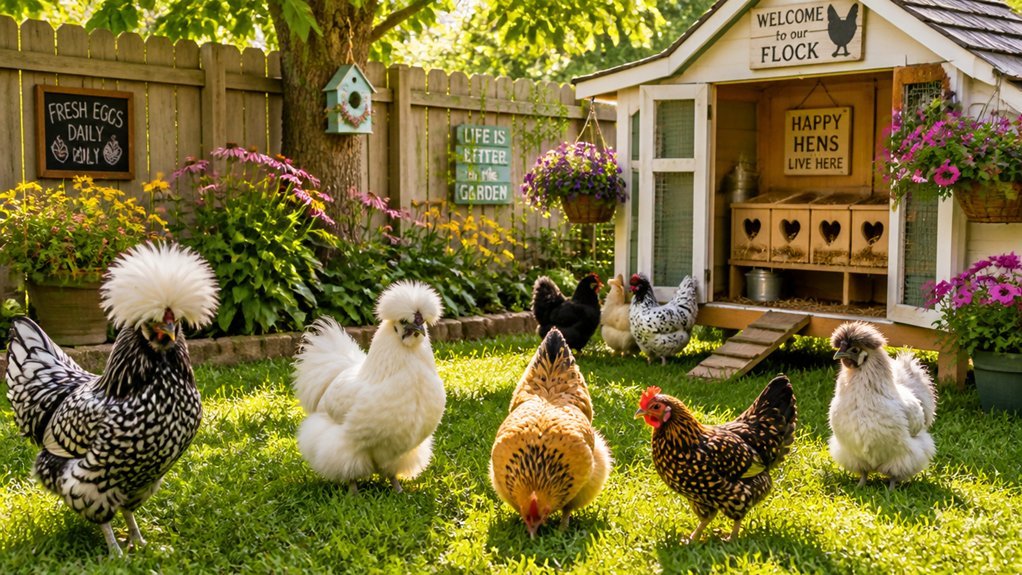
Keeping chickens comfortable in a small yard starts with giving them enough space to move, dust bathe, and rest without feeling cramped. You should provide a secure coop with good ventilation, dry bedding, and easy access to feed and water.
Add shaded spots, perches, and low platforms so they can explore without crowding. Rotate their run if possible to reduce mud and give grass time to recover. Offer enrichment like hanging greens, scratch grains, and dust baths to prevent boredom and stress.
Clean often, especially in warm weather, to control odor and pests. Choose calm, smaller breeds, and avoid overcrowding. When you meet their basic needs, your flock stays healthier, happier, and far more content in a limited yard space.
Frequently Asked Questions
How Many Chickens Can I Keep in a Tiny Backyard?
You can usually keep 2 to 4 chickens in a tiny backyard, depending on local rules and coop space. You’ll need room for roaming, nesting, and cleanup, so don’t overcrowd them.
Do Small-Yard Chickens Need Special Coop Ventilation?
Yes, you do need good ventilation, even for small-yard chickens. You should keep air moving without creating drafts, so moisture and ammonia don’t build up. Proper vents help birds stay healthy and comfortable year-round.
Can Chickens Free-Range in a Very Limited Space?
Yes, you can let chickens free-range in a very limited space, but you’ll need to supervise them, protect plants, and provide enrichment. Otherwise, they’ll quickly scratch, damage, and crowd the area.
What Plants Are Safe to Grow Near Chickens?
You can grow basil, oregano, thyme, rosemary, marigolds, sunflowers, clover, and herbs near chickens. You’ll want to avoid foxglove, nightshade, azalea, rhubarb leaves, and onion tops, since they’re toxic if pecked.
How Often Should I Clean a Small Chicken Coop?
You should clean your small chicken coop weekly, and spot-clean droppings daily. Change bedding as needed, scrub feeders and waterers often, and deep-clean monthly to keep odors down and your birds healthy.
In Summary
Choosing the right chicken breed for your small yard makes all the difference. You’ll have a happier flock, fewer noise issues, and better egg production when you pick calm, quiet, and space-friendly birds. Focus on breeds that fit your yard size, your neighbors, and your goals. With a little planning, you can keep chickens comfortably in even a small space and enjoy fresh eggs right at home.