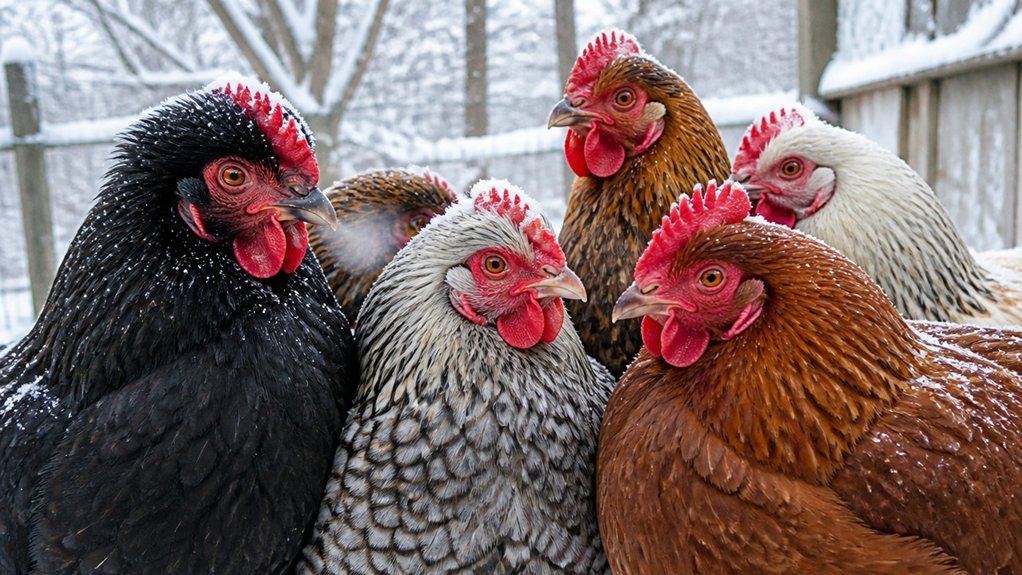
The best cold-hardy chicken breeds for your flock are Wyandottes, Plymouth Rocks, Orpingtons, Australorps, Sussex, Brahmas, and Chanteclers. These birds have dense feathering, compact bodies, and small combs that help them hold heat and avoid frostbite in winter. If you want dependable egg layers, Wyandottes and Australorps are strong choices. For even tougher cold, Brahmas and Chanteclers shine. With the right breed, your hens can stay healthy and productive all season, and there’s more to take into account.
Best Cold-Hardy Chicken Breeds
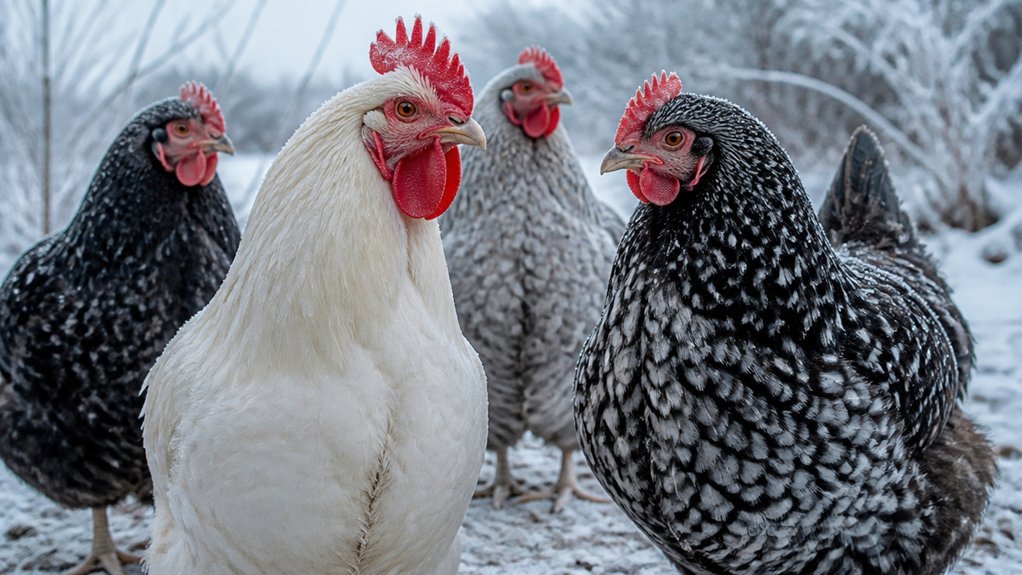
If you live in a region with harsh winters, choosing the right chicken breed can make a big difference in flock health and egg production. You want birds with small combs, tight feathering, and calm temperaments, because they handle cold better and lose less body heat.
A well-constructed coop with weatherproof materials, good ventilation, and adequate insulation further supports these hardy breeds during the colder months. You’ll also appreciate Sussex and Australorps for steady laying and dependable hardiness. Pick birds that stay active, eat well, and adjust easily to your coop routine.
Even the toughest breed still needs dry bedding, draft control, and enough space to roost comfortably. When you match hardy genetics with good winter care, you give your flock a better chance to stay healthy and productive all season.
Best Breeds for Extreme Winter
When you face brutal winters, you’ll want breeds with dense feathering, like Siberian-style protection that traps heat well. You should also look for frost-resistant comb types, since smaller, tighter combs hold up better in extreme cold. A consideration of breed hardiness can further help you select chickens capable of thriving in harsh winter environments.
Siberian Feather Protection
For chickens facing true deep-freeze conditions, Siberian-style feather protection can make all the difference: breeds with dense plumage, tight feathering, small combs, and heavy body coverage hold in heat far better than lighter, sparser birds.
You’ll notice this insulation in breeds like the Cochin, Brahma, and Orpington, which keep their bodies warmer because feathers trap still air close to the skin. When you choose birds with broad backs, full fluff, and thick underlayers, you give them a stronger buffer against icy winds and rapid heat loss.
Proper weather-resistant construction of their housing also plays a vital role in winter survival. You should still provide dry bedding, windbreaks, and extra feed, but feather density does a lot of the work. In brutal winters, that natural coat helps your flock stay active, comfortable, and productive.
Frost-Resistant Comb Types
Even in bitter cold, comb size and shape can make or break a bird’s winter comfort. You should favor breeds with small, tight combs because they lose less heat and resist frostbite better than tall, exposed types. Pea combs, rose combs, and walnut combs stay close to the head and offer useful protection when wind and moisture hit hard. Additionally, using weatherproof chicken coop doors can help maintain a stable environment, shielding birds from cold drafts and moisture as well. If you live where temperatures plunge, you’ll want birds like Ameraucanas, Wyandottes, Brahmas, Chanteclers, and Buckeyes, since their combs stay low and compact. You can also reduce risk by keeping coops dry, draft-free, and well ventilated, because damp air raises frost danger fast. In extreme winter, comb design matters just as much as feather density.
Deep-Winter Egg Layers
If winter eggs are your goal, choose breeds that keep laying through the darkest, coldest months without fading fast. You’ll get better results with birds that stay active, eat well, and don’t quit when daylight drops.
Look for breeds that pair hardiness with steady production and calm behavior in tight coops.
- Plymouth Rocks: dependable layers with solid cold tolerance
- Wyandottes: dense feathers and consistent winter output
- Australorps: strong production and good feed efficiency
- Orpingtons: gentle, bulky birds that handle chill well
- Chanteclers: bred for harsh climates and reliable laying
To keep eggs coming, give them draft-free housing, extra protein, unfrozen water, and supplemental light. When you match the right breed with smart care, you’ll collect more eggs all winter.
Adding well-designed walk-in coops with easy-to-clean features can also help maintain optimal conditions during the cold months, ensuring your hens stay comfortable and productive.
Cold-Hardy Chickens That Lay Well
When winter bites hard, you still want hens that keep your egg basket full, and several cold-hardy breeds do exactly that. If you want steady production, choose birds that stay active and unfazed by frost. Incorporating the right vitamins and electrolytes can help these breeds maintain hydration and overall health during cold, challenging months.
Best Dual-Purpose Winter Breeds
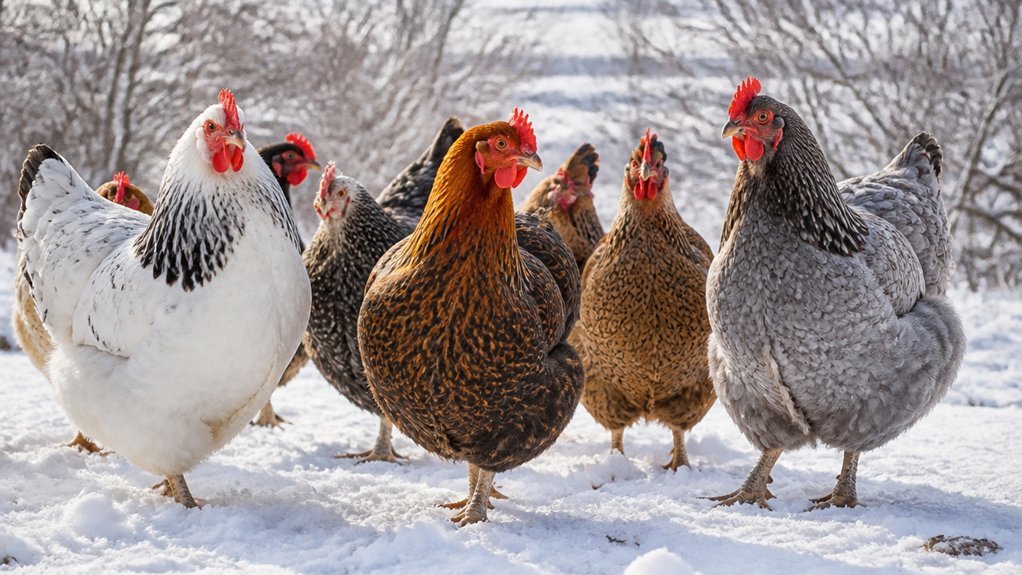
If you want a flock that gives you both hearty meat and steady eggs, dual-purpose winter breeds are a smart choice. You’ll want birds with dense feathering, strong body size, and good cold tolerance to handle harsh weather well. Breeds like Plymouth Rocks, Orpingtons, and Wyandottes often stand out for winter toughness and reliable productivity. Selecting breeds with the right roosting habits can also help ensure comfortable and safe overnight resting in colder climates.
Meat And Egg Yield
For winter flocks that need to feed your table and keep laying through the cold, dual-purpose breeds offer the best balance of meat and egg yield. You can count on them to supply steady eggs while also reaching a marketable size without extra fuss. A well-chosen breed will also have stronger shells, ensuring eggs survive transportation and handling during the colder months.
If you want efficiency, choose birds that mature at a moderate pace and convert feed into both shell and flesh well. Their value shows up when your coop has to do more than one job.
- You get eggs for breakfast and roasting birds for supper.
- You save space by keeping one versatile flock.
- You reduce feed costs with efficient growth.
- You simplify breeding by selecting productive hens and sturdy roosters.
- You make the most of limited winter resources.
Winter Hardiness Traits
Cold weather doesn’t have to shut down your flock, especially when you choose dual-purpose breeds built to handle winter’s bite. You’ll want birds with tight feathering, sturdy bodies, and small, well-protected combs, because those traits help them retain heat and avoid frostbite.
Dense plumage acts like insulation, while a calm, steady temperament keeps stress low when temperatures drop. You should also look for birds that keep eating well in cold snaps, since steady feed intake supports body heat and egg production. Strong legs and active foraging habits help them stay healthy on snow-packed ground.
If you provide dry bedding, draft-free shelter, and extra calories, these hardy birds can stay productive and comfortable through long, bitter winters. Ensuring their habitat is waterproof and insulated is also crucial to keep them warm and dry during harsh conditions.
Top Dual-Purpose Breeds
Which chickens give you both a reliable winter egg basket and a solid table bird? You’ll want dual-purpose breeds that keep laying when the weather turns harsh and still grow into sturdy, meaty birds. Proper management, including providing ample dry bedding and draft-free housing, greatly enhances their cold-hardiness. Look for calm temperaments, tight feathering, and good feed efficiency so you get more from every bag of grain. These breeds handle cold better when you provide dry litter, draft-free housing, and extra protein during molt and peak cold. – Feather insulation is a key trait to consider when selecting breeds for colder climates.
- Plymouth Rocks: steady layers and dependable size
- Sussex: active foragers with strong winter output
- Orpingtons: fluffy insulation and rich meat
- Wyandottes: rose combs help prevent frostbite
- New Hampshires: fast-growing birds with reliable eggs
Choose birds that fit your climate, then breed for vigor, and you’ll build a flock that works hard all winter.
Cold-Hardy Chickens for Small Coops
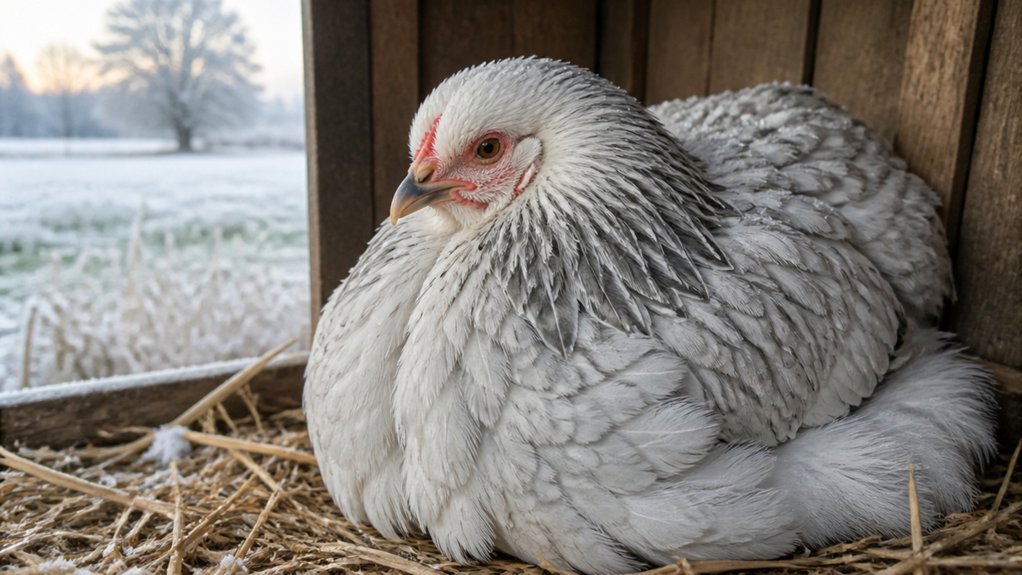
When your coop is compact, you need chicken breeds that can handle cold weather without demanding much space. You’ll do well with breeds like Wyandottes, Plymouth Rocks, and Australorps, because they stay productive in tight quarters and tolerate winter well.
Their compact bodies help them keep heat, and their thick feathering shields them from drafts. Make sure your coop still offers dry bedding, strong ventilation, and enough roost room so birds can settle comfortably at night.
You should also choose breeds that don’t need huge runs to stay healthy, since limited space can stress birds quickly. In a small setup, smart breed choice matters as much as insulation, and these cold-hardy options give you a practical balance of resilience, efficiency, and manageable size.
Best Calm Cold-Hardy Breeds
If you want a winter-ready flock that’s also easy to handle, calm breeds are a smart place to start. You’ll value birds that stay steady around you, your kids, and the coop routine.
Quiet temperaments make daily care smoother, especially when snow slows everything down.
- Orpingtons: gentle, docile, and pleasant in close quarters
- Plymouth Rocks: even-tempered and reliable with other birds
- Australorps: calm, friendly, and easy to manage
- Wyandottes: composed birds with a laid-back attitude
- Sussex: curious but not pushy, so they’re easy to work with
Choose breeds like these if you want fewer squabbles and less stress during long winter months. Their peaceful nature helps you build a flock you can trust, handle, and enjoy year-round.
What Makes a Chicken Cold-Hardy?
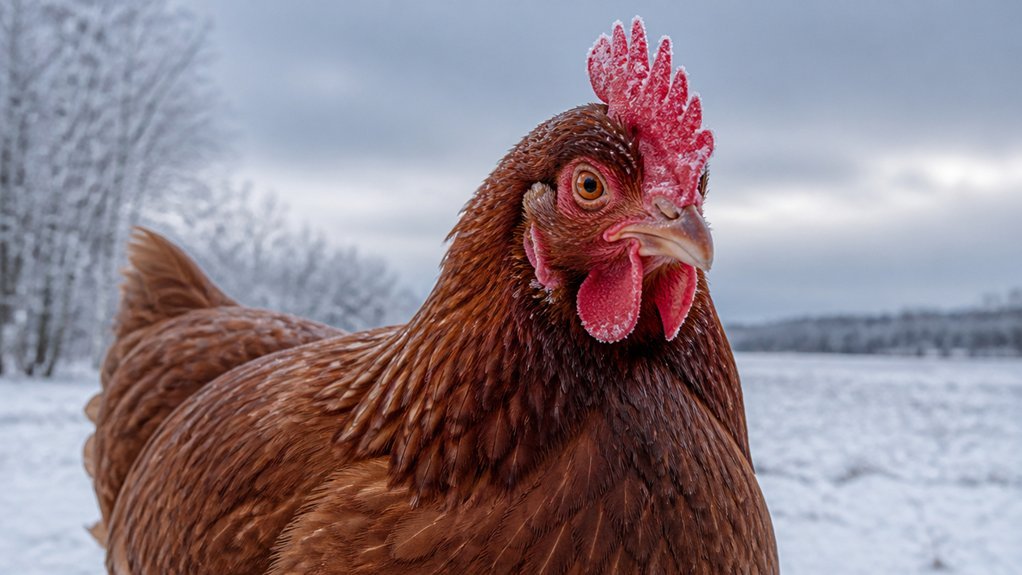
When you’re choosing cold-hardy chickens, you’ll want birds with dense feathers that trap warmth and shield them from wind.
You’ll also notice that sturdy bodies hold heat better, helping them stay comfortable in freezing weather. Smaller combs and wattles matter too, since they’re less likely to suffer frostbite.
Feather Density
Feather density plays a big role in how well a chicken handles cold weather, because a thick, close layer of feathers traps heat and blocks wind.
When you choose cold-hardy breeds, you want plumage that lies tight and fills out the body well, with fewer bare gaps around the neck, chest, and thighs. You’ll notice this trait in birds that keep a full, smooth outline even after molting. Dense feathers also shed moisture better, which helps your flock stay drier in damp, chilly conditions.
- Tighter plumage reduces exposed skin.
- Layered feathers create better insulation.
- Full feathering protects vulnerable body areas.
- Thick coats help resist wind chill.
- Dense plumage supports winter comfort.
Body Heat Retention
A cold-hardy chicken doesn’t just have thick feathers—it also holds onto body heat efficiently. You’ll notice this when the bird stays alert and active even after a frosty night.
Good heat retention comes from a compact body shape, strong metabolism, and efficient insulation that slows heat loss. When you choose breeds with these traits, you help your flock stay comfortable without burning extra energy just to stay warm. That matters because a hen that wastes less heat can keep eating, laying, and moving normally in winter.
You can support this advantage with dry bedding, wind protection, and enough feed, but the bird’s natural ability does most of the work. In cold weather, that internal efficiency makes all the difference.
Comb And Wattles
Even in freezing weather, you can spot a cold-hardy chicken by its smaller comb and wattles. These fleshy parts lose heat fast, so compact ones help your birds conserve warmth and avoid frostbite.
When you choose breeds with tight, neat combs, you give them a better chance in harsh winters.
- Look for pea, rose, or cushion combs.
- Avoid large single combs in severe cold.
- Check wattles for modest size and good circulation.
- Keep coop ventilation balanced, not drafty.
- Apply petroleum jelly only as a backup, not a fix.
You’ll still need dry bedding, shelter, and good nutrition, but the right comb and wattle shape gives you a clear edge when temperatures drop.
Why Feathering Matters in Cold Weather
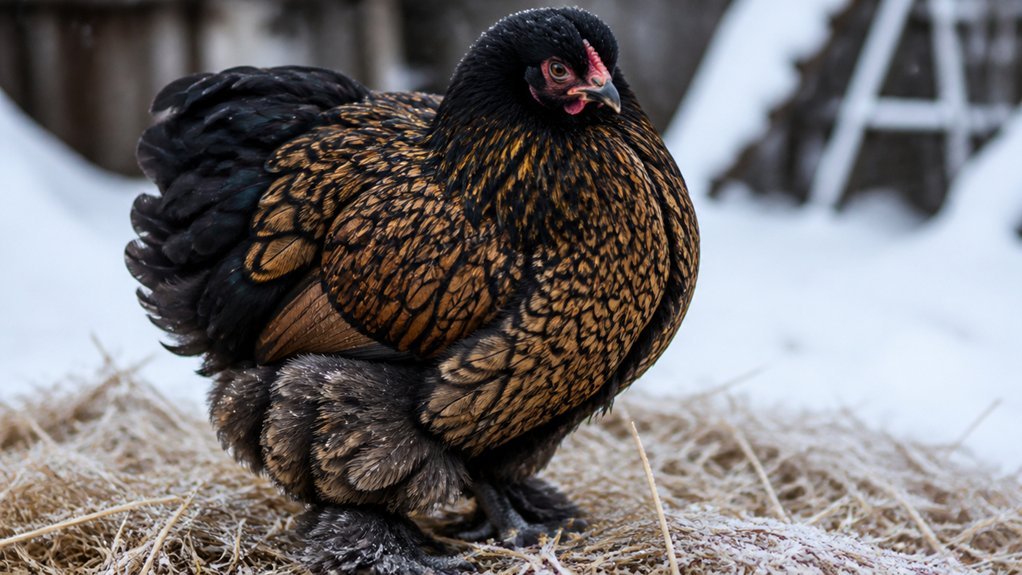
When winter bites, a chicken’s feathering does more than shape its looks—it helps trap warm air against the body, shield skin from wind, and reduce heat loss.
You’ll notice that dense, well-laid feathers give birds a built-in insulating layer, while sparse or patchy plumage leaves them working harder to stay comfortable. Breeds with tighter feather coverage often handle damp, windy days better because their coats shed moisture and keep body heat from escaping too fast.
You can support this natural protection by offering dry bedding, draft-free shelter, and enough space for birds to fluff up and rest. Good feathering won’t make a flock invincible, but it can help you choose birds that stay steadier, healthier, and more active through cold weather.
How Comb Shape Affects Frostbite Risk
Feathering helps chickens hold warmth, but a bird’s comb can be just as important in freezing weather. You should watch comb size and shape because exposed tissue loses heat fast. Tall, thin combs offer more surface area, so they’re more likely to frostbite in wind and damp cold.
A chicken’s comb can lose heat quickly, and tall, thin combs frostbite more easily in wind and damp cold.
Shorter, tighter combs usually cope better because they sit closer to the head and shed less heat.
- Large single combs need extra protection.
- Rose combs tend to resist frostbite better.
- Pea combs keep exposure low.
- Moisture raises risk in any shape.
- Dry housing helps guard delicate tissue.
If you keep vulnerable birds, use frost prevention steps before temperatures plunge. A small comb won’t guarantee safety, but it gives you an edge when winter bites.
Which Breeds Handle Snow Best?
So which chicken breeds handle snow best? You’ll usually want heavy, hardy birds with tight feathering and small combs. Buff Orpingtons stay calm, dense, and comfortable when the ground turns white. Plymouth Rocks cope well because they’re sturdy and easygoing in harsh weather.
Wyandottes also shine in snow; their rose comb helps you avoid frostbite problems. Australorps and Brahmas tolerate cold well too, with broad bodies that keep heat close.
If you want active foragers, Buckeyes and Sussex can still move through snow without much fuss. You should still give every breed a dry, draft-free coop, but these birds handle winter conditions with less stress. Pick one based on your climate, flock size, and the amount of snow you expect.
How to Feed Cold-Hardy Chickens
Cold-hardy chickens still need the right feed to stay warm and healthy through winter. You should offer a complete layer ration with enough protein, then add extra calories when temperatures drop.
Whole grains can help, but don’t replace balanced feed with scratch alone.
Fresh water matters just as much, so keep it unfrozen and easy to reach. You can also boost nutrition with healthy treats in moderation, like sunflower seeds or mealworms.
- Feed a balanced layer mash or pellets
- Increase calories with grains in small amounts
- Provide protein-rich treats sparingly
- Keep water available all day
- Remove spoiled feed quickly
Watch body condition closely; thin birds need more support, while overweight hens may lay less. Adjust portions based on weather, age, and activity, and you’ll keep your flock steady through winter.
Winter Coop Needs for Cold-Hardy Breeds
Even hardy breeds need a coop that stays dry, draft-free, and well-ventilated through winter. You should seal gaps that let in wind, but don’t block airflow near the roof, where moist air escapes.
Even hardy breeds need a dry, draft-free coop with steady ventilation to stay healthy through winter.
Add thick, dry bedding and refresh it often so feet stay warm and litter doesn’t turn damp. Keep roosts wide enough for birds to cover their toes, and place them above floor level.
You’ll also want insulated walls if your climate swings hard, yet avoid trapping humidity inside. Use windows or vents you can adjust on cold nights. Make sure waterers don’t freeze, and check for frost buildup on combs and walls.
With simple winter care, your flock stays comfortable, healthy, and active until spring.
Breeds to Avoid in Harsh Winters
Not every chicken breed handles bitter weather well, so you’ll want to skip birds with large combs, sparse feathering, or little body mass if your winters are severe.
Breeds like Leghorns, Minorcas, Mediterranean types, and many bantams can struggle when temperatures plunge because they lose heat quickly and expose vulnerable skin. You may also have trouble with ornamental birds that sacrifice utility for looks.
In hard freezes, these chickens can suffer frostbite, stress, and reduced egg production.
- Large combs freeze fast
- Thin plumage offers less insulation
- Lightweight bodies retain less warmth
- Tall, exposed frames lose heat
- Tiny bantams face harsher cold
How to Choose the Right Winter Breed
When you choose a winter breed, match it to your climate and the shelter you can provide so your hens stay dry and protected.
Look for smaller combs and wattles, since they’re less likely to frostbite in cold weather. You’ll also want a breed with a calm temperament and proven hardiness, because those birds handle winter stress better.
Climate and Shelter Needs
Choosing the right winter chicken breed starts with your climate and the shelter you can provide, because even the hardiest birds need protection from wind, moisture, and extreme cold.
If you live in a wet, windy region, choose birds that stay active and dry out quickly. In deep-snow areas, pick breeds that tolerate confinement and handle short daylight well.
Your coop should block drafts, shed rain, and stay ventilated enough to prevent damp air buildup. Add dry bedding, elevated roosts, and a snug, predator-proof run.
- Match breed hardiness to local lows
- Prioritize dry, draft-free housing
- Guarantee strong ventilation without chill
- Keep bedding thick and absorbent
- Provide space for indoor winter activity
Comb Type and Size
Because frostbite is one of the biggest winter risks, you should pay close attention to comb type and size when picking a cold-hardy chicken breed. Small, tight combs usually handle cold better because less skin sticks out into freezing air.
Pea combs, rose combs, and walnut combs are your safest bets, since they expose less tissue than tall single combs. If you want birds with larger combs, you’ll need extra winter protection, such as dry housing and regular checks for pale, blackened tips.
Don’t assume every breed with a big comb will fail in winter, but you should expect more maintenance. When possible, choose breeds whose combs stay low and compact, so your flock keeps eating, roosting, and laying with fewer cold-weather problems.
Temperament and Hardiness
A cold-hardy breed isn’t just about surviving low temperatures; it also needs a calm, adaptable temperament that fits winter living. When you choose birds for cold weather, you should look for hens that stay steady, handle confinement well, and don’t panic in storms. Active, hardy birds often keep eating and moving, which helps them maintain body heat.
- Pick breeds with low stress
- Favor hens that tolerate close quarters
- Choose birds with strong foraging instincts
- Avoid overly flighty or skittish stock
- Match behavior to your coop routine
You’ll get better winter results when your flock stays relaxed, cooperative, and resilient. That combination reduces feather loss, improves feed use, and makes daily care easier when snow and wind make everything harder.
Frequently Asked Questions
Can Cold-Hardy Chickens Still Lay Eggs in Winter?
Yes, your cold-hardy chickens can still lay eggs in winter, though production often drops when daylight shortens and temperatures fall. You’ll get more eggs if you keep them warm, dry, fed, and well-lit.
Do Cold-Hardy Breeds Need Extra Heat Lamps?
No, you usually don’t need extra heat lamps for cold-hardy breeds. You should provide dry bedding, good ventilation, and draft protection instead, because heat lamps can raise fire risk and stress your flock.
Are Cold-Hardy Chickens Okay With Free-Ranging in Snow?
Yes, you can let cold-hardy chickens free-range in snow if you keep them dry, provide shelter, and watch for frostbite. They’ll scratch around, but you should limit exposure during extreme cold or deep snow.
How Often Should I Check Chickens for Frostbite?
You should check your chickens daily in freezing weather, especially combs, wattles, and feet. If it’s bitterly cold or windy, check them morning and evening. Catching frostbite early lets you protect them faster.
Can Mixed-Breed Flocks Handle Cold Weather Well?
Yes, you can keep mixed-breed flocks in cold weather if you choose hardy birds, provide dry shelter, and monitor combs and feet. You’ll need extra care for weak breeds, but mixed flocks often adapt well.
In Summary
If you want chickens that can handle freezing weather, focus on hardy breeds like Plymouth Rocks, Wyandottes, Rhode Island Reds, and Orpingtons. You’ll get birds that stay active, keep laying well, and fit into many coop setups. Just remember, even cold-hardy chickens still need a dry, draft-free coop, good feed, and fresh water. Choose breeds that match your space, climate, and goals, and you’ll set your flock up for a strong winter.