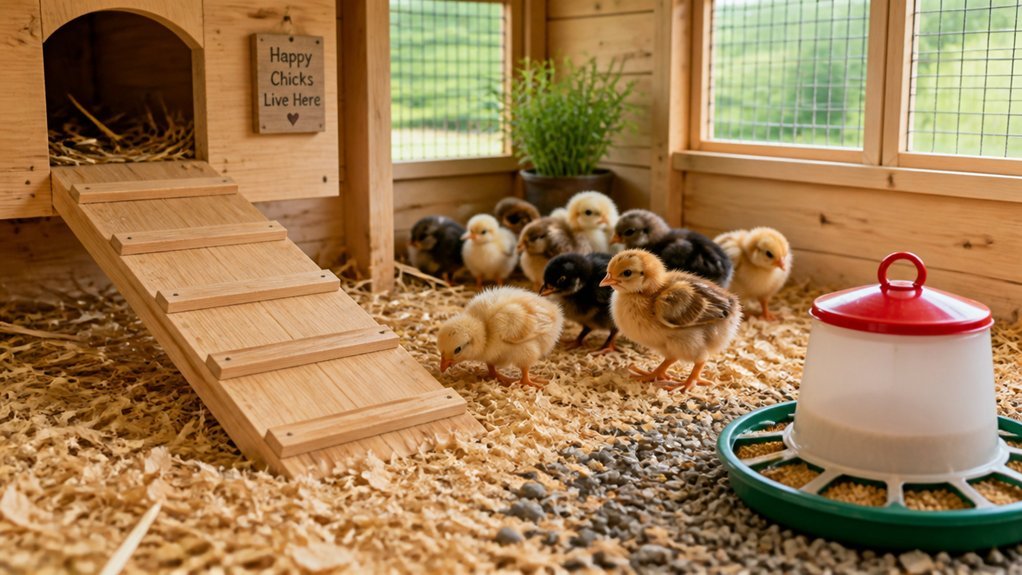
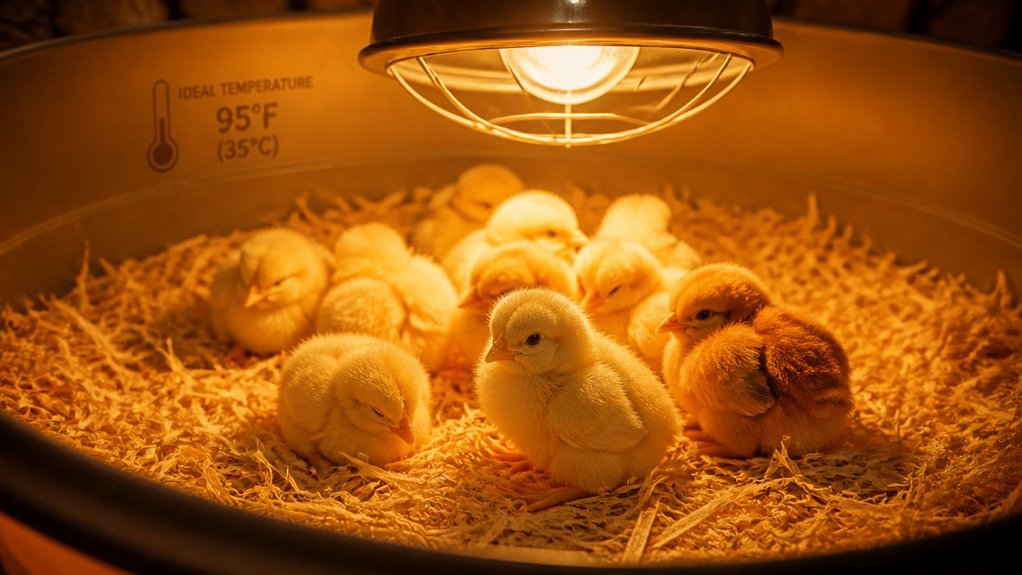
Keep chicks at about 95°F in the brooder during their first week, then lower the temperature by about 5°F each week until they’re fully feathered. You should use a reliable thermometer, not your hand, and watch the chicks’ behavior too. If they huddle tightly, they’re cold; if they pant or avoid the heat, they’re too warm. By week 3, you’ll already see how small adjustments make a big difference, and there’s more to get right.
What Is the Best Brooder Temperature for Chicks?
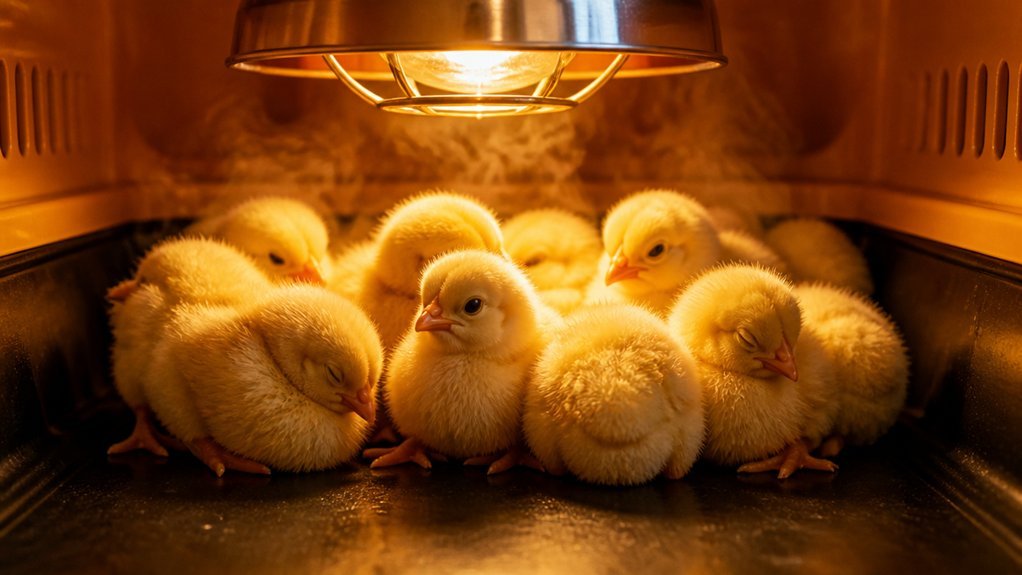
The best brooder temperature for chicks is about 95°F during their first week of life. You should keep the heat steady so your chicks can stay warm, active, and well fed. Place the heat source high enough to create a warm zone, but leave cooler areas so they can move away if they’re too hot. Watch their behavior closely: if they huddle tightly under the lamp, they’re chilly; if they spread out far from it, they’re probably too warm. Aim for a comfortable, even environment that supports normal growth and encourages drinking, eating, and resting. Use a reliable thermometer to check the brooder, not just your hand, so you can keep conditions safe and consistent for healthy chicks. Ensuring the correct brooder size and providing adequate heat zones helps chicks self-regulate their temperature effectively.
Brooder Temperature by Week
As your chicks grow, you can lower the brooder temperature by about 5°F each week until they’re fully feathered. Start around 95°F during week one, then move to 90°F in week two, 85°F in week three, and keep stepping down in the same pattern. Be sure to monitor chick behavior and signs of comfort or cold stress, adjusting the temperature as needed to maintain optimal growth conditions to ensure healthy development. You’re aiming for a steady progression, not a sudden change, so adjust gradually and keep the heat source reliable. 1. Week 1: Provide the warmest setting for newly hatched chicks. 2. Weeks 2–4: Reduce heat in small steps as feathers develop. 3. After full feathering: You can usually stop supplemental heat. This schedule helps you match warmth to growth, making brooding simpler and more consistent from start to finish.
How to Tell If Chicks Are Too Hot or Cold?
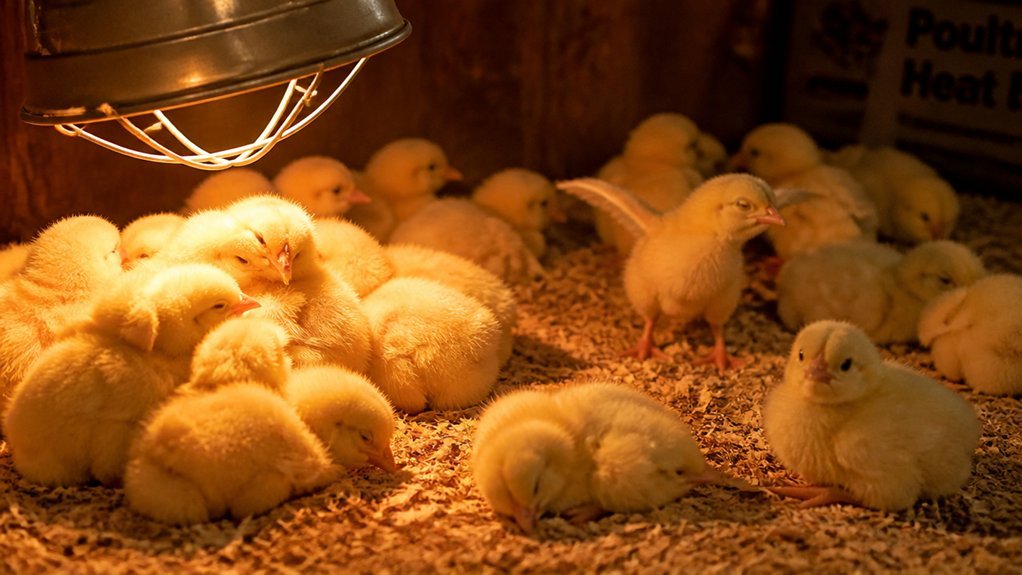
You can usually tell chick comfort by watching their behavior closely. If they huddle tightly under the heat source, they’re likely cold. If they spread far away, pant, or avoid the lamp, they’re probably too hot. Content chicks move around evenly, eat, drink, and settle quietly.
| Sign | Likely Meaning | What You Should Do |
|---|---|---|
| Tight huddling | Too cold | Increase heat slightly |
| Panting | Too hot | Lower heat or raise lamp |
| Loud peeping | Uncomfortable | Check temperature and airflow |
| Lethargy | Stress | Reassess brooder setup |
| Even spacing | Comfortable | Keep conditions steady |
Watch behavior throughout the day, not just once. Drafts, crowding, and uneven heat can mislead you, so keep observing and adjust only when the flock’s patterns clearly change. Regular monitoring with a reliable brooder thermometer helps ensure optimal temperature control and chick health.
How Brooder Temperature Changes as Chicks Grow
Brooder warmth shouldn’t stay the same for long, because chicks need less heat as they grow and feather out. You’ll usually start around 95°F in week one, then lower the temperature by about 5°F each week.
Watch their feather cover, not just the calendar, because faster-feathering chicks may need a cooler brooder sooner. As they mature, they spread out more, drink steadily, and stop huddling under the heat source. That shift tells you they’re regulating body temperature better.
Keep adjusting in small steps so you don’t shock them with sudden changes, and let their behavior guide you. Proper bedding can also influence their comfort, reflect their health status, and assist in maintaining ideal brooder conditions during this transition.
How to Keep Chicks Warm at Night
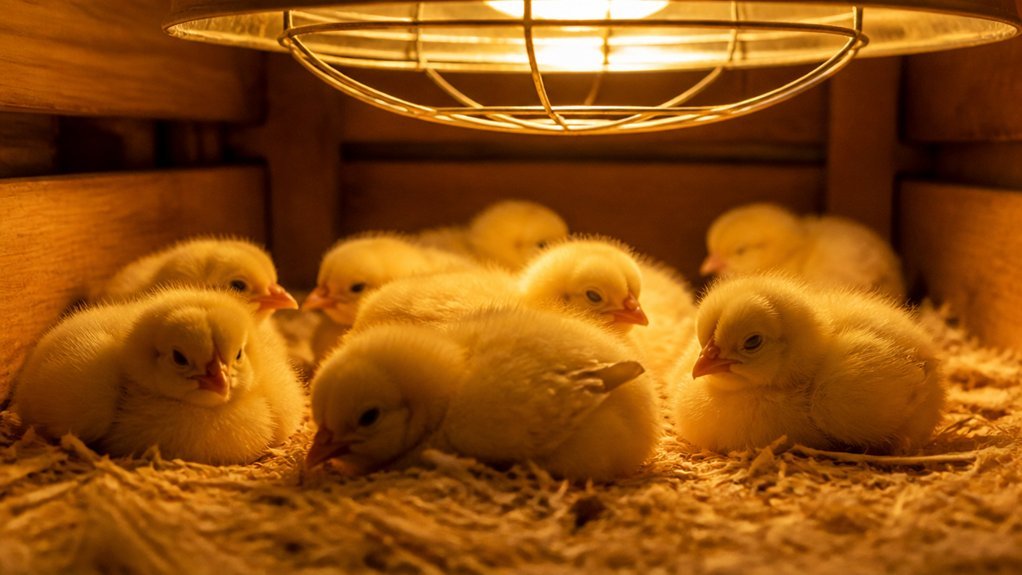
Nighttime can make chicks feel colder because temperatures drop and they’re less active, so keeping the brooder draft-free matters most.
You should check for gaps around windows, doors, or vents and block cold air without sealing off fresh airflow. Use a reliable heat lamp, heat plate, or brooder heater set at the right height, and confirm the warmth reaches the chicks’ level.
Add dry bedding so they can nestle comfortably, and avoid damp spots that steal heat. If your brooder sits in a chilly room, cover part of it with a breathable blanket or cardboard to hold warmth in.
Ensuring proper heat output control helps maintain a stable temperature at night. Watch the chicks before bed and early morning; if they huddle tightly, they’re too cold, and if they spread out, they’re comfortable.
Frequently Asked Questions
What Bedding Is Safest for a Chick Brooder?
Pine shavings are usually safest for your chick brooder because they’re absorbent and low-dust. Avoid cedar, slippery newspaper, and straw. You’ll keep chicks drier, cleaner, and less likely to develop leg problems.
How Often Should I Clean the Brooder?
You should clean the brooder daily, removing wet bedding, droppings, and spilled feed. Replace bedding completely at least once a week, and more often if it smells or looks damp, so your chicks stay healthy.
Do Chicks Need Light at Night?
No, you don’t need to leave chicks a light at night. You should give them darkness to rest, but keep them warm and safe. If you check them, use a dim light briefly.
When Can Chicks Move Outdoors?
You can move chicks outdoors once they’re fully feathered, usually around 6–8 weeks old, and daytime temperatures stay above 65°F. Make sure you’ve got a draft-free coop, secure bedding, and gradual acclimation.
What Waterer Is Best for Baby Chicks?
You’ll do best with a small, shallow poultry waterer with a narrow lip or vacuum-style base, so chicks can’t drown or chill themselves. Choose one you can clean easily and refill daily for fresh, safe water.
In Summary
Keeping your chicks at the right brooder temperature helps them grow strong and stay healthy. Start at 95°F in the first week, then lower it by 5°F each week as they feather out. Watch their behavior closely so you can spot chills or overheating early. As they grow, they need less heat and more space. At night, keep the brooder draft-free and safe so your chicks stay warm and comfortable.