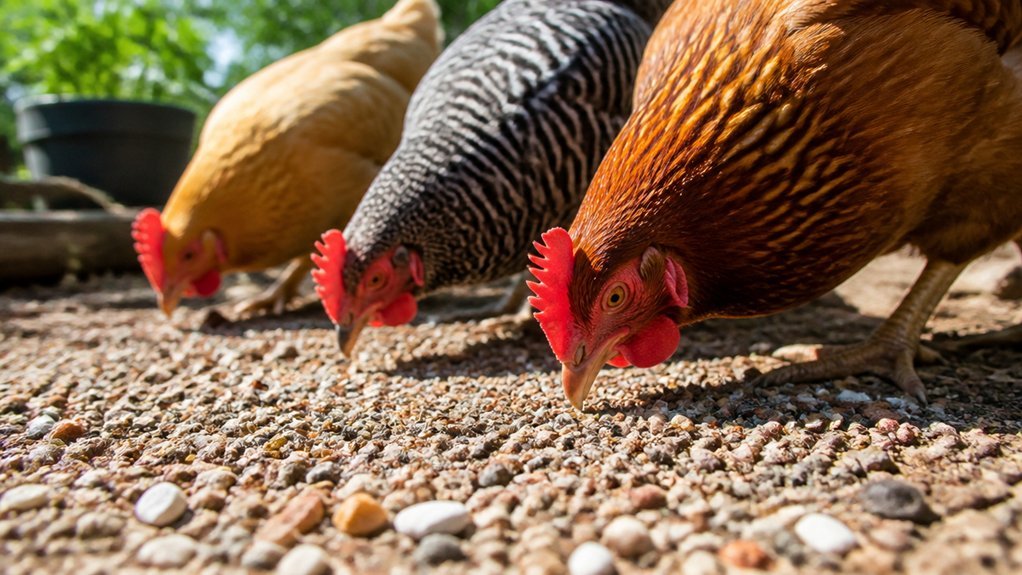
Grit matters because your chickens can’t properly grind food in the gizzard without it. When you offer the right grit, you help them break down seeds, feed, and tough plant matter so they can digest nutrients more efficiently. That means better weight gain, healthier droppings, and stronger egg production in laying hens. If your flock lives mostly in a coop or small yard, keeping grit available can make a big difference, and there’s more to know.
What Is Chicken Grit?
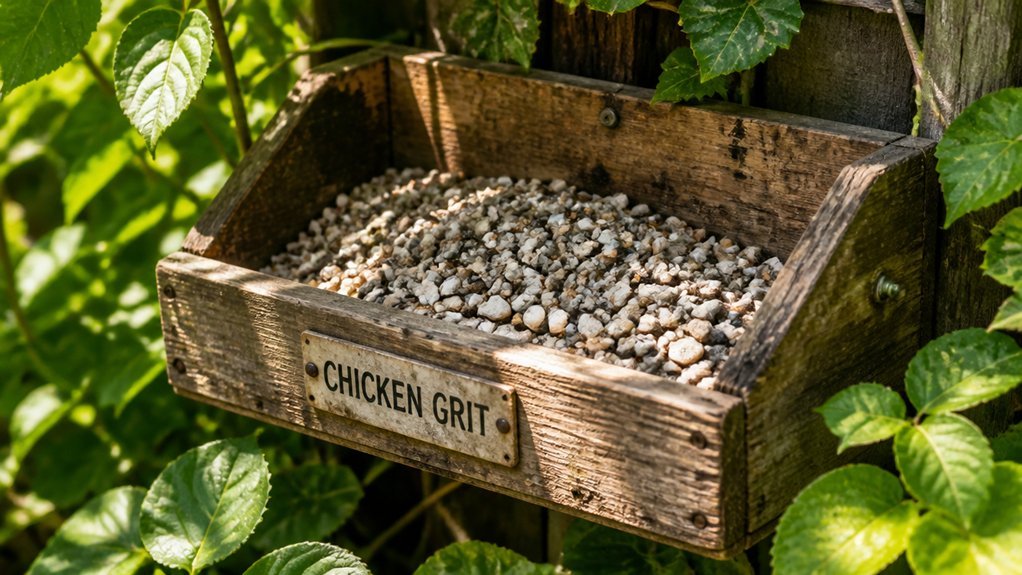
Chicken grit is a small, hard material—usually crushed granite, oyster shell, or similar particles—that helps your chickens grind food in their gizzards after they eat. You can think of it as tiny, durable pebbles that stay in the gizzard and help break feed into smaller pieces. Insoluble grit, such as crushed granite or quartzite, remains in the gizzard longer to support mechanical digestion. When you offer grit, you’re giving your flock a simple tool that supports efficient digestion. It’s a basic part of chicken care, and it helps your birds process the food they already eat more effectively.
Why Backyard Chickens Need Chicken Grit
Backyard hens need grit because their gizzards can’t do the job well without it. You give your chickens grit so they can crush feed, seeds, and tougher plant bits after swallowing them whole. Unlike mammals, your birds don’t chew, so the gizzard grinds food with the help of small stones or mineral pieces. Proper particle size of grit, such as shell particle size, plays a crucial role in supporting effective digestion. That process lets them extract more nutrients and move food through digestion more efficiently. When you offer grit, you support steady appetite, better feed use, and smoother digestion. Chickens that roam on soil may pick up some natural grit, but confinement, soft bedding, or sparse yards can limit access.
Signs Your Chickens Need More Grit
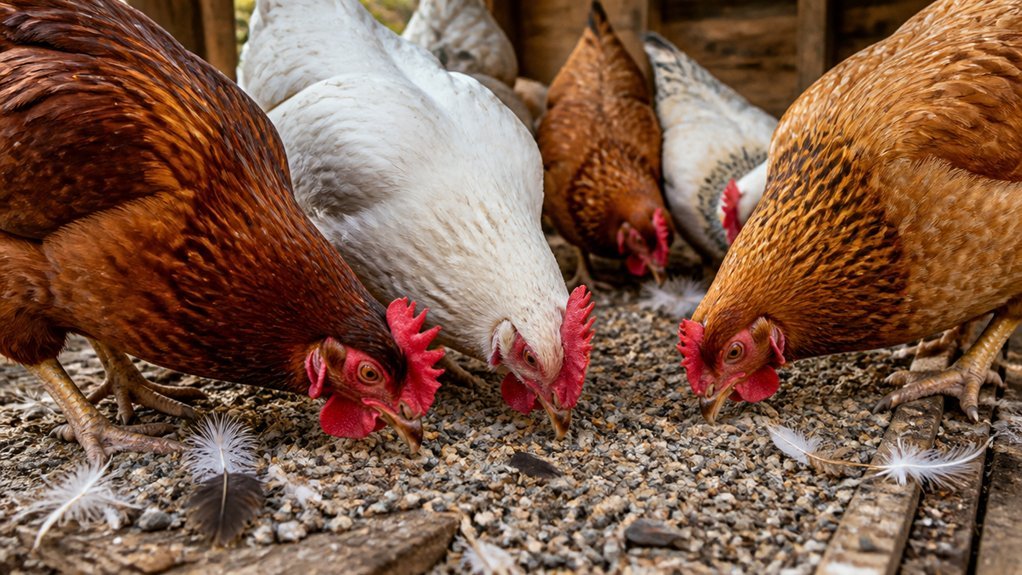
If your flock isn’t getting enough grit, you’ll often notice slower digestion first. You may see birds acting hungry soon after eating, even though their crops feel full. Droppings can look unusually loose, undigested, or packed with larger feed bits.
Your hens might lose weight, seem less lively, or reduce egg production because they can’t break food down efficiently. Watch for chickens that spend extra time at the feeder but don’t seem to thrive. You may also notice more whole grains in droppings after they’ve eaten scratch or fibrous greens.
When digestion stalls, feed use drops and waste rises. Providing quality poultry grit helps ensure their gizzards grind feed effectively, supporting healthy digestion and nutrient absorption. Check for these patterns together, then give your flock consistent access to grit so their gizzards can work properly.
Best Grit Types for Backyard Chickens
For most backyard flocks, insoluble granite grit is the best everyday choice because it stays in the gizzard and helps birds grind seeds, grains, and tough plant matter.
You should choose a size that matches your birds’ age: fine grit for chicks that eat anything besides starter feed, and larger grit for pullets and adults.
Oyster shell isn’t grit; it supplies calcium for laying hens, so use it separately when needed.
If your flock forages on grass, weeds, or garden scraps, they’ll usually benefit from regular access to granite grit.
Avoid using sand as a primary option, since it can compact and doesn’t perform as well.
Pick clean, hard particles and skip soft, crumbly materials that won’t hold up inside the gizzard for digestion.
How to Offer Chicken Grit in the Coop
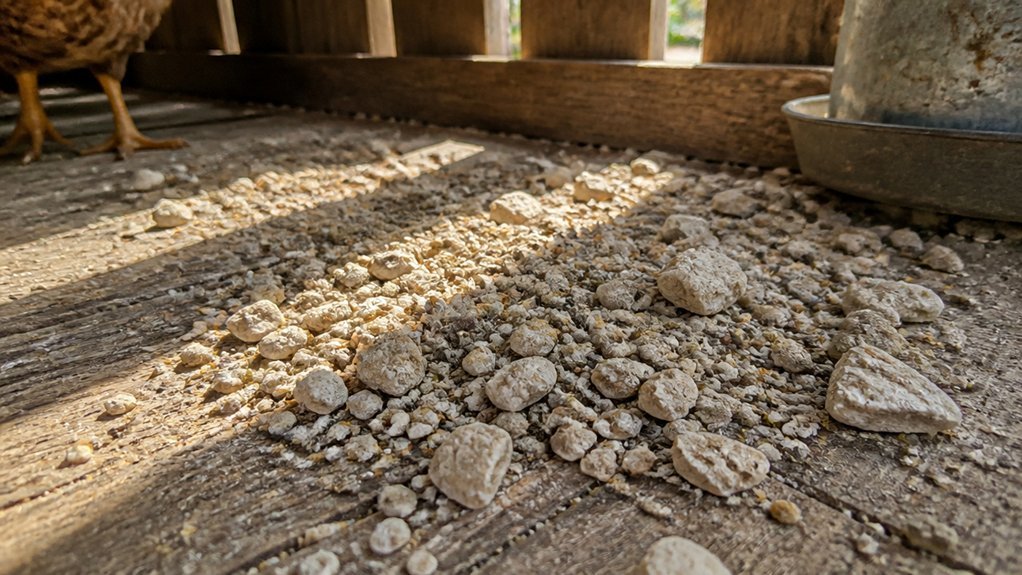
Offer grit in a separate, easy-to-reach container so your chickens can take what they need without competing with feed. Place it under cover in the coop or run, where rain won’t turn it into mud and bedding won’t bury it.
You can use a shallow dish, hanging feeder, or small tray that stays clean and stable. Refill it regularly, but don’t overfill; chickens only eat what they need.
Keep grit available at all times for birds eating scratch, kitchen scraps, grass, or whole grains. Check the container often for droppings, moisture, or mold, and wash it when needed.
If you move birds between coop and yard, offer grit in both spots so they can access it easily. Maintaining durable, pest-resistant containers ensures your grit stays clean and protected from pests that threaten food quality.
Frequently Asked Questions
Can Chickens Eat Grit-Free Feed Safely?
Yes, you can feed chickens grit-free feed safely if they aren’t eating whole grains, seeds, or pasture. You’ll need to provide grit separately when they eat fibrous foods, scratch grains, or other coarse treats.
Does Grit Help Chickens Digest Treats and Kitchen Scraps?
Yes, you do need grit for treats and kitchen scraps, since it helps your chickens grind tougher foods in the gizzard. Without it, they’ll digest slower and may struggle with fibrous bits.
How Often Should Young Chicks Start Getting Grit?
You should start offering chicks grit once they begin eating anything besides starter feed, usually around two to three weeks old. You’ll give it free-choice or with treats, and they’ll use it as needed.
Can Free-Ranging Chickens Still Need Supplemental Grit?
Yes, they can. You should still offer supplemental grit if your chickens free-range, because they may not find enough small stones, especially when soil is soft, pasture is sparse, or they eat lots of treats.
Is Crushed Oyster Shell the Same as Chicken Grit?
No, you shouldn’t treat crushed oyster shell as grit. You give oyster shell for calcium, and your chickens use it for strong eggshells, while grit helps them grind food in their gizzard.
In Summary
In the end, grit helps your backyard chickens do what their bodies can’t on their own: grind food and stay healthy. When you give your flock the right grit, you support better digestion, stronger nutrient absorption, and happier birds overall. Keep an eye on their feed, free-ranging habits, and behavior so you know when to offer more. A little grit goes a long way toward keeping your chickens thriving every day.