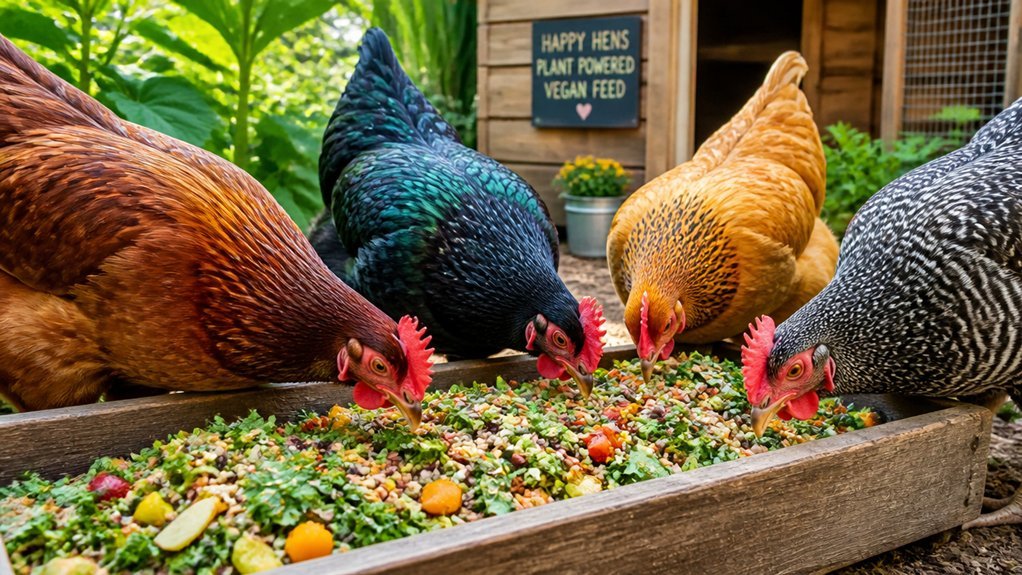
You choose vegan feed for your backyard chickens because it gives them complete nutrition from plant-based ingredients without meat, fish meal, or other animal byproducts. It supports steady growth, strong feathers, healthy eggshells, and consistent laying when it includes soy, peas, seeds, minerals, and vitamins. It’s also a cleaner, ethical option that fits sustainable flock care. If you want the best results, there’s more to know about ingredients, adjustments, and feeding different ages.
What Is Vegan Chicken Feed?
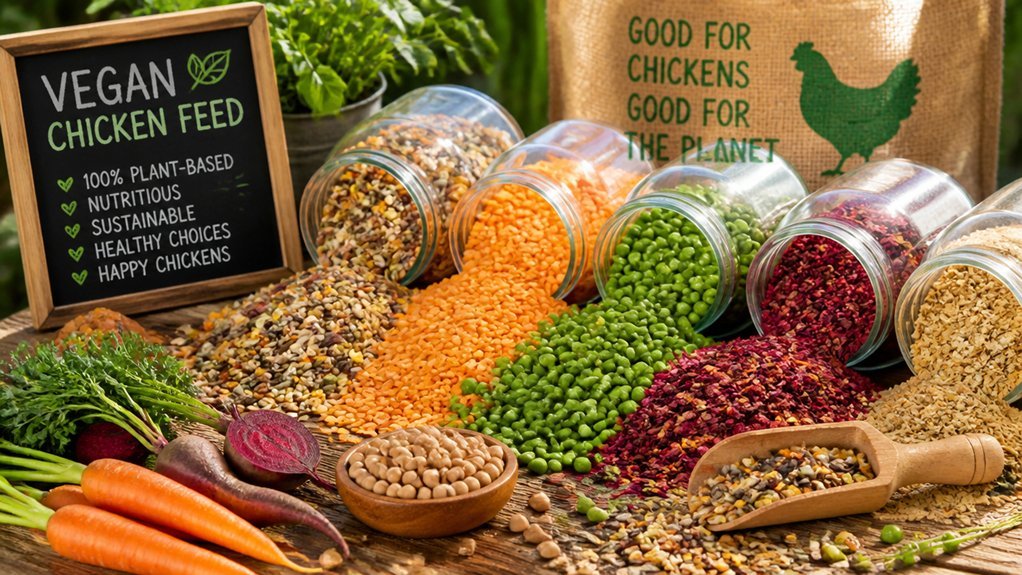
Vegan chicken feed is a plant-based diet for backyard chickens that contains no animal products, such as meat, fish meal, or dairy. You can build it from grains, legumes, seeds, vegetables, and mineral supplements that supply essential nutrients. Many blends use soy, peas, sunflower meal, corn, oats, and alfalfa to create balanced rations. You should read labels carefully, because some commercial feeds still include animal byproducts or rendered fats. If you mix feed at home, you need to match protein, calcium, vitamins, and amino acids to your flock’s age and laying stage. Additionally, choosing certified vegan formulas ensures the feed is free from cross-contamination during manufacturing. This approach lets you feed your chickens a diet aligned with plant-based values.
Benefits of Vegan Feed for Backyard Chickens
When you choose vegan feed for your backyard chickens, you give them nutrient-rich plant proteins that help support steady growth and energy. You also make it easier to keep your flock on a sustainable, well-balanced diet. That can support healthier chickens over time while lowering your environmental impact. Using corn- and soy-free formulas can further reduce allergenic risks and improve digestion for your birds.
Nutrient-Rich Plant Proteins
Plant proteins can give your backyard chickens the amino acids they need for steady growth, strong feather development, and healthy egg production. When you choose soy, peas, lentils, or sunflower meal, you’re feeding birds ingredients that pack concentrated nutrition into each bite.
These proteins help support muscle building, feather repair, and the energy demands of laying hens without relying on animal-based ingredients. You can also pair different plant sources to create a more complete amino acid profile, which helps meet your flock’s needs more effectively.
Because vegan feed often combines grains, legumes, and oilseeds, you give your chickens a balanced, practical diet that supports digestive health and overall performance. With the right mix, you’re offering nourishment that’s both efficient and easy to manage.
Sustainable Flock Health
Because a steady diet matters for long-term flock health, vegan feed can help your backyard chickens stay consistent in body condition, digestion, and overall wellbeing. You’ll support gut comfort with plant-based ingredients that are easier to manage and blend well with grains, seeds, and minerals.
That steady intake can help you avoid sudden feed shifts that upset laying patterns or energy levels.
Additionally, choosing feeds with balanced amino acids ensures your hens receive the essential nutrients needed for optimal reproductive performance, including strong eggshells.
- You can reduce unnecessary animal-based inputs.
- You can keep nutrient delivery predictable day to day.
- You can build a cleaner, simpler feeding routine.
When you choose vegan feed, you’re also making flock care more sustainable. You’ll waste less time sorting ingredients, and your birds may thrive on a balanced, repeatable diet that supports long-term health without extra complexity.
Vegan Feed vs. Traditional Layer Feed
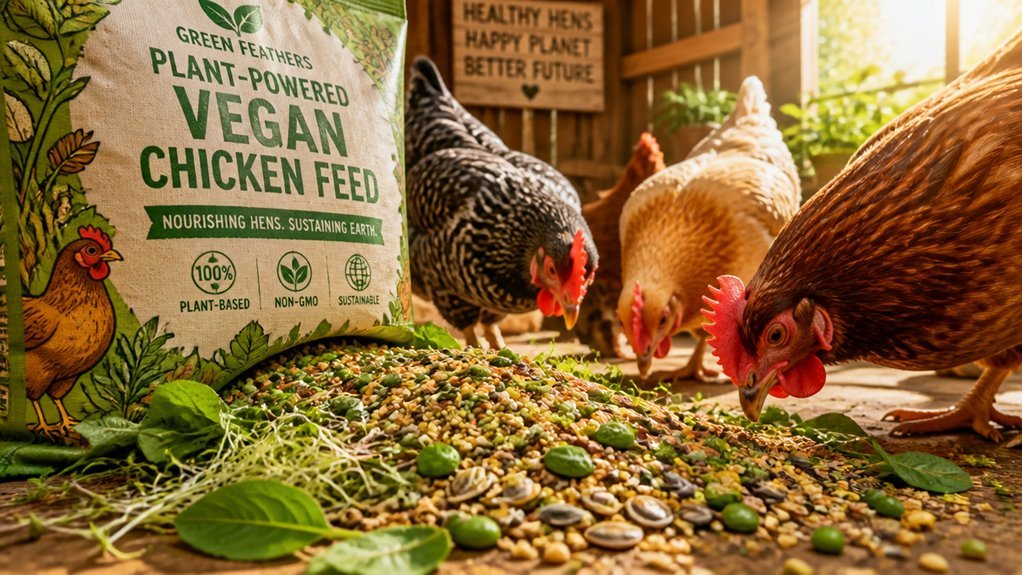
When you compare vegan feed with traditional layer feed, you’ll notice different nutrient sources, from plant-based ingredients to animal-derived additives. You may also see differences in egg quality, including shell strength, yolk color, and overall consistency. A key distinction is that vegan feeds often incorporate non-GMO grains, supporting environmentally friendly farming practices and aligning with ethical choices. If you care about ethical feed choices, you’ll want to weigh how each option fits your values and your flock’s needs.
Nutrient Sources Compared
Vegan feed and traditional layer feed deliver nutrients in different ways, so the best choice depends on what you want your hens to get from their diet. You can count on vegan feed to draw protein from soy, peas, sunflower meal, and other plant ingredients, while traditional layer feed often uses fish meal, insect products, or animal byproducts for added amino acids.
Both can supply calcium, phosphorus, vitamins, and minerals, but the ingredient path changes.
- Plant proteins can support steady growth and maintenance.
- Animal-based ingredients may offer a broader amino acid profile.
- Fortified formulas help you meet daily nutrient targets either way.
When you read labels, check protein percentage, methionine, lysine, and calcium levels. That way, you’ll match feed to your flock’s needs.
Egg Quality Differences
Beyond nutrients on a label, feed choice can also affect the eggs your hens lay. With vegan feed, you may notice steadier shell strength if the ration stays balanced, but yolk color often looks lighter because there’s less natural pigment from insects or fish ingredients. Traditional layer feed can produce richer yolks and sometimes a firmer white, though results still depend on freshness, storage, and your hens’ breed. Incorporating probiotics into their diet can further support gut health and nutrient absorption, potentially enhancing overall egg quality.
Ethical Feed Choices
If ethics are a major reason you’re choosing feed, the decision often comes down to what you want to avoid and what you’re comfortable supporting. Vegan feed lets you skip animal byproducts, fish meal, and rendered ingredients, so you can align your flock’s diet with a plant-based standard. Additionally, vegan formulations often emphasize additive-free formulas, ensuring your flock isn’t exposed to chemicals or fillers. Traditional layer feed, though, may use those inputs to boost amino acids and calcium. You can weigh your priorities with a simple checklist:
- Ingredient sourcing: Choose what fits your values.
- Nutritional goals: Make sure your hens still get balanced protein and minerals.
- Supply chain impact: Support farms and manufacturers you trust.
If you want a cleaner ethical line, vegan feed makes that choice easier. If you prioritize conventional nutrition, layer feed may feel more practical.
Nutrients Chickens Need Every Day

To keep backyard chickens healthy and laying well, you need to give them a balanced daily mix of protein, carbohydrates, fats, vitamins, minerals, and plenty of fresh water. Protein helps support feathers, muscles, and egg production, while carbohydrates supply quick energy for scratching, walking, and staying warm.
Healthy fats add concentrated energy and help your birds absorb key vitamins. You also need calcium, phosphorus, and trace minerals to support strong bones and hard eggshells. Vitamins A, D, E, and B-complex keep metabolism, immunity, and growth on track. Ensuring proper electrolyte balance is also vital to maintain hydration and overall health, especially during hot weather or stress.
Fresh water matters just as much as feed because chickens eat, digest, and regulate body temperature better when they’re well hydrated. When you meet these daily needs, your flock stays active, resilient, and productive.
Best Protein Sources in Vegan Chicken Feed
When you choose vegan feed for backyard chickens, the best protein sources usually come from soybeans, peas, lentils, sunflower meal, canola meal, and other plant-based ingredients that are rich in amino acids.
You can build a balanced ration by mixing these ingredients with grains, so your flock gets steady fuel for growth and feather repair. Focus on variety, because no single plant source does it all.
- Soybean meal: delivers concentrated protein and supports strong muscle development.
- Peas and lentils: add digestible protein and help diversify the feed.
- Sunflower and canola meal: round out the mix and improve amino acid coverage.
Providing a diverse plant-based protein ensures your chickens receive complete nutrition that promotes health and productivity.
Vitamins and Minerals Egg Layers Need
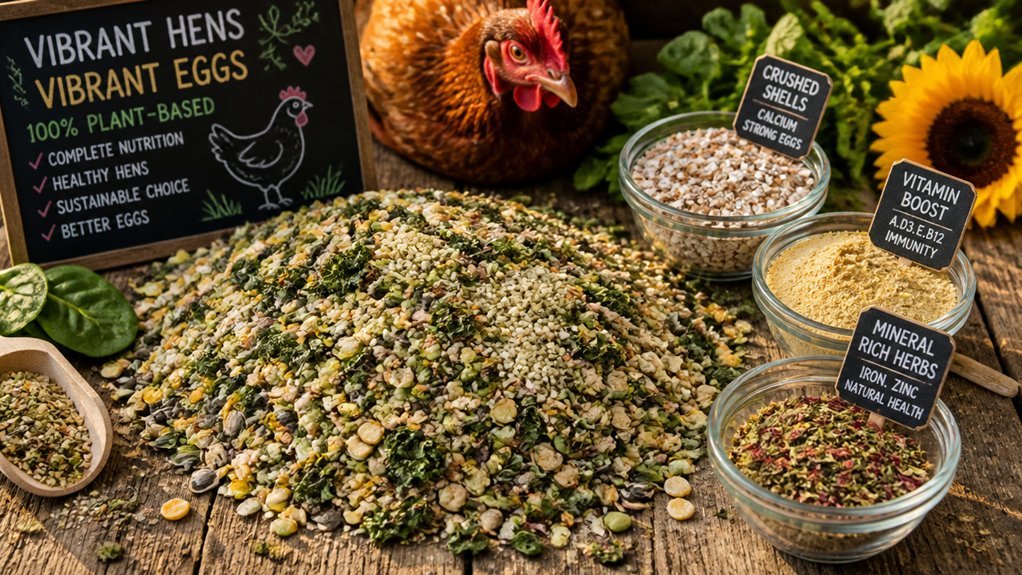
For strong egg production, your hens need more than protein alone—they also need the right vitamins and minerals to keep shells hard, support laying cycles, and maintain overall health. You should look for feed that supplies calcium, phosphorus, vitamin D3, vitamin A, and vitamin E in balanced amounts. These nutrients help your flock absorb minerals, build sturdy shells, and stay active through each laying cycle. Incorporating calcium-rich treats like Black Soldier Fly Larvae can significantly enhance shell quality. You can also offer clean grit and fresh water daily. Consistent intake matters more than occasional treats, so keep their ration steady and complete.
How Vegan Feed Supports Egg Production
Vegan feed can support egg production when it’s formulated with the right balance of plant proteins, amino acids, vitamins, and minerals hens need to lay consistently. You give your flock steady nutrition, and their bodies can turn that fuel into strong eggshells, firm whites, and rich yolks.
A well-made blend also helps you avoid gaps that can slow laying.
- It delivers protein from soy, peas, or legumes for egg formation.
- It supplies calcium, phosphorus, and vitamin D for shell strength.
- It includes trace nutrients that support metabolism and daily output.
You’ll usually see the best results when you feed consistently, keep fresh water available, and choose a balanced ration made for laying hens. That way, you support production without overcomplicating your routine.
Can Chickens Thrive on a Vegan Diet?

Yes—chickens can thrive on a vegan diet when you feed them a complete, balanced ration designed for their needs. You’ll want to match protein, amino acids, energy, vitamins, and minerals so your flock stays active and productive. Plant-based ingredients can do that when formulated well, and you can support health with clean water and routine observation.
| Nutrient | Vegan sources | Why it matters |
|---|---|---|
| Protein | Soy, peas | Muscle and feather growth |
| Amino acids | Methionine, lysine supplements | Strong body function |
| Calcium | Limestone, oyster-free mineral blends | Shell formation |
| Energy | Corn, wheat, oats | Daily activity |
| Vitamins | Fortified premixes | Overall wellness |
If you balance the ration carefully, you’ll give your chickens everything they need to flourish without animal ingredients.
Common Myths About Vegan Chicken Feed
Even with a well-formulated feed, you may still hear myths that vegan chicken feed is “unnatural,” “incomplete,” or “bad for egg laying.” In reality, chickens don’t need animal ingredients—they need the right balance of protein, amino acids, energy, vitamins, and minerals.
You can ignore claims that a plant-based ration automatically weakens hens or lowers production. What matters is formulation, not folklore.
- You don’t need meat meal for strong shells; hens need enough calcium and energy.
- You don’t need fish or insects for protein if the feed supplies essential amino acids.
- You don’t need animal ingredients to keep birds active, feathered, and productive.
When you choose a complete feed, you support health without buying into scare stories.
Safe Vegan Ingredients for Backyard Chickens
What should you look for in a safe vegan chicken feed? You want a balanced mix of grains, legumes, seeds, and mineral supplements that gives your flock steady energy and protein.
A balanced vegan feed blends grains, legumes, and minerals for steady energy and protein.
Look for corn, wheat, barley, oats, peas, and soybean meal as common plant-based staples. Sunflower seeds, flaxseed, and alfalfa meal can add healthy fats and nutrients.
You should also check for calcium sources like limestone or oyster-shell-free mineral blends, plus vitamins such as A, D, and E in fortified feeds. Choose feeds with clear labels, simple ingredient lists, and no animal by-products.
Freshness matters, so store feed in a cool, dry place. When you rotate ingredients thoughtfully, you help your chickens stay active, well-fed, and productive every day.
Ingredients to Avoid in Chicken Feed
When you choose chicken feed, you’ll want to avoid harmful animal byproducts that don’t fit a vegan plan.
You should also skip artificial additives, since they can add unnecessary chemicals to your flock’s diet. By checking labels closely, you can keep your chickens’ feed simple, clean, and plant-based.
Harmful Animal Byproducts
While many commercial feeds seem convenient, you’ll want to watch for animal byproducts that can undermine the benefits of a vegan diet for your flock. These ingredients may include fish meal, meat meal, and poultry fat, and they can weaken your goal of feeding chickens a plant-based ration.
Check labels carefully and choose feeds that clearly list grains, legumes, and plant proteins instead.
- Fish meal can add animal protein you don’t want.
- Meat and bone meal may hide mixed animal sources.
- Poultry fat comes from birds, so it doesn’t fit a vegan approach.
When you avoid these byproducts, you support cleaner sourcing and keep your hens on a feed that matches your values.
Artificial Additives To Avoid
Beyond animal byproducts, you’ll also want to steer clear of artificial additives that can slip into chicken feed and add little value for your flock. You should avoid synthetic colors, flavors, and preservatives, since they don’t improve nutrition and can clutter ingredient lists.
Some feeds also use artificial sweeteners or chemical stabilizers to make poor-quality formulas seem more appealing. These extras may irritate sensitive birds or mask low-grade ingredients.
Instead, choose feeds with simple, recognizable components like grains, legumes, and plant proteins. Check labels for vague terms such as “animal flavor” or “artificial enhancement,” and skip products with long lists of unpronounceable compounds.
When you feed cleaner formulas, you give your chickens better support for steady growth, strong eggshells, and overall health.
How to Switch Chickens to Vegan Feed
To switch your chickens to vegan feed, start by making the adjustment gradually so their digestion can adjust without stress. Mix a small amount of the new feed with their current feed, then increase the vegan portion over 7 to 10 days. Watch their appetite, droppings, and energy so you can spot any issues early.
- Begin with 25% vegan feed and 75% familiar feed.
- Raise the vegan feed to half, then three-quarters, while keeping fresh water available.
- Offer the full vegan feed once they’re eating steadily and acting normally.
Keep the change calm and consistent. If your flock hesitates, slow the pace a little instead of forcing a sudden switch. You’ll help them adapt smoothly and keep mealtime stress low.
Feeding Tips for Mixed-Age Flocks
When you keep chicks and adult birds together, you need a feeding plan that protects the younger birds while still meeting the needs of the whole flock.
You’ll want to choose age-specific nutrients, since chicks need more support for growth and adults need a balanced ration for maintenance.
A staged feeding shift helps you move everyone onto vegan feed without upsetting digestion or slowing development.
Chicks and Adults Together
If you keep chicks and adult hens in the same backyard flock, you’ll need to feed with care because their nutritional needs aren’t the same. Use a vegan flock feed that stays available to everyone, and make it easy for chicks to reach without crowding.
You can support smooth feeding by:
- Setting up separate feeders at chick height and adult height.
- Watching hens so they don’t guard the feed.
- Renewing feed often so it stays clean and appealing.
You’ll also want to scatter a little feed in shallow trays so smaller birds can eat calmly. Keep water nearby, and check that every bird gets enough time at the feeder.
With a thoughtful setup, you can help mixed-age flocks eat peacefully and thrive together.
Age-Specific Nutrient Needs
Because chicks, growers, and adult hens all need different nutrient levels, you can’t rely on one feeding plan to suit a mixed-age flock. You need to watch protein, calcium, and energy closely so younger birds keep growing and older hens stay productive.
Offer a vegan feed with balanced amino acids for all birds, but make sure it isn’t overloaded with calcium that can burden chicks. If you can, separate high-calcium supplements from the main ration and let adult hens access them as needed.
You should also provide clean water, because nutrient use depends on hydration. Check body condition, feather quality, and egg output to see whether the flock’s diet fits everyone. Small, regular observations help you spot shortages early and protect birds at every age.
Staged Feeding Transitions
Start changes slowly so your flock’s digestive systems and nutrient intake can adjust without stress.
When you move mixed-age chickens to vegan feed, blend the old ration with the new one over 7 to 10 days. You’ll help chicks, growers, and layers adapt without upsetting appetite or droppings.
Keep the mix fresh and watch each bird closely for energy, feather condition, and shell quality.
- Begin with 25% vegan feed, then raise it every few days.
- Offer separate feeders if younger birds need finer crumble.
- Track laying hens’ output and slow the shift if shells thin.
This staged approach lets you protect health, reduce waste, and spot problems early.
How to Choose the Right Vegan Feed Brand
Choosing the right vegan feed brand starts with checking the ingredient list, not the marketing claims. You should look for complete nutrition, including protein, amino acids, vitamins, and minerals that support laying, growth, and immune health.
Compare labels for soy, peas, sunflower meal, and algae-based omega sources, and avoid brands that rely on vague blends without guaranteed analysis. You’ll also want a company that tests for contaminants and posts clear sourcing information.
If you can, choose feed matched to your birds’ age and purpose, since pullets, layers, and mixed flocks need different balances.
Read reviews carefully, but trust transparent labeling and solid formulation over buzzwords. When a brand explains its choices clearly, you can feed with more confidence and fewer surprises.
Frequently Asked Questions
Can Vegan Feed Help Reduce Chicken Coop Odor?
Yes, vegan feed can help reduce coop odor because you’ll often get less strong-smelling manure and drier bedding. You should still clean regularly, improve ventilation, and manage moisture to keep smells down.
Is Vegan Feed Suitable During Winter Months?
Yes, you can use vegan feed in winter, but you’ll want a higher-energy mix and plenty of fresh water. You should watch body condition closely, since cold weather increases chickens’ calorie needs.
Will Vegan Feed Affect Egg Yolk Color?
Yes, it can. You’ll often see paler yolks on vegan feed because it lacks carotenoid-rich ingredients. You can boost color with marigold, alfalfa, or corn, and your hens’ll still lay nutritious eggs.
How Should Vegan Feed Be Stored Safely?
Store your vegan feed in a cool, dry, sealed container off the floor. You should keep it away from sunlight, moisture, rodents, and pests, and use older feed first so it stays fresh.
Can Treats Still Be Given With Vegan Feed?
Yes, you can still give treats. You should keep them vegan, like fruits, vegetables, grains, or seeds, and offer them sparingly so you don’t unbalance your chickens’ diet or reduce feed intake.
In Summary
Choosing vegan feed for your backyard chickens can support a cleaner, more plant-based way to care for your flock without sacrificing everyday nutrition. When you pick a balanced formula, you give your birds the protein, vitamins, and minerals they need to stay healthy and productive. Always check the ingredient list, make changes slowly, and watch your chickens closely as they adjust. With the right feed, you can feel confident you’re doing what’s best for them.