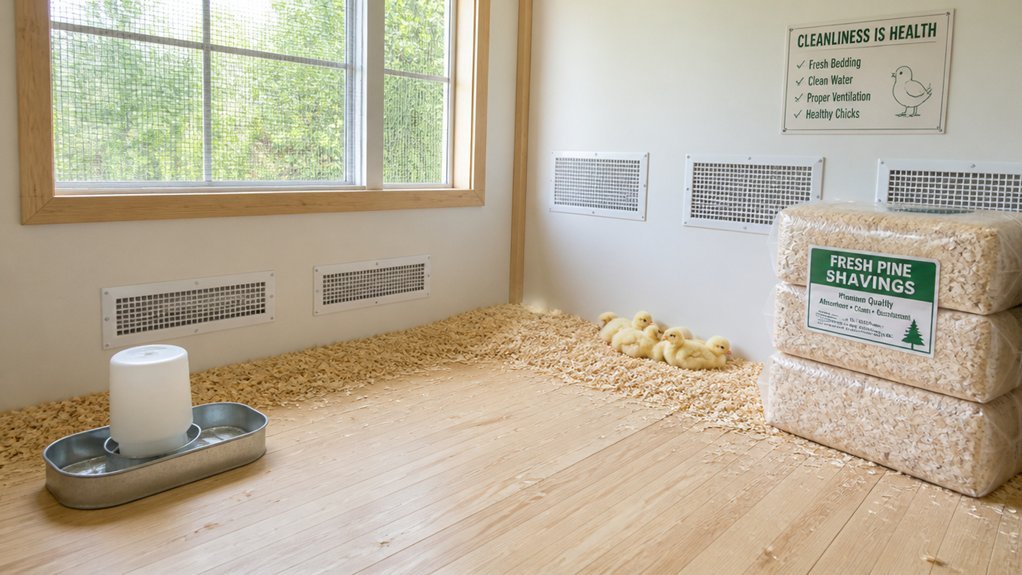
To keep newborn chicks healthy, you should use a clean, roomy brooder with dry pine shavings, steady airflow, and no drafts. Keep the temperature at 95°F the first week, then lower it 5°F each week. Give fresh water, and use electrolytes only if chicks seem stressed. Feed chick starter crumble right away. Watch for pasty butt, lethargy, or dehydration, and handle chicks gently every day. These basics are just the start of what helps chicks thrive.
Set Up a Safe Chick Brooder

Start by setting up a brooder that keeps your chicks warm, dry, and protected from drafts. Choose a clean, roomy container with solid sides so they can’t escape or get hurt. Line the floor with absorbent bedding like pine shavings, and avoid slippery surfaces that can strain their legs. Incorporate easy cleaning features such as removable liners or waterproof materials to maintain hygiene easily. Add low feeders and waterers so each chick can eat and drink easily. Keep the space free of sharp edges, loose wires, and small gaps where chicks might get trapped. You should also place the brooder in a quiet, low-traffic area to reduce stress. Check the setup daily, remove wet bedding, and sanitize surfaces often. A secure brooder helps your chicks stay safe, settle in quickly, and grow with confidence from the start.
Keep the Brooder Warm and Steady
Keeping the brooder at a steady temperature is one of the most important things you can do for newborn chicks. You should aim for about 95°F in the first week, then lower it by 5°F each week as they grow.
Watch their behavior to judge comfort: chicks huddling together usually need more heat, while chicks panting or avoiding the lamp are too warm. Place a reliable thermometer at chick level, not near the heat source, so you get an accurate reading.
Keep drafts away and avoid sudden temperature swings, since chicks can chill quickly. A stable brooder helps them eat, rest, and grow without stress. Selecting a brooder heating plate with adjustable height and temperature can further ensure a safe, consistent warmth environment.
Check the setup often, and adjust the heat gradually so your chicks stay active, balanced, and comfortable.
Give Chicks Water and Electrolytes
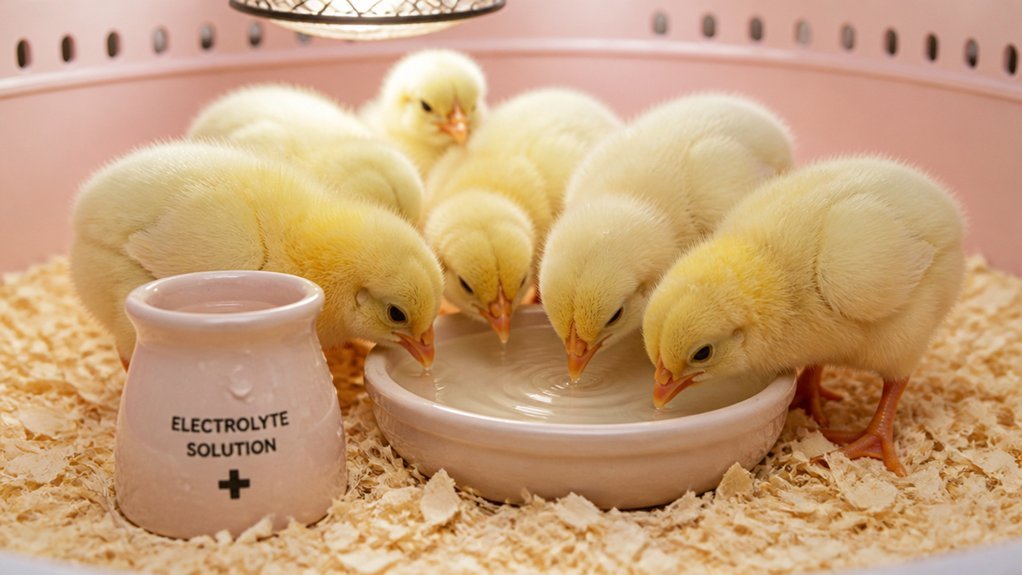
Offer your chicks clean, fresh water in a shallow dish they can reach safely.
If they seem weak or stressed, you can add a chick-safe electrolyte mix to help support hydration.
Watch for signs of dehydration, like droopy posture or tucked-in behavior, so you can act fast.
Using the correct electrolyte proportions in their water helps replace lost minerals and supports overall health during heat stress.
Clean Water Access
Even healthy newborn chicks need quick access to clean, fresh water as soon as they arrive in the brooder. You should place shallow waterers where every chick can reach them without climbing or crowding. Use clean containers, refill them often, and remove any droppings, bedding, or feed that gets into the water.
Fresh water helps chicks hydrate after travel, settle in faster, and start eating well. Check the water level several times a day, since small chicks can tip lightweight dishes or kick bedding inside. If you use a waterer with marbles or pebbles, make sure it stays stable and sanitary.
Never let the water sit long enough to grow dirty, warm, or stale. Clean water isn’t optional; it’s one of the first things that keeps your chicks strong.
Safe Electrolyte Mix
If your chicks seem stressed from shipping or slow to drink, you can give them plain water first and then a safe electrolyte mix for a short boost. Use a poultry product made for chicks, and follow the label exactly.
You can mix it with clean, lukewarm water and offer it in a shallow, easy-to-reach drinker. Keep the solution fresh, and replace it daily so it doesn’t spoil. Don’t add sugar, medication, or homemade ingredients unless a poultry vet tells you to.
Allowing chicks access to proper nutrition from the start helps support their overall health and development. Let the electrolyte water support recovery, but keep plain water available too. After the first short use, switch back to normal water so your chicks learn to drink steadily and stay on a simple, healthy routine.
Hydration Watch Signs
Watch your chicks closely for signs of dehydration, like droopy posture, panting, weak movement, or a poor appetite, and act quickly if they seem off. You should offer fresh, clean water at all times, and make sure every chick can reach it easily.
If they’re weak, dip each beak gently into water so they learn where to drink. Add electrolytes when chicks seem stressed, especially during heat, shipping, or after a rough start. Keep the brooder warm but not stuffy, because overheating can dry them out fast.
Check waterers several times a day, since bedding, droppings, or tipping can leave them without access. Watch for improvement within a few hours. If a chick stays limp, separated, or unresponsive, contact a poultry vet right away. Proper temperature monitoring can help maintain the ideal brooding environment and prevent issues related to improper heat levels.
Feed Chick Starter Crumble
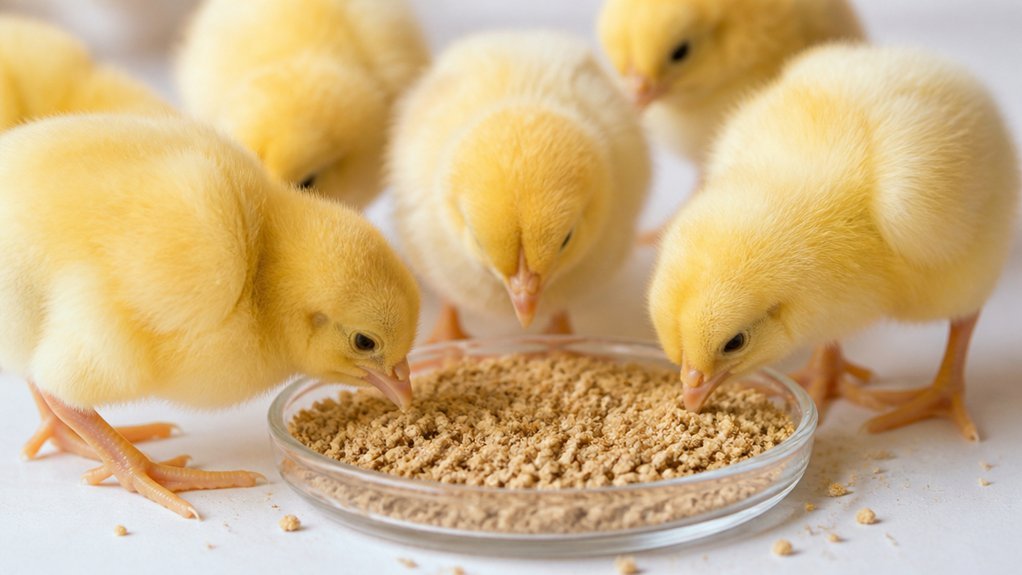
Start your chicks on a high-quality chick starter crumble as soon as they arrive, since it gives them the protein, vitamins, and minerals they need for fast, healthy growth. You should place the crumble in a shallow feeder so they can reach it easily without scratching bedding into it. Providing a balanced amino acid profile supports overall development and egg production later on. Keep fresh feed available at all times during the first weeks, and refill the feeder before it runs empty. If the pieces seem too large for tiny beaks, you can lightly crush them to make eating easier. Use a starter formulated for chicks, not layer feed, because it supports steady development. Remove damp or dirty feed right away, and store the bag in a cool, dry spot so it stays fresh and nutritious for your chicks.
Watch for Common Chick Health Problems
Watch your chicks closely for signs of illness like lethargy, pasty vents, wheezing, or loss of appetite. Early issues such as pasty butt, dehydration, and chilling can turn serious fast if you miss them. When you catch problems early, you can act quickly and help your chicks recover. Proper bedding and hygiene are crucial for maintaining a safe and clean environment that supports chick health.
Signs Of Illness
Even a healthy chick can go downhill fast, so you’ll want to spot trouble early. Watch for signs that tell you something’s wrong before it gets serious. A chick that isolates itself, stands hunched, or keeps its eyes closed may be struggling. Check for uneven breathing, drooping wings, weak legs, or a cold body. You should also notice poor appetite, wet droppings, or a dirty vent. Compare behavior often, because small changes matter. Monitoring feeding and watering habits can help identify early signs of issues.
Common Early Issues
Once you spot the early warning signs, the next step is to know the problems that show up most often in chicks. You may see pasty butt, where droppings stick to the vent and block waste. Check chicks daily and gently clean the area with warm water if needed.
Watch for dehydration too; weak chicks, wrinkled skin, and droopy posture often point to trouble. Cold stress can also slow growth and cause huddling, chirping, and lethargy, so keep the brooder warm and draft-free.
If a chick won’t eat, isolate it and offer fresh water and starter feed. You should also look for leg weakness, sneezing, or swelling, since fast action can stop a small issue from becoming a serious setback. Proper enclosure design can help prevent injuries and stress that contribute to some health problems.
Keep Bedding Clean and Dry
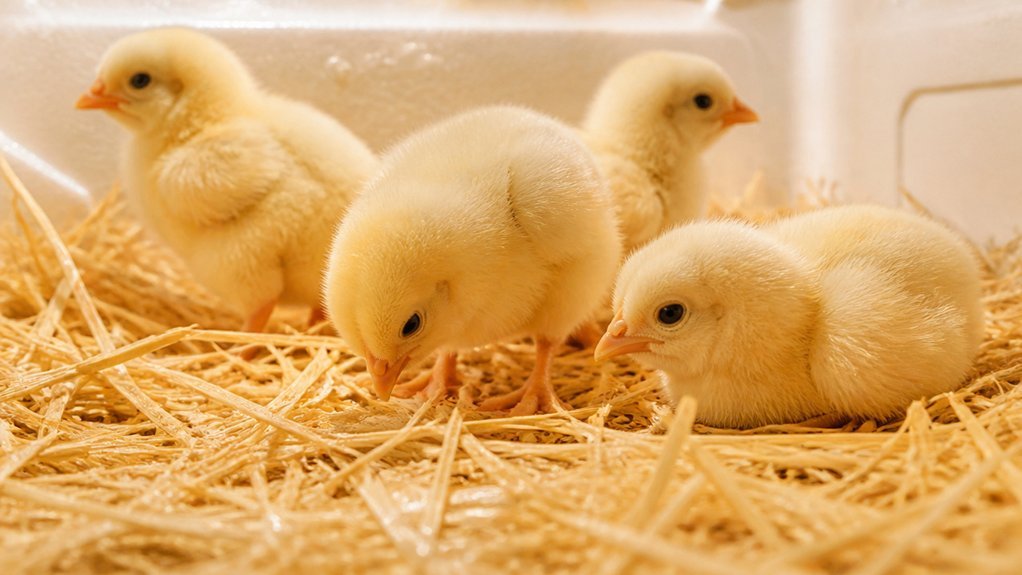
Keeping your chicks’ bedding clean and dry helps prevent illness and keeps them comfortable as they grow. Check the brooder several times a day and remove wet spots, droppings, and spilled feed right away. Replace damp bedding with fresh, absorbent material so moisture doesn’t build up.
If the litter feels cold, clumpy, or smelly, change it completely. Good airflow helps bedding dry faster, but avoid drafts that chill your chicks. Keep the waterer high enough that chicks can drink without splashing everywhere, and use a tray or raised base to limit spills.
A dry brooder also reduces odor and discourages harmful bacteria. When you stay ahead of messes, you create a healthier space that supports steady growth and strong early development. Dust control in bedding plays a vital role in maintaining a clean and healthy environment for your chicks.
Handle Chicks Safely Every Day
Handle chicks gently and calmly every day so they stay safe and learn to trust you. Approach the brooder slowly, speak softly, and let them see your hand before you lift one.
Handle chicks gently and calmly each day so they stay safe, relaxed, and learn to trust you.
Support the chick’s body with both hands, keeping its wings tucked in so it can’t flap free and injure itself. Hold it close to your chest for warmth and steadiness, but never squeeze.
Wash your hands before and after handling to protect fragile chicks from germs. If a chick struggles, lower it back into the brooder right away.
Limit handling sessions to a few minutes at first, then increase them gradually. Gentle daily contact helps you check health, spot injuries, and raise calmer birds.
Frequently Asked Questions
When Can Chicks Start Going Outdoors Safely?
You can take chicks outdoors once they’re fully feathered, usually around 6–8 weeks old, and temperatures stay above 60°F. You should start with short supervised outings, then increase time as they acclimate gradually.
How Do I Tell if a Chick Is Male or Female?
You usually can’t tell right away. You’ll need to wait for feathering, comb growth, or vent sexing. If you’re unsure, ask a breeder or vet; guessing often leads you astray.
What Vaccinations Do Newborn Chicks Need?
You usually don’t vaccinate newborn chicks yourself; breeders often handle Marek’s disease at hatch. You should ask your hatchery or vet which vaccines they gave, then follow local poultry-health advice for coccidiosis, Newcastle, or bronchitis.
How Often Should Chicks Be Handled to Stay Tame?
Handle your chicks daily for a few minutes each, starting gently once they’re settled. You’ll build trust faster with short, calm sessions, and they’ll stay tame if you’re consistent and avoid startling them.
When Should Chicks Switch to Grower Feed?
You should switch chicks to grower feed at about 6 to 8 weeks old, once they’re well-feathered and no longer need starter’s higher protein. Keep fresh water available and make the change gradually.
In Summary
By following these simple tips, you’ll give your newborn chicks the best start possible. Keep their brooder safe, warm, clean, and dry, and make sure they always have fresh water and chick starter crumble. Watch closely for any signs of illness, and handle them gently each day so they stay calm and healthy. With a little daily care, your chicks will grow strong, happy, and ready to thrive.