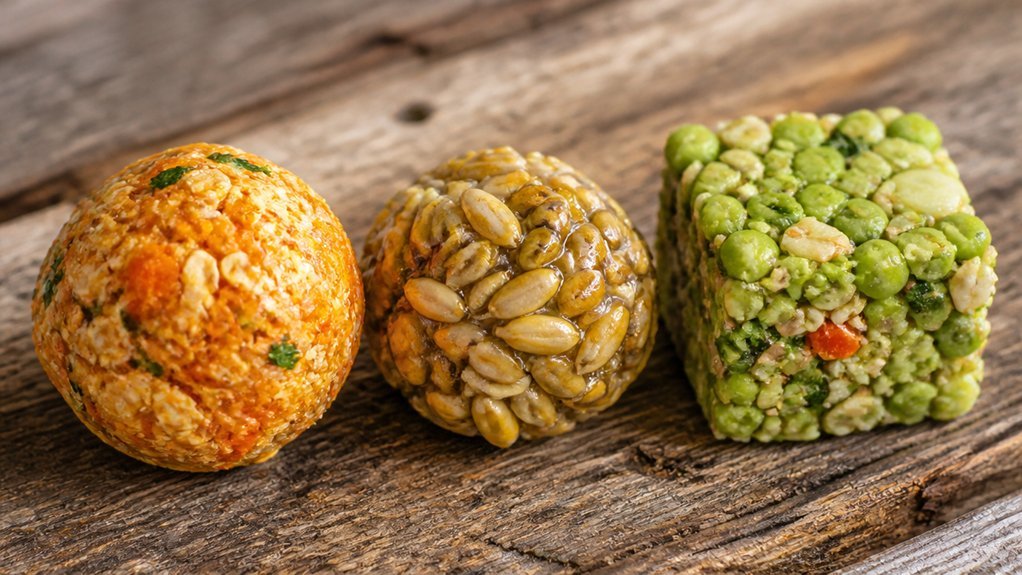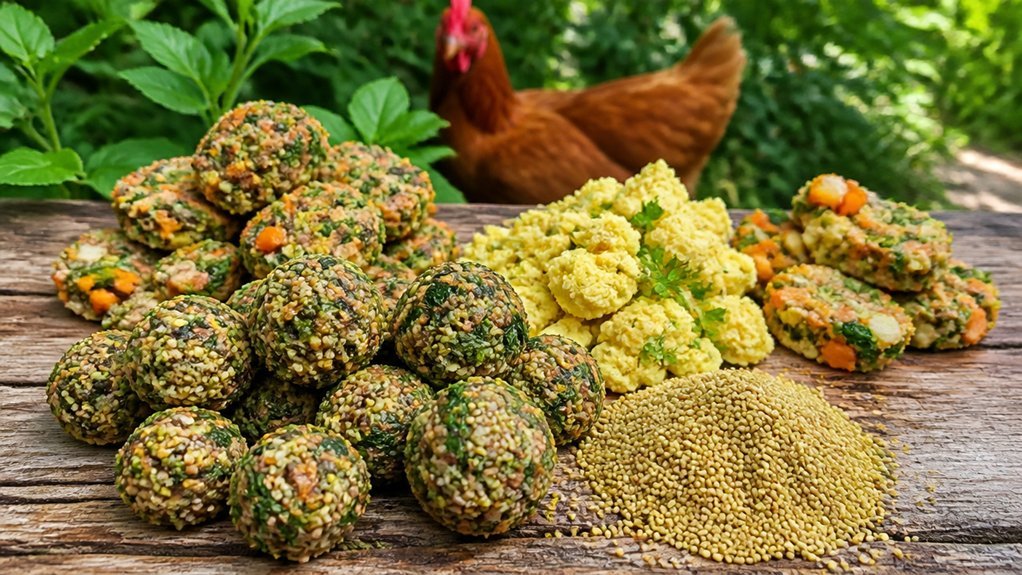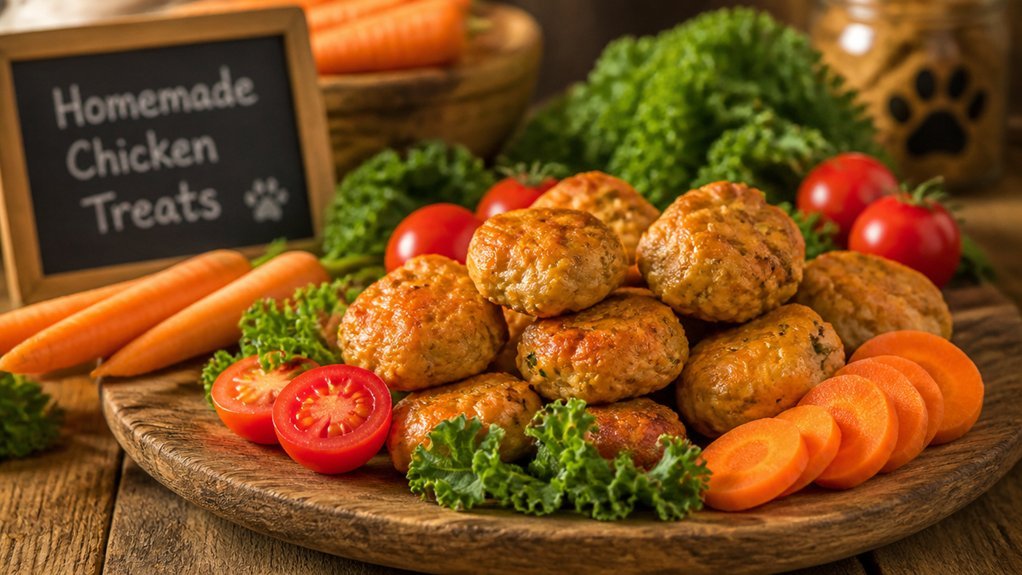
You can make healthy homemade chicken treats with veggies by mixing plain cooked chicken with tiny bits of carrots, peas, spinach, pumpkin, zucchini, or kale. These treats add nutrients, flavor, and variety without salt, fillers, or preservatives. Keep portions small so they don’t replace feed, and serve only a few pieces per bird. You can bake or chill them for easy prep, and if you keep going, you’ll find even more simple tips and safe ideas.
Why Veggie Chicken Treats Are a Good Choice
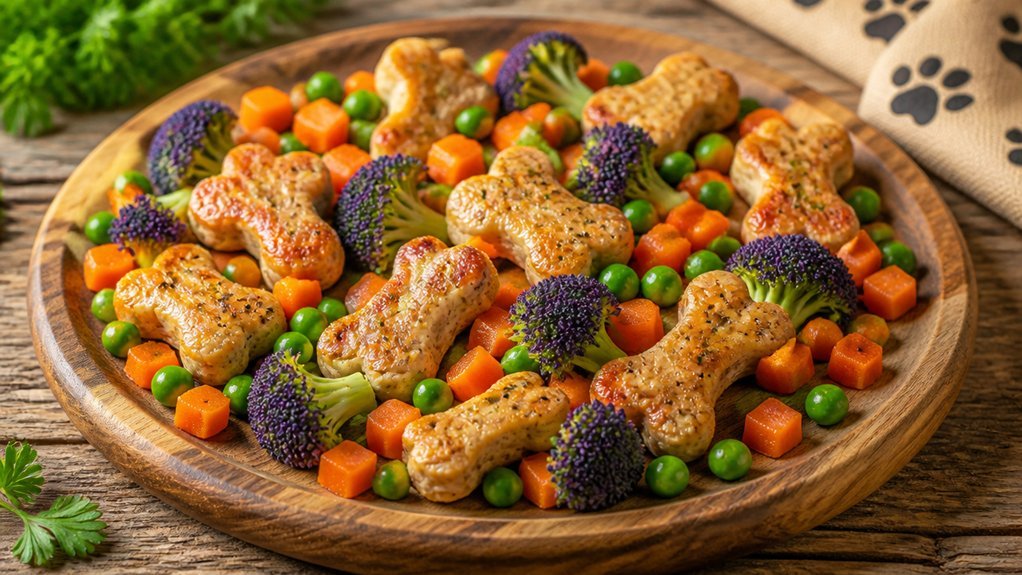
Veggie chicken treats are a smart choice because they give your dog extra nutrients without adding a lot of unnecessary fat or calories. You can boost your dog’s snack time with ingredients that support overall health while still keeping the recipe simple.
Veggie chicken treats add nutrients and flavor, giving your dog a lighter snack without the extra fat.
When you mix chicken with vegetables, you add flavor, texture, and variety without relying on processed fillers. That means you can reward your dog with something homemade and more balanced than many store-bought options.
You also control every ingredient, so you can avoid excess salt, preservatives, and artificial additives. If your dog needs a lighter treat, these bites can fit into its routine without ruining its diet.
You’ll feel good knowing you’re offering a wholesome snack that supports better eating habits. Probiotic support can further enhance your dog’s gut health and overall well-being.
Best Vegetables for Chicken Treats
When you make chicken treats at home, the vegetables you choose can make a big difference in both nutrition and taste. You can mix in carrots for a natural sweetness that many chickens enjoy, or use peas for a soft, protein-rich bite.
Finely chopped spinach adds color and nutrients, while pumpkin brings a smooth texture and gentle flavor. Zucchini works well too because it blends easily and keeps treats moist. You can also try shredded broccoli stems or small bits of kale for extra variety.
Keep pieces small so your chickens can peck and eat them easily. By rotating a few vegetables, you help prevent boredom and keep your homemade treats interesting, colorful, and appealing. Particle size plays a role in how well chickens can digest and enjoy these treats, so cutting vegetables into appropriate sizes can enhance their health benefits.
Safe Ingredients for Chicken Treats
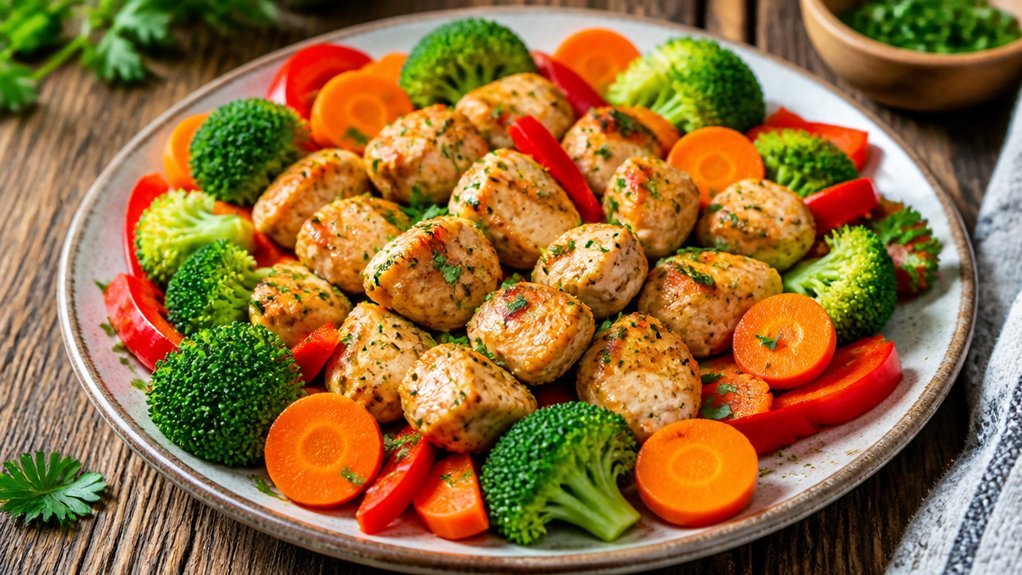
Choosing safe ingredients is key when you make chicken treats at home, because not every food that seems healthy is good for hens. You should stick with plain, fresh foods that support their diet and avoid anything salty, sugary, or seasoned. Safe choices can add variety without upsetting digestion or crowding out feed. You can also offer leafy greens and cooked grains in moderation. Always skip avocado, chocolate, onions, and moldy food, since these can harm your flock. Additionally, using balanced vitamins and minerals in treats helps support their overall health and egg production.
How to Make Chicken Treats at Home
You can start by choosing fresh chicken and crisp, dog-safe veggies for the best flavor and nutrition.
Then mix the ingredients well so the chicken and veggies blend evenly.
After that, shape the mixture into bite-sized treats and bake them until they’re firm and cooked through.
Choosing Fresh Ingredients
Fresh ingredients make the biggest difference in homemade chicken treats, so start with plain, high-quality chicken and simple add-ins that are safe and easy to digest. You’ll protect your dog’s health by choosing ingredients you can trust, and you’ll feel better knowing every bite starts clean and fresh. Look for:
- Boneless, skinless chicken with no seasoning
- Crisp carrots that smell sweet, not sour
- Fresh green beans with firm pods
- Pumpkin puree with no sugar or spices
Wash produce well, trim away bruised spots, and discard anything slimy or wilted. If the chicken smells off or feels sticky, don’t use it. Fresh ingredients help you create treats your dog can enjoy with confidence, and they make your kitchen feel calm, caring, and safe. Using proper storage techniques ensures your ingredients stay fresh longer, maintaining their nutritional value.
Mixing Chicken And Veggies
Once your ingredients are prepped, mix the chicken and veggies in a clean bowl so the flavors stay simple and dog-safe. You can use cooked, finely shredded chicken and soft vegetables like carrots, peas, or pumpkin.
Keep the pieces small so they blend evenly and your dog can eat them easily. Stir gently until the mixture looks consistent, but don’t overwork it, since you want a light texture.
If the mix feels too dry, add a small spoonful of plain water or unsalted broth to help it come together. If it feels too wet, add a bit more chicken or mashed veggie.
Taste isn’t the goal here; balance is. You’re building a wholesome base that’s easy to portion, shape, and bake later. Proper mixing ensures even distribution of ingredients and enhances the overall texture of the treats.
Shaping And Baking
With the chicken-and-veggie mixture ready, shape it into small, even portions so they bake evenly and stay easy for your dog to chew.
You can roll tiny balls, press them into flat bites, or use a cookie cutter for fun shapes. Place them on a lined baking sheet with a little space between each one.
A balanced treat with protein content supports your dog’s overall health and energy levels.
- Feel proud as you create a wholesome treat from scratch.
- Watch your dog’s tail wag at the smell filling your kitchen.
- Enjoy the comfort of knowing exactly what’s inside each bite.
- Celebrate a simple act that shows real care.
Bake at a low temperature until the treats are firm and lightly golden.
Let them cool completely before serving so your dog can enjoy them safely.
Easy Baked Chicken Treat Recipe
Whip up these easy baked chicken treats by cutting lean chicken breast into small, bite-sized pieces, then baking them low and slow until they’re fully cooked and pleasantly chewy.
You can keep the recipe simple by using just chicken and a few finely chopped veggies for extra color and nutrients. Mix the pieces with a little grated carrot or zucchini, then spread them on a lined baking sheet so they cook evenly.
Bake until the chicken feels firm and the edges turn lightly golden. Let the treats cool completely before you serve them.
Store leftovers in the fridge in an airtight container, and use them within a few days. These homemade bites give you a wholesome, protein-rich reward your dog can enjoy.
No-Bake Chicken Treat Ideas
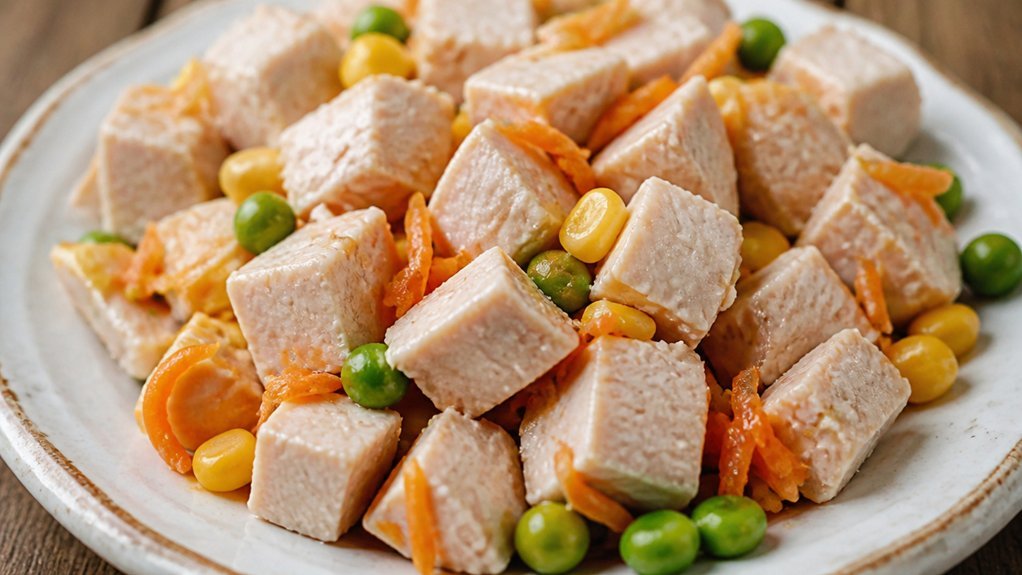
You can whip up quick chicken bites with cooked chicken, then mix in a few chopped veggies for extra flavor and crunch. A little pecking enrichment can also be incorporated by adding small bits of grains or seeds into the mixture for added nutrition and to encourage foraging behavior. Shape them into small portions, and let them chill so they hold together well. Once they’re firm, you can serve them right away as a simple no-bake treat.
Quick Chicken Bites
Quick chicken bites make an easy no-bake option when you want a fast homemade treat your dog will love. You can blend cooked chicken until it’s finely shredded, then press it into small bite-size pieces and chill them until firm.
They’re simple, fragrant, and perfect when you need a wholesome reward without turning on the oven. Additionally, using natural ingredients ensures your treats are healthy and free from artificial additives.
They’re simple, fragrant, and perfect when you need a wholesome reward without turning on the oven.
- You save time on busy days.
- Your dog gets a tasty, protein-rich snack.
- You control every ingredient.
- You create a treat that feels made with love.
Keep portions small so you can reward often without overdoing it. Store them in the fridge and use them within a few days for the best texture and freshness.
Veggie Mix-Ins
Adding a little dog-safe vegetable to your no-bake chicken treats can boost flavor, texture, and nutrition without making the recipe complicated. You can stir in finely shredded carrots for a mild sweetness, chopped spinach for extra color, or mashed pumpkin for a soft, savory bind. Incorporating organic grains from your ingredients can further enhance the nutritional profile of your treats. Small bits of green beans, zucchini, or peas also work well if you want more variety. Keep the pieces tiny so your dog can chew them easily and the mixture stays cohesive. Use plain, cooked vegetables with no salt, butter, onion, or garlic. Start with a small amount so the chicken flavor still leads, then adjust based on your dog’s preference. These veggie mix-ins let you make treats that feel fresh, look appealing, and offer a little nutritional boost in every bite.
Chill And Serve
Once the mixture is shaped, chilling turns it into an easy no-bake treat that holds together well and feels invigorating for your dog. Electrolyte balance is essential for maintaining energy and hydration, especially during warm days. Place the bites on a lined tray, cover them, and refrigerate until firm, usually 30 to 60 minutes. You’ll get cleaner edges, easier handling, and a cool texture your pup may love. Try these simple serving ideas: 1. Offer one treat after a walk. 2. Break a larger piece into training rewards. 3. Serve chilled on warm days for comfort. 4. Store extras in the fridge for quick, happy use. Keep portions small and watch your dog enjoy each bite. If the treats soften, chill them again before serving.
How Many Chicken Treats Can Chickens Eat?
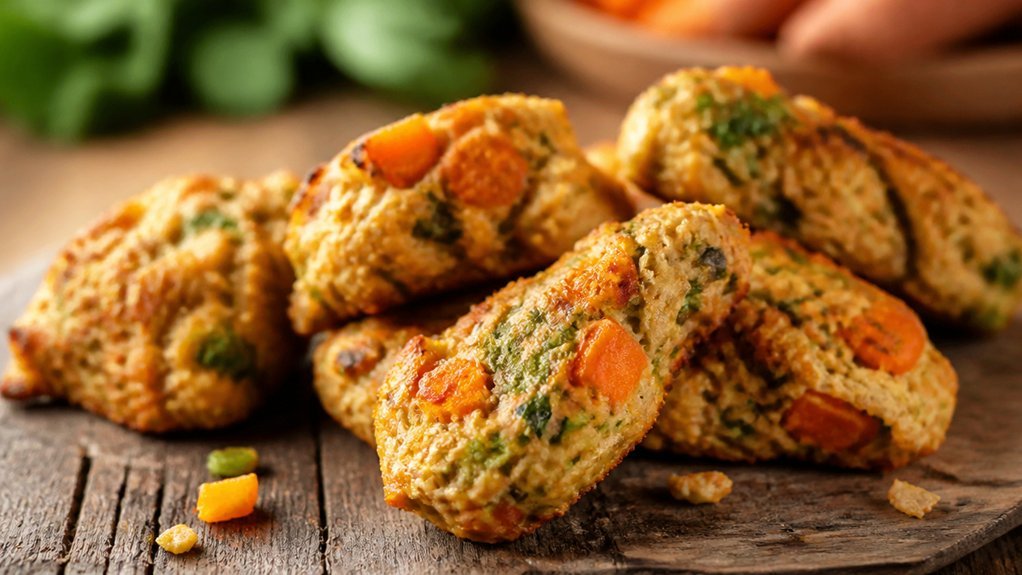
How many chicken treats can chickens eat? You should keep treats to a small part of your flock’s daily intake, with the bulk coming from a balanced feed. A good rule is to offer treats as an occasional snack, not a meal replacement.
Hand out only a few pieces per bird, and watch how quickly they finish them. If they gobble treats first and ignore their feed, you’re giving too much. Limit treats so they don’t crowd out nutrients, and always make sure fresh water is available.
You can spread treats out across the flock to reduce competition and keep everyone included. When you keep portions modest, you help your chickens stay healthy, active, and enthusiastic for their next treat.
Chicken Treat Feeding Guide by Age
Chickens need treats tailored to their age, because chicks, growers, and adults have very different nutritional needs.
You can offer tiny, soft veggie bits to chicks only after they’re eating starter feed well, and keep treats rare so they stay focused on growth. For growers, give small portions that support energy without crowding out balanced feed. Adult hens can enjoy a little more variety, but treats should still stay under control.
- Chicks: use soft, finely chopped pieces.
- Growers: keep servings small and simple.
- Adults: add more veggie variety.
- Always: watch how your flock responds.
When you match treats to age, you protect health, reduce waste, and make every snack feel like a reward your flock actually needs.
How to Store Homemade Chicken Treats
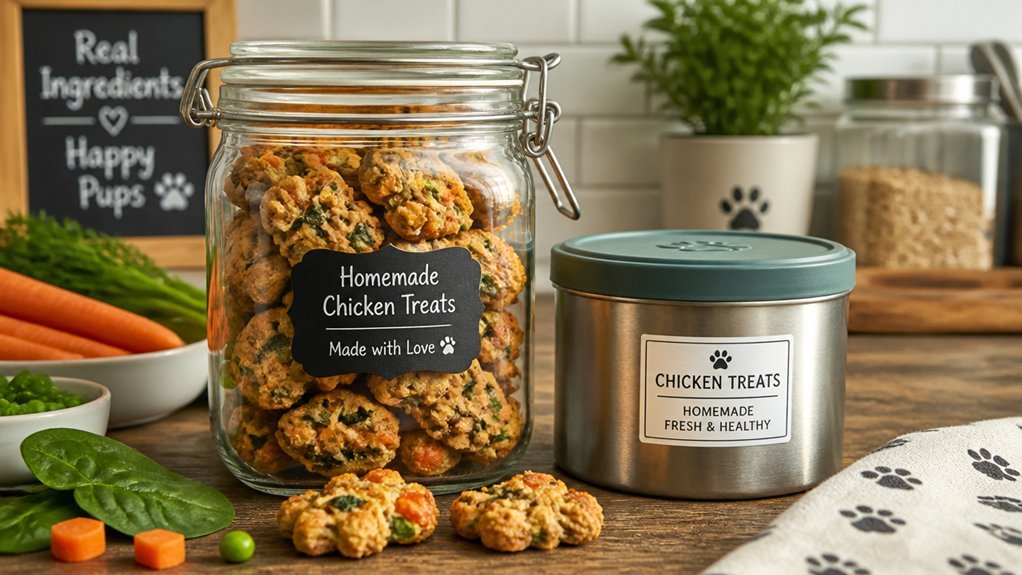
After you’ve picked treats that fit your flock’s age, store them so they stay fresh and safe to feed. Let the treats cool completely before you pack them away. Use an airtight container to keep out moisture and odors, and label it with the date you made them.
For short-term storage, keep the container in the refrigerator and use the treats within a few days. If you want them to last longer, freeze portions in small bags or trays so you can thaw only what you need.
When you’re ready to serve, check for any off smell, slimy texture, or mold, and discard anything that looks questionable. Keep treats separate from regular feed, and always wash your hands and tools after handling them.
Common Mistakes to Avoid
Even the best homemade chicken treats can cause problems if you make a few simple mistakes. You want every bite to support your dog, not upset its stomach or waste your effort. Watch for these common errors:
Even the best chicken treats can go wrong with a few simple mistakes.
- Using onions, garlic, or too much salt, which can hurt your dog fast.
- Overcooking the chicken, leaving treats dry, hard, and less appetizing.
- Adding too many veggies at once, which can cause gas or loose stools.
- Cutting pieces too large, making chewing risky for smaller dogs.
You should also cool treats fully before storing them. When you keep portions small, use safe ingredients, and bake evenly, you create snacks your dog’ll love and you can trust.
Frequently Asked Questions
Can I Use Leftover Cooked Chicken for Treats?
Yes, you can use leftover cooked chicken, as long as you remove bones, skin, seasoning, and excess fat. You’ll want plain, fresh chicken only, and you should refrigerate or freeze treats promptly after making them.
Are Veggie Chicken Treats Suitable for Baby Chicks?
No, you shouldn’t feed veggie chicken treats to baby chicks. You can offer chick starter feed, and you can give tiny, soft bits only if your vet approves, because chicks need balanced nutrition.
Can I Freeze Homemade Chicken Treats for Later Use?
Yes, you can freeze homemade chicken treats for later use. You’ll keep them fresh longer if you cool them first, portion them, and seal them tightly. Thaw only what you’ll feed soon.
What Signs Show a Chicken Dislikes a Treat?
You’ll notice a chicken dislikes a treat if it turns away, pecks once then stops, avoids the dish, or acts uneasy. You can offer smaller pieces and watch whether it eats enthusiastically or ignores them.
Should Treats Replace a Chicken’s Regular Feed?
No, you shouldn’t replace your chicken’s regular feed with treats; you’ll unbalance nutrition. Offer treats sparingly, keep feed available, and use treats only as a small supplement to support health and productivity.
In Summary
Healthy homemade chicken treats with veggies are a simple way to support your flock with tasty, nutritious snacks. When you choose safe ingredients, keep portions small, and serve treats in moderation, you help your chickens stay happy and healthy. You can also store your homemade treats properly to keep them fresh longer. With a little prep, you’ll give your chickens a wholesome treat they’ll love without risking their daily balanced diet.