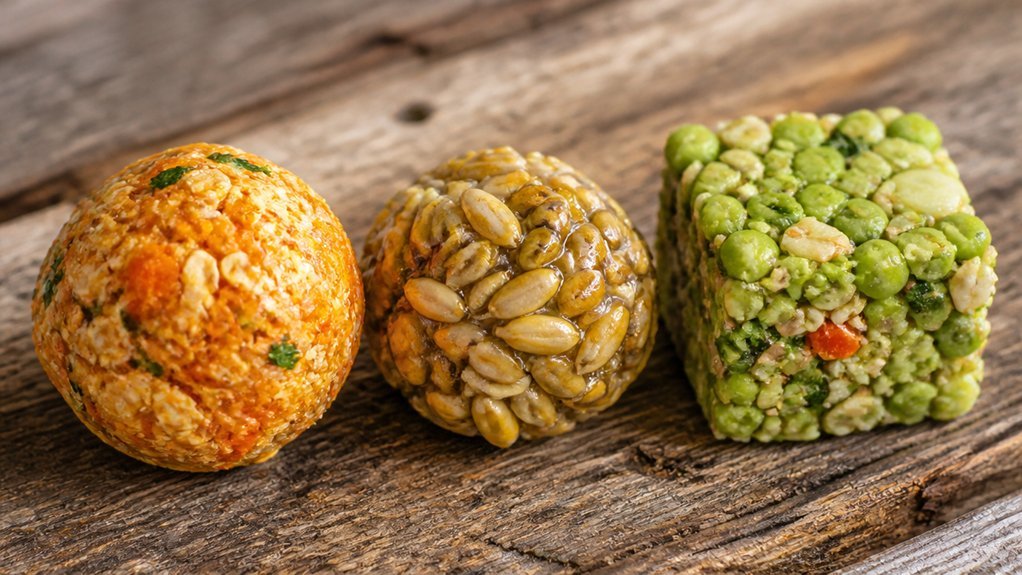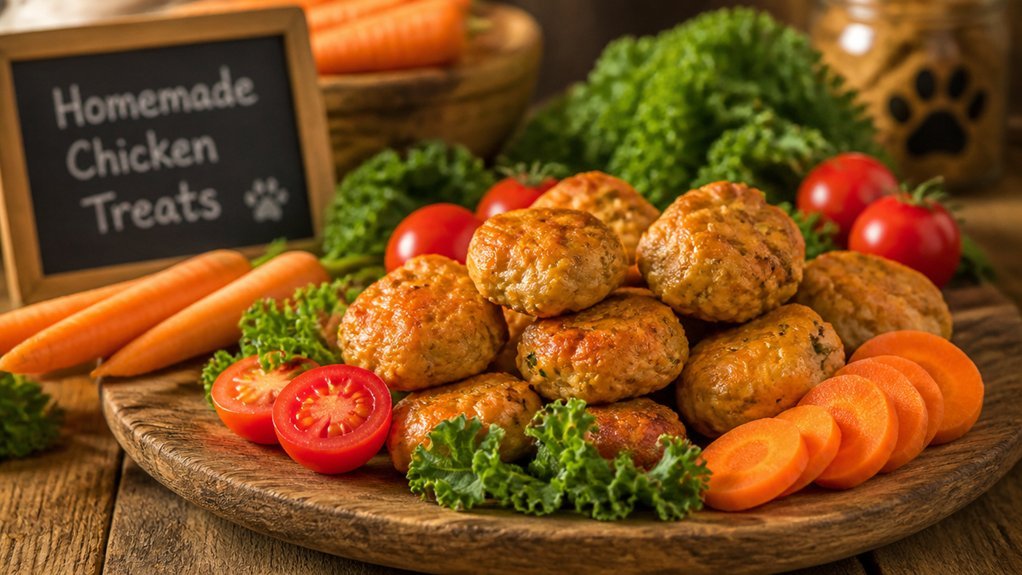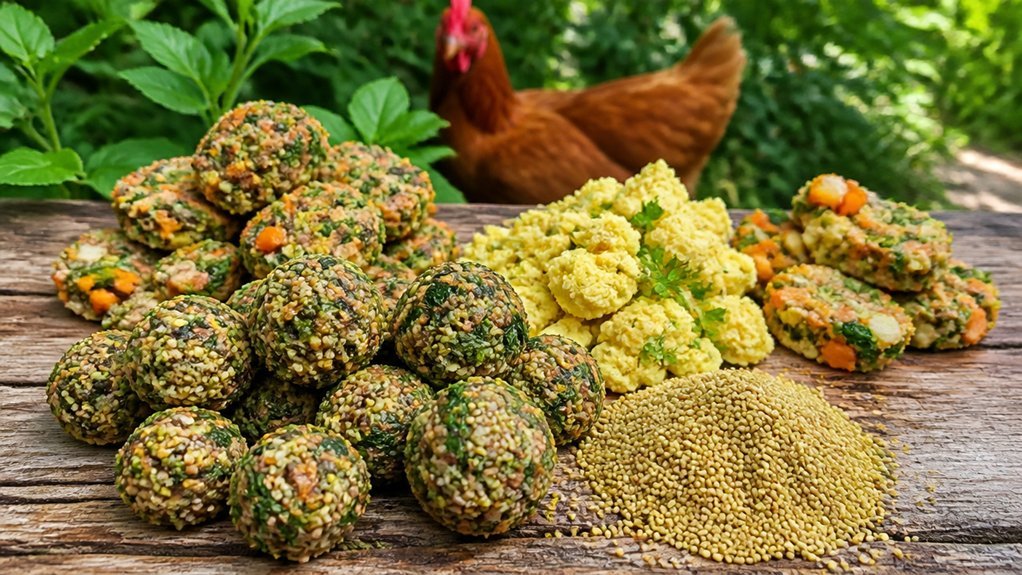
For picky backyard chickens, you’ll usually get the best response from simple homemade treats like chopped kale, cucumber, zucchini, berries, watermelon, scrambled eggs, plain yogurt, and mealworms. Offer them in tiny amounts, ideally in the morning or late afternoon, so they don’t fill up on snacks instead of layer feed. Rotate treats to keep interest high, and remove leftovers quickly. If you want to please even fussy hens, there’s plenty more to try.
Best Homemade Treats Chickens Love
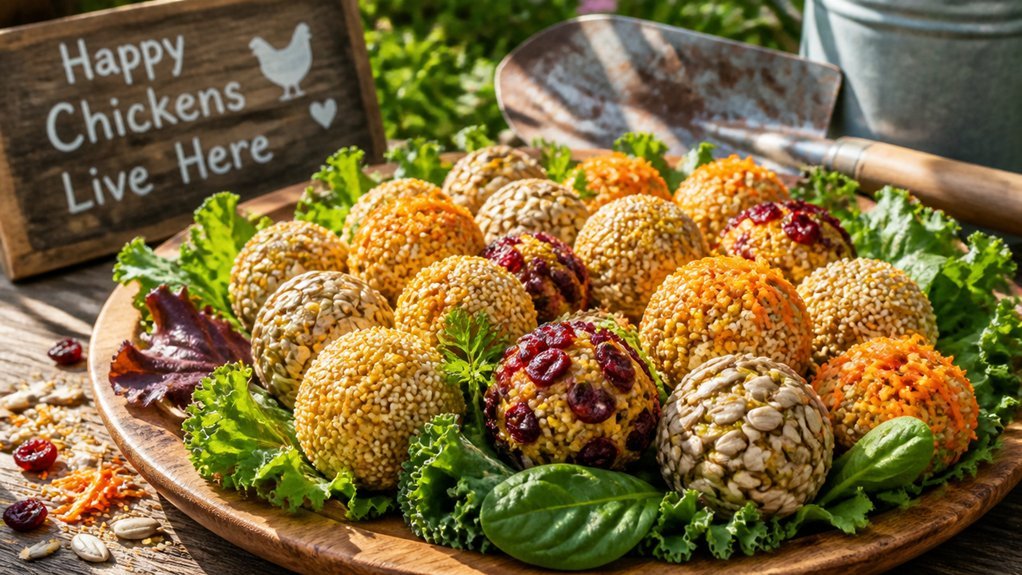
If you want to spoil your flock a little, the best homemade treats are simple, fresh, and easy for chickens to enjoy. You can offer chopped leafy greens, cooked oats, scrambled eggs, and plain cooked rice for a quick boost of flavor and nutrition.
Chickens also love small pieces of fruit, like berries, apples, and melon, as long as you remove seeds and pits. Fresh herbs such as mint, parsley, and basil can add variety without much effort.
Try mixing treats with their regular feed so they peck through it naturally. You should keep portions small, serve them fresh, and rotate options to keep your flock interested. With a little creativity, you’ll turn everyday ingredients into treats your chickens truly look forward to. Good treats can also support egg quality, making them a great addition to your flock’s diet.
Why Backyard Chickens Get Picky
Your chickens can get picky when seasonal forage changes what they find in the yard, so their tastes shift with the weather. You’ll also notice that each bird has its own personality, and some flock members simply prefer certain treats over others. When you understand those differences, you can choose homemade snacks they’re more likely to eat. Additionally, providing varied grains can encourage natural foraging behaviors and keep your flock active and engaged.
Changing Seasonal Forage
As the seasons change, so does what your chickens can find, and that shift often makes them seem extra picky. In spring, they graze on 嫩 greens and bugs; by late summer, dry patches cut those options down.
You’ll notice they peck more at fresh scraps when pasture thins, then ignore feed that once disappeared fast.
- Offer chopped herbs when weeds fade.
- Mix in grated squash or melon during dry spells.
- Scatter seeds or cracked grains when insects get scarce.
- Rotate safe garden scraps so their diet stays varied.
- Incorporate appropriate grit types to aid digestion as their foraging options change.
When forage changes, your flock also changes what it craves. If you match treats to the season, you’ll keep them interested without wasting food.
Flock Personality Differences
Even in the same coop, chickens don’t all want the same thing. You’ll notice bold hens rush treats first, while shy ones hang back and peck after the crowd leaves.
Some birds love sweet corn, berries, or warm oatmeal; others reject anything sticky, wet, or new. Breed, age, rank, and past experience all shape what each chicken trusts.
When you offer treats, watch which birds guard the bowl, which nibble cautiously, and which ignore it completely. That tells you a lot about their preferences.
Rotating small portions of different foods and letting each hen choose without pressure helps identify their individual tastes. You’ll get better results if you respect their quirks instead of forcing one favorite on the whole flock. Understanding probiotic strain diversity can also help support their gut health as part of a balanced approach to treats and nutrition.
Safe Ingredients for Chicken Treats
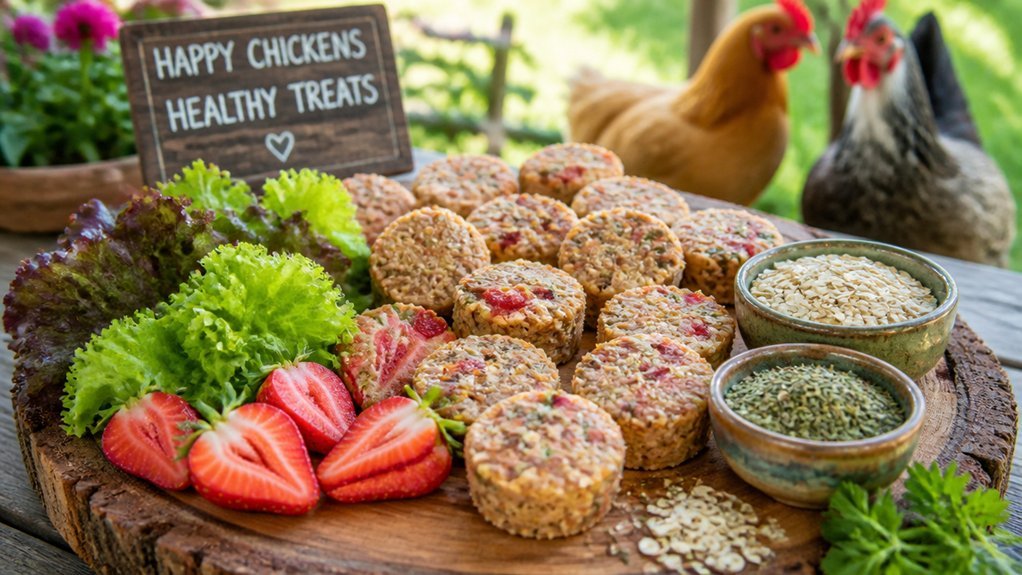
The best chicken treats start with simple, wholesome ingredients that add variety without upsetting your flock’s diet. You can keep things safe by choosing feed-friendly staples and skipping anything salty, sugary, moldy, or heavily processed.
Always wash produce, chop it into manageable pieces, and offer treats sparingly so they don’t crowd out balanced feed. Watch your hens’ droppings and energy after new foods, and stop if you notice loose stool or picky behavior. For added nutritional benefits, consider incorporating natural treats like dried mealworms, which provide essential proteins and fats to support feather growth and overall health.
Best Fruit Treats for Picky Chickens
You can offer your chickens safe fruits like berries, melon, and apples as tasty treats. Keep fruit in moderation so you don’t crowd out their regular feed, and use small portions to avoid waste. If your flock turns picky, try frozen fruit pieces for a cool, fun treat they’ll often peck at enthusiastically. Incorporating organic feed options into their diet can also support overall health and egg production.
Safe Fruits for Chickens
When you want to tempt picky chickens with a healthy snack, fruit can be a great choice because it’s sweet, juicy, and easy to serve.
You can offer a few safe options that many birds enjoy, and each one brings variety to the coop. Try these favorites:
- Apples — remove the seeds and cut them into bite-sized pieces.
- Berries — blueberries, strawberries, and raspberries are easy for chickens to peck.
- Melons — watermelon, cantaloupe, and honeydew add moisture and flavor.
- Bananas — soft slices make a simple treat your flock may love.
You can mix fruits into a dish or serve them plain. Fresh fruit can keep your chickens interested and give them a tasty break from their usual feed.
Serving Fruit in Moderation
Even healthy fruit treats should stay in the “little bit” category, since too much sugar can throw off a chicken’s balanced diet and reduce their interest in regular feed. You can offer fruit as a small reward, not a meal replacement, so your flock still gets the protein, calcium, and fiber it needs.
To keep the treats fresh and prevent attracting pests, it’s best to remove any uneaten fruit before it spoils. Additionally, using pest-resistant containers for storing leftover fruit can help maintain cleanliness and reduce pest activity around your coop.
Aim for tiny portions a few times a week, and watch how your birds respond. If one hen hogs the treat, spread it around so everyone gets a fair bite. Remove any uneaten fruit before it spoils, since spoiled food can attract pests and upset digestion.
Frozen Fruit Treat Ideas
For picky chickens, frozen fruit can turn a simple snack into something more tempting and revitalizing. You can freeze small pieces in clean water or plain yogurt, then offer them on hot afternoons to encourage pecking and reduce boredom. Incorporating water-soluble electrolytes into the freezing process can help replenish minerals lost during heat stress, making this treat even more beneficial for your flock. Choose fruits that are safe, soft, and easy to nibble once thawed.
- Berries: Freeze blueberries, raspberries, or chopped strawberries for a colorful treat.
- Melon: Cube cantaloupe or watermelon, then chill them until firm.
- Banana: Mash ripe banana and freeze it in ice cube trays.
- Apple bits: Mix peeled apple pieces with water for a crisp, cool snack.
Keep portions small and remove leftovers before they melt and spoil.
Veggie Treats Chickens Gobble Up
Veggies make some of the best homemade treats for chickens, especially when you want to add variety and extra nutrients to their diet. You can chop cucumbers, zucchini, lettuce, kale, or grated carrots into bite-size pieces so your flock can peck them easily.
Chickens often love leafy greens, and you can hang a bunch of kale or romaine in the run for a simple foraging game. Steamed pumpkin or sweet potato also works well when it’s cooled and mashed lightly.
Keep portions small so treats stay balanced with their regular feed. Avoid adding salt, oil, or seasoning, and remove any leftovers before they spoil. When you offer fresh vegetables, you give your chickens a tasty snack that keeps them active and curious. Using natural, biodegradable bedding can also help maintain a clean coop environment that supports their overall health.
Protein Treats for Extra-Picky Chickens
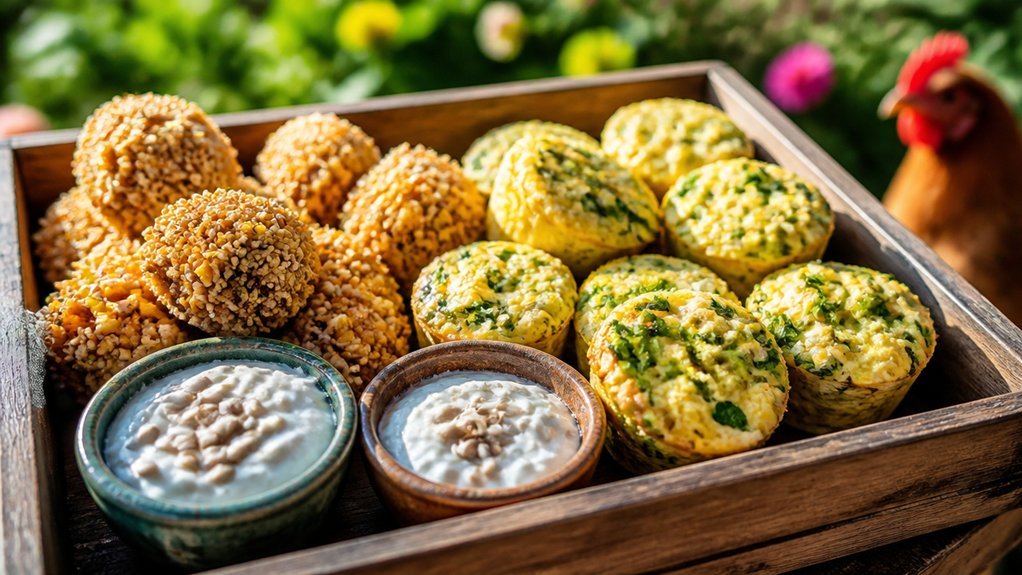
If your flock turns up its beaks at veggies, protein treats can win over even the pickiest chickens. You can offer these rich bites when you need a fast appetite boost. Keep portions small so you don’t crowd out their regular feed.
Try these favorites:
- Scrambled eggs, cooled and chopped
- Mealworms, dried or live
- Plain cooked beans, mashed
- Tuna, drained and flaked
You can mix a little into scratch or serve it by hand to build trust. Protein treats help support feather growth, egg laying, and recovery after stress. Balanced nutrition is essential for maintaining healthy shells and overall flock vitality.
Use them as a reward, not a meal replacement, and your chickens may start racing you to the coop.
Easy Frozen Treats for Hot Days
When the weather turns sweltering, frozen treats can help your chickens cool down while giving them a little enrichment.
You can mix chopped berries, peas, corn, or mealworms into water or plain unsweetened yogurt, then freeze the mixture in silicone molds, ice cube trays, or small cups. Once the treats harden, toss one into the run or offer a few by hand. Your flock will peck, scratch, and lick at the cold snack, which can make hot afternoons more bearable.
Keep portions small so the treats stay exciting and don’t crowd out their regular feed. If you use yogurt, choose a simple version without added sugar or artificial sweeteners. Always provide fresh water nearby, since frozen treats should supplement, not replace, hydration.
Simple Baked Treats Chickens Prefer
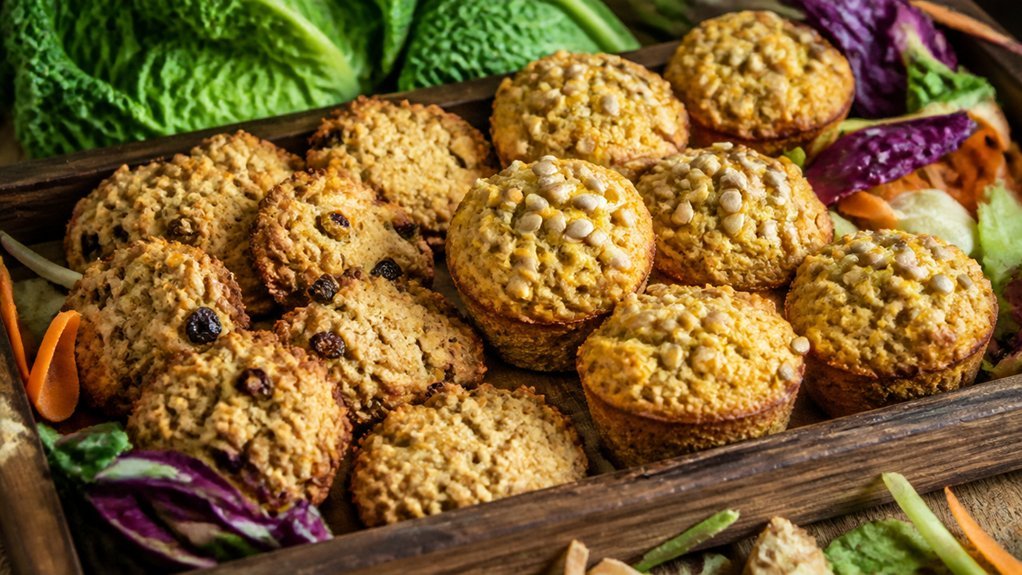
Baked treats are a simple way to add variety to your flock’s routine, and you can make them with ingredients you likely already have. Mix oats, mashed pumpkin, cornmeal, or chopped greens into a thick batter, then bake small portions until firm.
Baked treats add easy variety to your flock’s routine, using simple ingredients you likely already have.
Chickens usually prefer treats that are warm, easy to peck, and lightly textured.
- Bake oats with water for a simple, filling bite.
- Combine mashed sweet potato and cracked grain for a soft snack.
- Press chopped herbs into muffin tins for easy servings.
- Cool baked pieces fully before offering them outside.
Keep portions modest so treats stay occasional, not a meal replacement. You’ll learn what your birds like best by watching which pieces disappear first, and that makes future batches easier to tailor.
Treats for Chickens During Molting
When your chickens molt, you can offer protein-rich snacks like scrambled eggs, plain yogurt, or mealworms to help support new feather growth.
You can also give gentle molting treats that are easy to digest and won’t add stress to their system. Keep treats simple and nourishing so you’re helping them through this tough shedding period.
Protein-Rich Snack Choices
During molting, your chickens need extra protein to rebuild feathers, so choose snacks that support that effort without overloading their diet. You can offer small portions of high-protein treats a few times a week, keeping them as extras, not staples.
Stick to fresh, clean options and remove leftovers quickly so they stay safe and appealing.
- Scrambled eggs: Serve plain, cooled eggs for a fast protein boost.
- Plain Greek yogurt: Offer a spoonful for protein and a little variety.
- Mealworms: Use them sparingly since they’re rich and popular.
- Cooked beans: Give soft, fully cooked beans with no salt or seasoning.
Watch how your flock responds, and adjust portions if they finish everything too quickly.
Easy Feather Support
Besides boosting protein, you can make molting easier with treats that help your chickens feel comfortable while new feathers grow in.
You can offer finely chopped cucumber, watermelon, or cooked squash for extra moisture and a revitalizing bite. Mix in plain oats or soaked sunflower seeds to give them steady energy without overloading their crop. A little scrambled egg can also help when they’re shedding hard and looking rough.
Keep treats soft, easy to peck, and served in small amounts so your flock still eats balanced feed first. Fresh water matters just as much, so place it nearby and change it often.
When you keep snacks simple and soothing, you help your chickens stay calm, hydrated, and ready to grow back strong feathers fast.
Gentle Molting Treats
Molting can leave chickens a little tired and touchy, so gentle treats should be soothing, easy to digest, and worth pecking at. You can support them with soft foods that add protein, moisture, and comfort without upsetting their crop.
Try these:
- Scrambled eggs: warm, plain, and packed with protein for feather regrowth.
- Cooked oats: serve them soft and slightly warm for easy eating.
- Mashed pumpkin: it’s gentle, hydrating, and helps keep digestion steady.
- Chopped mealworms: offer a small handful for a tasty protein boost.
Keep portions small, since treats should complement their feed, not replace it. Fresh water matters too, because molting birds need extra support.
With calm, nourishing bites, you’ll help your flock get through this shed with less stress and better energy.
How Many Treats Chickens Can Eat
So how many treats can chickens eat without overdoing it? You should keep treats to about 10% of your flock’s daily food intake, with the other 90% coming from a balanced layer feed or appropriate ration.
For most hens, that means just a small handful of extras per bird each day, not a full bowl. Offer treats after they’ve eaten their main feed, so they don’t fill up on snacks. Watch their condition, egg production, and energy level; if either drops, cut back.
You can also split treats into smaller servings and give them once or twice a day. When you keep portions modest, you’ll satisfy picky eaters without disrupting nutrition, digestion, or routine. Consistency matters more than size.
Foods to Avoid in Chicken Treats
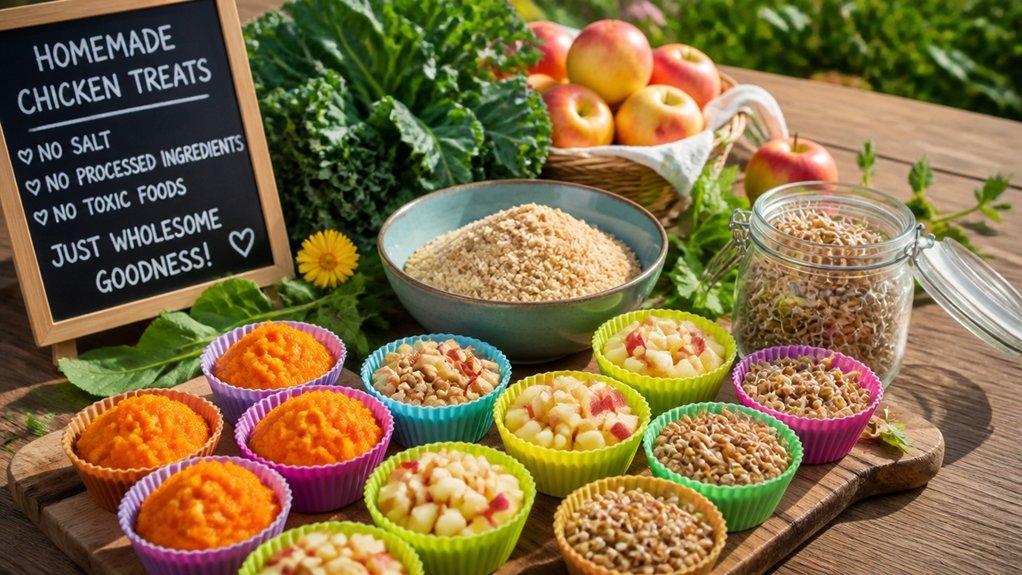
Even healthy treats can cause trouble if you choose the wrong foods, so avoid anything moldy, salty, sugary, greasy, or heavily processed. You should also skip foods that upset digestion or strain your flock’s organs.
Some common risks include items that seem harmless but can quickly make chickens sick.
- Avocado pits and skins — they can be toxic.
- Chocolate, caffeine, and alcohol — never give these to chickens.
- Raw beans and uncooked dry rice — they can cause digestive problems.
- Onion, garlic, and spoiled leftovers — they may irritate or poison birds.
Check every snack before you offer it, and trust your nose if something smells off. When you keep treats simple and fresh, you protect your chickens and keep your flock thriving.
How to Offer Treats to Picky Chickens
If your chickens turn their beaks up at a new snack, start small and keep it simple. Offer one treat at a time so you can see what they like. Scatter tiny pieces on clean ground or mix a few bits into their usual feed.
You can also hand-feed shy hens to build trust, but stay calm and let them approach on their own.
Try treats in the morning or late afternoon, when they’re most active. If they ignore a food, remove it and try again another day. Keep portions modest so treats don’t replace balanced feed.
Fresh greens, grains, and chopped fruit often work well. Watch for excitement, curiosity, and steady eating. When you find a winner, repeat it sparingly and rotate options to keep them interested.
Frequently Asked Questions
Can I Use Kitchen Scraps as Chicken Treats?
Yes, you can use kitchen scraps as chicken treats, but you should keep them small, fresh, and safe. You’ll avoid spoiled food, onion, avocado, and salty leftovers, and you’ll still give variety.
Do Homemade Treats Help Chickens Bond With Me?
Yes, you can use homemade treats to help your chickens bond with you. You’ll build trust by offering treats by hand, speaking calmly, and showing up regularly, so they’ll associate you with safety.
How Do I Store Leftover Chicken Treats Safely?
You should cool treats completely, then store them in an airtight container or zip bag in the fridge for up to three days. Freeze extras, and toss anything moldy, slimy, or smelly right away.
Can Chicks Eat the Same Treats as Adult Chickens?
Not always—you shouldn’t feed chicks the same treats as adult chickens. You need softer, smaller, age-appropriate foods and only tiny amounts. Avoid hard seeds, sugary scraps, and anything your chicks can’t digest safely.
Are Store-Bought Treat Mixes Better Than Homemade Ones?
Not usually; you’ll often get better control with homemade treats, since you choose fresh ingredients and avoid fillers. Still, store-bought mixes can save time and offer balanced extras, so you should compare labels carefully.
In Summary
With the right homemade treats, you can win over even the pickiest backyard chickens. Keep things simple, fresh, and safe, and you’ll soon learn which fruits, veggies, and molting boosts your flock loves most. Just remember to offer treats in moderation so you don’t replace their balanced feed. By watching how your chickens respond, you can make treat time fun, healthy, and rewarding for both you and your flock.