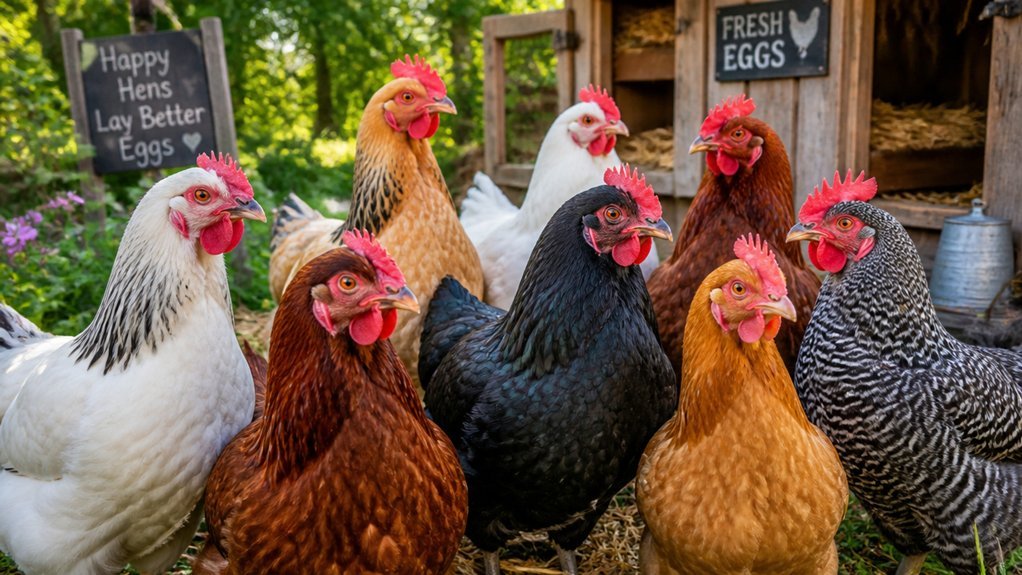
To choose chicken breeds for eggs, pick hens that mature early, lay steadily, and have broad bodies, bright combs, and active foraging habits. Leghorns, Rhode Island Reds, Australorps, Sussex, and Plymouth Rocks are reliable choices. Match breeds to your climate, since cold-hardy birds handle winter better and heat-tolerant breeds cope with summer stress. Also consider calm temperaments, coop space, egg color, and feed efficiency, and you’ll find the best fit for your flock.
Key Traits of Egg Layers
When you’re choosing chicken breeds for eggs, a few key traits tell you a lot about how productive a hen will be. You should look for hens with broad, well-spaced bodies, because that shape often supports steady egg production.
A large, bright red comb and wattles can signal maturity and good laying condition. Active foraging behavior matters too; hens that stay alert and eat well usually maintain stronger health and better output.
You’ll also want birds that mature early, since they start laying sooner and can give you more eggs over time. Calm but energetic temperaments help them cope with stress, and low stress supports consistent laying.
Finally, check that they stay healthy, since illness quickly cuts egg numbers and quality. Selecting breeds with robust shell formation capabilities can further improve your flock’s egg production and shell quality.
Top Egg-Laying Chicken Breeds
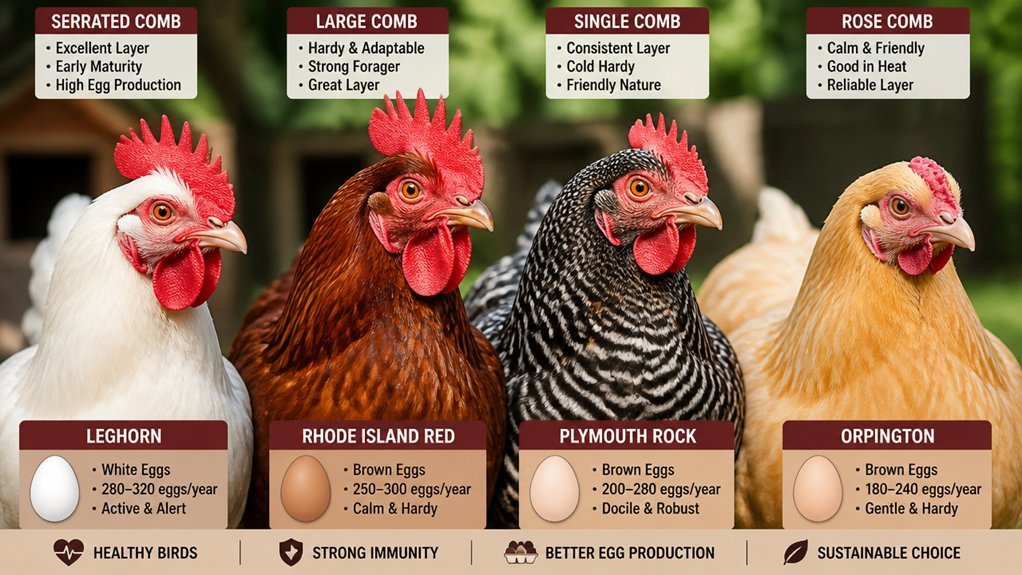
Some of the best egg-laying chicken breeds include Leghorns, Rhode Island Reds, Australorps, Sussex, and Plymouth Rocks.
You’ll get excellent production from Leghorns, which often lay large white eggs and start early. Rhode Island Reds give you steady brown eggs and stay dependable through long laying seasons.
Australorps earn attention for high output and calm behavior, while Sussex hens balance good egg numbers with an easygoing nature. Plymouth Rocks suit you if you want a friendly bird that still performs well.
Choose a breed that matches your goals for egg size, color, and temperament, then keep your flock well fed and comfortable.
When you compare these breeds, you can pick hens that fit your backyard and give you a reliable daily supply. Breed selection guides can help you make an informed decision based on climate, behavior, and productivity.
Match Breeds to Your Climate
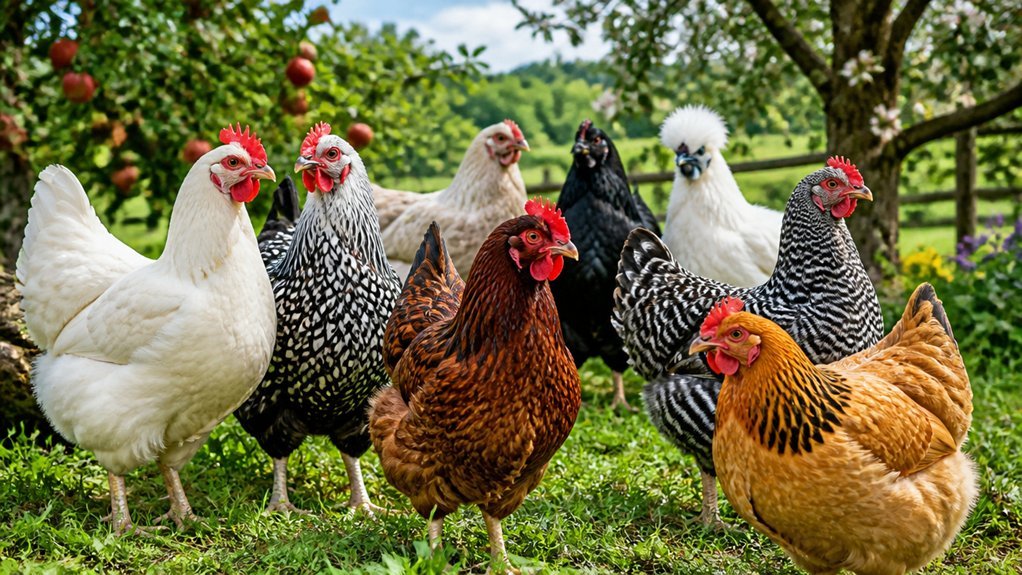
You’ll get better egg production when you choose breeds that suit your weather. In cold areas, pick cold-hardy layers that keep laying through winter, and in hot climates, look for heat-tolerant breeds that handle stress well. Matching the breed to your climate helps your flock stay healthy and productive year-round. Additionally, selecting weatherproof materials in your coop construction can further support your hens’ comfort in differing climates.
Cold-Hardy Layers
If you live in a cold climate, choosing hens that can handle winter makes a big difference in egg production. You should look for breeds with small combs, dense feathers, and sturdy bodies because they lose less heat. Wyandottes, Rhode Island Reds, Plymouth Rocks, and Orpingtons often keep laying when temperatures drop.
You’ll also want birds that stay active in snow and don’t mind shorter days. Give them a dry coop, good ventilation, and plenty of bedding to protect their feet and combs. Fresh water that doesn’t freeze helps too.
When you match your flock to your climate, you’ll get steadier winter eggs and healthier hens. Proper coop ventilation and insulation also play crucial roles in keeping cold-hardy breeds comfortable and productive. Check breed records, but also ask local keepers what works best where you live.
Heat-Tolerant Breeds
In hot climates, the best egg layers are birds that stay cool and keep eating through long, hot days. You’ll do better with heat-tolerant breeds like Leghorns, Rhode Island Reds, Andalusians, Minorcas, and Australorps. They handle sun, pant, and stress better, so you get steadier eggs and fewer worried pauses. Additionally, managing electrolyte balance and providing ample shade, fresh water, and airflow will help your flock thrive during summer heat.
Pick Breeds for Temperament and Space
Calm, friendly hens make daily chores easier, especially in small coops or backyard runs where birds live close together. You’ll enjoy birds that handle handling, nesting checks, and feed time without stress. Match the breed’s energy to your space so you don’t crowd active birds or bore quieter ones. Properly fitted chicken saddles can help protect injured or stressed hens during recovery, promoting comfort and feather regrowth.
Calm, friendly hens make chores easier, especially in small coops where birds need to live comfortably together.
- Choose docile breeds if you have children or frequent visitors.
- Pick smaller birds when coop space is tight.
- Avoid aggressive mixes that peck, chase, or guard feed.
- Favor breeds that settle quickly after noise or movement.
When you select hens with a steady temperament, you reduce flock drama and keep your routine simple. That makes coop cleaning, feeding, and coop visits smoother, and your birds stay healthier and more comfortable in the space you’ve got.
Compare Egg Color, Size, and Output

Once you’ve narrowed breeds by temperament and space, compare what they’ll put in the nesting box. Egg color won’t change taste, but it can matter to you and your customers. White Leghorns lay white eggs, while many Plymouth Rocks, Orpingtons, and Ameraucanas give you brown, blue, or green shells.
Considering date stamping options can help ensure your eggs are properly labeled for freshness and branding purposes.
Size also varies: young hens often start with small eggs, then produce larger ones as they mature. Look at average annual output, not just peak months, so you know what to expect across seasons. A breed that lays steadily may suit you better than one with flashy shells and fewer eggs.
Match your goals to the traits you value most, then choose hens that deliver the look and supply you want.
Weigh Feed Costs Against Egg Yield
Feed matters as much as egg count, because a high-producing breed can still cost you more if it eats heavily. You should compare how many eggs a hen lays with how much feed she needs to stay productive.
Some breeds convert grain efficiently, while others demand more calories for the same dozen eggs. Track your flock’s daily intake, seasonal changes, and any extra supplements.
- Check average eggs per hen each year.
- Estimate feed pounds per dozen eggs.
- Note breed size and metabolism.
- Factor in pasture, scraps, and kitchen waste.
Understanding protein requirements helps optimize your flock’s productivity and reduce feed costs. When you do the math, you’ll see whether a prolific layer actually saves money. Choose birds that fit your budget, your feeding setup, and your local climate, so your eggs stay affordable and steady.
Frequently Asked Questions
How Old Should Pullets Be Before Laying Eggs?
You should expect pullets to start laying at about 18 to 24 weeks old, depending on breed, feed, and season. You can watch for reddening combs, squatting, and wider pelvic spacing before first eggs.
Do Hens Lay Fewer Eggs During Winter Molting?
Yes, you’ll usually get fewer eggs during winter molting because your hens divert energy into feather growth. You can support them with extra protein, steady water, and stress-free housing until laying resumes.
Can Chickens Lay Eggs Without a Rooster?
Yes, your hens can lay eggs without a rooster. You’ll get unfertilized eggs for eating, not chicks. Keep them healthy, well-fed, and stress-free, and they’ll usually lay consistently during productive seasons.
How Long Do Egg-Laying Hens Remain Productive?
You’ll usually get strong egg production for about two to three years, though hens can keep laying longer at lower rates. Choose healthy birds, feed them well, and you’ll extend productivity.
What Health Problems Reduce Egg Production?
Parasites, respiratory infections, mites, obesity, stress, and nutrient deficiencies can cut your hens’ egg production. You’ll also see fewer eggs if they’re dehydrated, overcrowded, molting, or suffering from reproductive disorders.
In Summary
Choosing the right egg-laying chicken breed starts with what you need most. You’ll want birds that fit your climate, available space, and daily care routine. Think about temperament, egg color, size, and how many eggs you want each week. Don’t forget to compare feed costs with the eggs you’ll collect. When you match a breed to your goals, you’ll get healthier hens and a more rewarding flock.