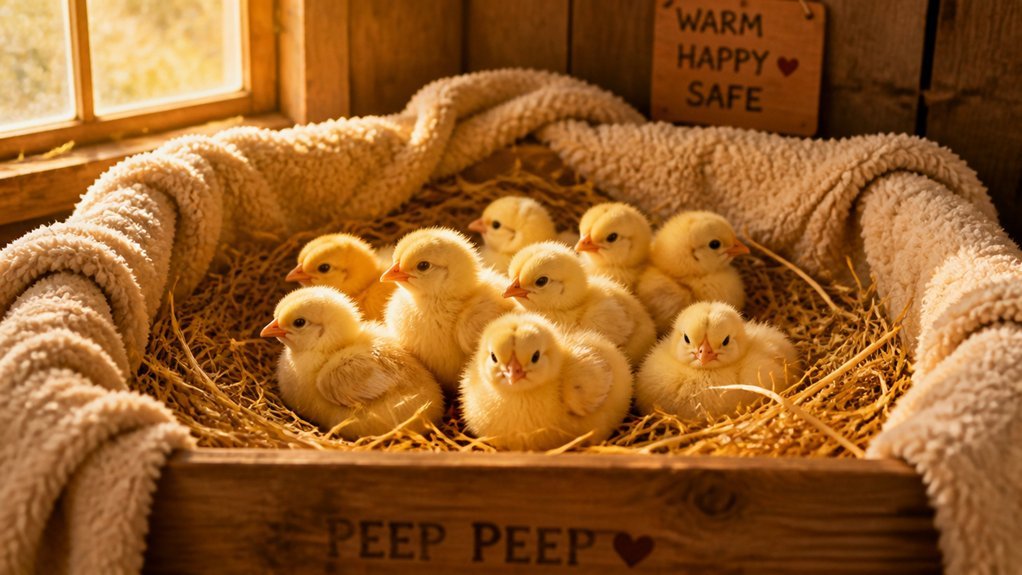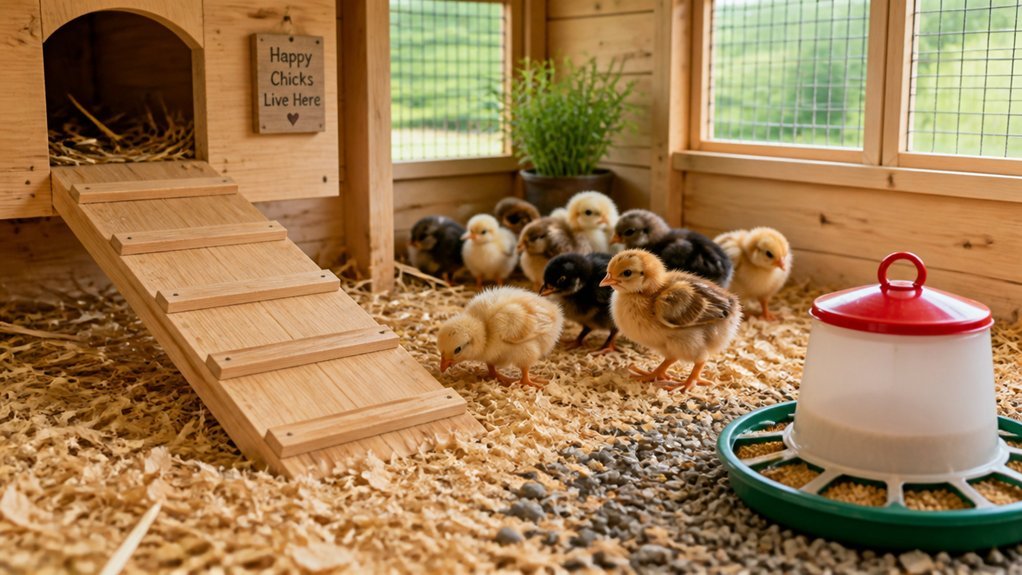
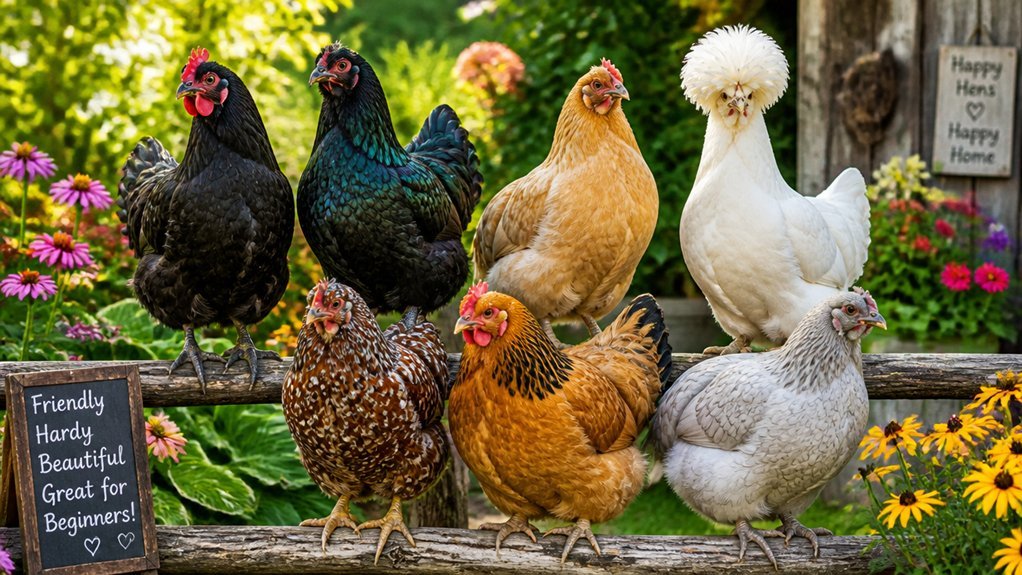
For a beginner backyard flock, you can’t go wrong with calm, hardy breeds like Buff Orpingtons, Sussex, Rhode Island Reds, Plymouth Rocks, Wyandottes, Australorps, and Leghorns. These chickens are friendly, easy to handle, and good layers, so daily chores feel simple and productive. Pick Orpingtons or Sussex for gentleness, Reds or Leghorns for steady eggs, and Rocks or Wyandottes for cold hardiness. The right breed match makes flock care easier, and there’s more to compare below.
Best Chicken Breeds for Beginners

If you’re just starting your flock, the best chicken breeds for beginners are the ones that are hardy, calm, easy to care for, and reliable egg layers. You’ll want birds that handle different weather, tolerate handling, and settle into your coop without drama.
Hardy, calm chickens that are easy to care for make the best flock starters.
Breeds with friendly temperaments make daily chores easier, especially when you’re learning feeding, coop cleaning, and basic health checks. Choose chickens that don’t need special housing or complicated care, so you can build confidence fast.
Good beginner breeds also adapt well to small backyards and mixed flocks. When you pick dependable birds with low-maintenance habits, you’ll spend less time worrying and more time enjoying your flock.
Additionally, selecting coops with weatherproof materials and predator protection features can help ensure your chickens stay safe and comfortable in any season.
Start simple, observe closely, and you’ll learn what works for you.
Top Egg-Laying Chicken Breeds
If you want plenty of fresh eggs, top egg-laying chicken breeds give you high production you can count on. You’ll also appreciate breeds that lay consistently, so your egg basket stays full week after week. These hens make a smart choice when you want steady results with less guesswork. Maintaining proper calcium intake and balanced nutrition is essential for optimal shell strength and overall hen health, especially during periods of stress or seasonal changes.
High Egg Production
When you want steady egg baskets, high-producing breeds make chicken keeping especially rewarding. You’ll get the most from hens like Leghorns, Rhode Island Reds, and Australorps because they turn feed into eggs efficiently.
Leghorns often lay large white eggs in impressive numbers, while Rhode Island Reds give you strong brown-egg output with hardy bodies. Australorps also shine if you want a calm bird that still delivers plenty.
When you choose high-output layers, make sure you’ve got enough coop space, quality feed, and clean water so your flock can support that production. You don’t need fancy management, but you do need balanced nutrition and consistency.
If your goal is a fuller carton each week, these breeds can help you reach it without much fuss.
Reliable Laying Habits
Big egg numbers are great, but consistency matters just as much. When you choose hens with steady laying habits, you get fewer surprise gaps and a more dependable breakfast basket.
Breeds like Rhode Island Reds, Australorps, Plymouth Rocks, and Sussex usually keep laying through much of the year, even when weather shifts or routines change. You’ll value that dependable pace if you’re new to backyard chickens, because it makes planning easier and reduces frustration.
These birds often start laying at a reasonable age and continue with solid output without demanding much fuss. Organic chicken feed can support their health and laying consistency, making sure your flock stays productive and healthy. If you want a flock that rewards simple care with regular eggs, focus on breeds known for reliability, not just record-breaking totals. That way, your coop works for you every week.
Calm Chicken Breeds for Backyards
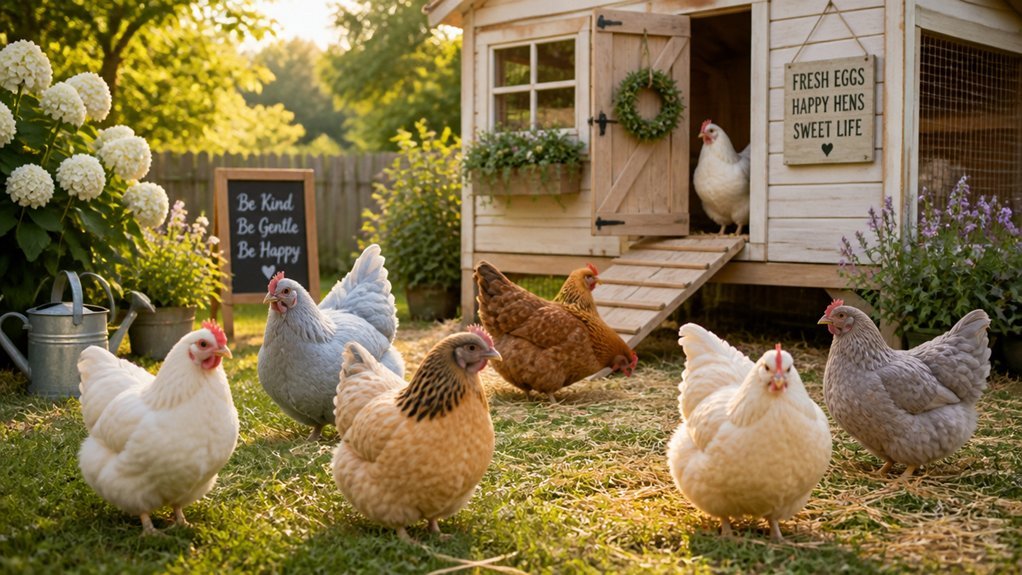
When you want a peaceful backyard flock, you should look for chicken breeds with gentle temperaments. These birds usually handle handling well and stay calm around kids, pets, and daily noise. Selecting breed types suited for beginners can also help ensure your flock remains friendly and manageable. You’ll also find that easygoing breeds make flock care simpler and more enjoyable.
Gentle Temperaments
If you want chickens that are easy to live with, start with calm breeds that stay relaxed around people and fit well in backyard settings. You’ll enjoy birds that don’t panic when you walk by, making daily care smoother and less stressful.
Gentle temperaments matter because they help you build trust faster, handle birds with confidence, and keep your flock’s routine predictable. When you choose placid chickens, you’ll spend less time chasing skittish hens and more time observing healthy behavior, feeding, and collecting eggs.
These birds often tolerate routine handling, which makes inspections and coop cleanups simpler. They also suit families, since their steady nature lowers the chance of noisy surprises. For beginners, that calm behavior can make backyard chicken keeping feel manageable and rewarding. Incorporating proper harness fit and handling techniques can further ensure safety and comfort for your chickens.
Easygoing Flock Picks
Easygoing breeds make backyard chicken keeping far less stressful because they’re typically calm around people, easier to handle, and less likely to stir up the whole flock. If you want a peaceful coop, choose birds that settle quickly and don’t mind your daily chores. You’ll enjoy them more, and they’ll adapt better to family life. Incorporating ergonomic benefits such as larger access doors and removable trays can further simplify routine maintenance, making your experience more enjoyable.
- Buff Orpingtons stay friendly and rarely act flighty.
- Sussex hens forage well but keep a relaxed, steady pace.
- Wyandottes handle mixed flocks without much drama.
These breeds suit small yards because they don’t demand constant supervision. You can collect eggs, refill feed, and check health without chasing nervous birds.
When you start with mellow chickens, you build confidence fast and create a calmer routine for everyone involved.
Cold-Hardy Chicken Breeds
If you live in a region with long, cold winters, choosing a hardy breed can make chicken keeping much easier. You’ll want birds that keep laying, stay active, and handle frost without trouble.
Plymouth Rocks are a great starter choice because they’re calm, dependable, and adapt well to chilly climates. Wyandottes also do well in the cold, thanks to their compact bodies and rose combs that resist frostbite. Orpingtons bring friendly personalities and solid winter laying, while Rhode Island Reds offer toughness and steady production.
You should still provide dry bedding, draft-free shelter, and fresh water, but these breeds won’t need special handling just because temperatures drop. If you pick one of these hens, you’ll give your flock a strong, beginner-friendly start through winter. Incorporating low-dust bedding can further improve coop air quality and reduce respiratory irritation during colder months.
Heat-Tolerant Chicken Breeds

When summer temperatures climb, heat-tolerant chicken breeds can make flock care much simpler. You’ll still need shade, cool water, and good airflow, but these birds handle hot afternoons better than many others.
Breeds such as Leghorns, Minorcas, and Andalusians stay active without seeming bothered by the sun, which can help you keep your flock comfortable with less stress. Their lighter bodies and sleek feathers often suit warm climates well.
- Offer plenty of fresh water in shaded spots.
- Let birds dust bathe and rest during peak heat.
- Watch for panting, drooping wings, or reduced activity.
- Selecting appropriate hydration strategies ensures your heat-tolerant breeds stay healthy and productive during hot weather.
Choosing a hardy breed doesn’t replace smart care, but it can give you a better starting point. If you live where summers feel long and heavy, you’ll value birds that stay lively without overheating.
Best Dual-Purpose Chicken Breeds
Dual-purpose chicken breeds give you the best of both worlds, because they provide a steady supply of eggs and a respectable amount of meat.
If you want a practical flock, start with Rhode Island Reds, Plymouth Rocks, or Sussex birds. You’ll get dependable layers that also grow into sturdy table birds. These breeds usually handle backyard life well, stay calm, and adapt to mixed climates. You can count on them for brown eggs, good feed efficiency, and solid body size.
Australorps also deserve a look since they lay heavily while still offering decent meat yield. Proper sizing and durable materials in band selection can help you keep track of these breeds effectively, even as your flock grows.
When you pick a dual-purpose breed, you simplify your setup and make your flock more useful year-round. That balance can be ideal when you’re keeping chickens for both breakfast and supper.
How to Choose the Right Breed

Choosing the right chicken breed starts with your goals, space, and experience level.
If you want eggs, choose calm layers; if you want meat too, pick a dual-purpose bird. Match breed size to your coop and run, since cramped chickens get stressed and messy.
Also think about your climate: some breeds handle cold better, while others thrive in heat.
- Want friendly birds? Choose gentle, beginner-friendly breeds like Orpingtons or Sussex.
- Need steady eggs? Look for reliable layers such as Rhode Island Reds or Leghorns.
- Want low drama? Pick hardy breeds that don’t need constant care or special feed.
You’ll do best when you start with one simple goal and avoid breeds that sound impressive but don’t fit your setup.
Frequently Asked Questions
How Many Chickens Should a Beginner Start With?
Start with 3 to 6 chickens; you’ll learn faster, keep them happier, and still get eggs. Choose a small flock so you can manage care, costs, and coop space without feeling overwhelmed.
What Coop Size Do Beginner Chickens Need?
You’ll want about 4 square feet per bird inside the coop, plus 8–10 square feet in the run. Give them more space if you can; beginners’ chickens stay healthier, calmer, and cleaner.
How Often Should Backyard Chickens Be Cleaned?
You should clean your backyard chickens’ coop weekly, removing droppings and soiled bedding, while renewing nesting boxes and water daily. Deep-clean monthly, and you’ll keep your birds healthier, happier, and odor under control.
Do Chickens Need a Rooster to Lay Eggs?
No, you don’t need a rooster for hens to lay eggs. Your hens will lay unfertilized eggs on their own, though a rooster is only needed if you want fertile eggs for hatching.
What Diseases Should Beginner Chicken Keepers Watch For?
You should watch for coccidiosis, mites, lice, Marek’s disease, respiratory infections, and egg binding. Check droppings, breathing, appetite, and feathers daily, isolate sick birds fast, and call a vet if symptoms worsen.
In Summary
Choosing the right chicken breed makes backyard keeping much easier and more enjoyable. If you want steady eggs, friendly birds, or hardy hens for your climate, you’ve got great options to start with. Think about your space, weather, and goals before you choose. The best breed for you is the one that fits your routine and feels easy to care for. Start simple, and you’ll build confidence fast with your flock.