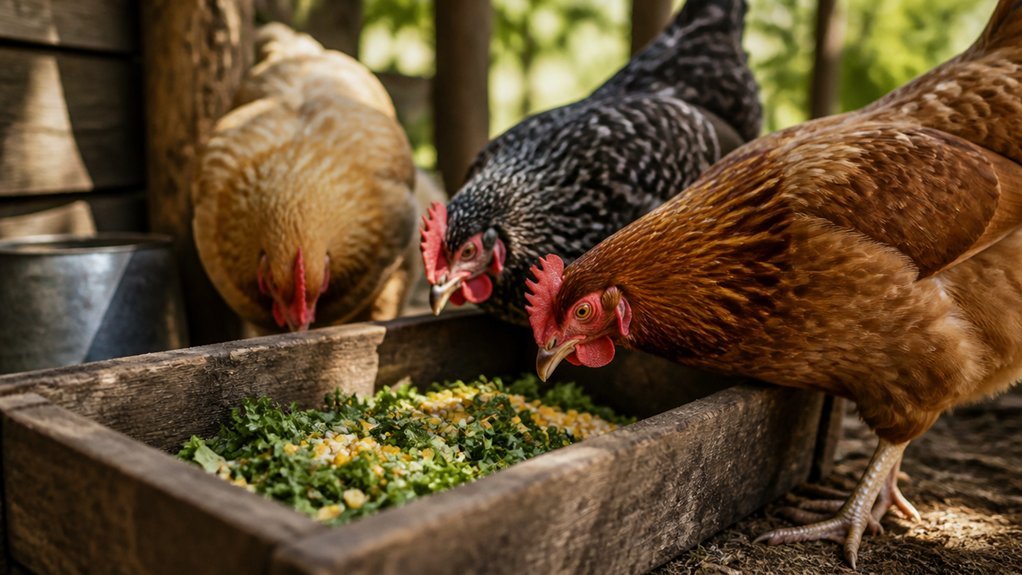
You can cut stress-related chicken illnesses by watching for early warning signs like standing apart, jumpiness, pale combs, or watery droppings. Give your flock enough space, fresh air, clean bedding, and steady feed and water. Protect them from predators, sudden weather swings, and crowded conditions. Quarantine new birds before mixing them in, and handle hens calmly with both hands. These simple habits help your flock stay healthier, and there’s more you can do, too.
Spot Stress Signs Before Chickens Get Sick

How can you tell when stress is starting to affect your flock? You’ll often notice changes in appetite, egg laying, and behavior before illness appears. Watch for hens that stand apart, peck less, or seem jumpy when you approach.
You may also see ruffled feathers, pale combs, watery droppings, or a sudden drop in eggs. Chickens under stress can sleep more, lose weight, or ignore favorite treats. Check each bird daily so you can catch small changes early.
If several chickens act off at once, treat it as a warning sign and look for the cause right away. Quick attention helps you stop minor stress from turning into disease and keeps your flock healthier overall. For effective prevention, understanding electrolyte balance is essential to support hydration and recovery during stress.
Fix Coop Crowding and Improve Ventilation
When the coop is too crowded, stress rises fast and chickens are more likely to get sick. You should give each bird enough room to move, perch, and rest without constant jostling. Tight quarters trigger pecking, overheating, and weak immunity, so expand space or split the flock if needed.
Keep air moving with open vents, screened windows, or a fan that doesn’t blow directly on them.
- Remove blockages that trap stale air.
- Raise humidity control by fixing leaks.
- Clean litter so ammonia doesn’t build up.
- Check for hot spots and damp corners.
- Utilize proper ventilation to ensure fresh airflow throughout the coop.
Good airflow helps feathers stay dry and lungs stay clear. When your coop feels fresh and uncrowded, your chickens handle stress better and stay healthier.
Keep Feed and Water Consistent
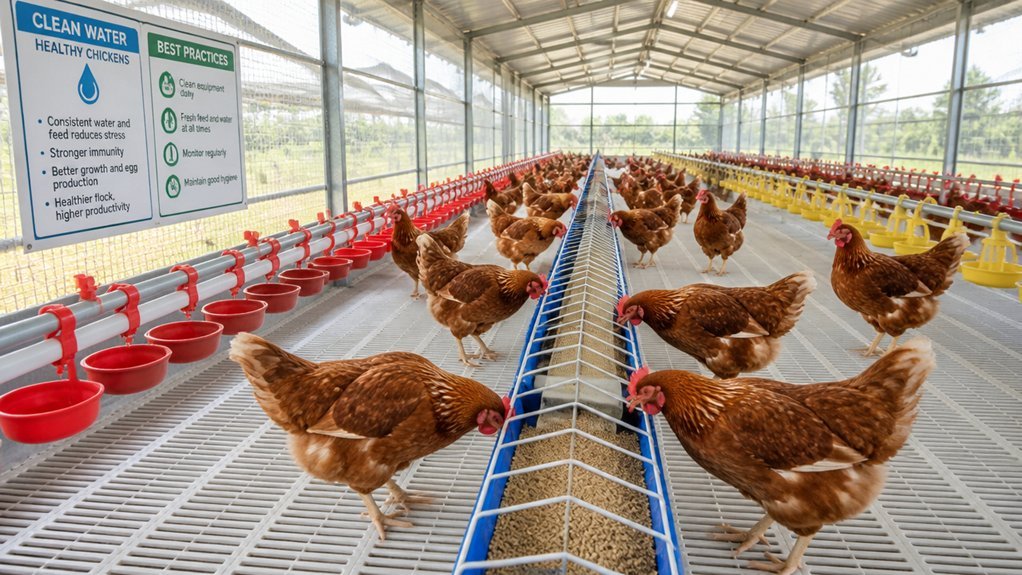
Keep your chickens on a steady feeding schedule so they know when to expect meals. You should also give them fresh water every day and check that it stays clean and easy to reach. Consistent feed and water help cut stress and support healthier birds. Ensuring your feeders are properly maintained and free from feed waste can also minimize disruptions to their routine.
Stable Feeding Schedule
A steady routine helps chickens feel secure, and that calm can lower stress-related illness. You should feed them at the same times each day so their bodies know when to expect food. When you keep a stable feeding schedule, you reduce competition, frantic pecking, and unnecessary flock tension.
Try to serve meals in the morning and again later, and avoid long gaps that leave birds unsettled.
- Set feeding times you can follow every day.
- Offer enough space so each bird can eat calmly.
- Remove old feed before adding fresh feed.
- Watch for birds that lag behind or crowd others.
- Using enclosed or downward-extended ports can help minimize feed spillage that causes muddy or dirty conditions, promoting better health and less stress.
Consistency helps your flock settle into a rhythm. When chickens trust the schedule, they spend less energy worrying and more energy staying healthy.
Fresh Water Access
Fresh water should always be easy for your chickens to reach, because dehydration raises stress and can quickly weaken their health. You should check drinkers daily, scrub algae, and refill before levels drop. Keep water in the shade when you can, and protect it from mud, droppings, and spilled feed. If you change waterers, do it slowly so birds don’t hesitate to drink. Ensuring water quality also includes utilizing light-blocking design features to prevent algae and slime buildup, which helps maintain cleaner water.
Reduce Stress During Weather Changes
When the weather shifts quickly, your chickens can get stressed and become more vulnerable to illness. Help them stay comfortable by reducing sudden temperature swings in their coop and run. Close drafts, add shade, and improve airflow without creating chilly gusts.
During cold snaps, use dry bedding and block wind; in heat, provide extra ventilation and cool water. Watch your flock closely for panting, huddling, or reduced activity, because those signs can mean they’re struggling.
You can ease seasonal stress by adjusting routines gradually instead of making abrupt changes. Effective coop ventilation helps maintain a stable and comfortable environment for your chickens, reducing their stress during weather fluctuations.
- Keep shelters dry and draft-free
- Offer shade during hot afternoons
- Increase ventilation on humid days
- Add bedding or insulation in cold weather
Quarantine New Birds Before Adding Them
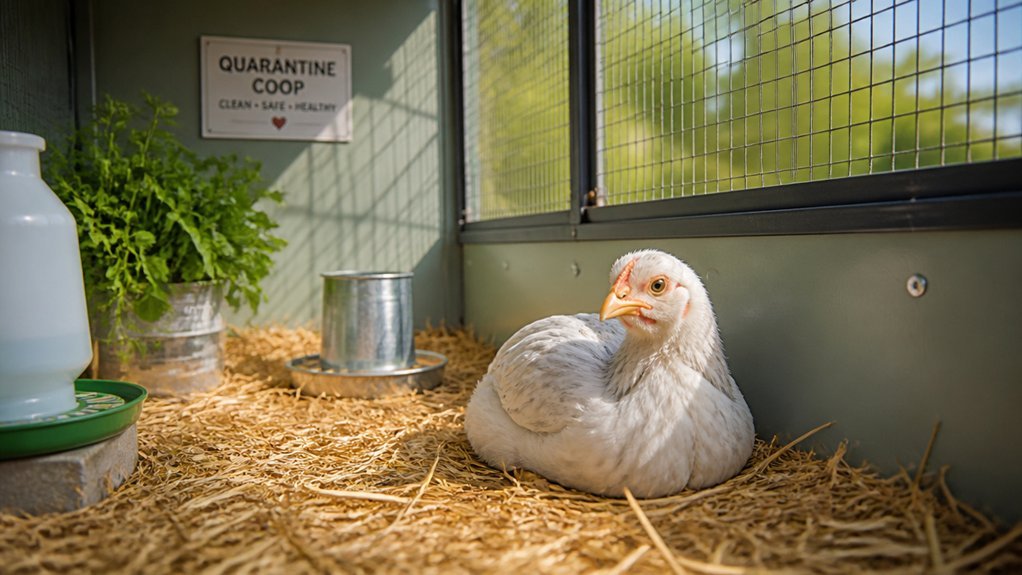
New birds can bring hidden stress and disease into your flock, so keep them separate before you mix them in. House them in a clean, dry coop or pen for at least 30 days. During that time, watch for sneezing, diarrhea, mites, limping, and low appetite.
Check droppings, comb color, and behavior daily, and handle them last so you don’t spread germs. Use separate feeders, waterers, boots, and tools for the quarantine area. Ensure your quarantine setup has secure organization and safety features to prevent escape or intrusion.
If a bird seems off, contact a poultry vet before it joins the rest. Quarantine also gives you time to assess temperament, eating habits, and body condition. When they stay healthy throughout the period, you can introduce them gradually and reduce pecking, panic, and illness in your flock.
Protect the Flock From Predators
You can cut stress fast by keeping predators out of your coop and run. Secure every enclosure, add motion lighting, and use deterrents that make your flock less tempting to raccoons, foxes, and other threats. Introducing a secure fencing system can further prevent predators from gaining access. When your chickens feel safe, they’re calmer, healthier, and less likely to get sick.
Secure Coop Enclosures
Even a well-fed flock can become stressed if predators can reach the coop, so securing the enclosure should be a top priority. You should inspect every panel, seam, and door for gaps that a raccoon, dog, or fox could exploit. Use sturdy hardware cloth instead of flimsy wire, and fasten it with screws and washers so it won’t pull loose.
Check locks daily, because simple latches often fail under pressure. Keep the run fully enclosed, including the top, to stop climbing and digging threats.
- Reinforce weak corners
- Bury mesh along the base
- Replace damaged boards quickly
- Test doors after every storm
When your coop stays sealed, your birds feel safer, eat better, and handle stress more easily.
Install Motion Lighting
Motion-activated lights can deter nocturnal predators before they reach your flock, especially around coop doors, runs, and dark corners. You’ll help your chickens feel safer by lighting these approach paths, so they’re less likely to panic at night. Mount fixtures high enough to avoid pecking and rain splash, and aim them where shadows gather. Use warm, bright LEDs for quick response and low power draw. Check the table below to plan placement:
| Area | Benefit |
|---|---|
| Coop entrance | Startles approaching animals |
| Run perimeter | Exposes movement fast |
| Feed station | Reduces night visits |
| Dark corners | Removes hiding spots |
Test the sensors after dusk and adjust sensitivity so cats, wind, and branches don’t trigger constant flashes. Proper placement at predator eye level enhances effectiveness and ensures the deterrent does not become a nuisance.
Use Predator Deterrents
Lighting the coop helps, but it works best alongside other predator deterrents that make your flock harder to target.
You can cut stress and illness by blocking access, masking scent, and denying easy cover. Keep feed sealed, fix gaps in fencing, and lock birds in a secure coop at dusk. Use hardware cloth instead of chicken wire, and bury the edges to stop digging predators.
- Trim tall grass around runs
- Remove spilled grain daily
- Add guard animals if appropriate
- Check latches and locks every night
If you live where hawks, raccoons, foxes, or dogs hunt, add overhead netting and motion alarms. When predators can’t stalk your hens, they stay calmer, eat better, and fight off disease more easily. Make sure your fencing is made from heavy-duty hardware cloth, which provides better predator protection than standard chicken wire.
Handle Chickens Calmly and Gently
When you handle chickens calmly and gently, you lower their stress and help prevent illness before it starts. Move slowly, speak softly, and avoid sudden grabs that can trigger panic.
Approach from the side, not from above, so they don’t feel threatened. Support the body fully with both hands, holding the wings close to prevent flapping and injury. Keep handling brief unless you’re checking health or cleaning a wound. If a bird struggles, pause and reset instead of forcing control.
You’ll build trust by handling the same chickens regularly and predictably. Clean hands and calm movements also reduce the spread of germs. Gentle care helps chickens stay relaxed, eat well, and recover faster, which makes your flock healthier overall.
Frequently Asked Questions
How Can I Tell if Stress Is Weakening My Chickens’ Immune Systems?
You can tell stress is weakening your chickens’ immune systems if you notice more infections, poorer appetite, dull feathers, slower growth, or increased pecking. Check for reduced egg laying and delayed recovery after minor illnesses too.
What Supplements Help Chickens Recover From Stress Faster?
You can help your chickens recover faster with electrolytes, probiotics, and a quality poultry vitamin mix. Add omega-3s, extra protein, and plenty of fresh water; these support immunity, restore energy, and reduce stress impacts.
How Long Should Stress Recovery Take in a Sick Chicken?
You should expect a sick chicken to recover from stress in a few days to two weeks, depending on illness severity and care. If it isn’t improving within 48 hours, you’ll need a vet.
Can Egg Production Drop Permanently After Severe Flock Stress?
Yes, egg production can stay reduced permanently after severe stress if you don’t address illness, nutrition, or age-related damage. You can often improve laying with better care, but some hens won’t fully recover.
Which Breeds Are Most Sensitive to Stress-Related Illnesses?
You’ll usually find that production breeds like Leghorns, Cornish Crosses, and Silkies can be more stress-sensitive, while hardy dual-purpose breeds often cope better. You should watch each bird closely, since temperament and health vary.
In Summary
By spotting stress early, you can stop small problems before they turn into illness. When you improve space, ventilation, food, water, and weather protection, your flock stays stronger and calmer. Quarantining new birds, keeping predators away, and handling chickens gently all help reduce stress every day. If you stay consistent and attentive, you’ll give your chickens the best chance to stay healthy, happy, and productive.