You can manage heat stress in chickens by watching for panting, drooping wings, red combs, and weakness, then acting fast. Give clean, cool water all day, add extra drinkers, and keep shaded, well-ventilated coops with fans if needed. Avoid overcrowding, feed during cooler hours, and protect birds from hot ground. Offer frozen fruit or ice cubes in small amounts. Pay extra attention to older, sick, and heavy birds, and there’s more you can do.
How to Spot Heat Stress in Chickens

Heat stress in chickens is easier to spot if you know what to look for. You may notice your birds panting hard, standing with wings held away from their bodies, or crowding into any bit of shade. They might stop eating, drink more, and seem less active than usual. Their combs and wattles can look bright red, then dull as they tire.
Watch for droopy posture, open-mouth breathing, and a reluctance to move around the coop. In severe cases, you may see weakness, stumbling, or a sudden collapse. Proper hydration with electrolytes supports their recovery electrolyte balance, helping them regain strength more quickly.
Check your flock often during hot weather, especially in the afternoon. If several birds show these signs at once, heat is probably building fast, and you’ll need to act quickly to lower their body temperature.
Give Chickens More Cool Water
Once you’ve spotted the warning signs, the next step is to help your flock cool down fast, and fresh water is the easiest place to start. You should replace every drinker with clean, cool water several times a day, because chickens drink more when they’re stressed. Keep containers in the cleanest, coolest part of the yard, and check them often so they don’t run empty. Add extra drinkers so timid birds can drink without crowding. If you can, offer a shallow pan with a few ice cubes to lower the water temperature for a short time. You can also rinse slimy troughs daily to keep water appealing. Ensuring your waterers have proper thermostat control helps maintain consistent water temperatures and prevents freezing, especially during extreme heat or cold. When birds stay hydrated, they handle heat better and keep eating, which helps them recover faster.
Add Shade and Coop Ventilation

As the sun beats down, give your chickens plenty of shade so they can escape the hottest part of the day. Hang tarps, plant trees, or move portable pens under cover. You should also boost airflow inside the coop with open windows, screened vents, or a fan placed safely out of reach. Good ventilation helps hot air leave and fresh air move in, which keeps your birds calmer and more comfortable. Using sized fans properly matched to your coop’s volume maximizes ventilation effectiveness.
| Shade option | Benefit |
|---|---|
| Tarps | Blocks direct sun |
| Trees | Offers natural cover |
| Vents | Releases trapped heat |
| Fans | Improves airflow |
Check shaded spots and airflow every afternoon, since heat builds fast. When you combine cover with steady ventilation, you help your flock stay cooler through the hottest hours.
Reduce Overcrowding in the Coop
Even with shade and airflow, chickens can still overheat if they’re packed too tightly in the coop. Give each bird enough room to stand, turn, and rest without brushing against another hen. Crowding traps body heat, raises stress, and makes it harder for weaker birds to reach cooler spots.
If your flock feels cramped, split them into smaller groups or expand their living space during hot weather. Watch for panting, wing spreading, and birds piling near doors, which signal pressure from overcrowding.
- Measure coop space before summer peaks.
- Remove unused barriers and improve run access.
- Separate aggressive birds so calmer hens can spread out.
- Ensure proper ventilation and use protective materials to keep the environment comfortable.
When you space birds properly, you help them stay cooler, calmer, and healthier through the worst heat.
Feed Chickens in Cooler Hours
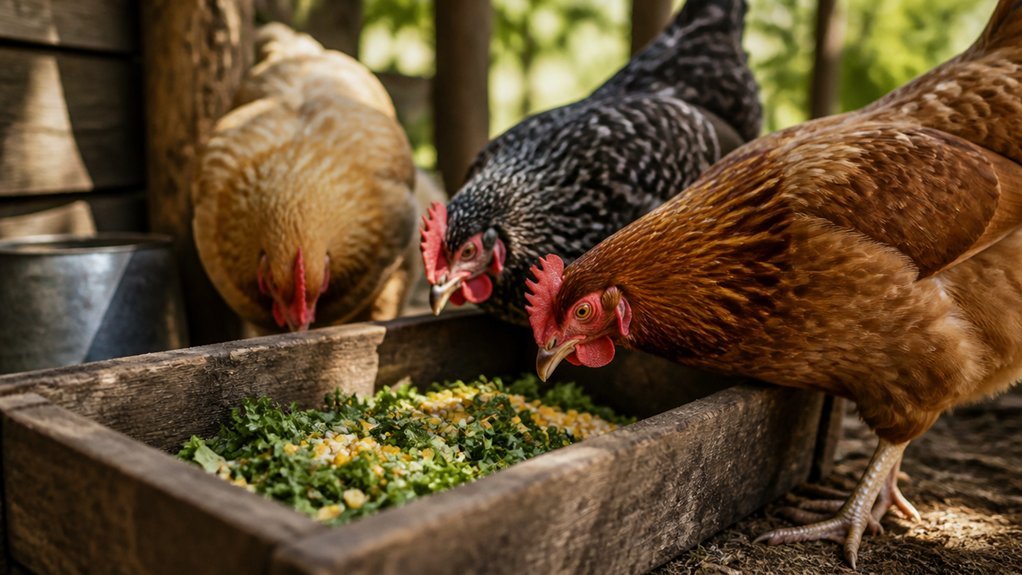
Feed your chickens early in the morning or later in the evening when temperatures drop, so they don’t have to eat during the hottest part of the day. You’ll help them stay comfortable, maintain appetite, and avoid extra heat buildup from digestion. Offer feed in smaller portions if your birds seem sluggish, and remove leftovers before they spoil. Incorporating balanced calcium and vitamin D3 in their diet during hot weather supports eggshell strength when hens are under heat stress.
Use Fans and Misters Safely
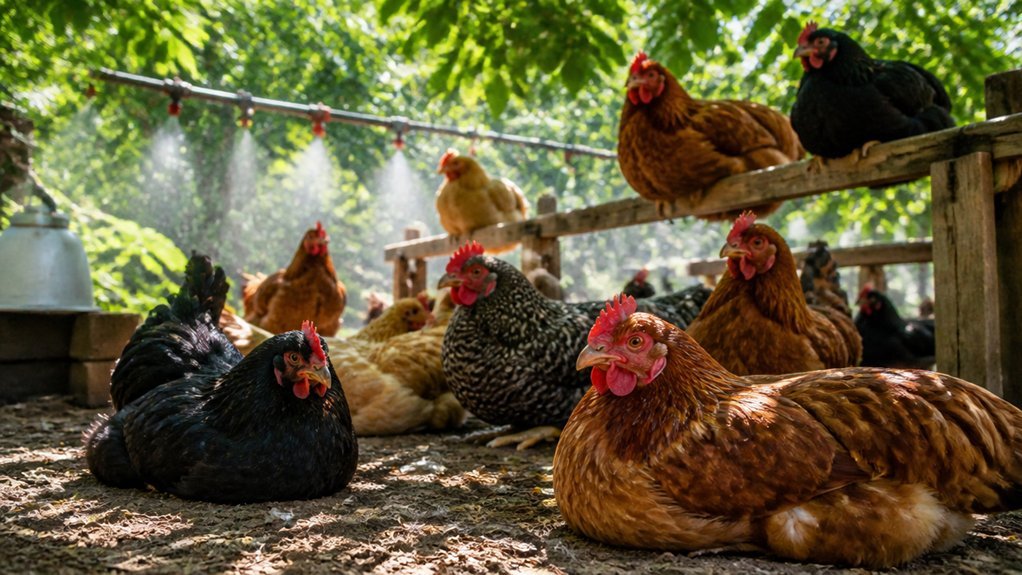
Fans and misters can help your chickens cope with heat, but you need to use them carefully. Place fans where they move air across the coop without blasting birds directly, and keep cords, motors, and outlets dry.
Use fans carefully to move air across the coop, keeping cords, motors, and outlets dry.
Use misters only in dry, well-ventilated areas so you don’t trap humidity inside. Check birds often, because damp feathers can cool them too much if you overdo it.
Additionally, ensuring proper weather resistance helps the equipment perform safely in harsh winter conditions.
- Run fans during the hottest hours and clean dust from blades regularly.
- Mist lightly in short bursts, then let air circulate before adding more moisture.
- Watch for panting relief, but stop if bedding stays wet or air feels heavy.
Smart use keeps temperatures down without creating unsafe conditions or extra stress.
Protect Chickens From Hot Ground

Hot pavement, bare soil, and metal surfaces can burn your chickens’ feet and raise their body heat fast. You can cut that risk by giving them shaded, cooler footing during the hottest hours. Move feed and water onto grass, wood, or other cool surfaces, and limit access to concrete runs when they’re scorching. Add pallets, straw, or raised platforms so birds can stand off the ground. Check surfaces with your hand before letting them out.
| Surface | Action |
|---|---|
| Pavement | Block access |
| Bare soil | Add cover |
| Metal | Shade it |
| Wood | Use for standing |
Keep the coop entry cool too, since hens will linger there. When you reduce heat from below, your flock stays calmer, drinks normally, and handles summer weather better.
Offer Frozen Treats on Hot Days
On hot days, you can cool your chickens with frozen fruit snacks that give them a tasty, invigorating treat. You can also drop in ice cube treats to help them stay hydrated and entertained. These simple options can make the heat feel a little easier for your flock. For extra satisfaction, you might consider offering crunchy dried mealworms, which are high in protein and provide a natural, nutritious snack that chickens love to peck at during the heat.
Frozen Fruit Snacks
When temperatures climb, you can help your chickens cool down with frozen fruit snacks. Choose safe fruits like berries, melon, or peeled apple, then freeze them in small portions. You’ll give a revitalizing treat that also encourages pecking and light activity.
Keep servings modest so the snack stays enjoyable, not messy or wasteful. Offer treats during the hottest part of the day, when birds need a little extra relief.
- Wash fruit thoroughly and remove seeds, pits, or cores.
- Freeze bite-sized pieces on a tray before serving.
- Place treats in a clean dish or scatter them lightly in shade.
Always balance snacks with their regular feed and fresh water. That way, you support comfort without disrupting nutrition. Plus, using frozen treats can provide additional hydration and cooling benefits during extreme heat.
Ice Cube Treats
Ice cube treats are another easy way to help your chickens beat the heat. You can freeze chopped berries, corn, peas, or leafy greens in water and toss the cubes into a shallow dish. As the ice melts, your birds peck at the frozen snack and stay hydrated at the same time. Light-Blocking Design features in some chicken waterers can help reduce algae growth, keeping the water cleaner and more appealing during hot weather. Use clean water and simple ingredients, and skip anything salty, sugary, or seasoned. On very hot days, offer the cubes in the morning or late afternoon so they don’t disappear too fast. You can also drop a few into a larger tub of cool water for extra interest. Watch your flock while they eat, and remove any uneaten pieces before they spoil or attract pests.
Watch Older, Sick, and Heavy Birds

You should keep a close eye on older birds, since they need more frequent checks in hot weather. Sick birds can’t handle heat stress well, and heavy birds overheat faster than the rest of the flock. A temperature monitoring tool can help you maintain optimal conditions and quickly detect dangerous fluctuations. If you spot any bird struggling, act quickly to cool it down and reduce further stress.
Older Birds Need Checks
Older, sick, and heavy chickens need extra checks during hot weather because they struggle to cool down as efficiently as healthy birds. You should watch older birds several times a day so you can spot trouble early and act fast.
- Check posture and breathing: Look for drooping wings, panting, or birds standing apart from the flock.
- Watch feed and water use: Make sure older birds can reach cool water easily and still eat without crowding.
- Give easy comfort: Move them to shade, improve airflow, and reduce stress from handling or loud activity.
You’ll protect these birds best by keeping routines steady and noticing small changes before they turn serious.
Sick Birds Are Vulnerable
Sick birds are often the first to show heat stress because their bodies already have to work harder, so keep a close eye on any chicken that looks weak, off-feed, or less alert. Check them more than once a day, and notice panting, drooping wings, or standing apart from the flock.
Give these birds the coolest spot you can find, with easy access to fresh water and shade. Don’t force extra activity, and reduce handling so they can conserve energy.
If a bird seems to worsen quickly, isolate it and contact a vet for advice. Quick action matters, because heat can push a vulnerable bird past its limit fast. Watch closely, respond early, and you’ll give weak birds their best chance to recover.
Heavy Birds Overheat Faster
Heavy birds build up heat faster because their bodies hold more mass and they can’t shed warmth as easily, so they need extra attention during hot weather. You should watch them closely for panting, wing spreading, and sluggish movement, since they can crash quickly.
Keep their water cool, their feed available in the coolest hours, and their coop well ventilated. Move them less, handle them gently, and give them shade all day.
- Check heavy, older, and sick birds first each morning and evening.
- Place extra waterers nearby so they don’t have to walk far.
- Separate any bird that seems weak, hot, or unable to stay upright.
If you act early, you can prevent heat stress from turning into a life-threatening emergency.
Help Chickens Recover After Heat Stress
Once your chickens start cooling down, move them into a quiet, shaded area with fresh water and a balanced feed to help them recover. Watch each bird closely for breathing, weakness, and pale combs.
Offer cool water often, and add electrolytes if you’ve used them before and know they suit your flock. Don’t force-feed or crowd them, because stress can linger after the temperature drops. Give them time to rest on dry bedding with good airflow, but keep them out of direct drafts.
Check crop fill, droppings, and alertness over the next day. If a chicken still pants hard, staggers, or won’t drink, separate it and contact a vet quickly. Quick, calm care helps them bounce back safely.
Frequently Asked Questions
What Chicken Breeds Handle Heat Best?
Mediterranean breeds like Leghorns, Minorcas, and Andalusians handle heat best. You’ll also find Rhode Island Reds and Australorps fairly tolerant if you give shade, fresh water, and good ventilation during hot weather.
Can Electrolytes Prevent Heat Stress in Chickens?
Yes, electrolytes can help your chickens cope with heat stress by replacing lost minerals and supporting hydration, but they won’t prevent it alone. You still need shade, cool water, ventilation, and reduced crowding.
How Hot Is Too Hot for Chickens?
You’ll worry when temperatures top 85°F, and distress rises fast above 90°F. If you’re seeing heavy panting, wings held out, or lethargy, your chickens are already overheating and need cooling right away.
Do Chicks Need Special Heat Protection?
Yes, you do need special heat protection for chicks because they overheat faster than adults. You should keep them shaded, well-ventilated, and hydrated, and avoid direct sun, crowded bedding, and hot surfaces during warm weather.
Should Chickens Be Cooled With Cold Water?
You shouldn’t cool chickens with very cold water; it can shock them. You can use cool, not icy, water on their legs and feet, provide shade, ventilation, and fresh water to help them recover safely.
In Summary
By watching for heat stress early, you can keep your flock safer all summer. Give your chickens cool water, plenty of shade, and good airflow, and feed them when temperatures drop. You should also reduce crowding, protect their feet from hot ground, and offer frozen treats for relief. Pay extra attention to older, sick, or heavy birds, and help any stressed chicken recover quickly. Small changes can make a big difference.