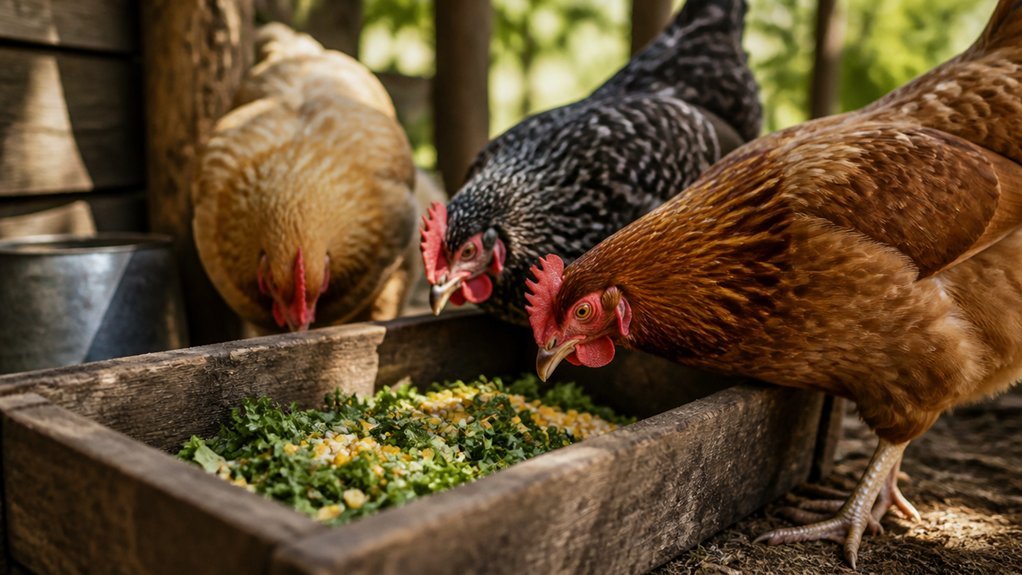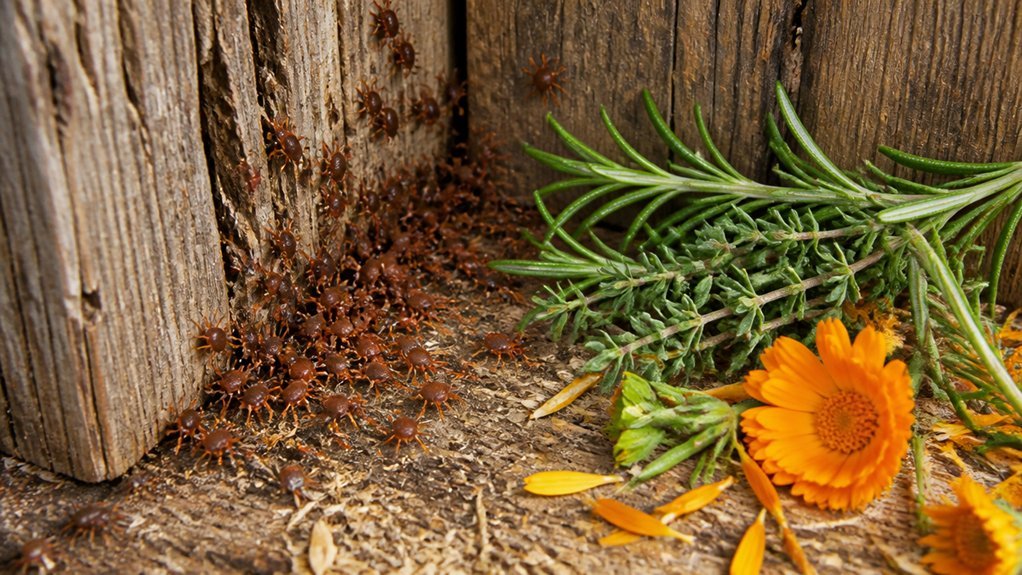
You choose natural remedies for chicken mites because they’re gentler on your flock, safer around eggs and people, and still help reduce itching, stress, and infestation pressure. They also support better coop hygiene and can be used alongside regular cleaning, dust baths, neem spray, diatomaceous earth, or herbal treatments. Natural methods may work slowly, but they can help you protect bird comfort and stop mites from spreading when you apply them consistently. There’s more to learn about what works best.
Signs Your Chickens Have Mites

If you spot your chickens scratching more than usual, acting restless at night, or losing feathers around the vent, mites may be the cause. You might also notice pale combs, dirty-looking skin, or tiny moving specks on feathers and roosts. Check close to the vent, under the wings, and around the neck, since mites hide in warm, shaded spots. At dusk, watch for your birds avoiding roosts, preening nonstop, or crowding together uneasily. You may find small black or reddish dots on perches, nest boxes, or egg shells. Run your fingers along the feathers; if you feel grit or see crusty debris, inspect further. Food-grade DE can be an effective natural remedy for controlling mites when used properly. Quick checks help you catch trouble early and keep your flock comfortable.
How Mites Hurt Your Flock
Mites do more than make chickens itchy—they drain blood, stress the flock, and can quickly wear birds down. You’ll notice hens scratching, preening, and losing sleep as mites feed at night. That constant irritation leaves birds restless and less willing to eat, drink, or roost normally. Over time, the flock may become pale, weak, and slower to grow or lay. Treating infested areas with poultry dust effectively can help break the life cycle of mites and lice, reducing reinfestation.
Why Natural Remedies Work Best

Natural remedies give you gentle parasite control without harsh chemicals. They help you keep the coop safer for your birds and for you, too. A mineral-based dust bath can be a natural and effective way to support your flock’s health and prevent mite infestations. When you use them consistently, you also support your flock’s overall health and comfort.
Gentle Parasite Control
When you’re dealing with chicken mites, gentle parasite control usually works best because it supports your flock without adding unnecessary stress or harsh chemical exposure. You can target mites while keeping your hens calmer and more comfortable. Natural options often let you act steadily instead of reacting with strong treatments that may irritate birds.
A key advantage is that natural disinfectants are less likely to leave harmful residues that could affect your birds’ health.
This approach helps you stay consistent, and consistency matters when mites multiply fast. By using gentler methods, you address the problem without creating a bigger one for your flock.
Safer Coop Environment
A safer coop environment gives you one of the best long-term advantages against chicken mites because it makes the space less inviting for pests in the first place. You can reduce hiding spots, limit damp buildup, and keep surfaces easier to inspect. Natural remedies fit this goal because they support cleaner routines without harsh residue or strong fumes. When you choose gentler methods, you can treat common problem areas more often and with less disruption. Additionally, using low-dust bedding like pine shavings helps dust control, further minimizing airborne pest attractants.
Supports Bird Health
Healthy birds handle mite pressure better, so the gentlest remedies often make the most sense for long-term care. When you choose natural options, you protect your flock’s skin, breathing, and overall comfort while avoiding harsh residues.
You’re also more likely to support daily wellness instead of only chasing symptoms. That matters because stressed birds eat less, rest poorly, and recover slowly. A gentle, non-toxic approach can help minimize stress-related behaviors like scratching. Additionally, advanced formulations in wound sprays are designed to promote faster healing and reduce irritation, supporting a healthier environment for your flock.
Natural Remedies That Kill Chicken Mites

If you want to kill chicken mites naturally, start with remedies that target the pests directly and disrupt their life cycle. Spray your coop with a strong mix of water and neem oil, then repeat after a few days to hit newly hatched mites.
You can also apply food-grade mineral oil to cracks, roosts, and nesting areas to smother pests hiding in tight spaces. Herbal sprays made with garlic, thyme, or rosemary may help repel mites and lower their numbers.
Keep bedding fresh and remove debris often so mites lose shelter and eggs. For your birds, rub a small amount of coconut oil on irritated skin to calm itching and make mites harder to grip. Check birds daily, because quick action helps you stop reinfestation before it spreads.
Using low dust hemp bedding can also help reduce airborne mites and improve overall coop hygiene, supporting your natural pest control efforts.
Use Diatomaceous Earth Safely
Diatomaceous earth can help control chicken mites when you use it carefully, because it damages the pests’ outer shells and dries them out. You should choose food-grade powder only, then keep it dry and apply a light dusting where mites hide. Avoid breathing the dust, and don’t overapply it around your flock.
Diatomaceous earth can help control chicken mites when used carefully, keeping dust light and application targeted.
A thorough application on waterproof roofing and protected nesting areas increases effectiveness and reduces mite resurgence.
- Wear a mask and gloves.
- Gently lift feathers and target roosts, nests, and cracks.
- Reapply after cleaning or moisture.
- Store the powder in a sealed container.
You can improve results by combining this step with regular coop sanitation. Keep bedding fresh, remove debris, and monitor your hens for scratching or irritation. Used wisely, diatomaceous earth adds a simple, natural tool to your mite-control routine.
Make Herbal Sprays for Mites

Herbal sprays can give you another natural way to discourage chicken mites, especially when you use them as part of a regular coop-cleaning routine.
You can make a simple spray by steeping dried rosemary, mint, lavender, or thyme in hot water, then straining it and letting it cool. Pour the liquid into a clean spray bottle and mist roosts, cracks, nesting areas, and other hiding spots after you’ve removed bedding and debris. Focus on dry surfaces, and avoid soaking wood or feed containers.
Reapply after deep cleaning or when the coop smells stale. Always test a small area first to check for staining.
While herbal sprays won’t replace thorough sanitation, they can help you keep the coop less inviting and support a cleaner, calmer environment for your flock. Incorporating ongoing dust baths and weather-resistant coop features can further enhance your pest control efforts.
Try Garlic And Apple Cider Vinegar
You can try a garlic spray to help repel mites, since its strong smell may make your coop less inviting to pests.
Mix apple cider vinegar with water for a mild rinse or spray, but keep the solution diluted so you don’t irritate your chickens’ skin. Always test a small area first and avoid spraying near their eyes, nostrils, or open wounds. Natural pest repellents can also provide additional protection against mites.
Garlic Spray Benefits
Garlic spray can be a simple, low-cost way to help discourage chicken mites while keeping your coop routine natural. You can use it to add an uninviting scent around roosts, walls, and nesting areas, and your birds won’t face harsh chemicals.
Its easy application helps you treat problem spots quickly, especially when you stay consistent. Garlic can also fit well into a broader prevention plan.
- You spray it on clean surfaces.
- You reapply after cleaning or rain.
- You target cracks where mites hide.
- You support a calmer coop routine.
If you want a gentle option, garlic spray gives you another practical tool. Keep your coop dry, inspect birds often, and act fast when you spot trouble.
Apple Cider Vinegar Mix
Another natural option is an apple cider vinegar mix, especially when you want to pair garlic and apple cider vinegar for a simple coop treatment. You can combine vinegar with water and crushed garlic to create a sharp-smelling spray that may help make your chickens’ environment less inviting to mites.
Apple cider vinegar also supports a healthier coop routine because it’s easy to mix, affordable, and widely available. When you use it, you’re adding a simple tool that fits naturally alongside other remedies. The acidic scent can linger in cracks, bedding edges, and roost areas where mites hide.
You’ll still need to stay consistent, since natural methods work best when you use them regularly and keep your coop clean, dry, and organized.
Safe Application Tips
When you try garlic and apple cider vinegar, start with a diluted mix so the scent stays strong enough to support your coop routine without irritating your chickens. Spray lightly around roosts, nesting boxes, and cracks, not directly on birds unless your vet approves.
Keep the coop dry, because moisture helps mites thrive. Use a small test area first, then watch for any signs of stress or sneezing.
- Mix fresh each day.
- Label the spray bottle clearly.
- Avoid eyes, beaks, and open wounds.
- Reapply after cleaning or rain.
You can pair this approach with regular bedding changes and dusting to reduce mite pressure. If your flock seems uncomfortable, stop and switch tactics.
Clean The Coop To Remove Mites
To get rid of chicken mites, you need to clean the coop thoroughly and remove every place they can hide. You should start by moving your chickens to a safe, temporary area, then take out bedding, nesting material, and loose debris.
Move your chickens to safety, then remove bedding, nesting, and loose debris to clear hiding spots.
Scrape droppings from perches, walls, corners, and cracks, because mites love tight spaces. Wash surfaces with hot water and scrub with a stiff brush to loosen hidden eggs and dirt. Pay close attention to roost joints, nesting boxes, and hardware cloth edges.
After cleaning, let the coop dry completely in sunlight if possible. A dry, spotless coop makes it harder for mites to survive and spread.
Repeat this deep cleaning often enough to break their cycle and protect your flock.
Give Chickens Natural Dust Baths

A natural dust bath can help chickens fight mites by letting them coat their feathers and skin with dry, fine material that helps smother and dislodge pests.
You can set up a shallow box or patch in a dry, sunny spot and fill it with plain soil, wood ash, or food-grade diatomaceous earth. Keep it loose so your birds can dig, roll, and shake freely.
- Choose a dry location.
- Add clean, fine dusting material.
- Let chickens bathe daily.
- Refresh the bath when it gets damp.
When you give them this choice, you support their grooming instincts and make it harder for mites to stay attached.
Check the bath often, and replace clumped material so it stays effective and inviting.
Treat Roosts And Nest Boxes
You should clean the roost surfaces often to remove mite eggs and debris.
Refresh the nest bedding so your hens have a dry, tidy place to rest.
Then apply safe treatments to the roosts and nest boxes to help keep mites under control.
Clean Roost Surfaces
Since chicken mites hide in cracks and seams, start by scrubbing roosts and nest boxes to remove droppings, dust, and debris that give them shelter. Use a stiff brush and warm, soapy water, then wipe every surface dry so moisture won’t linger.
Pay special attention to joints, corners, and hardware where pests can cling. For best results:
- Remove loose dirt with a dry brush.
- Scrub along grain and edges.
- Rinse or wipe away residue.
- Let all surfaces air-dry fully.
When you keep roosts clean, you make it harder for mites to spread and easier to spot new activity early. A simple routine each week can protect your flock and keep housing healthier without harsh chemicals.
Refresh Nest Bedding
Fresh bedding can break up a mite cycle by removing eggs, droppings, and hidden insects from nest boxes and roost areas. You should strip out damp or soiled material often, then replace it with clean, dry bedding that stays loose and breathable. This helps you deny mites the dark, crowded spaces they love.
Check each nest box edge, corner, and seam as you refill it, because mites often hide where you can’t see them. When you keep bedding renewed, you also support better comfort and cleaner eggs.
Don’t pack the material too tightly, since airflow matters. If you spot clumps, debris, or worn spots, remove them right away. Consistent renewing keeps the coop less inviting and makes your flock’s resting spots healthier overall.
Apply Safe Treatments
Once the coop is clean and the bedding is renewed, treat roosts and nest boxes with a poultry-safe mite control to target any insects still hiding in cracks and seams. You’ll get the best results by focusing on hidden joints, latch edges, and undersides where mites cluster.
- Read the label and follow it exactly.
- Wear gloves and keep birds out during application.
- Spray or dust lightly; don’t soak wood or litter.
- Repeat on the schedule the product recommends.
Choose natural options like food-grade diatomaceous earth, neem-based sprays, or essential-oil blends made for poultry. Always test a small area first and watch your flock for irritation. If mites return, clean again and reapply promptly.
Prevent Mites With Better Coop Hygiene
A clean coop does more than look tidy—it helps break the mite life cycle before it starts. You should remove droppings, soiled bedding, and spilled feed often, because mites hide in warm, dusty corners and breed fast.
Scrub roosts, nest boxes, and joints with a mild soap and hot water, then let everything dry fully before adding fresh bedding. You’ll also want to reduce clutter, since excess items give mites more places to linger.
Check cracks, seams, and perch ends regularly, and seal gaps where dirt builds up. Keep feed in sealed containers to limit attracting pests.
When you make hygiene part of your routine, you lower the chance of infestations and help your flock stay comfortable, healthy, and easier to manage year-round.
When Natural Remedies Aren’t Enough
If your chicken mites keep coming back despite cleaning, dusting, and other natural treatments, it may be time to look beyond home remedies. You’re dealing with a heavier infestation, and your flock can suffer fast. Watch for feather loss, pale combs, scabs, or restless nights.
At that point, you should:
- Inspect every bird closely.
- Check roosts, cracks, and nesting boxes.
- Isolate birds that look weak.
- Call a poultry veterinarian or extension expert.
They can confirm the mite type and suggest stronger treatment options that fit your birds’ needs. Don’t guess or keep repeating ineffective steps. Quick action protects egg production, comfort, and overall health.
When mites spread quickly, natural methods alone may not be enough to stop the damage.
Keep Chicken Mites From Coming Back
After you’ve knocked down a mite problem, keeping them from returning takes steady upkeep. Clean coops weekly, scrape roosts, and replace damp bedding before pests can hide.
Inspect cracks, nesting boxes, and perch joints, then seal gaps with caulk or wood filler. Give your flock dust-bathing spots filled with dry sand, soil, or wood ash so they can groom themselves naturally.
Quarantine new birds for two weeks and check them before mixing them in. Wash tools, crates, and gloves after use to avoid carrying mites back inside.
During warm months, examine birds often, especially around the vent and under wings. Consistent prevention protects your flock, lowers stress, and keeps natural remedies working longer.
Frequently Asked Questions
How Quickly Do Chicken Mites Reproduce?
Chicken mites reproduce fast; you can see new generations in about 7 to 10 days, and they’ll keep multiplying rapidly if you don’t treat them. Check your flock often and act quickly.
Can Chicken Mites Affect Humans?
Yes, chicken mites can bite you, causing itchy skin and irritation, but they can’t live on you long term. You should treat infested birds and clean coops quickly to stop repeated exposure.
What Time of Year Are Mites Most Common?
You’ll usually see mites most often in warm, humid months, especially late spring through summer. They breed faster then, and you’ll notice infestations sooner. In cooler weather, they’re less active, but they can still persist.
Do Mites Spread Between Coops or Nearby Birds?
Yes, mites can spread between coops and nearby birds, especially through contact, shared equipment, or wild visitors. You’ll need to isolate infested birds, clean thoroughly, and monitor neighboring flocks closely.
How Often Should I Inspect My Chickens for Mites?
You should inspect your chickens weekly, and check more often if you’ve had mites before. Look under wings, around vents, and at roosts. Quick checks help you catch infestations early and protect your flock.
In Summary
Natural remedies give you a safer, gentler way to fight chicken mites without exposing your flock to harsh chemicals. When you act fast, clean the coop, and use options like diatomaceous earth and natural sprays, you can reduce mites and help your chickens stay healthy. Keep up with good coop hygiene and regular checks, so mites don’t come back. If the infestation gets worse, don’t wait to get extra help.