
Nutrition is essential for brooding hens because you’re asking her body to do extra work while she eats less. She burns energy to keep eggs warm, and if feed is poor, she can quickly lose weight, muscle, and condition. A balanced ration with enough protein, calcium, vitamins, and clean water helps her stay healthy, calm, and strong. Good feeding also supports shell quality, fertility, and hatch success, and there’s more to get right.
Why Brooding Hens Need Extra Nutrition
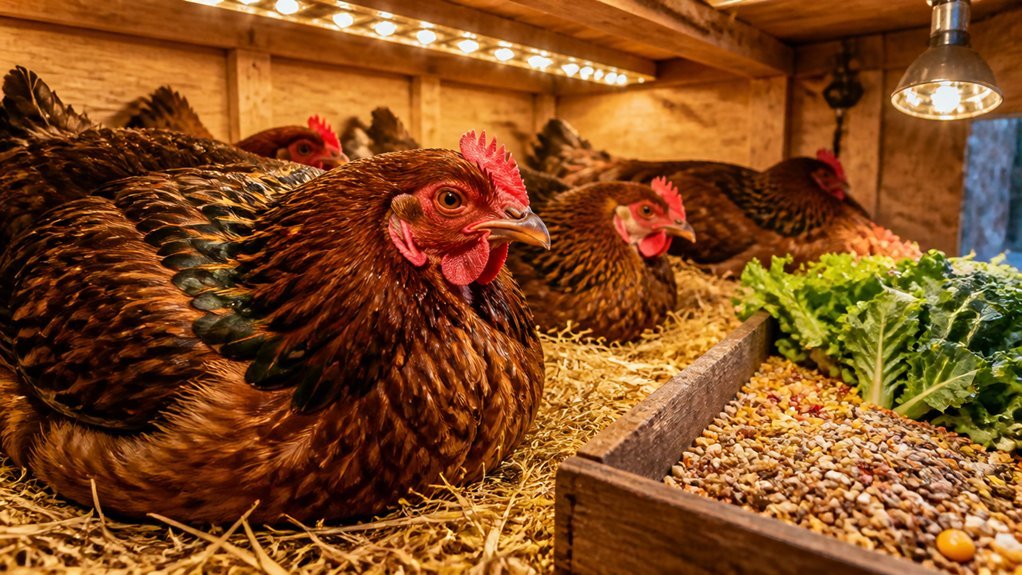
When your hen starts brooding, her body shifts from laying eggs to sitting on and warming them, and that job takes extra energy. You need to support her with more nutrients because she spends long periods in the nest and often eats less than usual.
Her feathers, muscles, and immune system all work harder while she stays focused on her clutch. If you don’t meet those needs, she can lose condition and become less able to keep eggs at the right temperature.
Good nutrition also helps her stay calm, alert, and physically steady during this demanding phase. By giving her a balanced diet with enough protein, vitamins, and minerals, you help her maintain health while she protects developing chicks. Providing appropriate starter feed supports her nutritional needs during brooding.
Energy Needs and Body Reserves During Brooding
A brooding hen burns energy even though she isn’t laying, because she spends long stretches off her normal feeding routine while keeping eggs warm and turning them with care.
You should expect her to rely on stored body fat and muscle support when she leaves the nest less often. If her feed is poor or limited, those reserves drop quickly, and she can lose weight fast.
Watch her keel bone and overall condition so you catch decline early. Give her steady access to fresh water and a balanced ration nearby, so she can refuel during brief breaks.
Implementing a balanced diet with proper nutrients, including calcium and vitamins D3, supports her shell formation and overall health during this vital period.
You’ll help her maintain enough strength to stay committed to the clutch and finish incubation without excessive depletion or weakness.
Best Protein Levels for Brooding Hens

How much protein does a brooding hen really need? You should aim for a moderate, steady level, not a sudden surge. Around 16% to 18% protein usually supports her well while she sits, eats less, and conserves energy.
Too little protein can leave her weak and reduce feather quality, while too much can waste feed and upset balance.
- Choose a complete layer or broody ration with solid protein.
- Offer small, fresh meals so she actually consumes enough.
- Watch her condition and adjust if she loses too much weight.
- Ensuring proper grain variety and quality helps maintain her health during brooding.
You don’t need to overcomplicate it. Consistent protein helps her maintain muscle, stay settled on the nest, and keep up with the demands of incubation.
Key Vitamins and Minerals for Brooding Hens
While protein keeps a broody hen strong, vitamins and minerals help fill in the gaps that support steady incubation. A balanced intake of probiotics can also promote gut health, enhancing nutrient absorption and overall vitality during this demanding period. Probiotic strains help maintain a resilient microbiome, crucial for long-term hen health. You should make sure she gets enough vitamin A for healthy skin and tissue, vitamin D for calcium use, and vitamin E to support overall condition. B vitamins help her stay active and maintain appetite, while vitamin K supports normal blood function. Minerals matter too: calcium strengthens bones, phosphorus works with calcium, and trace minerals like selenium and zinc support cell repair and immune health. You can offer a balanced ration or a quality layer feed with fresh water, so she doesn’t lose condition during long sitting periods. Keep treats limited, because you want her diet to stay nutrient-dense and consistent.
How Feed Affects Fertility and Hatch Rates
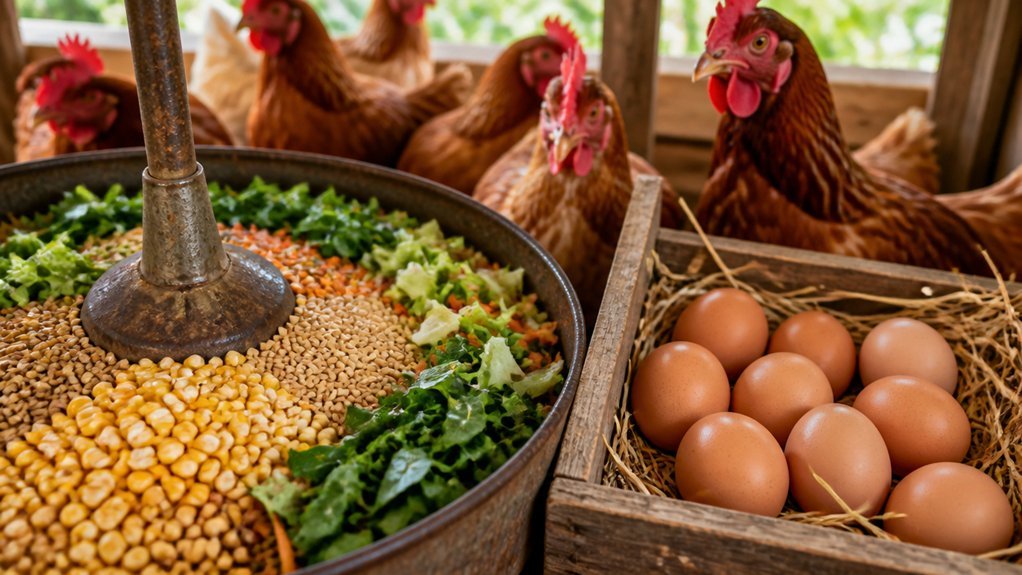
Feed quality can shape both fertility and hatch rates because a hen needs steady nutrition before and during brooding to maintain strong body condition and egg viability.
When you feed a balanced ration, you support ovulation, healthy egg formation, and stronger embryos that can develop well. Poor feed can lower fertility, weaken shells, and reduce the chance that chicks will hatch.
A well-formulated organic feed with adequate protein content ensures hens receive the essential nutrients needed for optimal reproduction.
- Give enough protein to support reproductive tissue and embryo growth.
- Provide calcium and phosphorus to build sturdy shells and help eggs protect developing chicks.
- Offer fresh water and consistent feed so her body keeps producing viable eggs.
When you keep nutrients steady, you help each egg start stronger and give every fertile egg a better chance to hatch successfully.
How to Feed a Brooding Hen Without Disturbing Her
To feed a brooding hen without upsetting her, move slowly, keep visits brief, and offer food and water close enough for easy access but not so close that you crowd the nest. Approach at the same time each day so she learns your routine and stays calmer.
Set the dishes just outside her nest area or in a nearby sheltered spot, then step back and let her eat undisturbed. Speak softly, avoid sudden motions, and never lift her unless you must. If she leaves the nest, don’t rush her; wait until she returns on her own.
Clean spills promptly to discourage pests, but keep maintenance quick. Electrolyte balance during heat stress supports hydration and comfort, helping her stay focused on incubation. By keeping your presence calm and predictable, you help her stay settled, conserve energy, and remain committed to incubation throughout.
Daily Feed for a Brooding Hen

You should give your brooding hen enough feed each day to keep her healthy and steady on the nest. Her daily ration needs to match her energy use, so you can adjust portions as needed. A balanced brooding diet helps her stay strong while she incubates her eggs. Ensuring her feeders are correctly sized and accessible prevents waste and encourages proper intake.
Daily Feed Requirements
Although a brooding hen eats less than a non-brooding bird, she still needs enough feed each day to maintain her health and support incubation. You should offer a measured daily amount so she can step off the nest, eat, drink, and return without wasting energy.
Watch her body condition and appetite, because each hen’s needs vary with size, weather, and nesting time.
- Keep feed within easy reach so she doesn’t abandon the clutch for long.
- Refresh feed daily so it stays clean and appealing.
- Check that she’s eating consistently, not just nibbling once or twice.
- Consider using automatic feeders to ensure a consistent and clean supply of feed during her brooding period.
If she starts losing too much weight, increase access and monitor her closely. Consistent daily feed helps her stay strong through the brooding period.
Balanced Brooding Diet
A brooding hen needs a simple, balanced ration that keeps her nourished without encouraging her to stay off the nest too long. You should offer a complete layer feed with steady protein, calcium, and energy, then add a small amount of scratch or grains only if she needs extra calories. Keep fresh water close so she won’t waste time searching for it. Avoid rich treats that can upset digestion or reduce nesting commitment. Incorporating calcium metabolism support through appropriate supplements can further enhance eggshell quality.
How Much Water Brooding Hens Need
Brooding hens need constant access to fresh, clean water, and they’ll often drink more than usual as they sit on eggs and regulate their body temperature.
You should check water often, because a hen can’t stay healthy or keep her broodling routine steady without enough hydration. In warm weather, she may drink even more.
One way to support her hydration is by choosing waterers that have a light-blocking design, which helps prevent algae buildup and keeps the water clearer longer.
- Refill drinkers before they run low.
- Place water close to the nest so she doesn’t travel far.
- Keep containers clean to prevent buildup and contamination.
You’ll usually see her take short, frequent drinks rather than one long session. If the water level drops, her appetite and condition can suffer.
Aim for steady access all day, every day, so you support her energy, comfort, and normal brooding behavior.
Safe Treats for Brooding Hens

When you want to offer a brooding hen a treat, keep it simple and light so you don’t disrupt her routine or digestion. You can hand her a few chopped greens, like lettuce, spinach, or tender herbs, for a quick nibble.
Small bits of cooked oats or plain scrambled egg also give gentle energy and protein. Fresh berries, sliced cucumber, and peas work well when you want variety without overfeeding.
Serve treats in tiny amounts, and give them away from the nest so she stays calm and focused. Always choose fresh, clean food and remove leftovers quickly.
If you keep treats occasional and modest, you’ll support her comfort while still giving her a little encouragement during broodiness.
Foods to Avoid Around Brooding Hens
You should keep toxic foods away from brooding hens, since even small amounts can make them sick.
Avoid salty scraps and processed foods, because too much salt can upset their balance and stress their bodies.
When you choose what’s nearby, you help them stay safe and focused on sitting their eggs.
Toxic Foods
Even the best brooding hen can get sick if she eats the wrong things, so keep toxic foods away from her nesting area and feed only safe, poultry-appropriate items. You should watch for common hazards that can harm her quickly.
Some foods seem harmless to people but upset a hen’s digestion, damage organs, or weaken her while she’s sitting.
- Avocado pits and skin
- Raw or green potatoes
- Moldy grains or spoiled leftovers
Remove kitchen scraps before they sit, and don’t let her peck at compost piles or fallen fruit.
If you notice drooping wings, poor appetite, or unusual droppings, act fast. Clean feeding areas daily, and keep her diet simple so she can stay focused on incubation and remain healthy throughout brooding.
Excess Salt Avoidance
Salt can be just as harmful as toxic foods if a brooding hen gets too much of it. You should keep salty scraps away because excess sodium dehydrates her, stresses her kidneys, and can reduce hatch success. Skip chips, cured meats, salted nuts, bouillon, and seasoned leftovers. Offer plain feed, fresh water, and clean treats instead.
| Food | Why avoid it |
|---|---|
| Chips | Too much salt |
| Cured meats | High sodium |
| Salted nuts | Dehydrating |
| Bouillon | Very salty |
| Seasoned leftovers | Hidden salt |
If you’re unsure, check labels before you share anything. Even small amounts add up when she eats little while brooding. Safe feeding helps her stay calm, hydrated, and focused on her eggs.
Signs Your Brooding Hen Is Undernourished
How can you tell if a brooding hen isn’t getting enough nutrition? You’ll notice her body and behavior change fast. She may look thin, feel lighter when you handle her, and keep her feathers rough instead of sleek.
She might leave the nest too often, act restless, or seem weaker than usual. Watch for these signs:
- Pale comb or wattles, which can point to low energy and poor condition.
- Dull eyes and poor posture, showing she’s struggling to stay alert and balanced.
- Reduced appetite or empty crop, meaning she isn’t taking in enough feed.
If you spot these clues, check her condition closely and make sure she’s eating well. Early attention helps you support her health and keep her brooding behavior steady.
Adjust Feed After Chicks Hatch
Once the chicks hatch, you’ll need to change how you feed the brooding hen so she can recover and keep producing enough milk for her young. Offer her a nutrient-dense layer feed or breeder ration with higher protein and enough calcium to support healing and egg production later.
Keep fresh water close, because brooding hens eat and drink less when they’re tending chicks, and easy access helps them stay strong. You can also provide small, frequent meals so she can eat without leaving the nest for long.
Add a little extra feed after the chicks settle if she seems thin or tired. Watch her body condition daily, and adjust portions to match her needs. Good feeding now helps her regain strength and care for her chicks well.
Common Brooding-Feed Mistakes
You can set brooding hens up for trouble if you skip balanced rations, since they need steady nutrition to stay healthy and support their chicks.
It’s easy to overfeed high-calorie treats, but too much can crowd out the feed they actually need.
Don’t forget fresh water, because without it, even a good diet won’t do its job.
Skipping Balanced Rations
Skipping balanced rations can undermine a brooding hen’s health faster than many keepers realize. When you let her feed fall short of complete nutrition, she can’t maintain steady condition, strong muscles, or proper feathering during long sitting periods.
You need a ration that supplies protein, vitamins, minerals, and energy in the right proportions.
- Choose a well-formulated layer or breeder feed suited to brooders.
- Check that fresh water stays available at all times.
- Review feed labels so you don’t miss essential nutrients.
If you rely on grain alone, you leave gaps that affect immunity and egg development. Balanced feeding helps her stay calm, resilient, and ready to hatch healthy chicks.
Overfeeding High-Calorie Treats
High-calorie treats can seem harmless, but too many scratch grains, corn, or kitchen scraps can quickly throw a brooding hen’s diet off balance. You might see her eat enthusiastically, yet those extras can crowd out the protein and minerals she needs to stay strong and steady on the nest. Keep treats limited and purposeful.
| Treat choice | Better approach |
|---|---|
| Scratch grains | Offer sparingly |
| Corn | Use only as a small reward |
A brooding hen needs nutrient-dense feed, not filler. If you give treats, measure them and keep them occasional. That way, you support her body without encouraging unhealthy weight gain or nutrient gaps. Small, controlled portions help her remain calm, productive, and ready to hatch with less stress on her system.
Ignoring Fresh Water
Even with a balanced feed, a brooding hen can run into trouble if she doesn’t have fresh water close by. You need to check her water several times a day because broodiness can make her sit longer, eat less, and dehydrate faster.
Stale or dirty water can also discourage drinking, which weakens her and slows recovery. Keep the drinker within easy reach, shaded, and filled with clean water.
- Refresh water morning and evening.
- Wash the container daily.
- Watch for drooping combs, heavy panting, or reduced droppings.
If you notice these signs, act fast. Hydration supports digestion, egg production, and body temperature, so don’t treat water as an afterthought.
Brooding Hen Feeding Checklist
When you’re caring for a brooding hen, a simple feeding checklist helps you keep her healthy and focused on incubation.
Check that she always has a balanced layer feed or breeder ration, since it supplies protein, calcium, and essential vitamins. Offer feed in a clean, easy-to-reach dish so she can eat without leaving the nest too long. Replace stale feed daily, and keep it dry to prevent mold.
Provide fresh water beside the feed, because dehydration quickly drains her strength. Avoid overloading her with treats; too many snacks can unbalance her diet.
If she starts losing weight, increase her access to nutrient-rich feed. Watch her appetite closely, and adjust portions as needed.
A consistent feeding routine supports steady energy, egg care, and better hatch success.
Frequently Asked Questions
How Does Brooding Affect a Hen’s Egg-Laying Cycle?
Brooding slows your hen’s egg-laying cycle because she stops laying while sitting on eggs. Her hormones shift, her body conserves energy, and she usually won’t resume laying until the broodiness ends and she recovers.
Can Brooding Hens Eat Layer Feed Safely?
Yes, you can offer layer feed safely, but it isn’t ideal for brooding hens. You’ll want a balanced, higher-protein ration instead, since layer feed lacks enough nutrients to support steady incubation and recovery.
Should Brooding Hens Get Grit Every Day?
Yes, you should offer grit every day. You’ll help her grind food efficiently, support digestion, and keep her eating well while brooding. Provide free-choice access, since she may only take what she needs.
Do Brooding Hens Need Supplements in Winter?
Yes, you should offer brooding hens extra supplements in winter, especially calcium, vitamins, and electrolytes. Cold weather increases stress, so you’ll help them stay healthy, maintain body heat, and support strong eggshells.
When Should a Brooding Hen Be Weighed?
Weigh your brooding hen before she settles on eggs, then again every few days if you can. You’ll spot unhealthy weight loss early and adjust feed, water, or supplements before she weakens.
In Summary
Nutrition is essential for brooding hens because you need to keep her strong, healthy, and ready to hatch viable chicks. When you give her enough energy, protein, vitamins, and minerals, you support egg fertility, proper incubation, and her own body reserves. Watch for signs she’s underfed, and adjust her diet after the chicks hatch. If you avoid common feeding mistakes, you’ll give her the best chance for a successful brood.