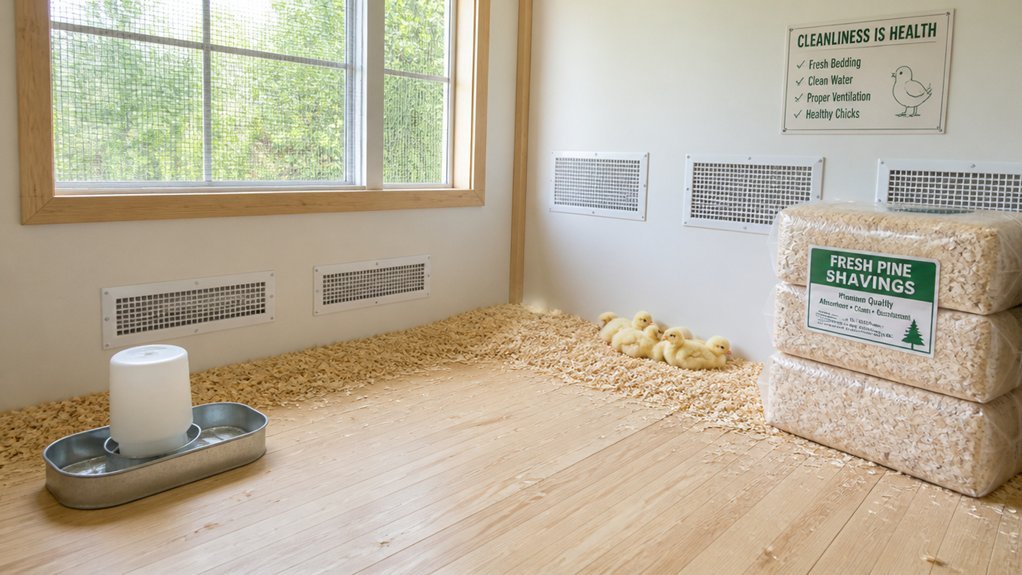
Keep your backyard chickens healthy on a budget by giving fresh water, balanced layer or grower feed, grit, and enough calcium for strong shells. Buy quality feed in bulk, store it in sealed bins away from heat and moisture, and measure portions to cut waste. Offer clean kitchen scraps and safe greens as treats, not meal replacements. Watch for pale combs, ragged feathers, or loose droppings so you can adjust feed early and keep your flock thriving with confidence.
What Backyard Chickens Need Daily?

So, what do backyard chickens need every day? You need to give them clean water, balanced feed, and a safe place to eat and rest. Fresh water keeps their bodies working, helps digestion, and supports egg production. A complete layer or grower feed gives them the protein, vitamins, and minerals they need for strong feathers, healthy bones, and steady laying. You should also provide grit if they don’t have access to small stones outdoors, since they use it to grind food. Ensuring they receive adequate calcium is crucial for maintaining strong eggshells, especially during hot weather or after molting. Chickens do best when you check supplies daily, remove spoiled feed, and keep containers clean. They also need consistent access to shade, shelter, and enough space so they can eat without stress or crowding.
Build a Low-Cost Feeding Plan
To keep chicken feeding affordable, build a simple plan around the basics: buy a quality feed in bulk, measure portions so nothing gets wasted, and use treats only as a small supplement.
Then set a weekly feeding budget and track what your flock actually eats. You can stretch your feed dollars by choosing the right formula for your birds’ age and purpose, so you’re not paying for nutrients they don’t need.
Store feed in sealed bins to protect freshness and reduce spoilage. Refill feeders only as needed, and adjust amounts if you notice leftovers.
When you plan ahead, you avoid rushed purchases and price spikes. A steady routine helps your chickens stay healthy while you keep costs predictable and manageable each month.
Paying attention to protein content in your feed ensures your flock gets the nutrition necessary for steady egg production and overall health.
Use Kitchen Scraps Safely

When you feed kitchen scraps, keep them safe and limited so they support your flock without causing health problems. Offer only fresh, plain leftovers, and remove anything moldy, salty, oily, or spoiled.
Chop scraps into small pieces so your chickens can eat them easily and waste less. Introduce new foods slowly, then watch for loose droppings or refusal to eat. You should also wash produce well and skip peels or trimmings treated with chemicals.
Safe feeding practices are crucial to prevent digestive upset or nutrient imbalances.
- Safe scraps: cooked grains, rice, oats, vegetables
- Unsafe scraps: moldy bread, rotten fruit, greasy foods
- Best practice: serve scraps after their balanced feed
Give scraps as treats, not a meal replacement, so your birds still get the nutrients they need.
Add Forage and Greens to Reduce Costs
Fresh forage and greens can lower feed costs while giving your chickens extra vitamins, fiber, and enrichment. You can let birds graze clipped grass, clover, dandelion leaves, chickweed, and garden trimmings that haven’t been sprayed.
Scatter greens in a run or hang them up to keep hens busy and reduce waste. Rotate where they forage so plants recover and mud doesn’t build up.
You can also grow quick crops like lettuce, kale, and chard in a corner bed just for chickens. Pick only fresh, clean greens and remove anything wilted or moldy.
Forage won’t replace a balanced feed, but it can stretch your budget and keep your flock active, curious, and better occupied each day. Incorporating natural foraging behavior through forage and greens supports healthy digestion, strong feathers, and overall flock vitality.
When Chickens Need Feed Supplements
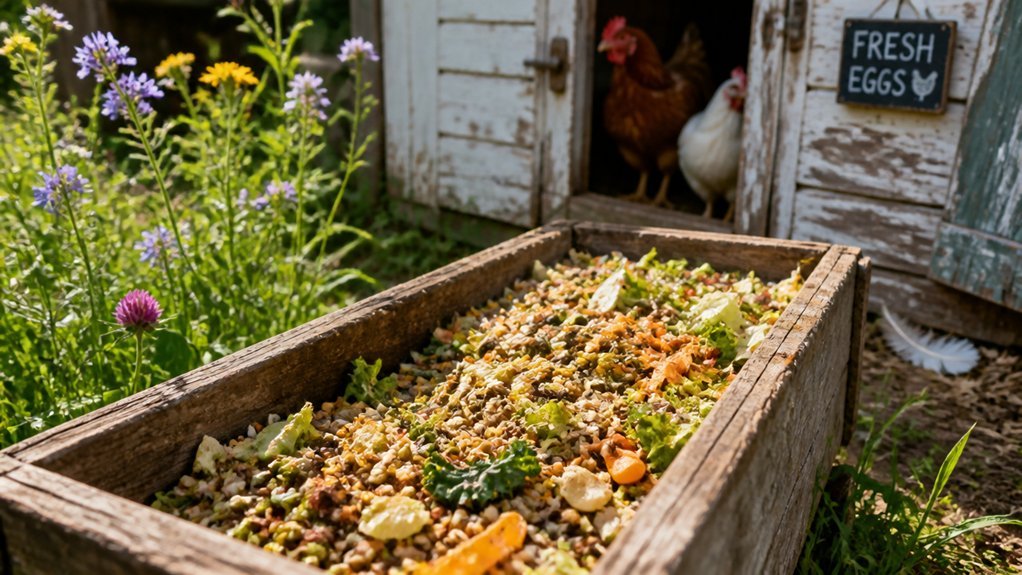
Even with good forage, some chickens still need a supplement to stay healthy and productive. You should watch birds closely during rapid growth, heavy egg laying, molting, cold snaps, or any illness.
When your flock’s diet lacks protein, calcium, or key vitamins, a targeted supplement can help them recover and perform better. Start with the flock’s needs, not a guess, and use supplements only when you see a real gap.
- Offer extra calcium for hens laying soft-shelled eggs.
- Use protein support for chicks, growers, or molting birds.
- Give electrolyte or vitamin support after heat stress or sickness.
- Proper supplementation supports electrolyte balance to help birds maintain hydration during heat stress.
You’ll save money by matching the supplement to the problem instead of feeding more than they need.
Store Feed Well and Waste Less
You can save money by storing chicken feed in a cool, dry, sealed container. This helps keep it fresh, prevents spoilage, and protects it from pests and moisture. Using proper storage containers, with features like airtight seals and pest-resistant designs, further enhances your feed’s safety and longevity. When you handle feed carefully, you waste less and stretch every bag further.
Proper Feed Storage
When feed sits in the wrong place, it spoils faster, attracts pests, and costs you more than it should. You can protect every bag by keeping it in a cool, dry, shaded spot off the floor. Seal the container tightly after each use so moisture and rodents can’t get in.
Label bags with the purchase date, and use older feed first to cut waste. Using a weatherproof, airtight lid on your storage container further prevents spoilage and contamination.
- Use sturdy bins with tight-fitting lids.
- Keep feed away from sunlight and damp walls.
- Scoop only what your flock needs each day.
You’ll save money when you store feed neatly and check supplies often. Good storage keeps your chickens eating the feed you paid for, not the scraps pests leave behind.
Prevent Feed Spoilage
Feed spoilage can drain your budget fast, so it pays to catch problems early and store supplies with care. Keep chicken feed in a clean, dry bin with a tight lid, and place it off the floor to block moisture and pests.
Choose a shaded spot away from heat, rain, and direct sunlight, because warmth speeds up mold growth and rancid oils. Buy only what your flock can use before the bag ages, and label each container with the purchase date.
Check feed often for odd smells, clumps, discoloration, or insects, and discard anything that looks off. Clean storage containers between refills, since leftover dust can harbor trouble. Using light-blocking storage ideas can help prevent spoilage caused by algae and mold growth.
When you protect feed quality, you protect your hens’ health and your feed budget too.
Reduce Feed Waste
A little planning goes a long way toward reducing feed waste and stretching your chicken budget. Use sturdy bins with tight lids, and keep feed off the floor so pests can’t get into it.
Measure only what your flock will eat in a day or two, then refill as needed. If you overfill feeders, chickens will scratch out more than they eat, and you’ll lose money fast.
Place feeders at back height to cut scattering and keep bedding from mixing in. Check storage often for moisture, mold, and broken bags, because spoiled feed gets tossed.
Using waste-minimizing feeder features like adjustable feeding levels and spill-resistant lids can further reduce waste and improve feed conservation.
Spot Diet Problems Early
Even healthy-looking hens can show early signs of a poor diet, so check for changes in comb color, feather quality, egg production, and droppings. A pale comb, ragged feathers, fewer eggs, or watery droppings can point to missing nutrients, parasites, or spoiled feed.
You should watch body weight too; a bird that feels thin or weak may not be getting enough protein or energy. Compare flock behavior as well. If hens crowd the feeder, peck more than usual, or leave feed behind, something may be off.
Monitoring the gut microbiome can help you understand if your flock’s digestive health is optimal, as probiotics support long-term gut health and immune function.
Catching these clues early lets you adjust feed, offer grit or calcium, and remove stale scraps before the problem spreads. Keep simple notes so you can spot patterns fast and act before small issues become costly setbacks.
Frequently Asked Questions
What Vitamins Do Backyard Chickens Need for Laying Eggs?
Backyard chickens need vitamins A, D, E, and B-complex for strong laying. You’ll also want calcium and phosphorus for eggshells, and fresh greens, grains, and quality feed to keep them productive.
How Much Water Should Chickens Drink Daily?
You should let each chicken drink about a pint of water daily, and more in heat or during laying. You’ll need clean, fresh water available all day, since chickens can’t thrive without steady hydration.
Can Chickens Eat Mealworms as a Protein Source?
Yes, you can feed chickens mealworms as a protein source, and they’ll enjoy them. You should offer mealworms as a supplement, not a staple, because too many can unbalance their diet and reduce overall nutrition.
What Treats Should Be Avoided for Baby Chicks?
You shouldn’t give baby chicks bread, avocado, chocolate, salty snacks, raw beans, sugary foods, or hard treats. They can’t digest these well, and you’ll risk choking, illness, or nutritional imbalance.
How Often Should Chicken Feeders Be Cleaned?
You should clean chicken feeders weekly, and sooner if you spot mold, droppings, or wet feed. Scrub them with hot, soapy water, rinse well, and dry fully before refilling to keep your flock healthy.
In Summary
By keeping your hens on a simple daily plan, you’ll give them the nutrition they need without overspending. Mix budget-friendly feed with safe kitchen scraps, fresh greens, and the right supplements when needed. Store feed properly so it stays fresh and waste stays low. Watch for early signs of diet problems, and you’ll catch issues fast. With a little planning, you can keep your backyard flock healthy, happy, and affordable all year.