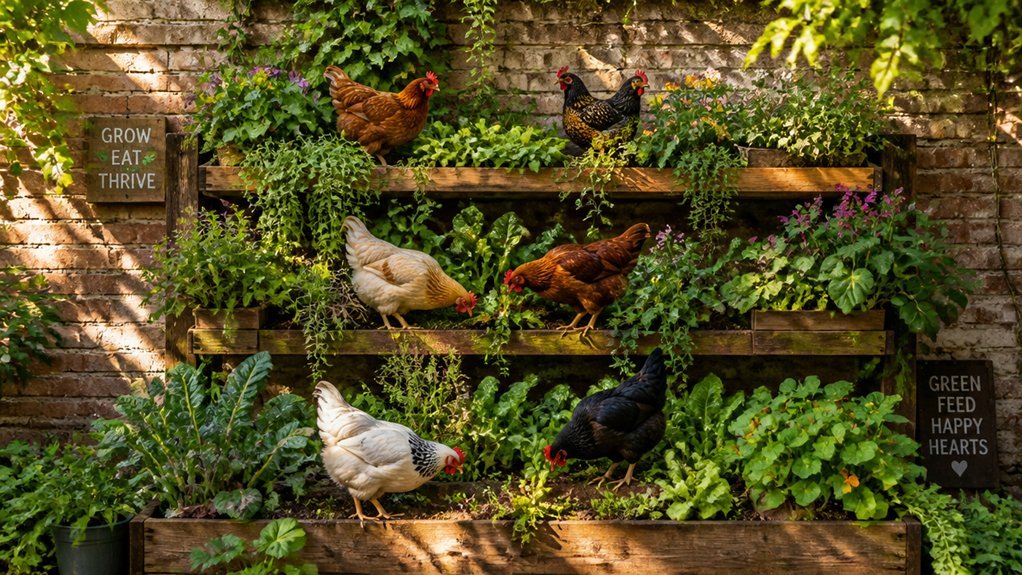
You choose vertical gardening with chickens because it helps you grow more food in a small space while keeping your flock involved. You can use trellises, towers, and stacked planters to save ground area, then let chickens work nearby paths to eat pests and scratch weeds without wrecking crops. With good fencing, shade, and smart plant placement, you’ll protect both garden and birds, and you’ll see how the system works even better next.
Why Vertical Gardening Works With Chickens
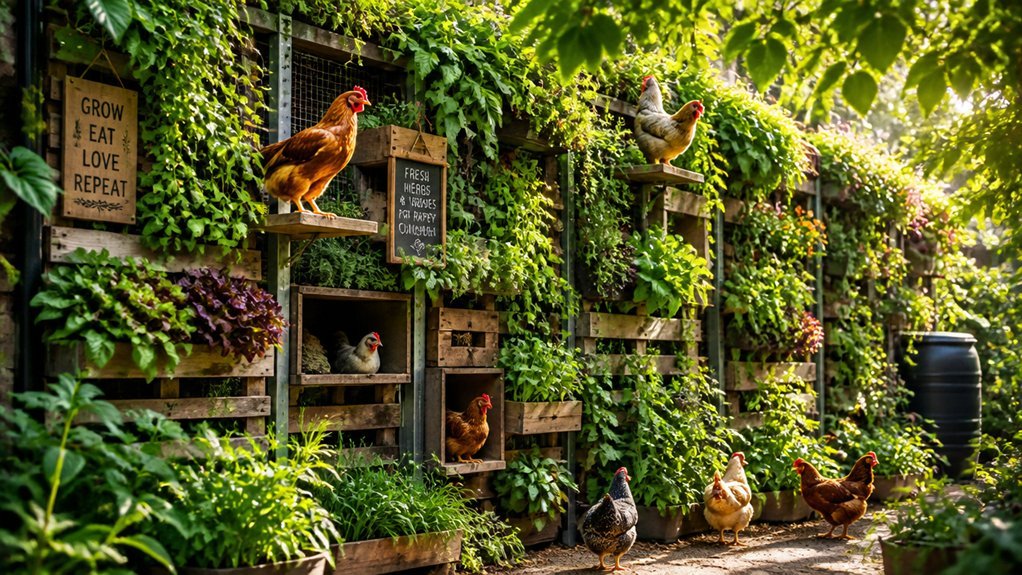
Vertical gardening works well with chickens because it lets you grow food up and out of reach while still making good use of a small space. You can protect tender plants from scratching feet and enthusiastic beaks, while your flock still helps nearby by eating pests and weeds. Using modular panels or flexible fencing options allows you to customize your garden layout while maintaining chicken barriers. Trellises, hanging baskets, and stacked planters keep your harvest organized and easier to manage. You also improve airflow around plants, which can reduce disease in damp runs or backyard setups. Because you grow upward, you can pair chickens with herbs, greens, and climbing crops without crowding the ground. That setup helps you stay productive, keep cleaner beds, and make the most of every square foot.
Save Space In Small Backyards
When your backyard is small, vertical gardening helps you make the most of every square foot. You can grow up instead of out, using fences, trellises, and stacked planters to save ground space. A well-designed small-space coop can be elevated or kept compact to maximize available area while providing a safe environment for your hens. That leaves room for your chickens to move around while your plants still thrive.
Maximize Limited Ground Space
If your backyard feels too small for both a garden and chickens, vertical gardening lets you fit more into the same footprint. You can place planters on walls, fences, and stacked frames, leaving open ground for your flock to roam, scratch, and dust bathe. This setup helps you use every inch without crowding your chickens or sacrificing fresh produce. Incorporating removable trays into your vertical garden system allows for easier access and cleaning, keeping your space tidy and hygienic. You’ll create separate zones for feeding, watering, and planting, which keeps traffic organized and reduces damage to tender crops. By lifting vegetables and herbs off the ground, you also free up space for paths, compost bins, and coop access. In a compact yard, smart layout matters, and vertical growing gives you more flexibility. It turns tight spaces into productive, comfortable areas for both plants and birds.
Grow Upward Efficiently
To save space in a small backyard, train plants to grow upward with trellises, towers, hanging baskets, and wall-mounted planters. You’ll free valuable ground for chickens, paths, and compost while still harvesting plenty of herbs, greens, and tomatoes. Choose sturdy supports that handle wind and weight, then guide vines early so they don’t sprawl. Keep poultry-safe crops above pecking height and use lower tiers for shade-tolerant plants. Additionally, selecting appropriate mesh size ensures your garden remains chicken-safe while allowing airflow and sunlight to reach your plants.
Set Up Safe Coop-To-Garden Paths
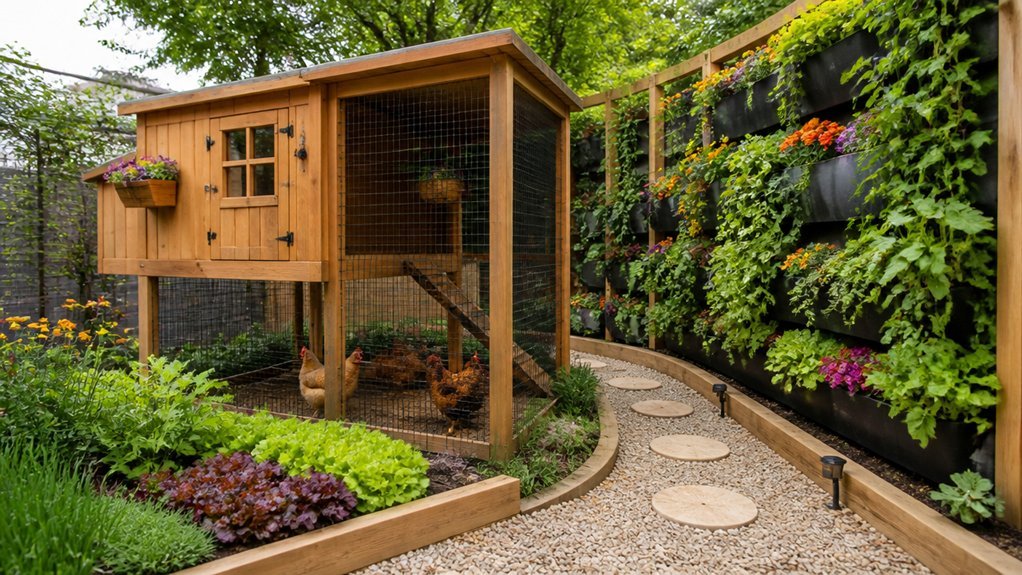
A safe coop-to-garden path keeps both your chickens and your plants protected while making daily chores easier. You can guide birds where you want them by building a narrow, secure route between spaces.
A safe coop-to-garden path protects your flock and plants while making daily chores easier.
Use sturdy fencing or netting along the sides so they don’t wander into beds, and keep the surface dry enough to prevent slips. Incorporating double-spiked posts into your fencing adds extra stability to deter predators and keep your chickens safe.
- Clear the path of tools, rocks, and low branches.
- Install gates at both ends so you control access quickly.
- Check for gaps, loose boards, or sharp edges often.
You’ll move feed, water, and harvest baskets faster when the path stays simple and direct. Good routing also reduces stress for your flock, since they learn the same route every day.
Choose The Best Plants For Vertical Beds
Once your coop-to-garden path is set, pick plants that can handle vertical growing and a little chicken traffic nearby. You’ll do best with compact, productive crops that thrive in pots, pockets, or stacked planters.
Leafy greens like lettuce, spinach, kale, and Swiss chard grow fast and give you repeated harvests. Herbs such as thyme, parsley, basil, and oregano stay manageable and add steady flavor. Strawberries work well too, because their runners stay easy to guide.
If you want flowers, choose nasturtiums or calendula for color and edible petals.
Look for varieties labeled dwarf, bush, or patio, since they stay smaller and fit tighter spaces. Group plants by sun needs, water them consistently, and leave enough room for air to move through the bed. For optimal health, selecting chicken-proof materials can help protect your plants from scratching and pecking.
Protect Plants From Chicken Scratch
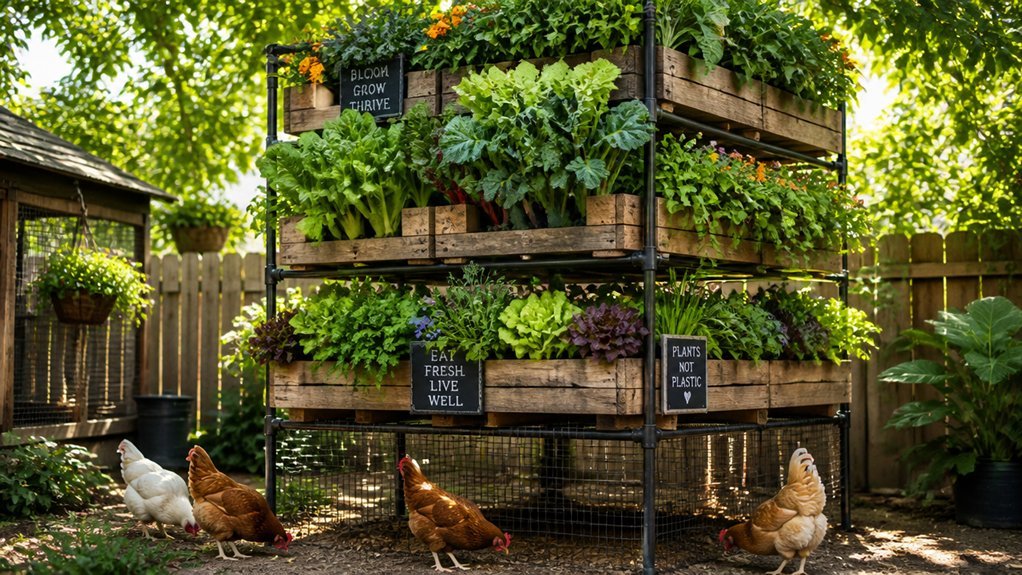
You can protect your vertical plants by adding raised beds and sturdy barriers that keep chickens from scratching into the soil. A thick mulch layer also helps shield roots and reduce exposed dirt that invites pecking. Set up chicken-free access zones around your beds so your plants can grow without constant interference. Using predator-proof fencing such as high-quality hardware cloth around your garden ensures durability and long-term protection against pests and predators.
Raised Beds Barriers
Raised beds give your crops a built-in defense, but chickens still need a little extra help to keep their scratching and pecking out of the soil. You can add sturdy barriers that keep birds where they belong while still letting you garden with ease.
Low fencing, wire panels, and simple hoop covers all work well around bed edges. Pick materials your flock can’t push through or hop over, and secure them tightly so gaps don’t invite trouble.
- Use welded wire around the frame.
- Install a gate for easy access.
- Check corners often for weak spots.
- Choose predator-resistant netting, like electric poultry netting, to enhance protection against raccoons or foxes.
When you protect the perimeter, your plants stay rooted, your beds stay tidy, and your chickens learn clear boundaries without constant supervision.
Mulch Protection Layers
A thick mulch layer can soften the look of your beds, but chickens will still scratch through loose material if you leave it unprotected. You can stop that by locking the mulch down with a lighter top layer that stays put, such as pine needles, shredded leaves, or straw netting.
Press the mulch firmly around stems and watering points so birds can’t easily fling it aside. You’ll also help the soil hold moisture and reduce weeds without inviting constant digging. If your flock roams nearby, refresh thin spots before they turn into scratch zones.
Keep mulch depth moderate, because piles that are too loose or too deep invite curiosity. When you combine coverage with texture and firmness, you protect roots, keep beds tidy, and make your garden less tempting to peck. Ensuring your mulch is secured with reinforced edging prevents it from shifting or being disturbed by chicken activity.
Chicken-Free Access Zones
Create chicken-free access zones by giving your plants a physical boundary chickens won’t cross. Use sturdy wire mesh, low fencing, or raised frames around vulnerable beds so your flock can’t scratch roots or topple seedlings. You’ll protect tender greens and keep soil in place while still letting chickens work nearby. Adding net size according to your garden layout can further enhance containment and ease of use.
- Install barriers at least 18 inches high for smaller birds and deeper edges for diggers.
- Leave narrow walkways for you to harvest, water, and inspect plants without opening the whole area.
- Add gates or removable panels so you can rotate access when plants are established.
You’ll get cleaner beds, healthier growth, and fewer repairs. With clear zones, your garden stays productive, and your chickens stay curious instead of destructive.
Turn Chicken Waste Into Fertility
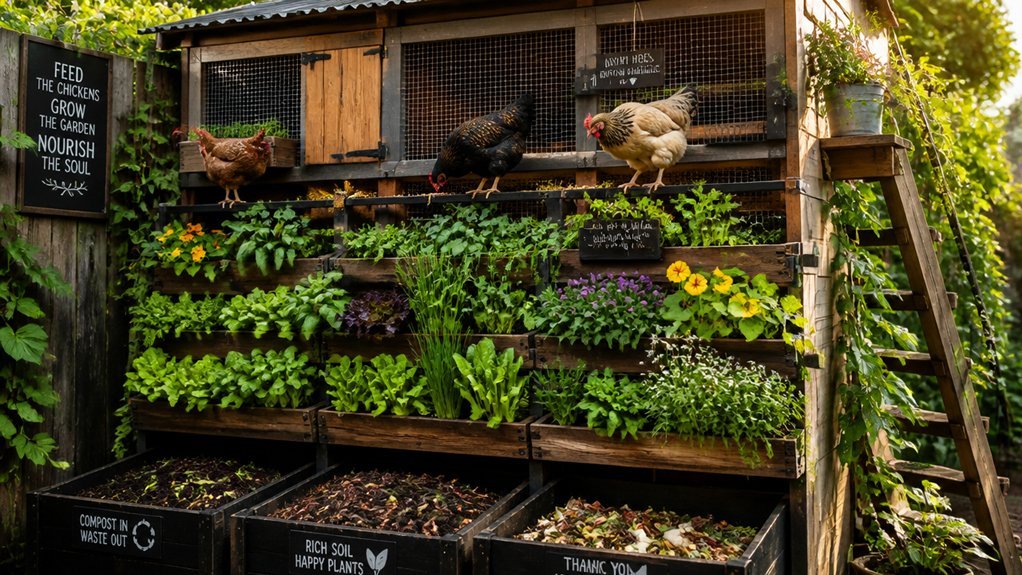
Instead of viewing chicken waste as a problem, you can turn it into one of the most valuable inputs in your vertical garden. You collect manure from coop litter or droppings beneath roosts, then place it where your plants can benefit from the nutrients.
Because chickens eat varied feed, their waste brings nitrogen, phosphorus, and potassium into your system. You can spread a thin layer around sturdy plants, tuck it under mulch, or add it to a dedicated feeding zone for heavy growers.
Keep fresh waste off tender leaves and fruit, and always wash your hands after handling it. When you manage it well, you reduce waste, feed your plants, and keep your setup productive without buying as much fertilizer.
Improve Soil Health With Compost Cycles
You can turn chicken manure into a powerful compost ingredient that feeds your vertical garden beds. By layering it with carbon-rich materials, you help the pile break down evenly and protect your plants from excess nitrogen.
Over time, these compost cycles build rich, nutrient-dense soil that supports stronger growth.
Chicken Manure Fertility
Chicken manure can become one of the most valuable fertilizers in a vertical garden when you compost it properly before use. You turn waste into a rich soil amendment that feeds plants and supports steady growth.
- Compost it fully so the nitrogen becomes available without burning roots.
- Mix the finished material into your beds or potting blend to boost fertility.
- Recycle plant trimmings and bedding with the manure to keep nutrients cycling through your setup.
When you manage this process well, you’ll improve soil structure, encourage stronger roots, and reduce the need for store-bought fertilizer. Your vertical garden stays productive, and your chickens help supply the nutrients that keep it thriving season after season.
Compost Layering Benefits
When you build compost in layers, you create a faster, more balanced cycle that feeds both your chickens and your vertical garden. You can alternate carbon-rich bedding, kitchen scraps, and chicken droppings to help air flow and break material down evenly. This keeps odors lower and lets you turn waste into useful compost with less effort. Your layered pile also encourages steady heat, which supports active decomposition and reduces waiting time. Use the table below to guide your mix:
| Layer | Purpose | Benefit |
|---|---|---|
| Browns | Add structure | Improve airflow |
| Greens | Add moisture | Speed breakdown |
| Manure | Add activity | Boost composting |
| Straw | Absorb liquid | Balance pile |
| Turned mix | Refresh oxygen | Keep process moving |
With each cycle, you strengthen your system and support healthier growth overall.
Nutrient-Rich Garden Soil
Those compost cycles don’t just reduce waste—they build richer soil that supports healthier garden growth. When you mix chicken bedding, plant scraps, and finished compost, you feed beneficial microbes and improve soil structure. Your beds hold moisture better, drain more evenly, and give roots the loose, fertile space they need.
- Add compost in thin layers to refresh nutrients without smothering plants.
- Turn scraps often so decomposition stays active and balanced.
- Rotate chicken access carefully, letting them scratch, fertilize, and rest the soil.
You’ll notice stronger seedlings, deeper green leaves, and fewer nutrient gaps over time. By cycling organic matter through your system, you create a living soil that keeps your vertical garden productive season after season, while your chickens help close the loop naturally.
Use Chickens To Manage Garden Pests
Chickens can be one of your best natural pest-control tools in a vertical garden, because they enthusiastically scratch, peck, and forage for insects, grubs, and weed seeds around the base of plants.
You can let them patrol pathways and perimeter beds to reduce slugs, beetles, and caterpillars before they spread. Their constant movement disturbs hiding pests, while their droppings add a little fertility as they work.
Keep a close eye on their behavior so they don’t uproot seedlings or damage tender roots. Direct them where pressure is highest, and move them on once they’ve cleaned up the area. By using chickens this way, you’ll cut pest numbers naturally, limit chemical sprays, and keep your garden healthier with less effort overall.
Create Shade And Shelter For Chickens

To keep your flock healthy in a vertical garden, give them plenty of shade and a secure shelter from heat, wind, and rain. You can use trellises, awnings, or tall plants to break the sun while keeping air moving.
Build a simple coop or run cover that stays dry, sturdy, and easy to clean. Place it where chickens can retreat quickly during weather shifts, but still watch the garden.
- Position shade where midday sun hits hardest.
- Add a roof or tarp that sheds rain well.
- Leave draft-free corners for resting and dust bathing.
When you protect your chickens from stress, they stay calmer, healthier, and more comfortable. Good shelter also helps you manage the flock without constant worry.
Grow More Food In Layered Beds
With shade and shelter in place, you can turn the vertical garden itself into a more productive food source by stacking crops in layers. You plant tall crops like pole beans or trellised tomatoes where they can climb without crowding lower plants.
Stack your garden in layers, letting tall crops climb while lower plants thrive in the shade.
Below them, you tuck leafy greens, herbs, and quick roots into the partial shade. This lets you harvest from the same footprint at different heights, so every square foot works harder for you.
Your chickens help too, because their manure feeds compost that you can add between crops. When you choose plants with different root depths and light needs, you reduce competition and boost total yield.
You’ll get more food, better spacing, and a garden that feels abundant without needing extra land.
Water Vertical Gardens More Efficiently
Because vertical gardens dry out faster than ground beds, you’ll want to water with precision so every plant gets what it needs without waste. Aim water at the root zone, not the leaves, so moisture reaches the soil where roots can use it. A drip line, soaker hose, or watering wand helps you control flow and reduce runoff.
You can also water in short bursts, letting each layer absorb moisture before adding more.
- Check the top inch of soil before watering.
- Water early in the day to cut evaporation.
- Group thirsty plants together so you can match their needs.
When you stay consistent, you save water, keep plants healthier, and make your vertical system easier to manage.
Let Chickens In Without Damaging Plants
Once your vertical garden is watered and settled, you can start letting chickens near it without turning your plants into a snack or a mess. Use short runs, sturdy mesh, and raised edges so birds can scratch nearby but can’t reach tender roots or seedlings. Train them with treats to stay in open paths, and move them in only after you’ve checked for loose panels and gaps.
| Control | Why it helps | Your move |
|---|---|---|
| Mesh barrier | Blocks pecking | Secure every side |
| Supervised access | Prevents chaos | Watch at first |
| Mulch cover | Limits scratching | Refresh often |
Keep water and feed outside the bed to draw attention away. With clear boundaries, your chickens help clean pests without trampling your vertical harvest.
Frequently Asked Questions
How Much Maintenance Do Vertical Chicken Gardens Require?
You’ll need moderate upkeep: you’ll water, prune, rotate crops, refill feed, clean droppings, and check structures weekly. Chickens help by scratching pests and fertilizing, but you’ll still monitor moisture, damage, and plant health regularly.
What Materials Work Best for Building Vertical Garden Frames?
You’ll get the best results with cedar, galvanized steel, or sturdy PVC for your frame. Use weather-resistant fasteners, wire mesh, and rot-proof screws, so you can support planters safely and keep your garden lasting longer.
Can Vertical Gardens Be Used in Cold Climates?
Yes, you can use vertical gardens in cold climates if you choose hardy plants, add insulation, and move portable frames indoors or against sheltered walls. You’ll extend your growing season and protect roots from freezing.
How Do You Prevent Predators From Entering the Garden Area?
You prevent predators by enclosing the area with sturdy wire mesh, locking gates, and burying fencing underground. Add motion lights, remove hiding spots, and secure food at night so raccoons, foxes, and birds can’t get in.
What Chicken Breeds Are Best for Garden-Friendly Flocks?
You’ll do best with Buff Orpingtons, Australorps, Cochins, and Brahmas. They’re calm, hardy, and less likely to scratch aggressively. Choose smaller, gentler breeds too, like Silkies, if you want a garden-friendly flock.
In Summary
Vertical gardening lets you make the most of your space while keeping chickens happy and healthy. You can grow more food in small yards, protect your plants from scratching, and create shady spots your flock will enjoy. With smart paths, sturdy beds, and the right plants, you’ll save water and reduce mess too. If you want a productive, beautiful backyard that works for both people and chickens, vertical gardening is a smart choice.