
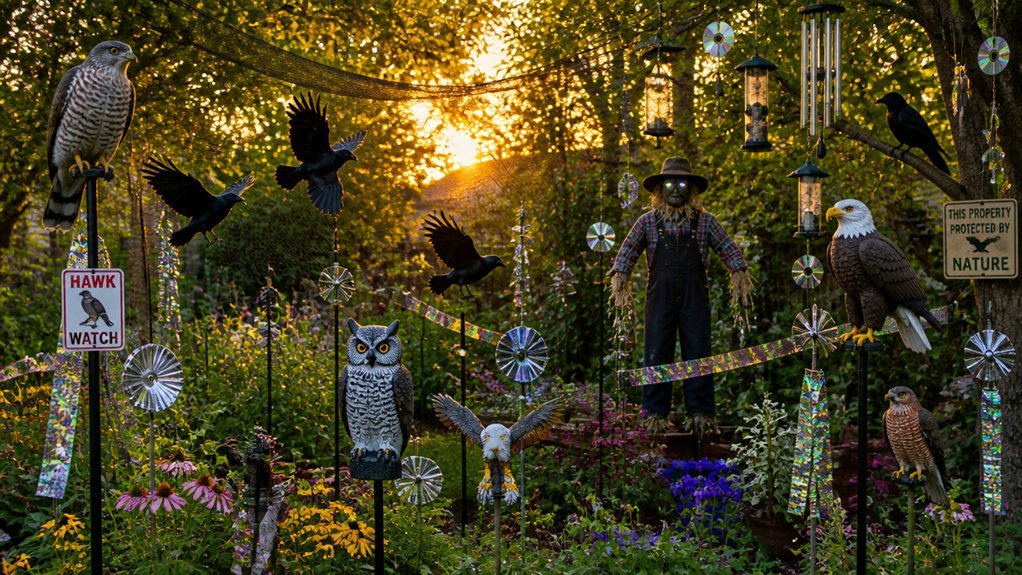
You can keep crows and hawks away by watching for early warning signs, then making your yard harder to scout and reach. Strengthen coops and runs with sturdy wire mesh, close gaps, and cover open areas with netting or roofing. Trim branches, reduce perches, and use reflective tape or rotating decoys so birds don’t get comfortable. Keep feed clean and sealed, and give chickens cover during free-range time. A few smart layers make a big difference, and more tips follow.
Spot Crow and Hawk Threats
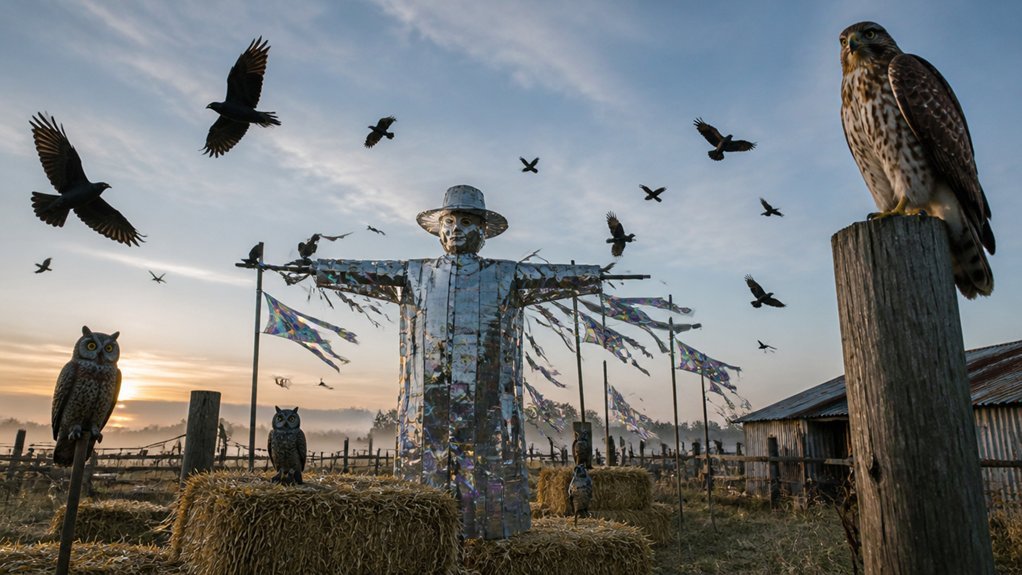
To spot crow and hawk threats, watch for the warning signs before they turn into a problem. You’ll often notice crows circling, calling loudly, or swooping low over feed areas. Hawks may perch nearby, scan the ground, or glide over your yard during daylight.
A predator mimicry tactic, such as flashing red lights, can help deter these birds effectively before they get too close.
Pay attention when birds act nervous, freeze, or crowd under cover; they’re telling you a predator’s close. Check for missing eggs, scattered feathers, or sudden agitation around your flock. If you see repeated flyovers at the same time each day, note the pattern.
You can also track where predators land, hunt, and watch from a distance. Early detection helps you respond faster, protect your birds, and reduce stress before an attack happens.
Harden the Coop and Run
Reinforce the coop and run so crows and hawks can’t get easy access. You should inspect walls, doors, and latches for gaps, then repair weak spots with sturdy lumber, wire mesh, and screws. Replace flimsy hardware with predator-resistant hinges and locks that won’t pop open in wind or when a bird tests them.
Add solid framing around windows and vents so nothing can pry them loose. If the run has soft sides or sagging panels, brace them from the inside to prevent bending. You should also secure feed bins and remove loose boards, because clutter gives predators places to perch or probe. Using hardware cloth with a 1/2 inch mesh size and sturdy steel gauge will further strengthen your defenses against aerial threats.
A hardened structure won’t stop every threat, but it makes your flock harder to reach and much safer every day.
Cover the Run With Netting
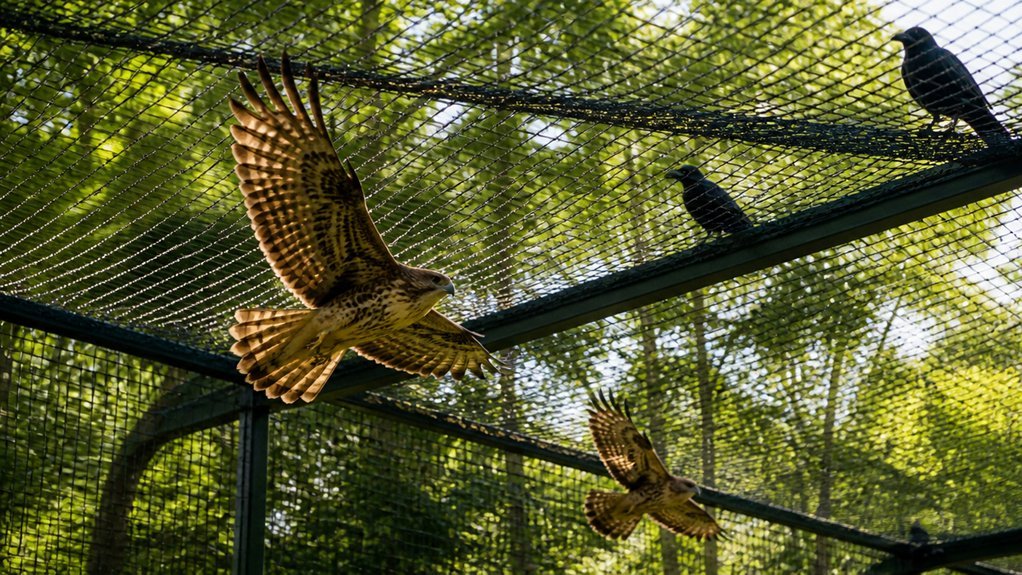
Cover the run with strong netting to keep crows and hawks from diving in. You can stretch poultry netting or aviary mesh across the entire run, then secure every edge so birds can’t slip inside. Use this quick guide:
| Net type | Best use | Key benefit |
|---|---|---|
| Poultry netting | Small runs | Light and easy |
| Aviary mesh | Long-term setups | Tougher barrier |
| Knotted netting | Windy areas | Holds shape better |
Check for loose spots, sagging sections, and holes after storms, because predators exploit weak points fast. If you use a support line, keep the net taut so it won’t pool with rain or snow. Trim nearby branches too, since crows often land first and test openings before hawks swoop. Ensuring the fence height and stability are adequate can help improve overall predator protection.
Add Overhead Cover for Chickens
Once the run is netted, add overhead cover so your chickens feel safer and hawks lose their advantage. You can stretch shade cloth, corrugated panels, or clear roofing over part of the run to give birds a protected zone. Use sturdy framing, secure fasteners, and a slope that sheds rain. Proper materials with reinforced edges and secure attachments help withstand wind and weather, ensuring long-lasting protection. Keep at least one section open for light and airflow, but make sure your flock can duck under shelter fast. Chickens relax when they can escape direct sky exposure, and that calm helps them forage and dust bathe more naturally. Overhead cover also protects feed and water from weather, which keeps the area cleaner. Check for sagging, sharp edges, and loose hardware often, and repair damage before predators notice it.
Block Hawks’ View of the Yard
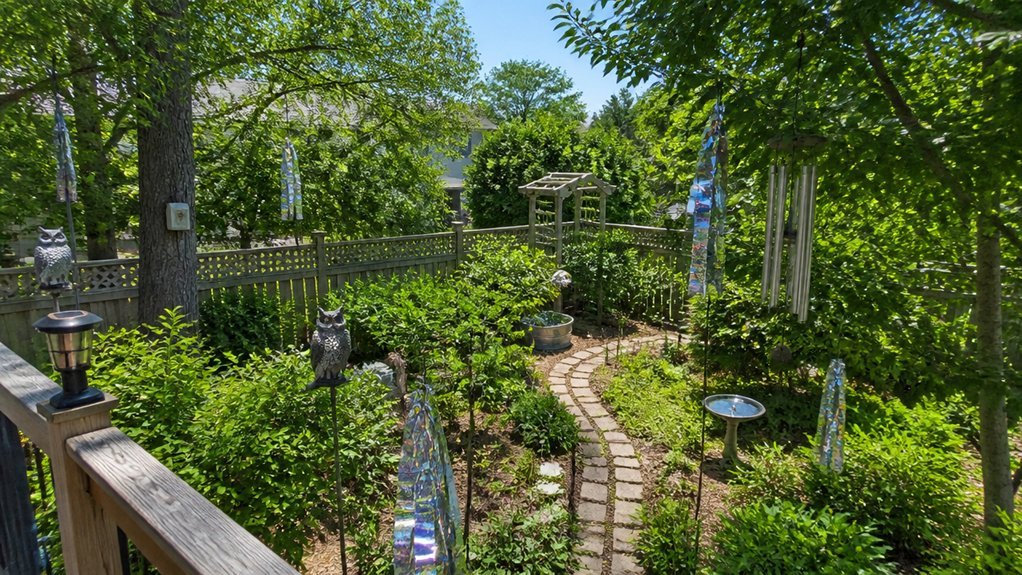
Hawks hunt best when they can spot movement from above, so make your yard harder to scan. Trim tall grass, stack firewood neatly, and keep tools, bins, and feeders from creating open perches.
Plant shrubs, small trees, or trellises where hawks can’t easily see every corner, but leave enough space for your chickens to move safely. If your run sits in the open, add shade cloth or garden netting along the sides to break up long sightlines. You can also use solid fencing panels or privacy screens on the most exposed edges.
The goal isn’t total enclosure; it’s to interrupt a hawk’s clear view long enough that it looks for easier prey elsewhere. Check for gaps after storms, since even small openings can restore a hunting lane.
Additionally, choosing appropriate netting size can help prevent hawks from successful glimpses into your yard, reducing their hunting advantage.
Use Reflective Deterrents for Crows
Crows often dislike sudden flashes and movement, so reflective deterrents can make your yard feel unsafe to them. You can hang strips of reflective tape, old CDs, or shiny metal ribbons near trees, fences, and garden beds. Let them move in the breeze, because that motion helps trigger the birds’ caution.
Place them where sunlight hits them during the day, and check them after storms so they don’t tangle or fade. If crows begin ignoring one spot, shift the materials to a new location and keep the pattern changing. You’ll get better results when you use several small reflective items instead of one large decoration.
Clean, bright surfaces usually work best, and you won’t need chemicals or complicated tools to start.
Use Decoys and Scare Devices Carefully
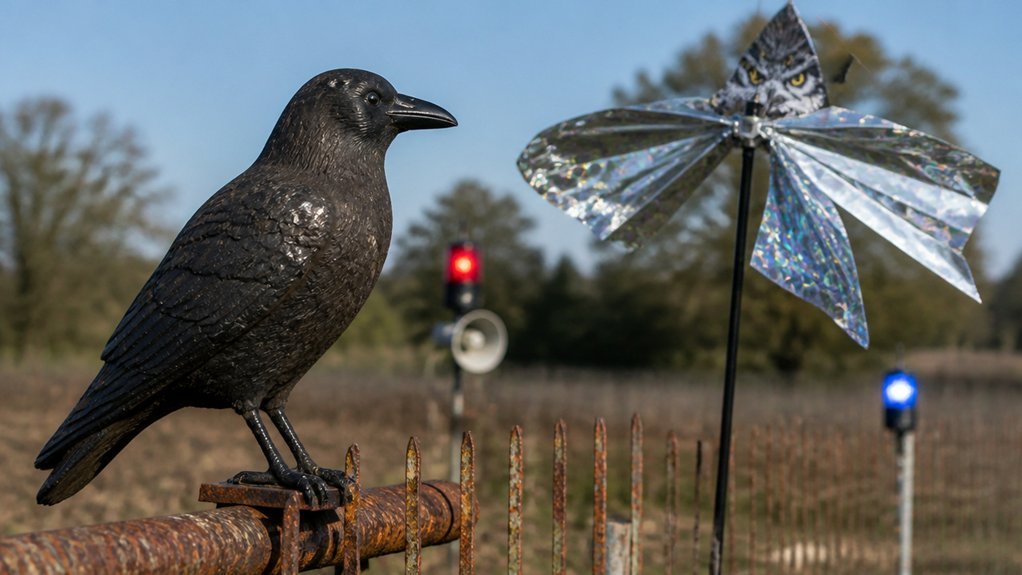
Decoys and scare devices can help at first, but they work best when you use them sparingly and move them often. You can place a fake owl, hawk silhouette, or predator balloon near trouble spots, but if birds see the same object day after day, they’ll ignore it.
Rotate the decoy’s position, change its height, and vary the type so it feels less predictable. Add motion, flashing eyes, or noise when possible, since movement makes the threat seem real.
Regularly update and maintain electrified fences to prevent predators like hawks and crows from exploiting weak spots near your setup. Use these tools as part of a broader plan, not as a permanent fix. Check them regularly for damage, fading, or buildup that reduces their effect, and don’t let them become part of the scenery.
Change Feeding Habits to Cut Visits
You can cut down crow and hawk visits by changing how you feed birds. Keep spilled seed to a minimum, offer smaller portions, and remove leftover food right away. Using adjustable height feeders can also help prevent birds from knocking feed onto the ground, further reducing waste and attracting unwanted visitors. These simple habits make your yard less appealing and help discourage repeat visits.
Reduce Spilled Seed
If you cut down on spilled seed, you make your yard far less attractive to crows and hawks. Place feeders where dropped grain won’t scatter onto open ground, and use trays to catch what falls.
Sweep or rake beneath feeders every day so leftovers don’t pile up and signal an easy meal. Choose feed that suits your birds, since cheaper mixes often leave more waste behind.
Keep the area dry, too, because damp seed molds quickly and invites scavengers. When you clean promptly, you remove odors, crumbs, and the constant buffet that brings larger birds back.
You can also inspect the ground after windy weather, since gusts spread seed far beyond the feeder. Small cleanup habits add up, and they help you keep unwanted visitors moving on.
Additionally, selecting weather-resistant feeders with removable rain covers or hoods can prevent water accumulation and discourage pests from discovering the food source.
Feed Smaller Portions
Instead of keeping feeders full all day, offer smaller portions more often so there’s less leftover food to attract crows and hawks. You’ll make your yard less appealing when you limit each feeding to what birds can finish quickly.
This habit also helps you control when birds visit, so you can choose quieter times and avoid drawing in big flocks. Use measured amounts instead of pouring in extra seed “just in case.” If you notice birds emptying feeders fast, adjust the schedule rather than increasing the load.
Smaller servings keep activity focused on brief, manageable visits, which can discourage larger predators from lingering nearby. You’ll also spend less time maintaining a busy feeding station and more time enjoying steady, predictable bird activity. Implementing pest-resistant feed containers can further reduce the risk of attracting unwanted visitors.
Remove Leftover Food
Clear away any leftover seed, fruit, and scraps as soon as feeding ends so your yard doesn’t keep advertising an easy meal. You’ll cut the reward that brings crows and hawks back day after day, and you’ll make your feeding area feel less predictable. Sweep patios, empty feeders, and rinse bowls before dusk. A cleanliness routine can significantly reduce attracted predators and nuisance birds.
Keep Chickens Safe During Free Range Time
When you let chickens roam, you need to give them some protection from overhead predators like crows and hawks. You can reduce risk by watching them during the safest daylight hours and keeping them near cover.
Keep chickens safe outdoors by timing free-range time wisely and giving them nearby cover from hawks and crows.
Use shrubs, panels, or shade structures so your flock can duck out of sight quickly. If you’ve got a wide yard, move them in smaller groups and stay nearby with a loud noise-maker ready.
Sudden movement helps, but don’t chase birds recklessly and scatter your hens. Train your chickens to return when you call with treats, so you can gather them fast if a hawk circles.
Keep your eyes on the sky, especially when a bird shadows the area, and bring everyone in before danger escalates.
Combine Tactics for Lasting Protection
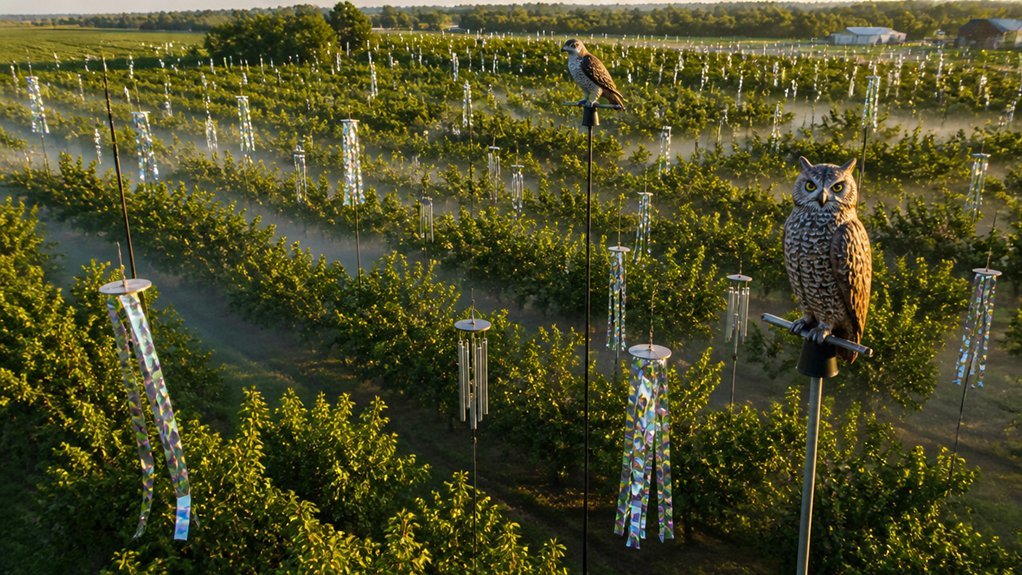
A lasting defense against crows and hawks works best when you layer several tactics together. You’ll get better results if you move chickens under cover, add overhead netting, and use reflective scare devices near open areas. Rotate decoys so birds don’t ignore them. Keep feed sealed, since scraps attract trouble fast. When you spot patrol patterns, change your routines and reduce predictable gaps.
| Tactic | Effect | Feeling |
|---|---|---|
| Netting | Blocks dives | Relief |
| Cover | Hides flock | Safety |
| Decoys | Confuses birds | Hope |
| Motion aids | Startles attackers | Control |
Use these tools together, not one at a time, and you’ll build a calm, durable shield for your flock.
Frequently Asked Questions
How Often Should I Inspect My Yard for New Predator Entry Points?
Inspect your yard weekly, and after storms or landscaping changes, because you’ll spot gaps early and stop predators from finding new entry points. Check fences, trees, sheds, and rooflines, then fix issues right away.
Do Crows Remember Specific Scare Tactics Over Time?
Yes, you can expect crows to remember specific scare tactics over time, especially if you use them repeatedly. They’ll often ignore predictable tricks, so you should rotate methods and change placements regularly.
Can Chicken Colors Affect Hawk Attacks in Open Yards?
Yes, your chicken colors can matter a little; hawks spot contrast and movement more than breed color. You’ll reduce risk by keeping birds near cover, using overhead netting, and avoiding bright, exposed yards.
Are There Legal Restrictions on Trapping or Relocating Crows?
Yes— you’ll often need permits, and many places prohibit trapping, relocating, or killing crows because they’re protected. Check your state, local, and federal rules before you act, since penalties can be serious.
What Weather Conditions Make Hawk Attacks More Likely?
You’re more likely to see hawk attacks on calm, clear days when visibility’s good and prey’s easy to spot. Windy, stormy, or very hot weather can also push hawks to hunt lower and closer.
In Summary
By staying alert and mixing a few smart defenses, you can keep crows and hawks from turning your flock into an easy target. Strengthen your coop, cover the run, and add overhead protection so predators have fewer chances to strike. Change feeding habits, use decoys wisely, and limit risky free-range time. When you combine these tactics, you give your chickens the best chance to stay safe, calm, and protected day after day.



